
Tamar Yellin
Author of The Genizah at the House of Shepher: A Novel
About the Author
Image credit: Photographer: John Wood
Works by Tamar Yellin
Mr. Applewick 1 copy
Eye Of The Beholder 1 copy
Associated Works
The Thackery T. Lambshead Pocket Guide to Eccentric and Discredited Diseases (2003) — Contributor — 809 copies, 20 reviews
Nemonymous 1: A Megazanthus for Parthenogenic Fiction and Late Labelling (2007) — Contributor — 5 copies, 1 review
Tagged
Common Knowledge
- Canonical name
- Yellin, Tamar
- Birthdate
- 1963
- Gender
- female
- Education
- Leeds Girls' High School
- Occupations
- teacher (Judaism)
lecturer (Judaism) - Nationality
- UK
- Places of residence
- England (birth)
Yorkshire, England, UK - Associated Place (for map)
- England, UK
Members
Reviews

I really enjoyed this book - a rambling, witty tale of a no-longer-young Biblical scholar, Shulamith, and her crazy, argumentative family - the present-day stories interleaved with the lives of her grandfathers and great-grandfathers. Superficially, the modern-day story is about the family dispute over what to do with an ancient Codex, but in fact the whole thing is more about the nature of stories themselves, and the way they can be created and re-created out of almost nothing. The various show more histories - personal, family, political - are as disputed as the variant Biblical texts which Shulamith studies. And the Jewish myth that the Torah was created from a heap of letters - which could have formed into any number of alternative combinations - is echoed in the way that people redefine their own lives.
The book does lose its way a little towards the end, but it's a great read, and I'd always rather read a book which is ambitious, even if it fails, than one which sets out with limited aims, however much it succeeds. show less
The book does lose its way a little towards the end, but it's a great read, and I'd always rather read a book which is ambitious, even if it fails, than one which sets out with limited aims, however much it succeeds. show less
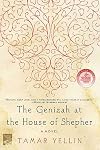
Genizah, a Hebrew word, is defined as a storeroom or attic, usually in a synagogue, for worn or unusable prayerbooks or bibles, which, since they contain the name of God, cannot be thrown away but must rather be buried according to Jewish ritual. That was the first question I had when I picked up The Genizah at the House of Shepher, and attics and storerooms and worn old books are at the crux of this slow, literary and very moving story about a woman, a book, and a mystery.
Shulamit Shepher show more is a researcher and scholar in the field of the Hebrew Bible; she lives in England and travels to Jerusalem to unravel a family controversy that threatens to boil over. Years ago, her great-grandfather, Shalom Shepher, had undertaken to find the ten lost tribes of Israel, and when he returned he brought with him a codex of the Hebrew Bible, found somewhere on his journeys. The book remains hidden for years; when it's discovered in the attic of the family home, the family decides to give it, albeit temporarily and for purposes of further study, to a research institute. Shulamit comes to Israel to see the codex, and to try to use her professional skills to unravel this family mystery. When she arrives she finds herself in the middle of family rivalries and secrets, and meets an intriguing stranger also interested in the codex.
The narrative alternates between Shulamit in the present tense and the story of her family in the past tense, starting with her great-grandfather's first marriage, leading right through her father's failed love affair and her brother's defection from the family. Author Tamar Yellin tells the story slowly, and ponderously; midrashic stories about Moses are interwoven as allegories about knowledge and learning, about what should be, and should not be, gleaned from books. This codex could be a very special book, an early- or perhaps even original- version of the Hebrew Bible, of which there are so many variants and versions, and as such has the potential to be of cataclysmic importance both spiritually, historically, academically and even commercially. Therefore the family is fraught with tension, anger and anticipation over its fate, which brings to the surface all kinds of lingering, competing motives and intentions.
The Genizah at the House of Shepher bears a passing resemblance to another book recently published about a female scholar and the fate of a precious Jewish book- Geraldine Brooks's People of the Book (which I reviewed earlier this year), but The Genizah is quite different. People of the Book was a page-turner- action-packed and busy with movement and twists and turns. The Genizah is altogether a slower book, more thoughtful, and more literary in style. I also found Shulamit to be a more likable character than Brooks's prickly heroine Hanna. People of the Book I can see being made into a movie; The Genizah I can see becoming a classic, and as the winner of last year's Sami Rohr Prize for Jewish Literature, given by the Jewish Book Council, it's off to a good start.
I loved reading The Genizah at the House of Shepher. I thought Yellin hit all the right notes in terms of pacing, character and outcome. The tentative romance between Shulamit and the mysterious Gideon was handled beautifully and the story of her family, and especially her father, was fascinating and bittersweet. I could have finished the book days before I did, but I slowed down for the concluding few chapters, because I wanted to make it last. I may pick it up again soon.
See my review at my blog as well; http://www.bostonbibliophile.com/2008/06/review-genizah-at-house-of-shepher.html show less
Shulamit Shepher show more is a researcher and scholar in the field of the Hebrew Bible; she lives in England and travels to Jerusalem to unravel a family controversy that threatens to boil over. Years ago, her great-grandfather, Shalom Shepher, had undertaken to find the ten lost tribes of Israel, and when he returned he brought with him a codex of the Hebrew Bible, found somewhere on his journeys. The book remains hidden for years; when it's discovered in the attic of the family home, the family decides to give it, albeit temporarily and for purposes of further study, to a research institute. Shulamit comes to Israel to see the codex, and to try to use her professional skills to unravel this family mystery. When she arrives she finds herself in the middle of family rivalries and secrets, and meets an intriguing stranger also interested in the codex.
The narrative alternates between Shulamit in the present tense and the story of her family in the past tense, starting with her great-grandfather's first marriage, leading right through her father's failed love affair and her brother's defection from the family. Author Tamar Yellin tells the story slowly, and ponderously; midrashic stories about Moses are interwoven as allegories about knowledge and learning, about what should be, and should not be, gleaned from books. This codex could be a very special book, an early- or perhaps even original- version of the Hebrew Bible, of which there are so many variants and versions, and as such has the potential to be of cataclysmic importance both spiritually, historically, academically and even commercially. Therefore the family is fraught with tension, anger and anticipation over its fate, which brings to the surface all kinds of lingering, competing motives and intentions.
The Genizah at the House of Shepher bears a passing resemblance to another book recently published about a female scholar and the fate of a precious Jewish book- Geraldine Brooks's People of the Book (which I reviewed earlier this year), but The Genizah is quite different. People of the Book was a page-turner- action-packed and busy with movement and twists and turns. The Genizah is altogether a slower book, more thoughtful, and more literary in style. I also found Shulamit to be a more likable character than Brooks's prickly heroine Hanna. People of the Book I can see being made into a movie; The Genizah I can see becoming a classic, and as the winner of last year's Sami Rohr Prize for Jewish Literature, given by the Jewish Book Council, it's off to a good start.
I loved reading The Genizah at the House of Shepher. I thought Yellin hit all the right notes in terms of pacing, character and outcome. The tentative romance between Shulamit and the mysterious Gideon was handled beautifully and the story of her family, and especially her father, was fascinating and bittersweet. I could have finished the book days before I did, but I slowed down for the concluding few chapters, because I wanted to make it last. I may pick it up again soon.
See my review at my blog as well; http://www.bostonbibliophile.com/2008/06/review-genizah-at-house-of-shepher.html show less
 This review was written for LibraryThing Early Reviewers.
This book was a joy to read. The language, rich and warm, particularly when describing the mythic history of the Shepher family going back to the 19th century. It is a tapestry of emotion, longing and want. The threads of family histories are woven into the story of love, of aging and missed opportunity. Yellin is particularly masterful in showing us the passage of time.
Shulamit Shepher, the narrator, enters the genizah, the storeroom of the past where every yellowing packet of letters and show more photographs, documents and receipts is weighted with significance for no one but the hovering spirits and the lonely seeker. Though she is a scholar searching out the truth of the ancient Codex found in her family home, this is primarily a story of relationships.
All families are flawed, have their strengths and weaknesses hidden in attics and closets that are perhaps better left undisturbed. You cannot go back on the road not taken to see where it actually led. show less
Shulamit Shepher, the narrator, enters the genizah, the storeroom of the past where every yellowing packet of letters and show more photographs, documents and receipts is weighted with significance for no one but the hovering spirits and the lonely seeker. Though she is a scholar searching out the truth of the ancient Codex found in her family home, this is primarily a story of relationships.
All families are flawed, have their strengths and weaknesses hidden in attics and closets that are perhaps better left undisturbed. You cannot go back on the road not taken to see where it actually led. show less
This review was written for LibraryThing Early Reviewers.Some years ago, there was an ad campaign for Levy’s Jewish Rye Bread, a product of a New York City based bakery, that carried the tag line “You don’t have to be Jewish to enjoy Levy’s”. The same could be said of this book.
The Genizah at the House of Shepher, is first of all a story of Family. Change some of the names, change some of the countries and I’m sure we can all find our relatives here in the story. Tamar Yelllin does a terrific job of showing us what families are like, show more especially in times of grief and stress. We are shown a family at each other’s throats over a manuscript of dubious provenance that may or may not be an imperfect copy, and therefore inherently worthless, of a Torah scroll set down as a book. Despite the internal bickering, they all turn as one against a stranger in their midst that wants to take it from them.
Secondly, it is story of Jewish tradition and esoteric knowledge, spanning over one hundred thirty years and many countries. Even if you are not Jewish, you will become involved with this story of intrigue involving a manuscript purportedly purloined from a mythical land where the people from some of the Ten Lost Tribes settled. You don’t need to be overly familiar with the traditions presented, Yellin works a lot of the details in to this portion of the story.
As a storyteller for this genre, I would put the author on par with Shalom Alechem or Chaim Potok. Outside of this genre, Ms. Yellin can hold her place easily, but it is difficult to find a similar story line, so I’m not sure who to compare her to. Scenery is presented with enough detail to carry the plot along without overwhelming you. People are sketched quickly, yet with detail, and her dialog flows realistically. Above all, this is a story being told to you.
Despite all the story has going for it, it cannot get a full five stars because the story does not have that lasting appeal of a truly great book. Once the heroine had completed her part in the story, I did not feel a longing to know what happens to her after this. By the same token, however, this signifies the story is told completely: all questions are answered, all quests are fulfilled and the circle is closed.
One aspect that some people may have trouble with is the story jumps around in time. In one chapter you are here now, the next may be happening one hundred twenty years ago and, after a brief return to now, you are taken back eighty years or so. In another series of scenes, there are some fantasy sequences, almost dreamlike, involving Moses. Some people may find these a little obscure or seemingly pointless. Please don’t ignore them as they are indeed important to the story.
If you feel we are indeed part of one family, read this story and it will reaffirm your feelings. If you enjoy stories of Israel, stories of Jewish tradition and trying to put things right, pick it up. If you want something a little different from your usual read, try this as it is almost in a class by itself.
Nu? So sit down, have some fruit and read it already!
Oh yes, and like Levy’s Jewish Rye, The Genizah at the House of Shepher is very filling and satisfying. show less
The Genizah at the House of Shepher, is first of all a story of Family. Change some of the names, change some of the countries and I’m sure we can all find our relatives here in the story. Tamar Yelllin does a terrific job of showing us what families are like, show more especially in times of grief and stress. We are shown a family at each other’s throats over a manuscript of dubious provenance that may or may not be an imperfect copy, and therefore inherently worthless, of a Torah scroll set down as a book. Despite the internal bickering, they all turn as one against a stranger in their midst that wants to take it from them.
Secondly, it is story of Jewish tradition and esoteric knowledge, spanning over one hundred thirty years and many countries. Even if you are not Jewish, you will become involved with this story of intrigue involving a manuscript purportedly purloined from a mythical land where the people from some of the Ten Lost Tribes settled. You don’t need to be overly familiar with the traditions presented, Yellin works a lot of the details in to this portion of the story.
As a storyteller for this genre, I would put the author on par with Shalom Alechem or Chaim Potok. Outside of this genre, Ms. Yellin can hold her place easily, but it is difficult to find a similar story line, so I’m not sure who to compare her to. Scenery is presented with enough detail to carry the plot along without overwhelming you. People are sketched quickly, yet with detail, and her dialog flows realistically. Above all, this is a story being told to you.
Despite all the story has going for it, it cannot get a full five stars because the story does not have that lasting appeal of a truly great book. Once the heroine had completed her part in the story, I did not feel a longing to know what happens to her after this. By the same token, however, this signifies the story is told completely: all questions are answered, all quests are fulfilled and the circle is closed.
One aspect that some people may have trouble with is the story jumps around in time. In one chapter you are here now, the next may be happening one hundred twenty years ago and, after a brief return to now, you are taken back eighty years or so. In another series of scenes, there are some fantasy sequences, almost dreamlike, involving Moses. Some people may find these a little obscure or seemingly pointless. Please don’t ignore them as they are indeed important to the story.
If you feel we are indeed part of one family, read this story and it will reaffirm your feelings. If you enjoy stories of Israel, stories of Jewish tradition and trying to put things right, pick it up. If you want something a little different from your usual read, try this as it is almost in a class by itself.
Nu? So sit down, have some fruit and read it already!
Oh yes, and like Levy’s Jewish Rye, The Genizah at the House of Shepher is very filling and satisfying. show less
This review was written for LibraryThing Early Reviewers.Lists
Awards


You May Also Like


Associated Authors
Statistics
- Works
- 8
- Also by
- 8
- Members
- 331
- Popularity
- #71,752
- Rating
- 3.6
- Reviews
- 34
- ISBNs
- 10
- Languages
- 3
- Favorited
- 1
