
Thomas Wright (8) (1973–)
Author of Built of Books: How Reading Defined the Life of Oscar Wilde
For other authors named Thomas Wright, see the disambiguation page.
About the Author
Image credit: Thomas Wright/from Curtis Brown, agent page
Works by Thomas Wright
Associated Works
Tagged
Common Knowledge
- Birthdate
- 1973
- Gender
- male
- Education
- University of Oxford (Magdalen College)
Saint Thomas More School, Bedford, England, UK - Relationships
- Ackroyd, Peter (researcher & editor)
- Nationality
- UK
- Places of residence
- Oxford, Oxfordshire, England, UK
Genoa, Italy - Associated Place (for map)
- UK
Members
Reviews
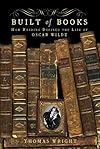
How very much I loved the idea of this book! I can't imagine why no one ever thought to analyze the content of Wilde's character through the lens of his library before. I think it's brilliant!
I like the author's delicate, clear sentences, leavened with a good dose of irony, in the best Wildean tradition. He is forced to rely on supposition and probability in many places in this book...how a volume came into the subject's library, what the effect of a particular book probably was on Wilde show more absent concrete evidence...and that means I don't judge the book by the same standard I would an academic treatise. It's a very interesting popular biography of a very interesting popular figure told in a novel and instructive way.
And having read it, I now dislike Oscar Wilde the man. He sounds like a perfect pill of a human being, contrary and crabby, sure of himself to the point of obnoxiousness in matters intellectual and aesthetic. He's one of those infuriating people who's Always Right, would never, ever admit to error or misunderstanding or ignorance.
Yuck.
Then came the hard labor years, which were *entirely* his own fault...the Marquess of Queensbury didn't tell a single lie about him, he knew it, and he arrogantly assumed his fame would protect him...and he seemed to get a little less cocksure.
Then he died.
It was a little like having the irrefutable evidence that Louis-Ferdinand Celine was a collaborator and an anti-Semite thrust upon me...I still like Death on the Installment Plan, but its luster is tarnished by the knowledge the author was a rotten, unworthy human being. Such is life, I suppose. Illusions lost later in life hurt no less than those lost early, it would seem. The Picture of Dorian Gray is just a wee bit besmirched for me now.
Read at your own risk, Wilde fans, and those who aren't really should give this book wide berth as it will bore them comatose. show less
I like the author's delicate, clear sentences, leavened with a good dose of irony, in the best Wildean tradition. He is forced to rely on supposition and probability in many places in this book...how a volume came into the subject's library, what the effect of a particular book probably was on Wilde show more absent concrete evidence...and that means I don't judge the book by the same standard I would an academic treatise. It's a very interesting popular biography of a very interesting popular figure told in a novel and instructive way.
And having read it, I now dislike Oscar Wilde the man. He sounds like a perfect pill of a human being, contrary and crabby, sure of himself to the point of obnoxiousness in matters intellectual and aesthetic. He's one of those infuriating people who's Always Right, would never, ever admit to error or misunderstanding or ignorance.
Yuck.
Then came the hard labor years, which were *entirely* his own fault...the Marquess of Queensbury didn't tell a single lie about him, he knew it, and he arrogantly assumed his fame would protect him...and he seemed to get a little less cocksure.
Then he died.
It was a little like having the irrefutable evidence that Louis-Ferdinand Celine was a collaborator and an anti-Semite thrust upon me...I still like Death on the Installment Plan, but its luster is tarnished by the knowledge the author was a rotten, unworthy human being. Such is life, I suppose. Illusions lost later in life hurt no less than those lost early, it would seem. The Picture of Dorian Gray is just a wee bit besmirched for me now.
Read at your own risk, Wilde fans, and those who aren't really should give this book wide berth as it will bore them comatose. show less
There is no better way to get to know an author than by reading a biography of books. Thomas Wright's Built of Books presents Oscar Wilde's life in a series of reading lists that illuminate his personal and professional lives. Unlike other biographies, which focus on personal relationships (and, of course, Wilde's trial), Wright's treatment of the famous aesthete treats the author's internal life, and really brings to life the thoughts and ideas of the infamous poet/playwright. Thomas show more Wright's Oscar Wilde is a complete person, revealed in all his intellectual glory. I would highly recommend this biography to anyone with even a passing interest in Oscar Wilde. show less
This is a biography of Wilde but with the differences of exploring Wilde through the books he owned, his library and the books he read through his life . it is an original, clever and very readable . The author's enthusiasm if not passion for Wilde and his search for all associations with Wilde makes for inspired research and writing . The story of the sale of Wilde's library in 1895 by auction to satisfy his creditors is sad but then his life story was poignant to the point of tragedy, show more because he was witty, achieved literary , social and theatrical fame and then fell through moral depravity and self deception. He lost his reputation, his place in society, destroyed his wife and harmed his children through his lies, egomania and obsessions. He paid the ultimate price of a prison sentence . Yet Wilde went on to write one of the most important pieces of prison literature, De Profundis . He was a brilliant , streaking comet and died impoverished, heartbroken and far too soon. The loss of his library was a bitter personal blow and he was inconsolable. It is interesting to read about the books that came back to Wilde in the remaining five years of his life . He was 46 when he died in Paris. This literary biography serves Wilde fans well and is a tribute to Wilde. The subtext is a guided reading list on what the educated English author of the period 1870 to 1900 would and should have read . The appendices, notes bibliography, afterword, and indexes add ballast. My copy is a hard backed edition and is beautifully illustrated by John Vassos and the photos have been traced in Wilde family archives and are a bonus. Well done, Mr Wright. show less
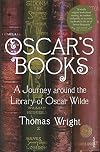
Thomas Wright’s “The books of Oscar”, is the ultimate LibraryThing fantasy.
Applying the adage " Tell me what you read and I tell you who you are" on Oscar Wilde, the most bookish guy there ever was, Wright succeeds in painting a surprisingly accurate and entertaining portrait of the XIXe century writer.
I was looking for a "lighter" introduction to Oscar Wilde before tackling Ellmann and Wilde’s oeuvre and this book was exactly what I needed.
Immediately after that awful court case show more that send Oscar Wilde to prison, his belongings including his superb library, were sold off to a frenzied crowd. The Library that took 30 years to complete was effectively destroyed in a single afternoon on the 24th April 1895. Thomas Wright sets himself the task to reconstitute the library. Not only the titles, but also searching the exact editions Wilde owned. Wright tries something altogether new:
" ...in the back of my mind, the idea of writing a book about Oscar Wilde the reader slowly took shape. It would be an entirely new kind of literary biography - an attempt to tell the story of an author's life and to illuminate it exclusively through the books that he had read."
The library of Oscar Wilde turns out to be an accurate mirror of his life, for books were everything to him. Not only was Oscar reading one book after another, (even speed-reading), which he then reviewed and annotated, but he also collected splendid editions, fondled them, designed their covers. He sniffed the pages, spoke like a book, offered and received tomes, dedicated books, even destroyed them, breaking their spines or eating the corners of the pages.
In the book, we follow his reading and the build –up of his impressive collection. Starting with the Irish folktales, his mother and father read to him as a child, and later switching to the Classics, which he, as a precocious and awesomely intelligent student, studied and learned by heart. Following that, there are the readings of his brilliant time at Trinity College and Oxford. Then comes, while he lived in London, his discovery of Flaubert and the French decadents, His love-hate relationship with the contemporary British writers and poets. Oscar becomes the tongue in cheek poseur shocking the Victorian bourgeois, fascinating and baffling to the non-conformist. We are introduced to the forbidden books that announced his downfall and the meagre choices of the prison libraries. The books his friends were able to pass to him to save his sanity and finally the books like Flaubert’s Temptation, which consoled him in his last years.
The scenes in prison, where he ruins his eyes by reading in the dim light or his breaking down when a friend smuggles him a book are heart wrenching, as is the story of Wilde himself, barely believable today, of how his life was so utterly destroyed because he was different and because in the end he messed with the wrong bully.
I loved it. Highly recommended! show less
Applying the adage " Tell me what you read and I tell you who you are" on Oscar Wilde, the most bookish guy there ever was, Wright succeeds in painting a surprisingly accurate and entertaining portrait of the XIXe century writer.
I was looking for a "lighter" introduction to Oscar Wilde before tackling Ellmann and Wilde’s oeuvre and this book was exactly what I needed.
Immediately after that awful court case show more that send Oscar Wilde to prison, his belongings including his superb library, were sold off to a frenzied crowd. The Library that took 30 years to complete was effectively destroyed in a single afternoon on the 24th April 1895. Thomas Wright sets himself the task to reconstitute the library. Not only the titles, but also searching the exact editions Wilde owned. Wright tries something altogether new:
" ...in the back of my mind, the idea of writing a book about Oscar Wilde the reader slowly took shape. It would be an entirely new kind of literary biography - an attempt to tell the story of an author's life and to illuminate it exclusively through the books that he had read."
The library of Oscar Wilde turns out to be an accurate mirror of his life, for books were everything to him. Not only was Oscar reading one book after another, (even speed-reading), which he then reviewed and annotated, but he also collected splendid editions, fondled them, designed their covers. He sniffed the pages, spoke like a book, offered and received tomes, dedicated books, even destroyed them, breaking their spines or eating the corners of the pages.
In the book, we follow his reading and the build –up of his impressive collection. Starting with the Irish folktales, his mother and father read to him as a child, and later switching to the Classics, which he, as a precocious and awesomely intelligent student, studied and learned by heart. Following that, there are the readings of his brilliant time at Trinity College and Oxford. Then comes, while he lived in London, his discovery of Flaubert and the French decadents, His love-hate relationship with the contemporary British writers and poets. Oscar becomes the tongue in cheek poseur shocking the Victorian bourgeois, fascinating and baffling to the non-conformist. We are introduced to the forbidden books that announced his downfall and the meagre choices of the prison libraries. The books his friends were able to pass to him to save his sanity and finally the books like Flaubert’s Temptation, which consoled him in his last years.
The scenes in prison, where he ruins his eyes by reading in the dim light or his breaking down when a friend smuggles him a book are heart wrenching, as is the story of Wilde himself, barely believable today, of how his life was so utterly destroyed because he was different and because in the end he messed with the wrong bully.
I loved it. Highly recommended! show less
Lists
Awards


You May Also Like


Associated Authors
Statistics
- Works
- 3
- Also by
- 1
- Members
- 445
- Popularity
- #55,081
- Rating
- 4.0
- Reviews
- 11
- ISBNs
- 161
- Languages
- 3