
James Hall (5) (1963–)
Author of The Self-Portrait: A Cultural History
For other authors named James Hall, see the disambiguation page.
About the Author
Image credit: Art Historian James Hall
Works by James Hall
Tagged
Common Knowledge
- Canonical name
- Hall, James
- Legal name
- Hall, James Edward Stuart
- Birthdate
- 1963-09-04
- Gender
- male
- Occupations
- art critic
historian
lecturer
broadcaster
journalist - Organizations
- University of Southampton
Guardian
The Sunday Correspondent - Agent
- Caroline Dawnay (United Agents)
- Nationality
- UK
- Associated Place (for map)
- UK
Members
Reviews
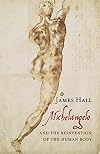
This book is far more than just a survey of the superlative male torso in Michaelangelo's art: it is a thorough examination of the moral and historical background which makes it plausible to see these extraordinary works as an expression also of a deeply Augustinian sense of the flawedness of human flesh, particularly at its most majestic. James Hall shows how all of Michelangelo's work is about engagement with crisis: 'His art specialises in the grandly catastrophic' in which we are all show more reflected as victims who collude in our own catastrophe. James Hall compares this with the kind of focuses seen most obviously in our own time in the work of Francis Bacon. This is all extremely interesting - and far more interesting than some of the homosexual subtext which could so easily have predominated in a study of this kind - which is not to say that this book evades an interpretation of the Sistine Chapel ceiling, for example, as a deliberate articulation of a 'paradise' prior to that of Genesis which is marked by homosociality, deliberately subverting Catholic doctrine and morals. The book concludes by asking why, in spite of the way in which Michelangelo's work makes almost everything else look 'small and tame and worldly', his most meaningful depictions of the human body are both solitary, strained, and in pain: paradise of any kind eludes him in the end. Whether this presupposition of guilt and shame (which is itself deeply Augustinian) is, in fact, persuasive is something which some of us may wish to doubt. show less
I knew I was in trouble already when in the introduction Hall claims that for Michelangelo "The male figure... was always in some sense a surrogate for the ultimate human being, the dying and dead figure of Christ." That "always" was too categorical for my taste, but I forged ahead. But when I got to his preposterous interpretation of the Doni Tondo, in which Hall claims the Virgin Mary is a stand-in for St. Christopher because she is looking at the Christ child over her shoulder, and then show more goes on to claim that the mysterious male figures in the background are "sinners waiting for purification in, and passage across it," referring to the river that St. Christopher crosses, but which is not in the Tondo, and which are not even attributes of St. Christopher, I simply gave up.
For a better academic treatment of Michelangelo I highly recommend Marcia Hall's (no relation, i assume) "Michelangelo's 'Last Judgment." show less
For a better academic treatment of Michelangelo I highly recommend Marcia Hall's (no relation, i assume) "Michelangelo's 'Last Judgment." show less
You May Also Like


Associated Authors
Statistics
- Works
- 8
- Members
- 312
- Popularity
- #75,594
- Rating
- 3.7
- Reviews
- 2
- ISBNs
- 174
- Languages
- 11