
Paul Kelly (2) (1955–)
Author of How To Make Gravy: A to Z, A Mongrel Memoir
For other authors named Paul Kelly, see the disambiguation page.
About the Author
Paul Kelly is the author of Triumph and Demise which won a John Button Prize for policy and politics in 2015. Kelly's book was selected for the $20,000 prize ahead of two other shortlisted titles: Power Failure (Philip Chubb, Black Inc.) and The Wife Drought (Annabel Crabb, Ebury). Paul kelly will show more be featured at the inaugural Kampot Writers & Readers Festival in Cambodia 2015. (Bowker Author Biography) show less
Image credit: At the Chill Island Festival 2007 on Phillip Island. Credit: Wikipedia author Andrew Braithwaite.
Works by Paul Kelly
Words and Music 3 copies
Death's Dateless Night 3 copies
Smoke 2 copies
....nothing but a dream 1 copy
...Nothing But a Dream 1 copy
Tagged
Common Knowledge
- Birthdate
- 1955-01-13
- Gender
- male
- Relationships
- Paul Kelly and the Messengers (band)
Paul Kelly and the Coloured Girls (band) - Nationality
- Australia
- Associated Place (for map)
- Australia
Members
Reviews
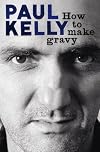
How to Make Gravy is a memoir by Paul Kelly, sometimes called Australia’s greatest living songwriter, a people’s poet, or our master songsmith.
But it’s not really. This is a book about Australia: the Australia I grew up in, and now live in. Really, this is a book about me.
If you don’t like reading about grown men getting emotional, then don’t read any further. But then you probably won’t like Kelly’s book either. Or his songs.
First, some background about the book. In 2004, show more Kelly had been invited to play some shows in Melbourne in the Spiegeltent, a construction of wood, canvas and mirrors that holds about 300 people.
He came up with the idea of singing 100 of his songs over four nights, in alphabetical order, 25 songs each night. He searched his catalogue of 300+ songs and chose the ones that he thought would sustain both his own and the audience’s interest the best.
He added some storytelling about and around the songs, invited guests to join him on stage and the shows were a great success. He went on to perform them in different cities and countries, performances were recorded to form a CD collection and he thought about a book to go with them. This is the result.
It’s a marvellous device that sets Kelly off on seemingly unconnected anecdotes about his life and work. The end result is surprisingly cohesive and comprehensive, in just the way many of his best songs are.
Paul Kelly was born in Adelaide in 1955 (four years before me) and gave his first public performance in 1974 at a folk club in Salamanca Place, Hobart. I grew up in Hobart and gave my first public performances busking at Salamanca Place, four years after Kelly was there. I went on to play folk at the same St Ives pub where it turns out Kelly had been listening to jazz a few years before. The importance of this for me is not that I did what Kelly did – without knowing until now that he had done that – but that we both lived and started performing at a time and place where that was not only feasible, but a natural thing to do.
If you could play a guitar and hold a tune, well of course you’d get up and perform. Of course you’d write your own songs, and naturally you’d play them in public.
Throughout How to Make Gravy, Kelly emphasises that his career has never been based on a master plan. He doesn’t even call what he does a craft, because that term implies you know what you’re doing, and he’s never approached songwriting that way. His songs are not built as careful structures, they’re stories based on scraps of overheard conversations, dim memories and made-up characters that he can’t shake until he gets them into a song.
This is very familiar territory for me. That he’s a writer of fiction set to music has sometimes led to misunderstandings, something with which I can also identify.
In fact, I think a significant number of people our age who now lead steady, settled lives making a decent living and raising families around Australia came through a period where they followed paths they could never have guessed would appear. The ’60s and ’70s were times you could chance your arm without a safety net and see what happened. Not everyone came through unscathed, and some not at all, but as I sit here in my nice house south of Sydney and read of Kelly’s experiences that ended up providing him with various wives, children, addictions, awards, collaborators, friends and the inspiration for a catalogue of sometimes astonishingly beautiful songs, it puts into context for me how lucky I have been and am now.
One thing that How to Make Gravy makes clear is that Kelly is no dunce, that’s for sure. Plenty of people start reading Whitman, Sartre and Nietzsche to gain some understanding of the world, but not many move on to working with people like Archie Roach and Mandawuy Yunupingu, or visit asylum seekers locked up in detention camps to gain some understanding of the country. Lots of people listen to the Beatles, the Beach Boys and Frank Sinatra but not many come away with a deep understanding of lyrical structure, melodic variation and performance skills the way Kelly has.
And, of course, he can write. Not just songs, but prose: dialogue, description, mood are particular strengths. I had to read some sections out loud to my wife because they were so funny, or so sad, or so wise and each time I realised how well written this book is. I reckon I could read the whole thing out loud and hold an audience (why yes, Mr Kelly, I am available). I also found myself choking up when I read some of it out loud. And sometimes when I just read to myself.
A highlight for me is the role of Dan Kelly in this book. Dan is his nephew and an established singer, songwriter and guitarist in his own right. He’s also a key member of Paul’s band, support network and family. There’s no sense of “wacky families” in this, nor of “I made him what he is”. Having seen Dan perform with Paul’s band a few years ago, and then more recently solo at a Wollongong wine bar, it’s obvious that he is a precocious talent in his own right. Paul is clearly glad that Dan is an equal, a colleague and good friend. You can see how they work together on this clip of the song “How to Make Gravy“.
Maybe all of this just comes down to, I get Paul Kelly, and he gets me. He is of my time, of my place, of my generation. And his book is great. show less
But it’s not really. This is a book about Australia: the Australia I grew up in, and now live in. Really, this is a book about me.
If you don’t like reading about grown men getting emotional, then don’t read any further. But then you probably won’t like Kelly’s book either. Or his songs.
First, some background about the book. In 2004, show more Kelly had been invited to play some shows in Melbourne in the Spiegeltent, a construction of wood, canvas and mirrors that holds about 300 people.
He came up with the idea of singing 100 of his songs over four nights, in alphabetical order, 25 songs each night. He searched his catalogue of 300+ songs and chose the ones that he thought would sustain both his own and the audience’s interest the best.
He added some storytelling about and around the songs, invited guests to join him on stage and the shows were a great success. He went on to perform them in different cities and countries, performances were recorded to form a CD collection and he thought about a book to go with them. This is the result.
It’s a marvellous device that sets Kelly off on seemingly unconnected anecdotes about his life and work. The end result is surprisingly cohesive and comprehensive, in just the way many of his best songs are.
Paul Kelly was born in Adelaide in 1955 (four years before me) and gave his first public performance in 1974 at a folk club in Salamanca Place, Hobart. I grew up in Hobart and gave my first public performances busking at Salamanca Place, four years after Kelly was there. I went on to play folk at the same St Ives pub where it turns out Kelly had been listening to jazz a few years before. The importance of this for me is not that I did what Kelly did – without knowing until now that he had done that – but that we both lived and started performing at a time and place where that was not only feasible, but a natural thing to do.
If you could play a guitar and hold a tune, well of course you’d get up and perform. Of course you’d write your own songs, and naturally you’d play them in public.
Throughout How to Make Gravy, Kelly emphasises that his career has never been based on a master plan. He doesn’t even call what he does a craft, because that term implies you know what you’re doing, and he’s never approached songwriting that way. His songs are not built as careful structures, they’re stories based on scraps of overheard conversations, dim memories and made-up characters that he can’t shake until he gets them into a song.
This is very familiar territory for me. That he’s a writer of fiction set to music has sometimes led to misunderstandings, something with which I can also identify.
In fact, I think a significant number of people our age who now lead steady, settled lives making a decent living and raising families around Australia came through a period where they followed paths they could never have guessed would appear. The ’60s and ’70s were times you could chance your arm without a safety net and see what happened. Not everyone came through unscathed, and some not at all, but as I sit here in my nice house south of Sydney and read of Kelly’s experiences that ended up providing him with various wives, children, addictions, awards, collaborators, friends and the inspiration for a catalogue of sometimes astonishingly beautiful songs, it puts into context for me how lucky I have been and am now.
One thing that How to Make Gravy makes clear is that Kelly is no dunce, that’s for sure. Plenty of people start reading Whitman, Sartre and Nietzsche to gain some understanding of the world, but not many move on to working with people like Archie Roach and Mandawuy Yunupingu, or visit asylum seekers locked up in detention camps to gain some understanding of the country. Lots of people listen to the Beatles, the Beach Boys and Frank Sinatra but not many come away with a deep understanding of lyrical structure, melodic variation and performance skills the way Kelly has.
And, of course, he can write. Not just songs, but prose: dialogue, description, mood are particular strengths. I had to read some sections out loud to my wife because they were so funny, or so sad, or so wise and each time I realised how well written this book is. I reckon I could read the whole thing out loud and hold an audience (why yes, Mr Kelly, I am available). I also found myself choking up when I read some of it out loud. And sometimes when I just read to myself.
A highlight for me is the role of Dan Kelly in this book. Dan is his nephew and an established singer, songwriter and guitarist in his own right. He’s also a key member of Paul’s band, support network and family. There’s no sense of “wacky families” in this, nor of “I made him what he is”. Having seen Dan perform with Paul’s band a few years ago, and then more recently solo at a Wollongong wine bar, it’s obvious that he is a precocious talent in his own right. Paul is clearly glad that Dan is an equal, a colleague and good friend. You can see how they work together on this clip of the song “How to Make Gravy“.
Maybe all of this just comes down to, I get Paul Kelly, and he gets me. He is of my time, of my place, of my generation. And his book is great. show less
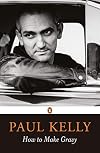
Very enjoyable A-Z of memories loosely linked to Kelly's back catalogue of songs, it is not really an autobiography as a collection of anecdotes and inspirations. Love the man and his music, and he writes well with a light touch. But it also feels pretty slight, he sidesteps any controversies or difficulties. Even dabbling in heroin has few repercussions, and relationships are only occasionally eluded to. Perhaps he is a lucky bastard who has jilted women and surfed through life with his show more guitar and poetry. I suspect others would have another tale to tell. Still, fair enough, he's a good companion. show less

Paul Kelly writes beautifully. You should read this book just because of this.
It helps if you know some of his songs, but I'd suggest it'd still be a fabulous read even if you didn't.
There are the lyrics to 100 songs. After each song there is some writing. This may or may not be related to the song. Often it is, it is just an obscure connection at the beginning that becomes more obvious.
It is not a chronological nor complete autobiography. This is absolutely not an issue. In the end you show more build up a picture of his life as the pieces of the mosaic are laid down. He writes mostly about his influences, his interests, the people in his life, how he writes his songs, what it's like to be on tour, what it's like to be in a band, cricket, football (Australian Rules).
Highly recommended. show less
It helps if you know some of his songs, but I'd suggest it'd still be a fabulous read even if you didn't.
There are the lyrics to 100 songs. After each song there is some writing. This may or may not be related to the song. Often it is, it is just an obscure connection at the beginning that becomes more obvious.
It is not a chronological nor complete autobiography. This is absolutely not an issue. In the end you show more build up a picture of his life as the pieces of the mosaic are laid down. He writes mostly about his influences, his interests, the people in his life, how he writes his songs, what it's like to be on tour, what it's like to be in a band, cricket, football (Australian Rules).
Highly recommended. show less
This is a great book for people interested in the writing process, be it poetry. song or prose. Paul Kelly is an Australian singer/songwriter and Caron sent me this book a while back. I have noodled through it many times but decided to sit down and read it as a cover to cover.
If you know Paul Kelly songs and are looking for the answer to "what's this song about?" you won't get those answers here. This is more about, here is how I came up with the idea to write this song. It is also about the show more pebbles we put in our pockets as writers that we subsequently throw into a big wooden bowl when we get home, look at, pick up and ponder and polish until they become the final product.
It is refreshing to see that other artists have reams of paper, books of lists and time "wasted" pondering before the emergence of the final product. Many time people ask what I am working on, looking for an exact answer in the linear world. An answer that frequently I can't give and comes out in some mumbled half idea that sounds as if I am doing nothing.
A great example is an painting that is working its way to canvas. With each day, the idea becomes more clear but a brush hasn't touched my hand yet - the muse and the lightning strike work in mysterious way. Likewise, when writing, a hash of ideas, a conversation or turn of phrase heard here and there become the great work.
Paul Kelly does a great job explaining the inexplicable. show less
If you know Paul Kelly songs and are looking for the answer to "what's this song about?" you won't get those answers here. This is more about, here is how I came up with the idea to write this song. It is also about the show more pebbles we put in our pockets as writers that we subsequently throw into a big wooden bowl when we get home, look at, pick up and ponder and polish until they become the final product.
It is refreshing to see that other artists have reams of paper, books of lists and time "wasted" pondering before the emergence of the final product. Many time people ask what I am working on, looking for an exact answer in the linear world. An answer that frequently I can't give and comes out in some mumbled half idea that sounds as if I am doing nothing.
A great example is an painting that is working its way to canvas. With each day, the idea becomes more clear but a brush hasn't touched my hand yet - the muse and the lightning strike work in mysterious way. Likewise, when writing, a hash of ideas, a conversation or turn of phrase heard here and there become the great work.
Paul Kelly does a great job explaining the inexplicable. show less
Awards


You May Also Like


Statistics
- Works
- 32
- Members
- 309
- Popularity
- #76,231
- Rating
- 3.9
- Reviews
- 9
- ISBNs
- 254
- Languages
- 7
- Favorited
- 1