
David F. Noble (1)
Author of The Religion of Technology: The Divinity of Man and the Spirit of Invention
For other authors named David F. Noble, see the disambiguation page.
About the Author
David F. Noble has been a Professor of the History of Technology at MIT and Curator of Automation at the Smithsonian Institution. He is currently Professor of History at York University in Toronto. He was a co-founder of The National Coalition for Universities in the Public Interest
Works by David F. Noble
The Religion of Technology: The Divinity of Man and the Spirit of Invention (1997) 247 copies, 4 reviews
America by Design: Science, Technology, and the Rise of Corporate Capitalism (Galaxy Books) (1977) 159 copies, 2 reviews
A World Without Women: The Christian Clerical Culture of Western Science (1992) 124 copies, 1 review
Tagged
Common Knowledge
Members
Reviews
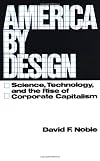
Well-written and well-defended argument regarding the industrial backbone of 20C USA.
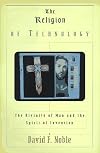
This is a well-researched and fascinating book on the history of technology and its connection to religious movements of western culture. Noble shows that religious orders fostered early technologies as part of their devotion, and that later scientists often considered their work to be either divinely inspired or an asperation to achieve divinitely through a god-like altering of the earth, which could only occur if the scientists were following God's will. These connections are not show more theoretical: Noble cites actual statements to this effect, that range in date from the millenarians of the 12th century to researchers in the Human Genome Project (who are quoted as saying that they are creating "Adam II"). Science becomes a way for men to become gods, to manipulate life, to be part of what one called "the eighth day of creation." And to do it without women.
It is interesting that few owners of this book have tagged it as being about women. Noble's final chapter is called "A Masculine Millenium" and provides his explanation of the exclusion of women from science and technology. Prior to the 20th century science was dominated by decidedly masculinist religious institutions as key promoters (from monks to Masons) of technological development. Later scientists reveal their bias, even referring to cloning as a way for men to create their successors directly, going back to the pre-Eve times of Eden. The trinity in these pages is God, Man, and Science. It's a great read; I can't recommend it enough. (You may also want to read Noble's earlier book, "World Without Women" on Christian culture and science.) show less
It is interesting that few owners of this book have tagged it as being about women. Noble's final chapter is called "A Masculine Millenium" and provides his explanation of the exclusion of women from science and technology. Prior to the 20th century science was dominated by decidedly masculinist religious institutions as key promoters (from monks to Masons) of technological development. Later scientists reveal their bias, even referring to cloning as a way for men to create their successors directly, going back to the pre-Eve times of Eden. The trinity in these pages is God, Man, and Science. It's a great read; I can't recommend it enough. (You may also want to read Noble's earlier book, "World Without Women" on Christian culture and science.) show less
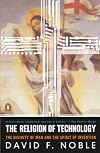
Interesting but not compelling. It doesn’t really address the question of why technology has made such startling advances in the West, but it does describe the religious ideology that many scientists use to subjectively describe the paths their work takes and its goals. Most decent scientists are fanatics as well as brilliant, so it’s not surprising that they would use religious metaphors. For example, astronauts saying they view earth as God does, and genetic scientists as playing God. show more So I finished and still was no closer to knowing if religion provided a framework for technology to evolve, or if scientists simply described what they were doing, and the uncharted territory they were entering, through religious imagery.
There is also too much discussion of alchemists, who were usually charlatans and conjurers rather than good scientists or devout Christians. Noble focuses on the West and Christianity, but the book’s most famous and easily recognizable quote was Oppenheimer’s remark on witnessing his first nuclear explosion, taken from the Bhagavad Ghita, “Now I am become death, destroyer of worlds.”
It does, in a round-about way, illustrate the evolution of religious imagery used to describe scientific and technological advances. From Bacon working to raise man from his fallen state and return him to his Adamic nature, to the utopian and millenarian objectives of baroque-era scientists who said they wanted to create the new Eden, to genetic scientists saying they are playing god.
And this is the point of the book, that science may be undertaking work that is no longer entirely human. Vide the artificial intelligence crowd who says that they want to create machines that are smarter and further down the evolutionary scale than man, but (at least one) says that he doesn’t care what happens to man because he won’t be around when it does. Man is good at puzzles but bad at playing God. We’re about to build Babel 2.
There’s some apologia at the end on why there aren’t enough women scientists that is as clear as mud. I think Mr. Noble wrote it to get laid.
One thing that did strike me as I read the book was that I really couldn't think of any religion that turned its back on technology, though many of them did suppress the discoveries technology led to. That was interesting to think about. show less
There is also too much discussion of alchemists, who were usually charlatans and conjurers rather than good scientists or devout Christians. Noble focuses on the West and Christianity, but the book’s most famous and easily recognizable quote was Oppenheimer’s remark on witnessing his first nuclear explosion, taken from the Bhagavad Ghita, “Now I am become death, destroyer of worlds.”
It does, in a round-about way, illustrate the evolution of religious imagery used to describe scientific and technological advances. From Bacon working to raise man from his fallen state and return him to his Adamic nature, to the utopian and millenarian objectives of baroque-era scientists who said they wanted to create the new Eden, to genetic scientists saying they are playing god.
And this is the point of the book, that science may be undertaking work that is no longer entirely human. Vide the artificial intelligence crowd who says that they want to create machines that are smarter and further down the evolutionary scale than man, but (at least one) says that he doesn’t care what happens to man because he won’t be around when it does. Man is good at puzzles but bad at playing God. We’re about to build Babel 2.
There’s some apologia at the end on why there aren’t enough women scientists that is as clear as mud. I think Mr. Noble wrote it to get laid.
One thing that did strike me as I read the book was that I really couldn't think of any religion that turned its back on technology, though many of them did suppress the discoveries technology led to. That was interesting to think about. show less

Noble begins by wondering why women have had so little role in science throughout our history, and traces this to the exclusively masculine religious orders that dominated research and scholarship until modern times. As science became a divinely inspired activity serving God and the church, it was obvious that only sanctioned members of the religious orders could take science in the direction that carried out God's plan. This eliminated the laity, but it also eliminated all women, even those show more actively involved in religion. If a woman did engage in scientific activity, such as the chemistry needed to produce medicines, that was branded witchcraft because it was seen as coming from outside of the holy scientific order.
That said, this is not a piece of feminist writing, but a fascinating study of how scientific development in the middle ages and beyond was directly connected to the religious scholarly institutions of the time. If you wonder why science developed as it did, this book has some of the answers and is a great read. show less
That said, this is not a piece of feminist writing, but a fascinating study of how scientific development in the middle ages and beyond was directly connected to the religious scholarly institutions of the time. If you wonder why science developed as it did, this book has some of the answers and is a great read. show less
Lists
Big Data (1)
You May Also Like


Statistics
- Works
- 10
- Members
- 777
- Popularity
- #32,751
- Rating
- 3.9
- Reviews
- 9
- ISBNs
- 60
- Languages
- 3