
Bruce Marshall (1) (1899–1987)
Author of The White Rabbit
For other authors named Bruce Marshall, see the disambiguation page.
About the Author
Image credit: Courtesy of the NYPL Digital Gallery (image use requires permission from the New York Public Library)
Series
Works by Bruce Marshall
Associated Works
Our Lady of Beauraing; Father Malachy's Miracle; Padre Ignacio; Quartet in Heaven (1959) — Contributor — 3 copies
Tagged
Common Knowledge
- Canonical name
- Marshall, Bruce
- Legal name
- Marshall, Lieutenant-Colonel Claude Cunningham Bruce
- Birthdate
- 1899-06-24
- Date of death
- 1987-06-18
- Gender
- male
- Education
- University of St Andrews
- Occupations
- army officer
novelist
accountant - Organizations
- British Army (WWI, WWII)
- Nationality
- Scotland
UK - Birthplace
- Edinburgh, Scotland, UK
- Places of residence
- Paris, France
Cote D’Azur, France - Place of death
- Biot, France
Members
Reviews
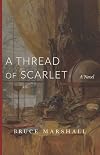
Bruce Marshall's 1959 novel, "A Thread of Scarlet" relates the fifty-year career of Donald Dumwhinnie Campbell, a Scottish convert to Roman Catholicism, like Marshall himself. We are introduced to Father Campbell upon the occasion of his ordination in 1907, which event was unattended by any of his relatives, none of whom make an appearance at any time in the story. Campbell finds favor with his Archbishop (of Inchkeith and the Pentlands) and progresses through the ranks to monsignor, bishop, show more archbishop and finally cardinal before rendering his soul to God at the end of 1957.
Father Campbell's journey often takes him well beyond his Scottish diocese and not just to Rome for his ad limina visits to the Pope every five years to report on the state of his diocese. He makes a couple of fundraising tours of the United States where he becomes acquainted with among others the Bishop of Minnehaha and his sister, a nun who, along with her sisters, supports herself by running a gas station in the Midwest. He has frequent recourse to visit France and Spain and to listen to the critiques of Abbe Bonpapa concerning the state of the church in France which has effectively been overcome by republican hostility to the clergy. In Spain he is appalled by the seeming indifference on the part of the hierarchy to the welfare of the poorest among the Spanish laity. That said, the same clergy is credited with courage and steadfastness to the faith when many of them suffer torture and martyrdom at the hands of the Spanish republican forces during the civil war.
We see Campbell in uniform in World War I as a chaplain to the Roman Catholics among the troops fighting for king and country. In the course of that conflict, he has occasion to attempt to console an ex-Catholic officer and to save him from a firing squad when he refuses to go over the top out of conscientious objection to murdering Germans who have done him no harm.
Campbell is plagued by a recurring cast of characters including a Canon who devotes his career to completing one book in attempt to reconcile theology with philosophy and science. He is not shy about showing off his knowledge or in being dismissive of his fellow clergy and the congregation. He regards the day-to-day tasks of the priesthood as a grind and frequently comes up with justifications for lightening his load.
But the larger issues with the clergy are put on display with their casual attitude in conducting the liturgy, their contempt for the laity, and their lack of collegiality towards their fellow priests. Their worldliness is highlighted by their conduct each time Father Campbell dines out with any number of them and then invariably gets stuck with the check.
The laity, generally speaking, don't come off any better than their betters. The are an ignorant, superstitious bunch for the most part and could be said to keep to their faith because they accept the prudential advice of Pascal whose wager recommended betting on the existence of God because it might be true and you don't want to come up short on the day of judgement.
All in all, "A Thread of Scarlet", whose title is based on a verse from the Song of Solomon is a thoroughly entertaining, if frequently sobering read. Your enjoyment of it may be slightly marred by an unfamiliarity with Scottish slang and popular culture. Also, if you have no Latin or French, or if you're a bit rusty, you will lose something in the (lack of) translation on numerous occasions. In addition, the novel is replete with references to philosophers, theologians, saints and historical personages whom you may need to Google, especially if you are a relatively younger reader.
In any event Marshall who was an accountant by trade, is not only a man of serious learning but an engaging and entertaining storyteller. You will receive both pleasure and profit from the story of Father Campbell. show less
Father Campbell's journey often takes him well beyond his Scottish diocese and not just to Rome for his ad limina visits to the Pope every five years to report on the state of his diocese. He makes a couple of fundraising tours of the United States where he becomes acquainted with among others the Bishop of Minnehaha and his sister, a nun who, along with her sisters, supports herself by running a gas station in the Midwest. He has frequent recourse to visit France and Spain and to listen to the critiques of Abbe Bonpapa concerning the state of the church in France which has effectively been overcome by republican hostility to the clergy. In Spain he is appalled by the seeming indifference on the part of the hierarchy to the welfare of the poorest among the Spanish laity. That said, the same clergy is credited with courage and steadfastness to the faith when many of them suffer torture and martyrdom at the hands of the Spanish republican forces during the civil war.
We see Campbell in uniform in World War I as a chaplain to the Roman Catholics among the troops fighting for king and country. In the course of that conflict, he has occasion to attempt to console an ex-Catholic officer and to save him from a firing squad when he refuses to go over the top out of conscientious objection to murdering Germans who have done him no harm.
Campbell is plagued by a recurring cast of characters including a Canon who devotes his career to completing one book in attempt to reconcile theology with philosophy and science. He is not shy about showing off his knowledge or in being dismissive of his fellow clergy and the congregation. He regards the day-to-day tasks of the priesthood as a grind and frequently comes up with justifications for lightening his load.
But the larger issues with the clergy are put on display with their casual attitude in conducting the liturgy, their contempt for the laity, and their lack of collegiality towards their fellow priests. Their worldliness is highlighted by their conduct each time Father Campbell dines out with any number of them and then invariably gets stuck with the check.
The laity, generally speaking, don't come off any better than their betters. The are an ignorant, superstitious bunch for the most part and could be said to keep to their faith because they accept the prudential advice of Pascal whose wager recommended betting on the existence of God because it might be true and you don't want to come up short on the day of judgement.
All in all, "A Thread of Scarlet", whose title is based on a verse from the Song of Solomon is a thoroughly entertaining, if frequently sobering read. Your enjoyment of it may be slightly marred by an unfamiliarity with Scottish slang and popular culture. Also, if you have no Latin or French, or if you're a bit rusty, you will lose something in the (lack of) translation on numerous occasions. In addition, the novel is replete with references to philosophers, theologians, saints and historical personages whom you may need to Google, especially if you are a relatively younger reader.
In any event Marshall who was an accountant by trade, is not only a man of serious learning but an engaging and entertaining storyteller. You will receive both pleasure and profit from the story of Father Campbell. show less

Vespers in Vienna takes place in 1946 during the four power post-war occupation of Austria. British Col. Nicobar has been assigned to duty in Vienna and is billeted in a convent occupied by the Daughters of the Holy Ghost, founded by Saint Walpurga of Graz and currently under the direction of Mother Auxilia. Nicobar's mission is ostensibly to assist in the rehabilitation of Austria by being on the lookout for and putting down subversive activities, the definition of which is left pretty much show more up in the air by his superior, Col. Omicron.
It transpires that the Daughters of the Holy Ghost are providing sanctuary for a Russian born ballerina, Maria Buhlen, who is a descendant from what were known as the Volga German population of Russia, the result of historic population migrations, and one of many of Stalin's unfavored ethnic groups. Nicobar is compelled by duty and a direct order from his superior to turn over Maria to his Soviet counterpart, Col. Piniev. The encounter at the convent among the two colonels and the Mother Superior is the taking off point for a recurring theme in the novel about the ethical claims and shortcomings of Christianity, Communism and Western Liberalism.
The recurring dialogues between Col. Nicobar aka "Hooky" and Mother Auxilia reflect the moral and intellectual crisis of the West in the 20th century. Nicobar firmly rejects the totalitarian solution posed by Communism but is unable to believe in the truth of the most formidable alternative, Christianity. He is acutely conscious of the shortcomings of bourgeois liberal democracy but can't see his way through to any solution more viable than an honest doubt.
Vespers in Vienna is in many ways a beautiful story with intellectual depth that belies much of the light hearted, sardonic banter of its characters. It will reward your time and effort. show less
It transpires that the Daughters of the Holy Ghost are providing sanctuary for a Russian born ballerina, Maria Buhlen, who is a descendant from what were known as the Volga German population of Russia, the result of historic population migrations, and one of many of Stalin's unfavored ethnic groups. Nicobar is compelled by duty and a direct order from his superior to turn over Maria to his Soviet counterpart, Col. Piniev. The encounter at the convent among the two colonels and the Mother Superior is the taking off point for a recurring theme in the novel about the ethical claims and shortcomings of Christianity, Communism and Western Liberalism.
The recurring dialogues between Col. Nicobar aka "Hooky" and Mother Auxilia reflect the moral and intellectual crisis of the West in the 20th century. Nicobar firmly rejects the totalitarian solution posed by Communism but is unable to believe in the truth of the most formidable alternative, Christianity. He is acutely conscious of the shortcomings of bourgeois liberal democracy but can't see his way through to any solution more viable than an honest doubt.
Vespers in Vienna is in many ways a beautiful story with intellectual depth that belies much of the light hearted, sardonic banter of its characters. It will reward your time and effort. show less
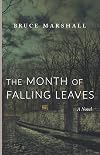
The Month of Falling Leaves by Bruce Marshall was originally published in 1963 at the height of the Cold War. It is a work of fiction ostensibly constructed on the theme of espionage behind the Iron Curtain, in this instance in Poland. The protagonist is an English professor of philosophy, Harold Hilliard, author of "The Dysteleological Surd", evidently a work which treats what C.S. Lewis called "The Problem of Pain" as proof that there is no benevolent creator who cares for the well-being show more of his creatures.
Hilliard, as one might expect, is a prophet not honored to any extent in his native land, but for reasons that remain obscure is something of a minor big hit in Poland. In fact, he is invited to lecture on the topic of his book to a Polish metaphysical society. Why such a society should have any cultural purchase in materialistic Communist Poland is not clear.
Hilliard's excursion becomes the jumping off point for a dark comedy of errors as a result of the mistaken identity or classic "wrong man" theme found in multiple Alfred Hitchcock films. The Polish state security organs, in the person of one Karminsksi, pursues Hilliard as a spy being inserted into Poland to take out or to deliver intelligence to an operative in a British run network inside Poland who goes by the code name Sardine. Hilliard's putative code name is Whale and there are other characters apparently known as Kipper and Caviare.
Hilliard's only real crime consists of trying to exchange Polish zlotys for dollars and pounds in a black market transaction to get a better deal than he could realize via the official exchange rate. Marshall, who was at one time an accountant by trade, endows Hilliard with the ability to perform a number of back of the envelope calculations that enable him to figure out the bottom line profit he will return home with after the expenses he incurred, and the commission owed his publisher.
Eventually, after a series of chance encounters with multiple characters all of which reinforce Karminski's belief in Hilliard's guilt, Hilliard and a female companion, Miss Zamorska, are taken into custody and Hilliard is confronted with a moral decision that may doom his fellow suspects to prison and torture but obtain release for himself and the freedom to escape back to Britain, the land of comfortable Western bourgeois materialistic consumption. In any case, a betrayal in some sense is the inevitable consequence of any choice he makes short of sacrificing himself.
Along the way Marshall introduces a colorful cast of characters, some ridiculous, some sinister, but all of them critical in some way to the eventual outcome of the plot.
Not so in between the lines, Marshall alludes to the conflict among the competing moral codes of Western liberalism, Communism and "Catholic Poland" as exemplified by Hilliard, Karminski and Zamorska. The Month of Falling Leaves is both a fast paced entertainment and a meditation on serious themes that earn it a highest recommendation. show less
Hilliard, as one might expect, is a prophet not honored to any extent in his native land, but for reasons that remain obscure is something of a minor big hit in Poland. In fact, he is invited to lecture on the topic of his book to a Polish metaphysical society. Why such a society should have any cultural purchase in materialistic Communist Poland is not clear.
Hilliard's excursion becomes the jumping off point for a dark comedy of errors as a result of the mistaken identity or classic "wrong man" theme found in multiple Alfred Hitchcock films. The Polish state security organs, in the person of one Karminsksi, pursues Hilliard as a spy being inserted into Poland to take out or to deliver intelligence to an operative in a British run network inside Poland who goes by the code name Sardine. Hilliard's putative code name is Whale and there are other characters apparently known as Kipper and Caviare.
Hilliard's only real crime consists of trying to exchange Polish zlotys for dollars and pounds in a black market transaction to get a better deal than he could realize via the official exchange rate. Marshall, who was at one time an accountant by trade, endows Hilliard with the ability to perform a number of back of the envelope calculations that enable him to figure out the bottom line profit he will return home with after the expenses he incurred, and the commission owed his publisher.
Eventually, after a series of chance encounters with multiple characters all of which reinforce Karminski's belief in Hilliard's guilt, Hilliard and a female companion, Miss Zamorska, are taken into custody and Hilliard is confronted with a moral decision that may doom his fellow suspects to prison and torture but obtain release for himself and the freedom to escape back to Britain, the land of comfortable Western bourgeois materialistic consumption. In any case, a betrayal in some sense is the inevitable consequence of any choice he makes short of sacrificing himself.
Along the way Marshall introduces a colorful cast of characters, some ridiculous, some sinister, but all of them critical in some way to the eventual outcome of the plot.
Not so in between the lines, Marshall alludes to the conflict among the competing moral codes of Western liberalism, Communism and "Catholic Poland" as exemplified by Hilliard, Karminski and Zamorska. The Month of Falling Leaves is both a fast paced entertainment and a meditation on serious themes that earn it a highest recommendation. show less

This is a kindly, sly comedy about a Catholic priest, Father Smith, in an unnamed Scottish industrial town. The tales takes us through 50 years of Father (and eventually Canon) Smith's life, from early in the 20th century into World War Two. It is a gentle tale about the foibles of man and the Catholic Church. Smith is portrayed as a devoutly religious man, sincere in his belief of Catholic philosophy and theology. Through Smith, we get lengthy descriptions of these beliefs and of their show more value as an ultimate source for good in this world and of their importance as a road to the next. As someone with an abiding suspicion of organized religion in general, I found it interesting to have these ideas presented in such a purely positive manner. Being Jewish myself, quite a bit of the philosophizing about Catholic dogma came as educational to me. It was nice to read that there are people who really do try to use these ideas as tools for good in the world. There are times when the good Father comes across, maybe, as a little too good to be true, but as a reader I was willing to forgive this from Marshall.
The most important attributes of this book are that is is, as I've said, kindly and therefore more than a little refreshing, and also that it's funny. As Marsall decribes Smith's journey through life, and his attempts to help his poor and often beset parishioners (the Catholics in Scotland are a minority and often, at least in this telling, a harassed minority), his observations often make us chuckle, such as thusly:
"Canon Smith hadn't been in the Carlton-Elite since five years previously, when he had taken the last sacraments to a dying Portuguese admiral, and he found the vestibule very worldly, with painted young women standing about with their overcoats thrown loosely over their shoulders and smoking with aggressive venom as though they were doing something both wicked and complicated, like committing adultery in Russian."
The book was published in 1945. Marshall was a converted Catholic who served in the British Army in both World Wars, although he lost a leg in the first. This gives weight to his description of Smith's time as a chaplain at the front during WW1. A particularly poignant and painful scene involves Father Smith assuring a scared young soldier that he was fighting for something valuable, and that after the war the world would be quite a different one indeed. Both Smith and the soldier live to learn how hollow this belief would become. This is an entertaining and in some ways enlightening book which I'm glad to have read. show less
The most important attributes of this book are that is is, as I've said, kindly and therefore more than a little refreshing, and also that it's funny. As Marsall decribes Smith's journey through life, and his attempts to help his poor and often beset parishioners (the Catholics in Scotland are a minority and often, at least in this telling, a harassed minority), his observations often make us chuckle, such as thusly:
"Canon Smith hadn't been in the Carlton-Elite since five years previously, when he had taken the last sacraments to a dying Portuguese admiral, and he found the vestibule very worldly, with painted young women standing about with their overcoats thrown loosely over their shoulders and smoking with aggressive venom as though they were doing something both wicked and complicated, like committing adultery in Russian."
The book was published in 1945. Marshall was a converted Catholic who served in the British Army in both World Wars, although he lost a leg in the first. This gives weight to his description of Smith's time as a chaplain at the front during WW1. A particularly poignant and painful scene involves Father Smith assuring a scared young soldier that he was fighting for something valuable, and that after the war the world would be quite a different one indeed. Both Smith and the soldier live to learn how hollow this belief would become. This is an entertaining and in some ways enlightening book which I'm glad to have read. show less
Lists
Awards


You May Also Like


Associated Authors
Statistics
- Works
- 33
- Also by
- 3
- Members
- 846
- Popularity
- #30,226
- Rating
- 3.8
- Reviews
- 28
- ISBNs
- 93
- Languages
- 6