
James Fox (1) (1945–)
Author of Life
For other authors named James Fox, see the disambiguation page.
About the Author
James Fox worked as a journalist in Africa, and later at the Sunday Times in London.
Works by James Fox
Tagged
Common Knowledge
- Canonical name
- Fox, James
- Birthdate
- 1945
- Gender
- male
- Occupations
- journalist
writer - Organizations
- The Sunday Times
- Relationships
- Freud, Bella (wife)
- Short biography
- In 2010, James Fox was the co-writer of Keith Richards' autobiography, Life.
- Nationality
- USA
- Birthplace
- Washington, D.C., USA
- Associated Place (for map)
- D.C., USA
Members
Reviews
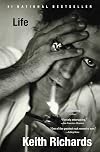
I choked up when Keith said goodbye on the 20th disk of [Life]. I sat in the car, sighing, for his youth, my youth - the exhilaration of the rock explosion in the 60's. Not so much nostalgic, I don't want to go back, but remembering how fine it was to put on a 45 or a new LP and dance. My mother permitted the Beatles, the Byrds, The Who .....on our High Fidelity player in the living room, but Cream and Rolling Stones were 'in-your-room-only'....... it tells you something. Keith will take you show more through an education in the evolution of 'dirty' rock and roll - will make you want to run out and educate yourself about the great Chicago blues players because those were his and Micks' guiding stars and mentors from across the pond. Whites were oblivious to this music, all but a few. Keith's mom was a big jazz and blues fan with a great ear, and her father was into music, so it was there in the family. Given a guitar and told to learn Malaguena, Keith did, until he got it down. He was a choir boy, an Eagle Scout from Dartford. He and Mick were at primary school together, saw each other again as teens on an Underground Platform, Mick with a blues record under his arm (problem with audio books is you can't look stuff up, so I'll come back with it later, Muddy Waters, maybe?) and started talking and one thing led to another and soon they were living in cheerful squalor (too poor for drugs, or even food or heat) and playing music all day every day together. Things happened, they had a sound, a look, it took. The next twenty years go by as Richards struggles to grow up in this insane environment, becomes a heroin addict, gets involved w/a brilliant but seriously dysfunctional woman, has children, loses one, travels, collects musicians and knowledge everywhere he goes. In the late 70's he gets of the stuff and his life smooths out considerably. He meets Patty Hansen, his wife of over thirty years now.... Richards is a passionate reader, LTers, I was charmed by his saying that he loves the [Master and Commander] series and that Aubrey and Maturin remind him of Mick and himself managing a huge enterprise like the Stones on tour for it's not unlike whipping a press-gang of raw navvies into shape..... very funny stuff. He's so smart, he's a bit scary - and so so so in love with music, so drawn - as opposed to driven -- he loves it and works the manic way he does out of pure love. Things happen, some of them so funny (the near-miss with a missile in the Atlas mountains is worth the whole book) some of them so seriously not funny - it's not easy to read about his oldest son's upbringing. In our fussy over-parenting era the idea of having your 7 year old putting away your needles and paraphernalia in your hotel room, the kid knowing that this had to be done or there would be trouble, would be considered abuse. Richards is candid and considered but also unapologetic: things simply were the way they were, the times were different and I know he's right. This same son is bringing up his own children attentively and carefully and Richards is graceful in his relief that Marlon made it. One thing though, Richards loves his children and they knew that -- on the road he would read to Marlon - he had the Tin Tin books in french, doesn't know french, so he'd make stuff up, and Marlon says that later when he read them for himself he realized that! One minute he might be carefully explaining what are the most important ingredients to making a good recording, the next he's telling you how to make a good shepherd's pie, but it all works. I'm raving, and I can't help myself. Forgive me. Bottom line, if you love the Stones, if you're interested in the era, if you're not easily shocked and like good story-telling...... go for it!
I should also add kudos to James Fox, who, I am guessing helped give the book its shape and much more besides at which I cannot guess. The voice is authentic Richards all the way.
***** I do recommend the audio book or at least a sampling of it. show less
I should also add kudos to James Fox, who, I am guessing helped give the book its shape and much more besides at which I cannot guess. The voice is authentic Richards all the way.
***** I do recommend the audio book or at least a sampling of it. show less
On the first page of his memoir Keith Richards describes the Rolling Stones as “mere minstrels,” which is true and also a massive understatement. Of course the story opens with a drug bust. This one is in Arkansas, but there are plenty others throughout the book (Toronto, England) as well as some near misses. Fortunately there is more music than drugs in the book. And presumably his life.
Richards first took an interest in music by listening to the radio with his mother, then Elvis show more flipped the switch for real and music became his obsession. The Stones started by teaching themselves to play Chicago blues from records, “unpaid promoters for Chicago blues.” Writing songs wasn’t the priority at first. “We were just playing American music to English people.” Their manager, Andrew Oldham, astutely made Mick and Keith start writing music of their own. We know how that went.
At some point in the book you get the impression that Keith is a brilliant musician to the exclusion of most everything else, except for drugs for a long time. You can see he truly cherishes music, musicians and collaboration with the like-minded. It seems the money and fame are good, but not the point of it all. show less
Richards first took an interest in music by listening to the radio with his mother, then Elvis show more flipped the switch for real and music became his obsession. The Stones started by teaching themselves to play Chicago blues from records, “unpaid promoters for Chicago blues.” Writing songs wasn’t the priority at first. “We were just playing American music to English people.” Their manager, Andrew Oldham, astutely made Mick and Keith start writing music of their own. We know how that went.
At some point in the book you get the impression that Keith is a brilliant musician to the exclusion of most everything else, except for drugs for a long time. You can see he truly cherishes music, musicians and collaboration with the like-minded. It seems the money and fame are good, but not the point of it all. show less
A surprisingly readable telling of Richards’ career as the guitarist for a famous rock ‘n' roll band. The debauchery is presented without sensationalism; he seems to have come through the hob-knobbing, hair-raising close calls, and heroin addiction with a measure of self-awareness—and a bit of self-centered satisfaction. By turns funny, touching, and dismaying, Richards’ memories are never uninteresting. He is particularly good at conveying the diligence and hard work behind the show more band’s early success, and the inside take on the development of key songs and the evolution of his guitar sound and playing is intriguing. Thankfully, a good chunk of the book is devoted to the never-equaled sequence from Beggars Banquet to Exile on Main Street, but the story, like the band, loses steam after the 1970s.
One night somewhere up north, it could have been York, it could have been anywhere, our strategy was to stay behind in the theatre for a couple of hours and have dinner there, just wait for everybody to go to bed and then leave. And I remember walking back out onto the stage after the show, and they’d cleaned up all the underwear and everything, and there was one old janitor, night watchman, and he said, ‘Very good show. Not a dry seat in the house.’
Arrogant Bastard Ale
Dundee Pale Bock Lager show less
One night somewhere up north, it could have been York, it could have been anywhere, our strategy was to stay behind in the theatre for a couple of hours and have dinner there, just wait for everybody to go to bed and then leave. And I remember walking back out onto the stage after the show, and they’d cleaned up all the underwear and everything, and there was one old janitor, night watchman, and he said, ‘Very good show. Not a dry seat in the house.’
Arrogant Bastard Ale
Dundee Pale Bock Lager show less
7 star book!
One of the best books I've read this year. Keith Richards was a clever kid, a talented artist, a choirboy who sang for the Queen and became an outstanding musician in one of the world's best bands. What is most on display in this book is his tremendous interest in music and musicians, not in rock, bands, money and fame - a lot of which he finds a bit of a pain but to be endured because that goes with the job. If you aren't fairly knowledgeable about music, blues in particular, show more there is going to be a lot of this book you are going to want to skip.
What is also interesting is his drug use. We never hear the ins and outs of being a tremendously successful heroin junkie. No, the spin is always on those poor street people who will steal their own mother's wedding ring for the next fix as they are quite beyond work. Richards enjoys his drugs a lot and tells us exactly what it feels like to be high on them and how it helped his work. His main supplier is his best friend and partner in crime, the very flamboyant Freddie Sessler, a holocaust survivor and (handily) owner of pharmacies so he could supply medical grade cocaine and heroin, who travelled along with the Stones. There were other dealers to ensure that when the band arrived at their tour date, the drugs would be ready and waiting, always a difficult time for a junkie.
The antics of the UK and especially US law enforcement officers to catch, entrap, imprison and get the Stones banned are hilarious as are the stories of Richards escaping them (most of the time). This is where money and being a big name helps! The story about Richards and Bobby Keys being got off a rap they had no defence against by the owner of Dole Pineapples is classic.
Richards also went cold turkey fairly often, not because he wanted to give up drugs but because he had to be clean and without the desperate need for drugs so he could enter various countries and tour with the band. These parts of the story are fairly harrowing to read, I really had no idea what cold turkey was really like but how it is very limited in time and can be endured. (Dr. Phil's Celebrity Rehab is more about Dr. Phil and the Celebrities than the rehab). When he actually decided to give up drugs, he made two attempts and that was it, gave them up thirty years ago.
His sex life was a great deal less interesting than, say, Mick Jagger's,as he was the sort of man who fell passionately in love, and then did whatever he could to keep the relationship alive. Not that groupies were totally unknown to him but that sort of sex wasn't anything he ever sought out. His first marriage to the actress Anita Pallenberg fell apart due to his wife's uncontrolled (as opposed to his controlled) use of drugs, and he has been married for decades to his second wife, the model Patty Hansen, who has never used them.
Essentially Keith is a man who questioned the system at every turn, but take away the surface and what you have left is a family man. His mother, a tremendously musical person herself, is in the story pretty constantly. For some years he raised his son, Marlon, alone (rather unconventionally taking him on tour), although he quite obviously cherishes all his children and has never, ever got over the loss of his baby son Tara, who died of cot death.
But this man, this clever, sensitive, man, this lover of books, this chronicler of arguably the best rock band ever, this musician's musician had that other side too,
the drug-taking, alcohol-sodden, irreverant, authority-bucking wild side, the man who took a lot of drugs and lived exactly as he pleased because he had the money to do so and continues to entertain us with his really great guitar licks.
Rock on Keith, rock on.
Although the book is ghost-written, it retains more of the voice of the author than it does of the ghost-writer which isn't always the case. But I don't recommend the audiobook. Johnny Depp, Keith's friend, reads well, but he can't sustain the right accent for long and it sounds somewhat fake with an American undertone. This might not annoy you, but it did me and I preferred the written word. show less
One of the best books I've read this year. Keith Richards was a clever kid, a talented artist, a choirboy who sang for the Queen and became an outstanding musician in one of the world's best bands. What is most on display in this book is his tremendous interest in music and musicians, not in rock, bands, money and fame - a lot of which he finds a bit of a pain but to be endured because that goes with the job. If you aren't fairly knowledgeable about music, blues in particular, show more there is going to be a lot of this book you are going to want to skip.
What is also interesting is his drug use. We never hear the ins and outs of being a tremendously successful heroin junkie. No, the spin is always on those poor street people who will steal their own mother's wedding ring for the next fix as they are quite beyond work. Richards enjoys his drugs a lot and tells us exactly what it feels like to be high on them and how it helped his work. His main supplier is his best friend and partner in crime, the very flamboyant Freddie Sessler, a holocaust survivor and (handily) owner of pharmacies so he could supply medical grade cocaine and heroin, who travelled along with the Stones. There were other dealers to ensure that when the band arrived at their tour date, the drugs would be ready and waiting, always a difficult time for a junkie.
The antics of the UK and especially US law enforcement officers to catch, entrap, imprison and get the Stones banned are hilarious as are the stories of Richards escaping them (most of the time). This is where money and being a big name helps! The story about Richards and Bobby Keys being got off a rap they had no defence against by the owner of Dole Pineapples is classic.
Richards also went cold turkey fairly often, not because he wanted to give up drugs but because he had to be clean and without the desperate need for drugs so he could enter various countries and tour with the band. These parts of the story are fairly harrowing to read, I really had no idea what cold turkey was really like but how it is very limited in time and can be endured. (Dr. Phil's Celebrity Rehab is more about Dr. Phil and the Celebrities than the rehab). When he actually decided to give up drugs, he made two attempts and that was it, gave them up thirty years ago.
His sex life was a great deal less interesting than, say, Mick Jagger's,as he was the sort of man who fell passionately in love, and then did whatever he could to keep the relationship alive. Not that groupies were totally unknown to him but that sort of sex wasn't anything he ever sought out. His first marriage to the actress Anita Pallenberg fell apart due to his wife's uncontrolled (as opposed to his controlled) use of drugs, and he has been married for decades to his second wife, the model Patty Hansen, who has never used them.
Essentially Keith is a man who questioned the system at every turn, but take away the surface and what you have left is a family man. His mother, a tremendously musical person herself, is in the story pretty constantly. For some years he raised his son, Marlon, alone (rather unconventionally taking him on tour), although he quite obviously cherishes all his children and has never, ever got over the loss of his baby son Tara, who died of cot death.
But this man, this clever, sensitive, man, this lover of books, this chronicler of arguably the best rock band ever, this musician's musician had that other side too,
the drug-taking, alcohol-sodden, irreverant, authority-bucking wild side, the man who took a lot of drugs and lived exactly as he pleased because he had the money to do so and continues to entertain us with his really great guitar licks.
Rock on Keith, rock on.
Although the book is ghost-written, it retains more of the voice of the author than it does of the ghost-writer which isn't always the case. But I don't recommend the audiobook. Johnny Depp, Keith's friend, reads well, but he can't sustain the right accent for long and it sounds somewhat fake with an American undertone. This might not annoy you, but it did me and I preferred the written word. show less
Lists
Awards


You May Also Like


Associated Authors
Statistics
- Works
- 5
- Members
- 4,408
- Popularity
- #5,682
- Rating
- 3.8
- Reviews
- 154
- ISBNs
- 118
- Languages
- 16