
Anne de Courcy
Author of The Fishing Fleet: Husband-Hunting in the Raj
About the Author
Anne de Courcy is an English biographer and journalist. Her title's include: Kithcens, Making Room at the Top, Snowdon: The Biography, The Fishing Fleet: Husband Hunting in the Raj, and The Husband Hunters: Social Climbing in London and New York. (Bowker Author Biography)
Image credit: Daily Mail
Works by Anne de Courcy
The Husband Hunters: American Heiresses Who Married into the British Aristocracy (2017) 305 copies, 8 reviews
Chanel's Riviera: Glamour, Decadence, and Survival in Peace and War, 1930-1944 (2019) 138 copies, 2 reviews
Five Love Affairs and a Friendship: The Paris Life of Nancy Cunard, Icon of the Jazz Age (2022) 49 copies, 1 review
Tagged
Common Knowledge
- Canonical name
- de Courcy, Anne
- Birthdate
- 1927-12
- Gender
- female
- Occupations
- writer
journalist
author - Organizations
- London Evening News (Women's Editor)
Evening Standard (feature writer)
Daily Mail
Biographers' Club - Relationships
- Hurst, Christopher (companion)
- Short biography
- Anne de Courcy is a well-known writer and journalist. In the 1970s she was the women's editor on the London Evening News and in the 1980s she was a regular feature writer for the Evening Standard. In 1992 she joined the Daily Mail, where she has written interviews, historical features and book reviews as well as edited a page on readers' dilemmas. She has written eight books including The English in Love, 1939: The Last Season, Circe: The Life of Edith, Marchioness of Londonderry and a biography of Diana Mosley that will appear after the subject's lifetime. She lives in London.
- Nationality
- UK
- Places of residence
- London, England, UK
Barnsley, Gloucestershire, UK - Associated Place (for map)
- UK
Members
Reviews
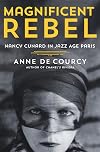
The Publisher Says: Anne de Courcy, the author of Husband Hunters and Chanel's Riviera, examines the controversial life of legendary beauty, writer and rich girl Nancy Cunard during her thirteen years in Jazz-Age Paris.
Paris in the 1920s was bursting with talent in the worlds of art, design and literature. The city was at the forefront of everything new and exciting; there was no censorship; life and love were there for the taking. At its center was the gorgeous, seductive English socialite show more Nancy Cunard, scion of the famous shipping line. Her lovers were legion, but this book focuses on five of the most significant and a lifelong friendship.
Her affairs with acclaimed writers Ezra Pound, Aldous Huxley, Michael Arlen and Louis Aragon were passionate and tempestuous, as was her romance with black jazz pianist Henry Crowder. Her friendship with the famous Irish novelist George Moore, her mother’s lover and a man falsely rumored to be Nancy’s father, was the longest-lasting of her life. Cunard’s early years were ones of great wealth but also emotional deprivation. Her mother Lady Cunard, the American heiress Maud Alice Burke (who later changed her name to Emerald) became a reigning London hostess; Nancy, from an early age, was given to promiscuity and heavy drinking and preferred a life in the arts to one in the social sphere into which she had been born. Highly intelligent, a gifted poet and widely read, she founded a small press that published Samuel Beckett among others. A muse to many, she was also a courageous crusader against racism and fascism. She left Paris in 1933, at the end of its most glittering years and remained unafraid to live life on the edge until her death in 1965.
Magnificent Rebel is a nuanced portrait of a complex woman, set against the backdrop of the City of Light during one of its most important and fascinating decades.
I RECEIVED A DRC FROM THE PUBLISHER VIA NETGALLEY. THANK YOU.
My Review: How the hell do I rate and review this book? Author de Courcy writes very well, has clearly done research I have no reason to suspect contains careless errors (ie, I as a non-expert possess no knowledge that contradicts anything contained in here), and clearly understands the role of conflict and drama in non-fiction...yet I hated every minute of the read.
Let me explain.
Nancy Cunard knew everyone, went everywhere, did everything adventurous and fun one can dream up to do when there is a giant pot of cash under one's checkbook. She was also a narcissist, and probably a sociopath. She had no moral compass I could discern from any anecdote herein. She was "mad, bad, and dangerous to know," because she could and did turn on people who had given her no cause to dislike them.
And men flocked to her orbit! They wanted sex, of course, but quite a lot of them fell for her! All the mor amazing because of her one reasonably good quality, by modern standards: she never bothered herself to dissemble. As the great majority of people prefer to be told pretty little lies by their lovers, I'd say this shows that the men who fell for her really, truly fell, to accept her honest and usually very scathing opinion of them and keep coming back. Her "honesty" (which, as presented herein, is really just brutal unnecessary unkindness) comes in for a helping of praise I don't feel is warranted. She did many laudable things in pursuit of social justice, which no one should try to minimize. Her addiction issues and mental illness, which the author is careful to make unmistakable for the reader, is obvious in hindsight from the present century's ludicrously low "heights" of enlightenment, do not excuse the abusive and manipulative behaviors she displayed. To Author de Courcy's credit, she makes no excuses for the troubling behviors but goes out of her way to explain how the Cunards were less a family than threesome of selfish, oblivious rich people. How else could Nancy have turned out?
So I liked the book. But I loathed the subject. I am not glad I know more about her than my previous awareness of her name and sterling literary taste and activities. I feel...soiled...by the knowledge that this awful person is a feminist icon to some because she was as free as the male abusers and rotters of her day. Yuck! "But they were worse!" hardly seems like a justification for someone to behave badly.
I've settled on four stars, all for the felicity of Author de Courcy's discourse, and none for this awful, abusive human being. show less
Paris in the 1920s was bursting with talent in the worlds of art, design and literature. The city was at the forefront of everything new and exciting; there was no censorship; life and love were there for the taking. At its center was the gorgeous, seductive English socialite show more Nancy Cunard, scion of the famous shipping line. Her lovers were legion, but this book focuses on five of the most significant and a lifelong friendship.
Her affairs with acclaimed writers Ezra Pound, Aldous Huxley, Michael Arlen and Louis Aragon were passionate and tempestuous, as was her romance with black jazz pianist Henry Crowder. Her friendship with the famous Irish novelist George Moore, her mother’s lover and a man falsely rumored to be Nancy’s father, was the longest-lasting of her life. Cunard’s early years were ones of great wealth but also emotional deprivation. Her mother Lady Cunard, the American heiress Maud Alice Burke (who later changed her name to Emerald) became a reigning London hostess; Nancy, from an early age, was given to promiscuity and heavy drinking and preferred a life in the arts to one in the social sphere into which she had been born. Highly intelligent, a gifted poet and widely read, she founded a small press that published Samuel Beckett among others. A muse to many, she was also a courageous crusader against racism and fascism. She left Paris in 1933, at the end of its most glittering years and remained unafraid to live life on the edge until her death in 1965.
Magnificent Rebel is a nuanced portrait of a complex woman, set against the backdrop of the City of Light during one of its most important and fascinating decades.
I RECEIVED A DRC FROM THE PUBLISHER VIA NETGALLEY. THANK YOU.
My Review: How the hell do I rate and review this book? Author de Courcy writes very well, has clearly done research I have no reason to suspect contains careless errors (ie, I as a non-expert possess no knowledge that contradicts anything contained in here), and clearly understands the role of conflict and drama in non-fiction...yet I hated every minute of the read.
Let me explain.
Nancy Cunard knew everyone, went everywhere, did everything adventurous and fun one can dream up to do when there is a giant pot of cash under one's checkbook. She was also a narcissist, and probably a sociopath. She had no moral compass I could discern from any anecdote herein. She was "mad, bad, and dangerous to know," because she could and did turn on people who had given her no cause to dislike them.
And men flocked to her orbit! They wanted sex, of course, but quite a lot of them fell for her! All the mor amazing because of her one reasonably good quality, by modern standards: she never bothered herself to dissemble. As the great majority of people prefer to be told pretty little lies by their lovers, I'd say this shows that the men who fell for her really, truly fell, to accept her honest and usually very scathing opinion of them and keep coming back. Her "honesty" (which, as presented herein, is really just brutal unnecessary unkindness) comes in for a helping of praise I don't feel is warranted. She did many laudable things in pursuit of social justice, which no one should try to minimize. Her addiction issues and mental illness, which the author is careful to make unmistakable for the reader, is obvious in hindsight from the present century's ludicrously low "heights" of enlightenment, do not excuse the abusive and manipulative behaviors she displayed. To Author de Courcy's credit, she makes no excuses for the troubling behviors but goes out of her way to explain how the Cunards were less a family than threesome of selfish, oblivious rich people. How else could Nancy have turned out?
So I liked the book. But I loathed the subject. I am not glad I know more about her than my previous awareness of her name and sterling literary taste and activities. I feel...soiled...by the knowledge that this awful person is a feminist icon to some because she was as free as the male abusers and rotters of her day. Yuck! "But they were worse!" hardly seems like a justification for someone to behave badly.
I've settled on four stars, all for the felicity of Author de Courcy's discourse, and none for this awful, abusive human being. show less

This was a fascinating exploration of an aspect of the British empire experience of which I had been unaware. I knew about all those ladies in their stifling finery, living lives of ridiculous luxury amidst unthinkable poverty in a brutal climate, but I had never wondered how they got there, or why they went. I had certainly never heard of them referred to collectively as the Fishing Fleet. The girls fell into two main categories: those who were returning to parents in India after being sent show more to England for their education; and those born in England who hadn't found a suitable match at home (probably because all the eligible men were off building the Empire) and were shipped out to stay with relatives or family friends in India. They were all looking for marriage because, well, there were no other options. And those sex-deprived Empire-building Englishmen with their stiff upper lips were all too willing to oblige.
The book focuses on the period of the Raj, especially from the 1890s to World War II, because that was the period for which the author was able to get plenty of first-hand accounts, from letters, diaries, and even some personal interviews. The author does a good job of providing the historical context for the Fishing Fleet in the Raj, going back to 1671, when the East India Company paid young women to sail out to India and marry. The book has chapters on the women and the men, the voyage, physical and social conditions in India, courtship and marriage, as well as chapters spotlighting the experiences of individual women. Many aspects of the women's lives in India were explored, and they even had menstrual cycles! (It bugs me that basic inconveniences of human bodily functions are so often ignored in books.) Everything is described through the first-hand accounts, and there are dozens of photographs.
My only complaint about the book was that it dragged a bit through the middle, with account after account of dances, clubs, protocol, lavish entertainments and unimaginably wealthy maharajahs. Towards the end I started to notice some repetitions.
I'd recommend this to anyone interested in British India. It amazes me how they built such an exaggerated version of English society in a place completely different from their home, and managed to keep themselves so separated from the enormous native population, while at the same time relying on native labour for everything. show less
The book focuses on the period of the Raj, especially from the 1890s to World War II, because that was the period for which the author was able to get plenty of first-hand accounts, from letters, diaries, and even some personal interviews. The author does a good job of providing the historical context for the Fishing Fleet in the Raj, going back to 1671, when the East India Company paid young women to sail out to India and marry. The book has chapters on the women and the men, the voyage, physical and social conditions in India, courtship and marriage, as well as chapters spotlighting the experiences of individual women. Many aspects of the women's lives in India were explored, and they even had menstrual cycles! (It bugs me that basic inconveniences of human bodily functions are so often ignored in books.) Everything is described through the first-hand accounts, and there are dozens of photographs.
My only complaint about the book was that it dragged a bit through the middle, with account after account of dances, clubs, protocol, lavish entertainments and unimaginably wealthy maharajahs. Towards the end I started to notice some repetitions.
I'd recommend this to anyone interested in British India. It amazes me how they built such an exaggerated version of English society in a place completely different from their home, and managed to keep themselves so separated from the enormous native population, while at the same time relying on native labour for everything. show less
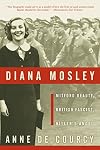
Diana Mosley, wife of the fascist leader Sir Oswald Mosley and one of the 'celebrated' Mitford sisters, generally regarded as the most beautiful, is given fair treatment by Anne De Courcy. The Author clearly liked the person while disliking her politics, or at least considering it very misguided.
The book is mostly interesting because Diana was at the heart of Sir Oswald's attempt to create a British variant of continental fascism and because she knew and liked Hitler (though not as show more cringingly as her sister Unity), moving in the highest Nazi circles in the 1930s.
The interest extends to her wartime incarceration and the way the British Establishment (of which she was very much a part) tried to deal with the threat of people speaking their mind in a liberal society and yet potentially 'Quislings' had the German planned invasion of 1940 succeeded.
Other than this period of interest that covers the twenties and early thirties of a woman who lived to her early nineties, the book tells us a lot about the gilded world of the wealthy English upper middle classes but is otherwise a foot note to British social and political history.
It is this early period that fascinates, not as rubber-necking for insights into Adolf and his circle, but because what she thought and what she did offers us a more complicated and curious narrative about mid-twentieth century British politics. Most will find it hard to come to terms with.
The facts are that fascism was never going to take root in the UK, that Mosley was a narcissist blind to political reality and that (as Overy has suggested) an eventual imperial struggle between rising Germany looking eastwards and the older British Empire was always on the cards.
The given narrative is overladen with good versus evil moral judgements that filtered across from the interwar British Left into the national consciousness and became justified by war and victory. Yet there were always alternative mental maps. Diana Mosley had one, the pacifists another.
What is clear from the evidence in the book (notably the transcript of her October 1940 meeting with the Government Advisory Committee deciding on her continued incarceration) is that Diana was intelligent, strong-willed and articulate. We may disagree with her but she was not stupid.
We should step back a bit and look at the situation in the late 1930s and consider that there would be no knowledge of two very different types of atrocity that would emerge in the early 1940s - atrocities that arise out of the fact of all-out war and atrocities based on ideology.
Even today we find it hard to differentiate the two but they are distinct. Both progress in stages, becoming worse in the first case with resistance or desperation (as we are seeing in Ukraine) and in the second by the very nature of the ideology (Nazi antisemitism or Bolshevism).
The key to the Mosley view of the world lies not in expecting them to have foresight but in seeing democracy to have failed (an argument beginning to reappear today) because the leaderships of the West failed to deal with poverty and joblessness. It explains Mosley's shift from Labour to fascism.
Diana was independently minded, horrified by the condition of the British people but unable to escape the racial and imperialistic mind-set of her class and generation. There is a fascinating assessment of Churchill in the October 1940 meeting from an insider from the same social set.
To her and her ilk, the task was to unify a nation to create jobs fit for heroes (hence her instinctive support for the authoritarian Lloyd George) where war could be avoided through strength and where the empire could be exploited by the homeland because, bluntly, white Britain was superior.
These views are so alien to our early twenty-first century world view that they are simply dismissed as evil or stupid but they were only an ironically more moral (in the strict meaning of the word) version of general attitudes even if those general attitudes were already changing.
The targeting of the Jews was probably the most stupid mistake of the British fascists (a mistake Mussolini did not make until the end) because it cut across an instinctive British tolerance, admiration of Jewish achievement and a powerful lobby.
Similarly, the racial idea (actually far from dominant in pre-war British fascist thinking) was based on bad science while its economic corporatism (taken from Italian fascism) cut across every English instinct for economic freedom except on the Left. The Left wanted something much tougher.
Fascism simply got nowhere. Yet listen to Diana's words and not all is wrong. She and Mosley were right that war would see the collapse of the British Empire and great power status and probably that an accommodation with Hitler over Danzig would have bought time for rearmament.
They saw themselves not so much as pro-German (though they were) as pro-Western and pro-British where British interests lay in preserving Britain's economic and military ability to remain a Great Power in partnership with other strong European nations.
The obvious corollary (ended by American and Soviet domination of the post-war world) was that Europe should maintain hegemony over the world and exploit it to advance it. It should be no surprise to find post-war Oswald Mosley becoming a strong pro-European.
In other words, although I personally disagree with the world view, it was a cogent world view that did not necessitate extermination camps (though I suspect it would have necessitated an authoritarian police structure of some kind).
It also not only did not necessitate war from a British perspective, athough one suspects the reality would have been one of constant colonial wars to maintain control of resources and the abandonment of any moral principle surrounding Germany's and Italy's eastward expansions.
Yes, it was wrong-headed at so many levels but it was not entirely stupid and it should not be treated as stupid which leads to the interesting question of how a liberal State (albeit at war) could justify the imprisonment without trial of a woman, separating her from her small children.
The British Government's approach to the problem of the Mosleys is an object lesson in fear and, in part, loss of moral principle. The initial incarceration was panicked but comprehensible - after all, the Nazis used prominent fascists in Europe to create puppet governments.
These puppet governments would gain the administrative support of the standing civil service (often with the implicit support of governments-in-exile) in order to keep the State functioning. But governments-in-exile were assuming that liberation might eventually come.
If Britain fell, the puppet governments would (if they had not been so incompetent) eventually have become 'independent' governments under de facto Berlin influence and control. Keeping Mosley and his consort under control was mission-critical especially if resistance had to move north.
Similarly, the appalling conditions under which Diana Mosley and other fascist women and wives were kept in Holloway for many many months might not be justified in a perfect world but everyone was living a hard life with constant bombing and food shortages.
Finally British tyranny was always one helluva lot less vicious in every way from what a dissident could expect in Germany or the USSR with no attempts at forced labour, torture or cruelty (although keeping a mother from her young child comes damned close).
But complaints about 'whataboutism' are the last refuge of the modern scoundrel because you should judge a situation by what you claim to be your standards and not by the behaviour of foreign barbarians. In this respect, the British State comes out quite badly.
The Government had allowed itself to be ruled by the Leftist mob long after the danger of a puppet government had passed and it took far too long to recognise that the war was supposed to be about freedom of expression and speech.
The blot (albeit a small one) reminds one of the later treatment of Turing in that a national security state was allowed to emerge that moved away from a material and immediate threat (a puppet government during an invasion threat) to an attempt at ideological control.
In some ways the British people were played in the late 1930s by elite groups just as they were in 1914 and are being today over Ukraine - this is normal. The winning narrative probably did reflect mass opinion by September 1939 but it was not always informed opinion. Just as today.
At the end of the day, the UK went to war ill-prepared perhaps because it did so too soon and the result saw tens of thousands of civilian and military British deaths, existential risk to the nation, the loss of a Great Power status and an empire and a permanent junior role to Washington.
Perhaps this (as the current narrative insists) was a 'price worth paying' just as 13% inflation, rising interest rates, massive energy bills, two years of possible recession and a collapse of living standards for the poorest are allegedly a 'price worth paying' over Ukraine.
But these decisions over what is a 'price worth paying' are always made by surprisingly closed elites (politicians, security apparat, special interests, the media, activists). These elites rarely actually pay much of that price. They dump that problem on their voters and the poor and the young.
We need the freedom to be able to explore all possible narratives with the fullest possible information before rolling in with any prevailing elite narrative. One hopes that the current neo-Cold War does not have dissidents like Mr. Galloway eventually banged up.
I have moved far on from the book which is a good read with plenty for fans of both Downton Abbey (the upper class life style) and mid-twentieth century British history. De Courcy recreates a milieu and a personality with consummate skill.
And my conclusion? Much the same as De Courcy's. Despite her views and her flaws, I found myself liking Diana (although not her narcissistic husband) without changing my position on her views as mostly (though not entirely) wrong-headed.
What came across most was the need to engage with these views and not just dismiss them as 'fascist' as a term of insult. It is necessary to ask why they emerged when they did, on what information and which parts were sound and which were not.
Much of what she and Mosley believed is utterly irrelevant to day. Their views depended entirely on 'facts' that have ceased to exist - pre-Keynesian economics, an empire, 'successful' corporatist fascist experiments in Europe, indirect rule by an aristocratic elite, racial ideology.
The empire (at least 'ours') is gone, economic decisions are neoliberal and global, the fascist experiments collapsed into chaos and incompetence, the aristocrats have mostly (not entirely) been replaced with careerists and technocrats and the culture wars privilege race and gender.
What remains? Not much. The Europeanism has resulted in a shambles with the chancelleries of Europe dancing to Washington's tune. A false claim of antisemitism in the UK destroyed the last socialist challenge to the system. Jewish influence, for good or ill, has never been stronger.
The Mosleys may prove to be right in the end about the need for some economic planning but they shared that with the defunct socialists and wartime government. They were probably more right that we dare admit about mass immigration but we are not allowed to say so.
What remains is a memory, not a nostalgic one, of another way of seeing the world at a particular point in history that the British people rejected and almost certainly rightly so. And perhaps a slight bad taste in the mouth not so much at the fascism but at the needless panic about it.
So long as we never stop asking ourselves whether the price dumped on us by elites is worth paying or not we should be fine. We may come up with the same answer as our masters but it should be our answer and not theirs. show less
The book is mostly interesting because Diana was at the heart of Sir Oswald's attempt to create a British variant of continental fascism and because she knew and liked Hitler (though not as show more cringingly as her sister Unity), moving in the highest Nazi circles in the 1930s.
The interest extends to her wartime incarceration and the way the British Establishment (of which she was very much a part) tried to deal with the threat of people speaking their mind in a liberal society and yet potentially 'Quislings' had the German planned invasion of 1940 succeeded.
Other than this period of interest that covers the twenties and early thirties of a woman who lived to her early nineties, the book tells us a lot about the gilded world of the wealthy English upper middle classes but is otherwise a foot note to British social and political history.
It is this early period that fascinates, not as rubber-necking for insights into Adolf and his circle, but because what she thought and what she did offers us a more complicated and curious narrative about mid-twentieth century British politics. Most will find it hard to come to terms with.
The facts are that fascism was never going to take root in the UK, that Mosley was a narcissist blind to political reality and that (as Overy has suggested) an eventual imperial struggle between rising Germany looking eastwards and the older British Empire was always on the cards.
The given narrative is overladen with good versus evil moral judgements that filtered across from the interwar British Left into the national consciousness and became justified by war and victory. Yet there were always alternative mental maps. Diana Mosley had one, the pacifists another.
What is clear from the evidence in the book (notably the transcript of her October 1940 meeting with the Government Advisory Committee deciding on her continued incarceration) is that Diana was intelligent, strong-willed and articulate. We may disagree with her but she was not stupid.
We should step back a bit and look at the situation in the late 1930s and consider that there would be no knowledge of two very different types of atrocity that would emerge in the early 1940s - atrocities that arise out of the fact of all-out war and atrocities based on ideology.
Even today we find it hard to differentiate the two but they are distinct. Both progress in stages, becoming worse in the first case with resistance or desperation (as we are seeing in Ukraine) and in the second by the very nature of the ideology (Nazi antisemitism or Bolshevism).
The key to the Mosley view of the world lies not in expecting them to have foresight but in seeing democracy to have failed (an argument beginning to reappear today) because the leaderships of the West failed to deal with poverty and joblessness. It explains Mosley's shift from Labour to fascism.
Diana was independently minded, horrified by the condition of the British people but unable to escape the racial and imperialistic mind-set of her class and generation. There is a fascinating assessment of Churchill in the October 1940 meeting from an insider from the same social set.
To her and her ilk, the task was to unify a nation to create jobs fit for heroes (hence her instinctive support for the authoritarian Lloyd George) where war could be avoided through strength and where the empire could be exploited by the homeland because, bluntly, white Britain was superior.
These views are so alien to our early twenty-first century world view that they are simply dismissed as evil or stupid but they were only an ironically more moral (in the strict meaning of the word) version of general attitudes even if those general attitudes were already changing.
The targeting of the Jews was probably the most stupid mistake of the British fascists (a mistake Mussolini did not make until the end) because it cut across an instinctive British tolerance, admiration of Jewish achievement and a powerful lobby.
Similarly, the racial idea (actually far from dominant in pre-war British fascist thinking) was based on bad science while its economic corporatism (taken from Italian fascism) cut across every English instinct for economic freedom except on the Left. The Left wanted something much tougher.
Fascism simply got nowhere. Yet listen to Diana's words and not all is wrong. She and Mosley were right that war would see the collapse of the British Empire and great power status and probably that an accommodation with Hitler over Danzig would have bought time for rearmament.
They saw themselves not so much as pro-German (though they were) as pro-Western and pro-British where British interests lay in preserving Britain's economic and military ability to remain a Great Power in partnership with other strong European nations.
The obvious corollary (ended by American and Soviet domination of the post-war world) was that Europe should maintain hegemony over the world and exploit it to advance it. It should be no surprise to find post-war Oswald Mosley becoming a strong pro-European.
In other words, although I personally disagree with the world view, it was a cogent world view that did not necessitate extermination camps (though I suspect it would have necessitated an authoritarian police structure of some kind).
It also not only did not necessitate war from a British perspective, athough one suspects the reality would have been one of constant colonial wars to maintain control of resources and the abandonment of any moral principle surrounding Germany's and Italy's eastward expansions.
Yes, it was wrong-headed at so many levels but it was not entirely stupid and it should not be treated as stupid which leads to the interesting question of how a liberal State (albeit at war) could justify the imprisonment without trial of a woman, separating her from her small children.
The British Government's approach to the problem of the Mosleys is an object lesson in fear and, in part, loss of moral principle. The initial incarceration was panicked but comprehensible - after all, the Nazis used prominent fascists in Europe to create puppet governments.
These puppet governments would gain the administrative support of the standing civil service (often with the implicit support of governments-in-exile) in order to keep the State functioning. But governments-in-exile were assuming that liberation might eventually come.
If Britain fell, the puppet governments would (if they had not been so incompetent) eventually have become 'independent' governments under de facto Berlin influence and control. Keeping Mosley and his consort under control was mission-critical especially if resistance had to move north.
Similarly, the appalling conditions under which Diana Mosley and other fascist women and wives were kept in Holloway for many many months might not be justified in a perfect world but everyone was living a hard life with constant bombing and food shortages.
Finally British tyranny was always one helluva lot less vicious in every way from what a dissident could expect in Germany or the USSR with no attempts at forced labour, torture or cruelty (although keeping a mother from her young child comes damned close).
But complaints about 'whataboutism' are the last refuge of the modern scoundrel because you should judge a situation by what you claim to be your standards and not by the behaviour of foreign barbarians. In this respect, the British State comes out quite badly.
The Government had allowed itself to be ruled by the Leftist mob long after the danger of a puppet government had passed and it took far too long to recognise that the war was supposed to be about freedom of expression and speech.
The blot (albeit a small one) reminds one of the later treatment of Turing in that a national security state was allowed to emerge that moved away from a material and immediate threat (a puppet government during an invasion threat) to an attempt at ideological control.
In some ways the British people were played in the late 1930s by elite groups just as they were in 1914 and are being today over Ukraine - this is normal. The winning narrative probably did reflect mass opinion by September 1939 but it was not always informed opinion. Just as today.
At the end of the day, the UK went to war ill-prepared perhaps because it did so too soon and the result saw tens of thousands of civilian and military British deaths, existential risk to the nation, the loss of a Great Power status and an empire and a permanent junior role to Washington.
Perhaps this (as the current narrative insists) was a 'price worth paying' just as 13% inflation, rising interest rates, massive energy bills, two years of possible recession and a collapse of living standards for the poorest are allegedly a 'price worth paying' over Ukraine.
But these decisions over what is a 'price worth paying' are always made by surprisingly closed elites (politicians, security apparat, special interests, the media, activists). These elites rarely actually pay much of that price. They dump that problem on their voters and the poor and the young.
We need the freedom to be able to explore all possible narratives with the fullest possible information before rolling in with any prevailing elite narrative. One hopes that the current neo-Cold War does not have dissidents like Mr. Galloway eventually banged up.
I have moved far on from the book which is a good read with plenty for fans of both Downton Abbey (the upper class life style) and mid-twentieth century British history. De Courcy recreates a milieu and a personality with consummate skill.
And my conclusion? Much the same as De Courcy's. Despite her views and her flaws, I found myself liking Diana (although not her narcissistic husband) without changing my position on her views as mostly (though not entirely) wrong-headed.
What came across most was the need to engage with these views and not just dismiss them as 'fascist' as a term of insult. It is necessary to ask why they emerged when they did, on what information and which parts were sound and which were not.
Much of what she and Mosley believed is utterly irrelevant to day. Their views depended entirely on 'facts' that have ceased to exist - pre-Keynesian economics, an empire, 'successful' corporatist fascist experiments in Europe, indirect rule by an aristocratic elite, racial ideology.
The empire (at least 'ours') is gone, economic decisions are neoliberal and global, the fascist experiments collapsed into chaos and incompetence, the aristocrats have mostly (not entirely) been replaced with careerists and technocrats and the culture wars privilege race and gender.
What remains? Not much. The Europeanism has resulted in a shambles with the chancelleries of Europe dancing to Washington's tune. A false claim of antisemitism in the UK destroyed the last socialist challenge to the system. Jewish influence, for good or ill, has never been stronger.
The Mosleys may prove to be right in the end about the need for some economic planning but they shared that with the defunct socialists and wartime government. They were probably more right that we dare admit about mass immigration but we are not allowed to say so.
What remains is a memory, not a nostalgic one, of another way of seeing the world at a particular point in history that the British people rejected and almost certainly rightly so. And perhaps a slight bad taste in the mouth not so much at the fascism but at the needless panic about it.
So long as we never stop asking ourselves whether the price dumped on us by elites is worth paying or not we should be fine. We may come up with the same answer as our masters but it should be our answer and not theirs. show less
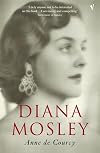
A rather conflicting read. I've had a long fascination with the Mitford sisters and Diana is very much a Mitford with all the charm and beauty of her class and family, but she was also obsessively dedicated to her fascist second husband Oswald Mosley. Although the author talks of their great love for each other, reading between the lines it becomes obvious that this was a one sided obsession - with Mosely continuing the affairs for which he was notorious, and being extremely demanding to the show more devoted Diana (even resenting the time she spent at the deathbed of her sister Nancy). Her early married life echoed that of Idina Sackville (The Bolter) who left her husband and two young sons for another man. I enjoyed finding the parallels with Nancy Mitford's fictional characters but I found the politics, in particular her friendship with Hitler, and her anti-semitism profoundly uncomfortable, and a reminder that evil isn't only banal but can be actively charming. A worthwhile read for anyone with an interest in history and early twentieth century politics and with alarming resonances today. show less
Lists
Awards


You May Also Like


Statistics
- Works
- 15
- Members
- 1,893
- Popularity
- #13,589
- Rating
- 3.5
- Reviews
- 57
- ISBNs
- 93
- Languages
- 5