
Susan Hunt (1) (1940–)
Author of Spiritual Mothering: The Titus 2 Model for Women Mentoring Women
For other authors named Susan Hunt, see the disambiguation page.
About the Author
Susan Hunt is 3 mother, grandmother, pastor's wife, author, and the former director of women's ministries for the Presbyterian Church in America. Hunt has written a number of books, including True Woman and Big Truths for Little Kids.
Image credit: via Amazon.com
Works by Susan Hunt
Tagged
Common Knowledge
- Legal name
- Hunt, Susan M.
- Birthdate
- 1940-01-28
- Gender
- female
- Places of residence
- Marietta, Georgia, USA
- Map Location
- USA
Members
Reviews
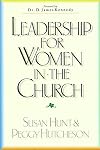
In this book, Susan Hunt and Peggy Hutcheson attempt to address the issue of female leadership within the body of Christ. They approach this sensitive topic from a very conservative position, acknowledging and even rejoicing in the biblical standard of male headship both in the home and the church. But they argue that traditional interpretations of male headship have led to churches failing to utilize all the unique gifts of women in the Body. This is really a primer for women to take show more leadership in ways that do not challenge male headship, so that the church will be effective in its ministry both to and by women.
At the beginning of each chapter the authors quote Psalm 34:3, which says, "Glorify the Lord with me; let us exalt His name together." And that is really the goal. This isn't a book that rails against the men in our churches or pushes for women to have the same roles as men in church leadership. Rather, it is a call to bring God glory and to do it together. That is the goal—not self promotion, not competition, not women's "rights," nothing to do with self at all. We are here to bring glory to God, to the abnegation of self. And, far from being stifling, this opens up wonderful opportunities for women to perform fulfilling and joyful service within the Body of Christ.
The authors start with a discussion of the biblical role of women and what it means to be a helper-leader. Contrary to what feminism would have us believe, being a helper ("ezer" in Hebrew) is not an inferior role—because God uses the exact same word for Himself frequently in the Bible! If God can call Himself our helper, there is no shame whatsoever in a woman being a helper. It is a necessary and valuable role. Basically it is the biblical complementarian view of manhood and womanhood: equal in value, different in function—and what that looks like in church ministry.
I loved the discussion of female leadership in the context of women in the Bible like Esther, Mary, Martha, Priscilla, and especially Hannah. Hannah's life is a fascinating study because she exemplifies a third option to our fight-or-flight response to conflict. Hannah faced infertility (and open derision about it from the other wife in the home). She was also completely misunderstood by both her husband and the priest at the temple. But, although certainly wronged, Hannah didn't fight for her rights or flee the situation. Instead, she took the third option: prayerful waiting. I think this concept is one of the most powerful points of the book.
One thing I didn't love about the book was the Presbyterian flavor with all its emphasis on covenantal theology. Hunt and Hutcheson are certainly aware that they are speaking from that perspective and try to transcend it, and I think they succeed for the most part. But many of the structures they assume in church leadership look very different in my non-denominational church. Maybe this is a good thing; it prevents me from making their words into formulas.
Another thing I did not like at all is the exercise they recommend for confidence. They say that our confidence cannot be in ourselves or our abilities... but then they completely undermine that statement by saying we should go to the mirror and practice telling ourselves our good qualities, so we can have a "healthy self concept" and therefore confidence. They also recommend getting a group of women to tell us what they admire about us. It's well and good to be aware of your strengths and gifts, but NOT in the context of learning confidence. Our confidence is not in our abilities or how we can use a mirror to convince ourselves of how great we are. Our confidence is in Christ, not in our natural abilities (or lack thereof), and that is what makes our ministry effective. I don't like going into this so deeply because the authors do say so many good things that I absolutely loved. I don't want to undermine the overall message of the book by nitpicking. But they really, really failed in this particular section.
The conclusion is excellent. I'll just quote some of it:
We challenge evangelical women to be pacesetters by leaving behind confusing rhetoric about our roles, and moving ahead to begin meeting needs. Make yourself available to serve the Lord and pray for wisdom to discern his direction. Ask God to develop within you a greater sensitivity to the needs of those he wants you to serve.
We beg you not to use anything in this book as a weapon to fight the men in your church. If you do this, you have completely misunderstood or misinterpreted us. Even if you are in a church that is not addressing the issue of employing women's gifts, we urge you to resolutely refuse to become adversarial. Resolve to offer the winsome help that is needed.
...We urge you to focus the light of Holy Scripture on everything we have said. We are not infallible, but God's Word is... It is your responsibility to put everything we have said through the grid of God's Word. The Bible is the authoritative Word of God and the only rule for faith and practice.
As I seek to serve Christ by serving my local church, I will remember this book's oft-repeated theme of God's glory being central in all I do. This is not about me, but Him—what a wonderful truth! It frees me to serve as He designed, not as my ambition dictates. I'd recommend this book to any woman seeking to minister effectively in her church body. show less
At the beginning of each chapter the authors quote Psalm 34:3, which says, "Glorify the Lord with me; let us exalt His name together." And that is really the goal. This isn't a book that rails against the men in our churches or pushes for women to have the same roles as men in church leadership. Rather, it is a call to bring God glory and to do it together. That is the goal—not self promotion, not competition, not women's "rights," nothing to do with self at all. We are here to bring glory to God, to the abnegation of self. And, far from being stifling, this opens up wonderful opportunities for women to perform fulfilling and joyful service within the Body of Christ.
The authors start with a discussion of the biblical role of women and what it means to be a helper-leader. Contrary to what feminism would have us believe, being a helper ("ezer" in Hebrew) is not an inferior role—because God uses the exact same word for Himself frequently in the Bible! If God can call Himself our helper, there is no shame whatsoever in a woman being a helper. It is a necessary and valuable role. Basically it is the biblical complementarian view of manhood and womanhood: equal in value, different in function—and what that looks like in church ministry.
I loved the discussion of female leadership in the context of women in the Bible like Esther, Mary, Martha, Priscilla, and especially Hannah. Hannah's life is a fascinating study because she exemplifies a third option to our fight-or-flight response to conflict. Hannah faced infertility (and open derision about it from the other wife in the home). She was also completely misunderstood by both her husband and the priest at the temple. But, although certainly wronged, Hannah didn't fight for her rights or flee the situation. Instead, she took the third option: prayerful waiting. I think this concept is one of the most powerful points of the book.
One thing I didn't love about the book was the Presbyterian flavor with all its emphasis on covenantal theology. Hunt and Hutcheson are certainly aware that they are speaking from that perspective and try to transcend it, and I think they succeed for the most part. But many of the structures they assume in church leadership look very different in my non-denominational church. Maybe this is a good thing; it prevents me from making their words into formulas.
Another thing I did not like at all is the exercise they recommend for confidence. They say that our confidence cannot be in ourselves or our abilities... but then they completely undermine that statement by saying we should go to the mirror and practice telling ourselves our good qualities, so we can have a "healthy self concept" and therefore confidence. They also recommend getting a group of women to tell us what they admire about us. It's well and good to be aware of your strengths and gifts, but NOT in the context of learning confidence. Our confidence is not in our abilities or how we can use a mirror to convince ourselves of how great we are. Our confidence is in Christ, not in our natural abilities (or lack thereof), and that is what makes our ministry effective. I don't like going into this so deeply because the authors do say so many good things that I absolutely loved. I don't want to undermine the overall message of the book by nitpicking. But they really, really failed in this particular section.
The conclusion is excellent. I'll just quote some of it:
We challenge evangelical women to be pacesetters by leaving behind confusing rhetoric about our roles, and moving ahead to begin meeting needs. Make yourself available to serve the Lord and pray for wisdom to discern his direction. Ask God to develop within you a greater sensitivity to the needs of those he wants you to serve.
We beg you not to use anything in this book as a weapon to fight the men in your church. If you do this, you have completely misunderstood or misinterpreted us. Even if you are in a church that is not addressing the issue of employing women's gifts, we urge you to resolutely refuse to become adversarial. Resolve to offer the winsome help that is needed.
...We urge you to focus the light of Holy Scripture on everything we have said. We are not infallible, but God's Word is... It is your responsibility to put everything we have said through the grid of God's Word. The Bible is the authoritative Word of God and the only rule for faith and practice.
As I seek to serve Christ by serving my local church, I will remember this book's oft-repeated theme of God's glory being central in all I do. This is not about me, but Him—what a wonderful truth! It frees me to serve as He designed, not as my ambition dictates. I'd recommend this book to any woman seeking to minister effectively in her church body. show less

This is a great resource for Christian parents. There are twenty short chapters, each one containing a story about a flawed but loving Christian family, a passage from the bible, and follow up questions, and prayers. The beginning even has great information on how to use the book for parents, grandparents, and teachers.
Each chapter touches on a different lesson that someone in the family has to learn. Like, why are boys and girls different? How do we reflect God? How can prayer help? I show more thought some of the examples were pretty good, for instance boys and girls are different but equal just like crayons. "One crayon is designed to color things green, and one is designed to color things red - but one is not better than the other. They're equal, and their different functions are equal." It has lots of good lessons and reflections for kids.
I thought it could have been a little more diverse and a little less sexist, but it is a Christian educational book. To expect anything other than a white middle class family with a stay at home mom is silly. But hey, what can you do. Maybe you can make your own lesson up at the end to teach your kids?
Informative, Christian read for parents or adults that work with children.
I received this book for free from Moody Publishing in return for my honest, unbiased opinion. show less
Each chapter touches on a different lesson that someone in the family has to learn. Like, why are boys and girls different? How do we reflect God? How can prayer help? I show more thought some of the examples were pretty good, for instance boys and girls are different but equal just like crayons. "One crayon is designed to color things green, and one is designed to color things red - but one is not better than the other. They're equal, and their different functions are equal." It has lots of good lessons and reflections for kids.
I thought it could have been a little more diverse and a little less sexist, but it is a Christian educational book. To expect anything other than a white middle class family with a stay at home mom is silly. But hey, what can you do. Maybe you can make your own lesson up at the end to teach your kids?
Informative, Christian read for parents or adults that work with children.
I received this book for free from Moody Publishing in return for my honest, unbiased opinion. show less
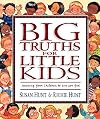
What is the most important thing that a child can learn from his parents? Eight-year-old Caleb and his younger sister Cassie live with their dad and mom. The whole family is striving to be godly. They all regularly attend church services, and every night the parents teach the children about Jesus using the catechism. Caleb’s best friend Angus and his family attend the same church, but their other friend Daniel and his family, who recently moved into the community, don’t go to church. So show more Caleb and Angus ask Daniel to go to church with them. Will he be allowed to go? How will his parents react? And what will be the result?
The reader needs to be aware that the authors come from a highly Reformed (Calvinistic) religious tradition. Susan Hunt is the women’s ministry consultant for Christian Education and Publications of the Presbyterian Church in America. Her son Richie Hunt is the children’s and youth minister at Grace Covenant Presbyterian Church in Dallas, GA. Bible believers from other religious backgrounds may not necessarily agree with some concepts and practices set forth in the book, such as salvation by praying to ask Jesus into your heart, total hereditary depravity, tithing, keeping the “Christian’s Sabbath,” following the Ten Commandments, and baptizing infants. In fact, many of us would prefer to instruct our children simply from the Scriptures rather than using a man-made catechism.
However, putting the issue of the catechism aside, the thing I really like about this book is that the 36 stories illustrate how the truth of God’s word can be practically applied even in the lives of young children and also how important it is for parents to teach their children what the Bible says. Youngsters have a much greater capacity to learn than a lot of people think, so we shouldn’t wait until they’re older but start from the very beginning to inculcate within them both Biblical morality and Biblical doctrine. Each chapter concludes with a “Let’s Talk” section with questions about the lesson and a “Let’s Pray” section which, rather than having a written prayer to repeat, gives a passage of Scripture and just encourages the reader to pray based upon what that passage says. show less
The reader needs to be aware that the authors come from a highly Reformed (Calvinistic) religious tradition. Susan Hunt is the women’s ministry consultant for Christian Education and Publications of the Presbyterian Church in America. Her son Richie Hunt is the children’s and youth minister at Grace Covenant Presbyterian Church in Dallas, GA. Bible believers from other religious backgrounds may not necessarily agree with some concepts and practices set forth in the book, such as salvation by praying to ask Jesus into your heart, total hereditary depravity, tithing, keeping the “Christian’s Sabbath,” following the Ten Commandments, and baptizing infants. In fact, many of us would prefer to instruct our children simply from the Scriptures rather than using a man-made catechism.
However, putting the issue of the catechism aside, the thing I really like about this book is that the 36 stories illustrate how the truth of God’s word can be practically applied even in the lives of young children and also how important it is for parents to teach their children what the Bible says. Youngsters have a much greater capacity to learn than a lot of people think, so we shouldn’t wait until they’re older but start from the very beginning to inculcate within them both Biblical morality and Biblical doctrine. Each chapter concludes with a “Let’s Talk” section with questions about the lesson and a “Let’s Pray” section which, rather than having a written prayer to repeat, gives a passage of Scripture and just encourages the reader to pray based upon what that passage says. show less
I struggle with Susan Hunt's material. It's relevant, but outdated in a social sense. She could model some of this differently to make it timeless.
You May Also Like


Associated Authors
Statistics
- Works
- 30
- Members
- 4,660
- Popularity
- #5,410
- Rating
- 4.2
- Reviews
- 12
- ISBNs
- 70
- Languages
- 3
- Favorited
- 1