
Mark Vernon (1)
Author of The Philosophy of Friendship
For other authors named Mark Vernon, see the disambiguation page.
About the Author
Mark Vernon is a writer, commentator and psychotherapist, contributing to and presenting programmes on BBC radio, as well as writing for the national and religious press, and online publications like Aeon. He has a PhD in ancient Greek philosophy, and other degrees in physics and in theology, show more having studied at Durham, Oxford and Warwick universities. He is the author of several previous books, including The Meaning of Friendship (Palgrave Macmillan), God: The Big Questions (Quercus), and The Idler Guide to Ancient Philosophy (Idler Books). He used to be an Anglican priest. For more information see www.markvernon.com. show less
Works by Mark Vernon
Associated Works
Religion and the New Atheism: A Critical Appraisal (Studies in Critical Social Sciences) (2010) — Afterword — 19 copies
Tagged
Common Knowledge
- Gender
- male
- Occupations
- author
journalist - Organizations
- The School of Life (founding faculty member)
Members
Reviews
A Secret History of Christianity: Jesus, The Last Inkling, And The Evolution Of Consciousness by Mark Vernon
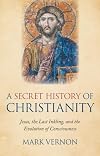
This wasn't what I was expecting - in a good way. I'd slot this more solidly into the spirituality category, than necessarily straight up religious. I loved how Vernon wove together history, philosophy, and poetry with spiritual beliefs in a way that gets you thinking without feeling overwhelming or preachy. I'm not Christian, but I thought this was interesting, easy to read, and engaging. If you're interested in philosophy/spirituality/how Christianity has evolved over the years, I show more recommend reading this! show less
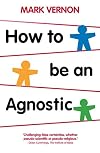
Mark Vernon is a former Anglican priest who flirted with atheism after leaving the church, and finally settled on a “more satisfying” compromise of agnosticism. He found atheism, with its dogmatic certainty and sometime hostility to the beliefs of others, to be no more open-minded than religion. Besides, he says, religion is not just a set of beliefs or a moral code. It is a way of seeing the world and a way of approaching what’s unknown. So, is there higher ground in the middle, show more halfway between theists and atheists?
Vernon is no shoulder-shrugging agnostic, self-labeled because of a confessed disinterest in contemplating the Infinite. Nor does Vernon settle for “spiritual but not religious.” That’s simply not enough. A proper agnostic doesn’t dodge the hard questions, yet leaves room for spirituality and awe. Says Vernon, “A spirituality-inclined agnostic is like being a believer to this extent: we are individuals who think that God is not a silly question, as the conviction atheist must have concluded, but rather one that our experience demands we keep asking. To put it more concisely: for us, God is not the answer, but the pressing spiritual question. But can God still be thought of as the question, in a mystery-dissolving age of science and certainty? It depends on what you mean by God.”
So this book is not a search for God, but a search for the proper question. That is How To Be An Agnostic, and Vernon does it well. He writes intelligently, philosophically, and with a deep respect for past thinkers dating back to Socrates (who gets quite a bit of press time). The book’s childish cover and title notwithstanding, this is a serious and thoughtful exploration … even a little overwhelming. I can wade through mathematical treatises, but diving too deeply into the magnificence of our creation wears me down. Still, it is this very beauty and complexity … coupled with the key question, “why is there something instead of nothing” … which stirs the spirit of a serious agnostic.
Beware: There are no answers herein. The book meanders gently into the sunset by the final page, content to exit with a few words of agnostic instruction, but without a conclusion. That is, of course, the point. show less
Vernon is no shoulder-shrugging agnostic, self-labeled because of a confessed disinterest in contemplating the Infinite. Nor does Vernon settle for “spiritual but not religious.” That’s simply not enough. A proper agnostic doesn’t dodge the hard questions, yet leaves room for spirituality and awe. Says Vernon, “A spirituality-inclined agnostic is like being a believer to this extent: we are individuals who think that God is not a silly question, as the conviction atheist must have concluded, but rather one that our experience demands we keep asking. To put it more concisely: for us, God is not the answer, but the pressing spiritual question. But can God still be thought of as the question, in a mystery-dissolving age of science and certainty? It depends on what you mean by God.”
So this book is not a search for God, but a search for the proper question. That is How To Be An Agnostic, and Vernon does it well. He writes intelligently, philosophically, and with a deep respect for past thinkers dating back to Socrates (who gets quite a bit of press time). The book’s childish cover and title notwithstanding, this is a serious and thoughtful exploration … even a little overwhelming. I can wade through mathematical treatises, but diving too deeply into the magnificence of our creation wears me down. Still, it is this very beauty and complexity … coupled with the key question, “why is there something instead of nothing” … which stirs the spirit of a serious agnostic.
Beware: There are no answers herein. The book meanders gently into the sunset by the final page, content to exit with a few words of agnostic instruction, but without a conclusion. That is, of course, the point. show less
Isn't it a gross arrogance to suggest that one can cover 'All That Matters' about God in 127 pages? The answer is probably, "Yes" but, what this little tome does very well, is to pull various threads together. It takes eight questions such as, 'Is God love?', 'Is God in suffering?' and 'Is God our moral ideal?' and discusses them in terms of the ideas of leading thinkers through the ages. I found that this approach was useful, to me, in two ways; firstly, I came across leading lights of whom show more I had not heard, and secondly, it places those of whom I was aware in context.
If, like me, you are not reading about theology as part of an organised course, it can be difficult to get that over view as to where a certain author fits in; who had previously said what, what was going on locally when he expounded his views? This book gives that background. It fulfils the role that a course tutor would perform, setting the scene.
Mark Vernon does an excellent job of remaining neutral. This is not a book of his opinions: I have no more idea now, than I did when I began the book, as to his religious beliefs. This is important because it leads to a book that can be read by anyone, whatever their belief system, and I would guarantee that, be they a novice, or an expert in the field, they will find the experience worthwhile. show less
If, like me, you are not reading about theology as part of an organised course, it can be difficult to get that over view as to where a certain author fits in; who had previously said what, what was going on locally when he expounded his views? This book gives that background. It fulfils the role that a course tutor would perform, setting the scene.
Mark Vernon does an excellent job of remaining neutral. This is not a book of his opinions: I have no more idea now, than I did when I began the book, as to his religious beliefs. This is important because it leads to a book that can be read by anyone, whatever their belief system, and I would guarantee that, be they a novice, or an expert in the field, they will find the experience worthwhile. show less
I feel very special at being the first one to rate this book a one star.
...
Not really.
The quotations were cool The "brilliant observations" were not (they were also not particularly 'brilliant' in my opinion). Too bad, because I really wanted to like this book.
I guess I'm the only one who expected more (fun) out of something with that title. And, you know, the part where it claimed to be "easy and fun to read"...
It was easy, it wasn't fun. I got bored, I moved on.
Either philosophy books show more aren't for me or I'm really choosing all the bad ones. show less
...
Not really.
The quotations were cool The "brilliant observations" were not (they were also not particularly 'brilliant' in my opinion). Too bad, because I really wanted to like this book.
I guess I'm the only one who expected more (fun) out of something with that title. And, you know, the part where it claimed to be "easy and fun to read"...
It was easy, it wasn't fun. I got bored, I moved on.
Either philosophy books show more aren't for me or I'm really choosing all the bad ones. show less
You May Also Like


Associated Authors
Statistics
- Works
- 20
- Also by
- 2
- Members
- 450
- Popularity
- #54,505
- Rating
- 3.1
- Reviews
- 7
- ISBNs
- 76
- Languages
- 7