
Laura Miller (1) (1960–)
Author of The Magician's Book: A Skeptic's Adventures in Narnia
For other authors named Laura Miller, see the disambiguation page.
Works by Laura Miller
Literary Wonderlands: A Journey Through the Greatest Fictional Worlds Ever Created (Literary Worlds Series) (2016) — Editor — 359 copies, 9 reviews
Associated Works
Tagged
Common Knowledge
- Birthdate
- 1960-02-12
- Gender
- female
- Occupations
- columnist
journalist
critic - Organizations
- Salon.com
- Nationality
- USA
- Associated Place (for map)
- USA
Members
Reviews

Should the fact that you disagree, perhaps even loathe, the ideas behind a work of literature prevent you from enjoying or appreciating it? Laura Miller was introduced to a lifetime of reading by the Narnia books when she was a child. She adored them until she discovered they were Christian allegories and never read them again as a result. Until, that is, she was asked to write an article on the book that had had the most influence on her life. As she ended up as a writer and literary critic show more she reluctantly had to concede that the Narnia books were the most influential - they started it all off. But how could she have got so much out of them and yet missed this major theme? And were they good or bad?
And so we get an excursus on why we read, how and why it affects us, how children read? What is it about a literary work that distinguishes it from, say, a catechism? - the visceral enjoyment of story; the imaginative other world; the characters. For a start children read for the adventure, the story, and lose themseves in the world that is created for them. Religion, like, say sex, just passes them by as uninteresting amid all the interesting aspects. For instance Aslan may represent Christ but he is first and foremost yet another semi-anthropomorphic animal in children's literature. He is furry, he growls, he moves lithely, he has big deep eyes and he talks. You could go on. Lewis is a good enough writer not to slather on the christianising so it ends as a very superficial gloss on a different story. Besides Lewis' Christianity was a strange artifact and theologically often very dubious. You can get some very odd religious ideas from him as it was in some ways very personal. Very few of the fundamentalists who eulogise him today can be aware that one of his closest friends was gay. As an issue it totally passed Lewis by. Like possibly most people, religion for him was a pick and mix activity.
The author makes her points well. She moves from children's stories, through the literary creation, Lewis's other works, his life and work and how it influences what he creates, his life and how it led him back to religion, his own literary criticism and finally to his place among the Inklings. All is done well and as interestingly as possible. She has interesting points to make on Tolkien's worldview as opposed to Lewis'. She doesn't duck the misogyny though I think she lets Lewis off too lightly. My only criticism would be that in the end it is too much energy, thought and time spent on something which cannot really bear it which is why she constantly broadens her subject.
And her conclusion? While Lewis may not have been of the devil's party without knowing it he was certainly not of the fundamentalists' and children will continue to enjoy (or not) the Narnia books. show less
And so we get an excursus on why we read, how and why it affects us, how children read? What is it about a literary work that distinguishes it from, say, a catechism? - the visceral enjoyment of story; the imaginative other world; the characters. For a start children read for the adventure, the story, and lose themseves in the world that is created for them. Religion, like, say sex, just passes them by as uninteresting amid all the interesting aspects. For instance Aslan may represent Christ but he is first and foremost yet another semi-anthropomorphic animal in children's literature. He is furry, he growls, he moves lithely, he has big deep eyes and he talks. You could go on. Lewis is a good enough writer not to slather on the christianising so it ends as a very superficial gloss on a different story. Besides Lewis' Christianity was a strange artifact and theologically often very dubious. You can get some very odd religious ideas from him as it was in some ways very personal. Very few of the fundamentalists who eulogise him today can be aware that one of his closest friends was gay. As an issue it totally passed Lewis by. Like possibly most people, religion for him was a pick and mix activity.
The author makes her points well. She moves from children's stories, through the literary creation, Lewis's other works, his life and work and how it influences what he creates, his life and how it led him back to religion, his own literary criticism and finally to his place among the Inklings. All is done well and as interestingly as possible. She has interesting points to make on Tolkien's worldview as opposed to Lewis'. She doesn't duck the misogyny though I think she lets Lewis off too lightly. My only criticism would be that in the end it is too much energy, thought and time spent on something which cannot really bear it which is why she constantly broadens her subject.
And her conclusion? While Lewis may not have been of the devil's party without knowing it he was certainly not of the fundamentalists' and children will continue to enjoy (or not) the Narnia books. show less
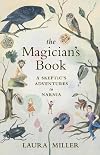
Book reviewer and Salon.com co-founder Laura Miller fell in love with Narnia in the second grade when her teacher handed her a copy of [b:The Lion the Witch and the Wardrobe|100915|The Lion, the Witch and the Wardrobe (Chronicles of Narnia, Book 2)|C.S. Lewis|http://photo.goodreads.com/books/1171472410s/100915.jpg|4790821]. Several years later, Laura, by then a lapsing Catholic and a junior-high student, read that C.S. Lewis's intent in writing the Chronicles of Narnia had been a recasting show more of Christian doctrine for children. She felt snookered and angry and did not revisit Narnia for many years. During those years, the Christian aspect of the Narnia books has come still more to the forefront, to the point that most discussion of the books seems to focus on that aspect alone; not to mention the Christian-evangelical-produced films released recently. From numerous tomes by evangelicals to the hatred professed by fantasy writer/atheist Philip Pullman, it seems that no one can any longer view the Narnia books other than through the lens of one's own belief or unbelief. Laura Miller, still a skeptic, manages to take a much more balanced look at the series in this excellent book.
A few years ago, Miller decided to revisit Narnia, wrote a column on Salon.com about it, and thereby started a fascinating conversation with other Narnia-lovers which led to the book. She combines memoir, biography, and literary criticism in the wide-ranging work. She explains that the Chronicles are not, in fact, allegory, as sloppy thinkers are fond of calling them; compares and contrasts Lewis and his friend Tolkien (who didn't think much of the Chronicles for his own reasons); references Northrop Frye and Ingmar Bergman as well as George MacDonald and Charles Williams. If you don't care for fantasy and never wished to visit Narnia, this book will not change your mind and you might as well skip it. But for anyone who has ever enjoyed the books -- whether you reread them regularly or not, whether you are a believer or a skeptic -- [b:The Magician's Book|11127|The Chronicles of Narnia|C.S. Lewis|http://photo.goodreads.com/books/1166457868s/11127.jpg|781271] will enrich your thinking about reading in general and [b:The Chronicles of Narnia|100915|The Lion, the Witch and the Wardrobe (Chronicles of Narnia, Book 2)|C.S. Lewis|http://photo.goodreads.com/books/1171472410s/100915.jpg|4790821] in particular. Highly receommended. show less
A few years ago, Miller decided to revisit Narnia, wrote a column on Salon.com about it, and thereby started a fascinating conversation with other Narnia-lovers which led to the book. She combines memoir, biography, and literary criticism in the wide-ranging work. She explains that the Chronicles are not, in fact, allegory, as sloppy thinkers are fond of calling them; compares and contrasts Lewis and his friend Tolkien (who didn't think much of the Chronicles for his own reasons); references Northrop Frye and Ingmar Bergman as well as George MacDonald and Charles Williams. If you don't care for fantasy and never wished to visit Narnia, this book will not change your mind and you might as well skip it. But for anyone who has ever enjoyed the books -- whether you reread them regularly or not, whether you are a believer or a skeptic -- [b:The Magician's Book|11127|The Chronicles of Narnia|C.S. Lewis|http://photo.goodreads.com/books/1166457868s/11127.jpg|781271] will enrich your thinking about reading in general and [b:The Chronicles of Narnia|100915|The Lion, the Witch and the Wardrobe (Chronicles of Narnia, Book 2)|C.S. Lewis|http://photo.goodreads.com/books/1171472410s/100915.jpg|4790821] in particular. Highly receommended. show less
Miller writes at times extremely movingly about the impact that reading has especially on the juvenile mind. I particularly liked her exploration of the differences between reading as a child and reading as an adult and the way in which children inhabit a fantasy world of a novel with a passion and without any degree of removal or eye towards literary criticism.
Her description of her relationship with religion and how it impacted her to realize that Narnia was about religion (and more to show more the point that it was rife with symbolism and additional meanings) and overall her maturation in her reading style was poignant.
Also interesting was the exploration of the relationship between Lewis and Tolkien - Miller really uses the men as foils to each other to explore their distinct religiosities and views on their manifest to write. In addition, she talks about the different approaches to writing and the relative importance of different components of a story's structure. It made clear to me that the reason I've always liked Lewis and never liked Tolkien is that Lewis is committed to a narrative, whereas Tolkien was truly a setting simulationist.
On the other hand, once she had dispensed with her central thesis, the remainder of the book really lagged and seemed to be the same key points in repetition. show less
Her description of her relationship with religion and how it impacted her to realize that Narnia was about religion (and more to show more the point that it was rife with symbolism and additional meanings) and overall her maturation in her reading style was poignant.
Also interesting was the exploration of the relationship between Lewis and Tolkien - Miller really uses the men as foils to each other to explore their distinct religiosities and views on their manifest to write. In addition, she talks about the different approaches to writing and the relative importance of different components of a story's structure. It made clear to me that the reason I've always liked Lewis and never liked Tolkien is that Lewis is committed to a narrative, whereas Tolkien was truly a setting simulationist.
On the other hand, once she had dispensed with her central thesis, the remainder of the book really lagged and seemed to be the same key points in repetition. show less
I haven���t had a best book of the year since Little, Big, I think, and this is just about a perfect book for me. Literary nonfiction, nonacademic analysis, a lover���s criticism and memoir, a bit of biography without much prying, about children���s books but for adults, and the knowledge that she can love Narnia as an adult without Christian apologetics.
Laura Miller draws an analogy, C.S. Lewis : J.R.R. Tolkien :: Samuel Coleridge : William Wordsworth. She talks about that show more for a while and then St. Brendan (for Voyage of the Dawn Treader). And The Phantom Tollbooth and Raskolnikov and Philip Pullman and Spenser, accepting the merit of each without discounting the children���s literature.
She says Voyage is the most medieval of the Chronicles and Silver Chair the most like a fairy tale. The former makes sense (because I agree with it, and it pleases me to have that reason for its being my favorite) but the latter doesn���t, because I like fairy tales but Chair is, except for Last Battle which doesn���t count, my least favorite. She is wrong about one thing: she doesn���t like Horse and His Boy much (for reasons in addition to its xenophobia).
My favorite element is her treatment of Lewis���s friendship with Tolkien. Since Lord of the Rings is for adults and Narnia for children, the latter often gets shunted. She looks at each man���s background and what led each to write how he did. She points out that though Christianity permeates all the books, they include elements Lewis liked from several other ��� Norse, Celtic, Greek ��� mythologies. That���s one of the things Tolkien disliked about them, their being a pastiche rather than internally consistent. Tolkien was such a stickler that he removed a reference to tomatoes since they did not belong to his Old World Middle-Earth, but Lewis gave Mrs. Beaver a sewing machine and orange marmalade.
The bit that made me happiest was Chatsworth. Miller (and others) have looked throughout the British Isles for Lewis���s Platonic ideal of Narnia. She visited the hinterlands of Belfast, where he grew up, and around Oxford, where he lived as an adult and wrote the Chronicles, and elsewhere. Then she visited Chatsworth with Susannah Clarke (who lives near it), and here she found English countryside that looked like Narnia ��� wildness, not wilderness ��� to her. This pleases me particularly because it���s possible Jane Austen had Chatsworth in mind for Pemberley.
So there you are. Narnia is ten miles in circumference, Mr. Darcy is a Talking Beaver, and Mrs. Reynolds is probably a faun. Next I shall compare Elizabeth and Mrs. Gardiner���s circumscribing Pemberley in a two-pony cart to the White Witch and her dwarf (Darcy���s gardener?) with two reindeer.
Miller mentions many books I want to read (maybe one of them explains where human Telmarines and Calormenes come from), she goofs at least once by saying the British Isles have been peopled for ���hundreds of thousands of years��� (p. 205, and a neat trick for a species only 200,000 years old from another continent), and gave me a lot of pleasure from cover to cover. show less
Laura Miller draws an analogy, C.S. Lewis : J.R.R. Tolkien :: Samuel Coleridge : William Wordsworth. She talks about that show more for a while and then St. Brendan (for Voyage of the Dawn Treader). And The Phantom Tollbooth and Raskolnikov and Philip Pullman and Spenser, accepting the merit of each without discounting the children���s literature.
She says Voyage is the most medieval of the Chronicles and Silver Chair the most like a fairy tale. The former makes sense (because I agree with it, and it pleases me to have that reason for its being my favorite) but the latter doesn���t, because I like fairy tales but Chair is, except for Last Battle which doesn���t count, my least favorite. She is wrong about one thing: she doesn���t like Horse and His Boy much (for reasons in addition to its xenophobia).
My favorite element is her treatment of Lewis���s friendship with Tolkien. Since Lord of the Rings is for adults and Narnia for children, the latter often gets shunted. She looks at each man���s background and what led each to write how he did. She points out that though Christianity permeates all the books, they include elements Lewis liked from several other ��� Norse, Celtic, Greek ��� mythologies. That���s one of the things Tolkien disliked about them, their being a pastiche rather than internally consistent. Tolkien was such a stickler that he removed a reference to tomatoes since they did not belong to his Old World Middle-Earth, but Lewis gave Mrs. Beaver a sewing machine and orange marmalade.
The bit that made me happiest was Chatsworth. Miller (and others) have looked throughout the British Isles for Lewis���s Platonic ideal of Narnia. She visited the hinterlands of Belfast, where he grew up, and around Oxford, where he lived as an adult and wrote the Chronicles, and elsewhere. Then she visited Chatsworth with Susannah Clarke (who lives near it), and here she found English countryside that looked like Narnia ��� wildness, not wilderness ��� to her. This pleases me particularly because it���s possible Jane Austen had Chatsworth in mind for Pemberley.
So there you are. Narnia is ten miles in circumference, Mr. Darcy is a Talking Beaver, and Mrs. Reynolds is probably a faun. Next I shall compare Elizabeth and Mrs. Gardiner���s circumscribing Pemberley in a two-pony cart to the White Witch and her dwarf (Darcy���s gardener?) with two reindeer.
Miller mentions many books I want to read (maybe one of them explains where human Telmarines and Calormenes come from), she goofs at least once by saying the British Isles have been peopled for ���hundreds of thousands of years��� (p. 205, and a neat trick for a species only 200,000 years old from another continent), and gave me a lot of pleasure from cover to cover. show less
Lists
Awards


You May Also Like


Associated Authors
Statistics
- Works
- 4
- Also by
- 3
- Members
- 1,207
- Popularity
- #21,276
- Rating
- 3.9
- Reviews
- 47
- ISBNs
- 67
- Languages
- 4
- Favorited
- 1