
Robert Burton (1) (1577–1640)
Author of The Anatomy of Melancholy
For other authors named Robert Burton, see the disambiguation page.
About the Author
Image credit: 1635 portrait by Gilbert Jackson
Works by Robert Burton
The Anatomy of Melancholy: Volume VI: Commentary on the Third Partition, together with Biobibliographical and Topical Indexes (2000) 6 copies
Associated Works
The Broadview Anthology of Seventeenth Century Verse & Prose (2000) — Contributor, some editions — 77 copies
Lapham's Quarterly - Lines of Work: Volume IV, Number 2, Spring 2011 (2011) — Contributor — 32 copies, 2 reviews
Seventeenth century essays, from Bacon to Clarendon (Essay index reprint series) (1972) — Author — 4 copies
Tagged
Common Knowledge
- Canonical name
- Burton, Robert
- Other names
- Democritus Junior
Berton, Robert - Birthdate
- 1577-02-08
- Date of death
- 1640-01-08
- Gender
- male
- Education
- free school, Sutton Coldfield, Warwickshire, England, UK
Brasenose College, University of Oxford
Christ Church College, University of Oxford (BA|1602|MA|1605|BD|1614) - Occupations
- teacher
writer
essayist
author
vicar (St. Thomas, Oxford) - Nationality
- England
- Birthplace
- Lindley, Leicestershire, England, UK
- Places of residence
- Lindley, Leicestershire, England, UK
Oxford, Oxfordshire, England, UK - Burial location
- Christ Church Cathedral, Oxford, Oxfordshire, UK (north aisle)
- Map Location
- England, UK
Members
Reviews
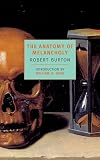
I have finally finished a careful reading of Robert Burton's "Anatomy of Melancholy," along with a wonderful book by Ruth Fox, "The Tangled Chain: The Structure of Disorder in the Anatomy of Melancholy."
This is part of my ongoing project to read maximalist fiction -- really, to read the longest, most complex books I can find. There is a tradition according to which Burton belongs with Milton and Shakespeare in the 17th century canon. I haven't been able to discover the origins of this show more judgment (I suspect someone like Harold Bloom) but it seems wholly appropriate. Even though Burton's book is nominally what is now called nonfiction, it is an act of imagination absolutely comparable to Milton and Shakespeare. If it's read as a first-person text, and not a 17th century medical treatise, it can sound to 21st century ears as a memoir, or a "theory-text," or a kind of "essay-novel" in the tradition of Musil. (Autobiographical voicing is intermittent throughout; see for example 1.2.2.6, 1.4.1.) In other words: there is no reason not to include it in the roster of indispensable English writing.
(And before I begin: the NYRB edition pictured here is not a good one to read. The print is small and the margins are clipped. After a lot of searching I found the Tudor Publishing edition edited by Dell and Jordan-Smith, printed in 1927, in hardcover. I bought a copy for only $10. It's well printed and easy to read; it's 1,000 pages long, so it's bulky but not difficult to hold. There are also editions with Burton's extensive Latin intact, but unless you are fluent in Latin, those are only impediments; Burton did not imagine his Latin guarded his text against anyone -- except in one passage, where he makes fun of scholars by putting a page in Latin, pretending they couldn't read it. There is also the multi-volume Cambridge Press edition, which is madly expensive, and not at all necessary unless you're interested in looking up Burton's sources, almost all of which were also written in Latin.)
Perhaps an initial thing to say about the book is that it cannot be read without laughing, and that the comedy is unintended. It's an inevitable effect of the three centuries that have passed since the book was written. It's absolutely full of outlandish, crazy, unbelievable anecdotes and odd usages of English.
The book is as prodigious as Shakespeare or Milton in striking ideas and writing, and I annotated nearly every one of my edition's 1,000 pages. Most of those passages are also inadvertently funny. To cure rabies, it's only necessary to go to a bath and picture a dog in the bath: the conceit (why would a dog bathe?) is enough to overcome the insanity of rabies (1.2.6.1). A good cure for farting is to put a bellows "into a clyster pipe" and pump the wind out (2.5.3.2). Horse leeches are good for hemorrhoids (2.4.3). These days people can hardly be bled, but it was once possible to take "six pounds of blood" and people wouldn't mind (1.2.1.4).
A full engagement with the book has to acknowledge that it is ridiculous at many points. Personally I did not find any of those passages detrimental to a more serious reading. And the language and ideas are often stupendous. At one point he argues that it is no harm to be a stranger who travels and has no home, and he gives a list of things that are strangers to one another, including rain, which is "a stranger to the earth" (2.3.4). Later he remarks that the ground "covets" showers, because it loves them (3.1.1.2). He has a barely controlled fascination with stagnant water, which is expressed dozens of times in the book, each time with a different poetry:
"The worst... is a thick, cloudy, misty, foggy air, or such as comes from fens, moorish grounds, lakes, muckhills, draughts, sinks, where any carcasses or carrion lies, or from whence any stinking fulsome smell comes" [1.2.2.5]
And he is of course wonderful in his repeated conjurings of different kinds of melancholics:
"...little by little... Melancholy, this feral friend, is drawn on, & as far as it reaches its branches toward the heavens, so far does it plunge its roots to the depths beneath; it was not so delicious at first, as now it is bitter and harsh: a cankered soul macerated with cares and discontents, a being tired of life, impatience, agony, inconstancy, irresolution, precipitate... into unspeakable miseries. They cannot endure company, light, or life itself... Their bodies are lean and dried up, withered, ugly, their looks harsh, very dull, and their souls tormented, as they are more or less intangled..." [1.3.1.4]
It would be possible to go on quoting until I'd quoted most of the book: the same would be true of Milton or Shakespeare. For me, however, the principal interest of the book for me is its structure. Burton offers a "Synopsis" at the start of each of the book's three "Partitions" (parts). The Synopsis is in the form of an outline organized in bracketed paragraphs { { {. If the three Synopses were printed all together, in a reasonable font size, they might be 10 feet long. He divides each of his Partitions into Sections, each Section into Members, each Member into Subsections, and in the text, each Subsection has a number and a title (some fairly long). (It is worth remarking that the famous frontispiece is a simple-minded and inaccurate synopsis: I studied it as a student, because it's the book's only visual element, but it doesn't begin to approach the text's concerns.)
This is daunting enough, but the interest comes in the fact that these Synopses do not make logical sense. In a rationally organized table of contents, each division (here, for example, each Section) would be equal to each other Section. But in Burton's Synopsis, some Sections are subheadings of other Sections. The entire organization is a chaos, and it is therefore impossible to use as a guide in reading: instead a reader is at the mercy of Burton's often unconvincing synopses and introductions.
Ruth Fox's book is a brilliant untangling of Burton's sense of reason and logic: it belongs in the tradition of Empson in that every sentence counts, and the book is argued from first to last. In that sense it's a sort of antidote to Burton: slim, well-organized, nothing superfluous. She makes the fascinating point that in the Third Partition on Love-melancholy, the last of the book's three parts, Burton inverts his own system of organization. Here is part of her analysis:
"...the logic of the first two Partitions is one of cause an effect, of action and reaction, so that Partition I states the thesis--definition, causes, symptoms, and prognostics--of the disease, while Partition II--under its single topic, cure--provides the antithesis to all of the topics of I. In I and II the three kinds of 'definite' melancholy are treated as subtopics of the cause-cure analysis.... But in Partition III he changes the base of his analysis, using now as his major organizational scheme not the logic of thesis and antithesis, but that of division... To put it another way, the roman numerals of the outline of Partitions I and II become the arabic numerals in the outline of Partition III." [pp. 124-25]
The entire structure and logic of the outline is inverted: subheading become headings.
This is an important example of the way the book is continuously getting away from Burton. Fox concludes: "Burton's book sets out to cure melancholy, and does so by being an ordered form of disorder, an answer to imperfection which contains imperfection but defines it by art." (pp. 271-72)
I could literally go on for several hundred pages on this topic. There are more logical issues in this book than any other I know, including Wittgenstein's "Tractatus." Burton tries desperately hard, in as many ways as he can, to control his subject, but melancholy keeps spreading: in one passage, everyone is a melancholic and "no mortal man is free" from it (1.2.3.1); in another, melancholy and madness are nearly equated; in another, all of melancholy is a fault of love.
The fact that Burton probably died by suicide necessarily haunts all readings of this book. In the book, suicide comes up several times (see for example 1.4.1), but most especially toward the end, where he speaks of despair. For him that is a special condition, particularly hard to bear, because the person who experiences it suffers from a partial, and therefore faulty, understanding of god. He may be able to reason very well, in fact better than anyone around him, and that makes his condition especially intractable. One woman "rose from her bed, and out of the window broke her neck into the street" (3.2.4.5). Another, a lawyer from Padua, out-argued his doctors, arguing "against himself, and so he desperately died" (3.2.4.4).
"The Anatomy of Melancholy" is a labyrinth that shifts and changes as it is read. (For Fox, this organic, unfinished quality is what makes it, paradoxically, able to present itself as a cure.) As a document of a fierce struggle against solitude, despair, unreason, confusion, depression, and suicide, it has no rival. show less
This is part of my ongoing project to read maximalist fiction -- really, to read the longest, most complex books I can find. There is a tradition according to which Burton belongs with Milton and Shakespeare in the 17th century canon. I haven't been able to discover the origins of this show more judgment (I suspect someone like Harold Bloom) but it seems wholly appropriate. Even though Burton's book is nominally what is now called nonfiction, it is an act of imagination absolutely comparable to Milton and Shakespeare. If it's read as a first-person text, and not a 17th century medical treatise, it can sound to 21st century ears as a memoir, or a "theory-text," or a kind of "essay-novel" in the tradition of Musil. (Autobiographical voicing is intermittent throughout; see for example 1.2.2.6, 1.4.1.) In other words: there is no reason not to include it in the roster of indispensable English writing.
(And before I begin: the NYRB edition pictured here is not a good one to read. The print is small and the margins are clipped. After a lot of searching I found the Tudor Publishing edition edited by Dell and Jordan-Smith, printed in 1927, in hardcover. I bought a copy for only $10. It's well printed and easy to read; it's 1,000 pages long, so it's bulky but not difficult to hold. There are also editions with Burton's extensive Latin intact, but unless you are fluent in Latin, those are only impediments; Burton did not imagine his Latin guarded his text against anyone -- except in one passage, where he makes fun of scholars by putting a page in Latin, pretending they couldn't read it. There is also the multi-volume Cambridge Press edition, which is madly expensive, and not at all necessary unless you're interested in looking up Burton's sources, almost all of which were also written in Latin.)
Perhaps an initial thing to say about the book is that it cannot be read without laughing, and that the comedy is unintended. It's an inevitable effect of the three centuries that have passed since the book was written. It's absolutely full of outlandish, crazy, unbelievable anecdotes and odd usages of English.
The book is as prodigious as Shakespeare or Milton in striking ideas and writing, and I annotated nearly every one of my edition's 1,000 pages. Most of those passages are also inadvertently funny. To cure rabies, it's only necessary to go to a bath and picture a dog in the bath: the conceit (why would a dog bathe?) is enough to overcome the insanity of rabies (1.2.6.1). A good cure for farting is to put a bellows "into a clyster pipe" and pump the wind out (2.5.3.2). Horse leeches are good for hemorrhoids (2.4.3). These days people can hardly be bled, but it was once possible to take "six pounds of blood" and people wouldn't mind (1.2.1.4).
A full engagement with the book has to acknowledge that it is ridiculous at many points. Personally I did not find any of those passages detrimental to a more serious reading. And the language and ideas are often stupendous. At one point he argues that it is no harm to be a stranger who travels and has no home, and he gives a list of things that are strangers to one another, including rain, which is "a stranger to the earth" (2.3.4). Later he remarks that the ground "covets" showers, because it loves them (3.1.1.2). He has a barely controlled fascination with stagnant water, which is expressed dozens of times in the book, each time with a different poetry:
"The worst... is a thick, cloudy, misty, foggy air, or such as comes from fens, moorish grounds, lakes, muckhills, draughts, sinks, where any carcasses or carrion lies, or from whence any stinking fulsome smell comes" [1.2.2.5]
And he is of course wonderful in his repeated conjurings of different kinds of melancholics:
"...little by little... Melancholy, this feral friend, is drawn on, & as far as it reaches its branches toward the heavens, so far does it plunge its roots to the depths beneath; it was not so delicious at first, as now it is bitter and harsh: a cankered soul macerated with cares and discontents, a being tired of life, impatience, agony, inconstancy, irresolution, precipitate... into unspeakable miseries. They cannot endure company, light, or life itself... Their bodies are lean and dried up, withered, ugly, their looks harsh, very dull, and their souls tormented, as they are more or less intangled..." [1.3.1.4]
It would be possible to go on quoting until I'd quoted most of the book: the same would be true of Milton or Shakespeare. For me, however, the principal interest of the book for me is its structure. Burton offers a "Synopsis" at the start of each of the book's three "Partitions" (parts). The Synopsis is in the form of an outline organized in bracketed paragraphs { { {. If the three Synopses were printed all together, in a reasonable font size, they might be 10 feet long. He divides each of his Partitions into Sections, each Section into Members, each Member into Subsections, and in the text, each Subsection has a number and a title (some fairly long). (It is worth remarking that the famous frontispiece is a simple-minded and inaccurate synopsis: I studied it as a student, because it's the book's only visual element, but it doesn't begin to approach the text's concerns.)
This is daunting enough, but the interest comes in the fact that these Synopses do not make logical sense. In a rationally organized table of contents, each division (here, for example, each Section) would be equal to each other Section. But in Burton's Synopsis, some Sections are subheadings of other Sections. The entire organization is a chaos, and it is therefore impossible to use as a guide in reading: instead a reader is at the mercy of Burton's often unconvincing synopses and introductions.
Ruth Fox's book is a brilliant untangling of Burton's sense of reason and logic: it belongs in the tradition of Empson in that every sentence counts, and the book is argued from first to last. In that sense it's a sort of antidote to Burton: slim, well-organized, nothing superfluous. She makes the fascinating point that in the Third Partition on Love-melancholy, the last of the book's three parts, Burton inverts his own system of organization. Here is part of her analysis:
"...the logic of the first two Partitions is one of cause an effect, of action and reaction, so that Partition I states the thesis--definition, causes, symptoms, and prognostics--of the disease, while Partition II--under its single topic, cure--provides the antithesis to all of the topics of I. In I and II the three kinds of 'definite' melancholy are treated as subtopics of the cause-cure analysis.... But in Partition III he changes the base of his analysis, using now as his major organizational scheme not the logic of thesis and antithesis, but that of division... To put it another way, the roman numerals of the outline of Partitions I and II become the arabic numerals in the outline of Partition III." [pp. 124-25]
The entire structure and logic of the outline is inverted: subheading become headings.
This is an important example of the way the book is continuously getting away from Burton. Fox concludes: "Burton's book sets out to cure melancholy, and does so by being an ordered form of disorder, an answer to imperfection which contains imperfection but defines it by art." (pp. 271-72)
I could literally go on for several hundred pages on this topic. There are more logical issues in this book than any other I know, including Wittgenstein's "Tractatus." Burton tries desperately hard, in as many ways as he can, to control his subject, but melancholy keeps spreading: in one passage, everyone is a melancholic and "no mortal man is free" from it (1.2.3.1); in another, melancholy and madness are nearly equated; in another, all of melancholy is a fault of love.
The fact that Burton probably died by suicide necessarily haunts all readings of this book. In the book, suicide comes up several times (see for example 1.4.1), but most especially toward the end, where he speaks of despair. For him that is a special condition, particularly hard to bear, because the person who experiences it suffers from a partial, and therefore faulty, understanding of god. He may be able to reason very well, in fact better than anyone around him, and that makes his condition especially intractable. One woman "rose from her bed, and out of the window broke her neck into the street" (3.2.4.5). Another, a lawyer from Padua, out-argued his doctors, arguing "against himself, and so he desperately died" (3.2.4.4).
"The Anatomy of Melancholy" is a labyrinth that shifts and changes as it is read. (For Fox, this organic, unfinished quality is what makes it, paradoxically, able to present itself as a cure.) As a document of a fierce struggle against solitude, despair, unreason, confusion, depression, and suicide, it has no rival. show less

Qui la malinconia sta anche per ipocondria. Questa è la recensione che ho fatto alla versione in lingua inglese.
Se in terra c'è un inferno, si trova certamente nel cuore di un uomo melanconico.
Gli uomini sono malvagi, maliziosi, traditori, e insignificanti, non si amano l'un l'altro né amano sé stessi, non sono ospitali, caritatevoli o socievoli come dovrebbero essere, ma falsi, dissimulatori, doppiogiochisti, disposti a tutto per raggiungere i loro fini, senza pietà, senza compassione, show more e per trarre un beneficio non esitano a procurar danno al prossimo.
Tutti i poeti sono pazzi.
Chi vive secondo le prescrizioni del medico, vive infelicemente.
La cucina è diventata un'arte, una scienza nobile; i cuochi sono dei gentiluomini.
L'ozio è un'appendice della nobiltà.
È chiaro quanto di più crudele è la penna che la spada.
Una religione è tanto vera quanto un'altra.
Una coscienza a posto è una festa continua.
Queste sono soltanto alcune citazioni tratte dal libro di cui intendo occuparmi in questo post. Posseggo l'edizione inglese che vedete riprodotta qui sopra. Un volume di ben 1342 pagine, pubblicato qualche tempo fa dalla "New York Review Books" in versione economica. La prima edizione della versione originale venne pubblicata in Inghilterra nell'anno del Signore 1621.
Ne vennero stampate diverse edizioni. L'opera di Robert Burton è un affresco enciclopedico di ciò che è stato detto e scritto sulla malinconia, a cominciare dagli autori più antichi. La malinconia, in questo testo, è una malattia universale e l'angoscia esistenziale del soggetto malinconico diventa l'emblema della condizione umana: l'anatomia della malinconia è dunque anatomia dell'uomo e anatomia del mondo.
Questo è un libro che, come bibliomane, ho tenuto per diverso tempo sotto osservazione, bene in vista sullo scaffale di fronte al tavolo dove scrivo, riservandomi di leggerlo e parlarne appena mi afferrava la "malinconia". In effetti la patologia di cui si occupa questo pastore anglicano non era la malinconia come la intendiamo noi oggi.
Malinconia deriva dal tardo latino "melancholia" e, questo, dal greco "melankholia", composto da "melas", "nero", e "khole", "bile". "Bile nera", quindi. Uno dei quattro umori sempre presenti nel corpo umano e dalla cui combinazione dipendeva la salute o la malattia. Il suo, quindi, si rivela essere, a mio parere, uno straordinario studio sulla condizione umana.
Questo libro non è un libro, un trattato, un romanzo, un poema epico, una storia, è piuttosto la negazione dell'idea di libro e di tutti i libri possibili che erano stati scritti fino ad allora. Ricordate che siamo agli inizi del seicento, la stampa del tempo era una attività commerciale e culturale ancora giovane, pensate alle comunicazioni dell'epoca. Burton voleva spiegare, facendone un resoconto, quelle che erano per lui le emozioni umane. Non si tratta solo di malinconia, depressione, tristezza. Si tratta di tutta la condizione umana.
Sono le ragioni della malinconia ad interessare lo scrittore, le motivazioni, le basi della malinconia, quali ad esempio, la bellezza, la geografia, la digestione, le passioni, le bevande, la gelosia, il bacio e così via. Occasioni, situazioni che danno origine e scatenano la malinconia. Sotto le spoglie di Democrito, Robert Burton sorridendo dice che su questa terra tutti e ognuno o è stupido o è folle, lui stesso incluso.
Questo è un libro che non si legge tutto intero, dall'inizio alla fine. Esiste anche la traduzione in italiano e salva il lettore dalla prosa inglese del seicento non sempre digeribile. E' un non-libro, lo si gusta a pezzettini, scegliendosi un argomento, un sintomo, una situazione, uno stato d'animo, una sensazione.
La bravura dello scrittore si esprime interamente per mezzo della sua penna graffiante e dell’ironia al limite del sarcasmo. La penna è la spada con cui il melanconico pastore anglicano vibra terribili stoccate che non risparmiano nessuno. Dei suoi colleghi scrittori, Burton dice: “[…] lardellano i loro magri libri col grasso delle opere degli altri. "Inediti fures" [ladri illetterati] Una colpa che tutti gli scrittori considerano tale e di cui tuttavia sono colpevoli essi stessi, "trium literarum homines" (uomini di tre lettere, fur = ladro) sono tutti ladri. Rubacchiano dalle opere degli autori antichi per riempire i loro nuovi commenti; scrostano i letamai di Ennio e il pozzo di Democrito, come ho fatto io. Lo dice lui stesso!
Per cui succede «che non solo biblioteche e negozi sono pieni delle nostre putride cartacce, ma anche seggette e latrine», "Scribunt carmina quae legunt cacantes".” Burton ci ha negato la traduzione di questa frase, che potrebbe suonare all’incirca così: Scrivono versi che vengono letti mentre si defeca, (pag. 58,59). Sui magistrati egli afferma: “Vedere un agnello giustiziato, un lupo pronunciare sentenze, latro [un rapinatore] chiamato in giudizio e fur [un ladro] seduto sul seggio; il giudice punire severamente gli altri e comportarsi peggio lui stesso, eundem furtum facere et punire, rapinam plectere, cuum sit ipse raptor [lo stesso uomo commettere il furto e punirlo, punire una rapina ed essere lui stesso un rapinatore!]. (pag. 102)
E che cosa pensare degli avvocati? “Che ora si sono moltiplicati come tante cavallette, non i padri ma le pesti del paese, e in gran parte una genia di uomini superbi, malvagi, aridi, litigiosi "crumenimulga natio" ecc., un gruppo di spremi quattrini, una compagnia di parolai, di avvoltoi con la toga, "qui ex injuria vivent et sanguine civium" [che vivono derubando e uccidendo i loro concittadini], ladri e seminatori di discordie.
Essi sono peggiori di qualsiasi predatore di strada "auri accipitres, auri exterebronides, pecuniarum hamiolae, quadruplatores, curiae harpagones, fori tintinnabula, monstra hominum, mangones" ecc.: si assumono l’incarico di fare la pace, mentre in verità sono i veri disturbatori della nostra pace, una compagnia di gente avida, senza religione, di esattori sanguisughe e opprimenti, comuni legulei famelici, "rabulas forenses", che contemporaneamente amano e onorano le nostre buone leggi, i nostri degni avvocati, che sono tanti oracoli e piloti di buon governo”. (pag. 126)
Ce n’è poi in abbondanza anche per poeti, retori, oratori, innamorati, librai, cattolici e protestanti, e non mancano i politici. Insomma, questo libro è "uno dei più pazzi e più perfettamente organizzati assalti paranoici alla concentrazione umana che sia mai stata fatta", come si è espresso il critico Angus Fletcher. show less
Se in terra c'è un inferno, si trova certamente nel cuore di un uomo melanconico.
Gli uomini sono malvagi, maliziosi, traditori, e insignificanti, non si amano l'un l'altro né amano sé stessi, non sono ospitali, caritatevoli o socievoli come dovrebbero essere, ma falsi, dissimulatori, doppiogiochisti, disposti a tutto per raggiungere i loro fini, senza pietà, senza compassione, show more e per trarre un beneficio non esitano a procurar danno al prossimo.
Tutti i poeti sono pazzi.
Chi vive secondo le prescrizioni del medico, vive infelicemente.
La cucina è diventata un'arte, una scienza nobile; i cuochi sono dei gentiluomini.
L'ozio è un'appendice della nobiltà.
È chiaro quanto di più crudele è la penna che la spada.
Una religione è tanto vera quanto un'altra.
Una coscienza a posto è una festa continua.
Queste sono soltanto alcune citazioni tratte dal libro di cui intendo occuparmi in questo post. Posseggo l'edizione inglese che vedete riprodotta qui sopra. Un volume di ben 1342 pagine, pubblicato qualche tempo fa dalla "New York Review Books" in versione economica. La prima edizione della versione originale venne pubblicata in Inghilterra nell'anno del Signore 1621.
Ne vennero stampate diverse edizioni. L'opera di Robert Burton è un affresco enciclopedico di ciò che è stato detto e scritto sulla malinconia, a cominciare dagli autori più antichi. La malinconia, in questo testo, è una malattia universale e l'angoscia esistenziale del soggetto malinconico diventa l'emblema della condizione umana: l'anatomia della malinconia è dunque anatomia dell'uomo e anatomia del mondo.
Questo è un libro che, come bibliomane, ho tenuto per diverso tempo sotto osservazione, bene in vista sullo scaffale di fronte al tavolo dove scrivo, riservandomi di leggerlo e parlarne appena mi afferrava la "malinconia". In effetti la patologia di cui si occupa questo pastore anglicano non era la malinconia come la intendiamo noi oggi.
Malinconia deriva dal tardo latino "melancholia" e, questo, dal greco "melankholia", composto da "melas", "nero", e "khole", "bile". "Bile nera", quindi. Uno dei quattro umori sempre presenti nel corpo umano e dalla cui combinazione dipendeva la salute o la malattia. Il suo, quindi, si rivela essere, a mio parere, uno straordinario studio sulla condizione umana.
Questo libro non è un libro, un trattato, un romanzo, un poema epico, una storia, è piuttosto la negazione dell'idea di libro e di tutti i libri possibili che erano stati scritti fino ad allora. Ricordate che siamo agli inizi del seicento, la stampa del tempo era una attività commerciale e culturale ancora giovane, pensate alle comunicazioni dell'epoca. Burton voleva spiegare, facendone un resoconto, quelle che erano per lui le emozioni umane. Non si tratta solo di malinconia, depressione, tristezza. Si tratta di tutta la condizione umana.
Sono le ragioni della malinconia ad interessare lo scrittore, le motivazioni, le basi della malinconia, quali ad esempio, la bellezza, la geografia, la digestione, le passioni, le bevande, la gelosia, il bacio e così via. Occasioni, situazioni che danno origine e scatenano la malinconia. Sotto le spoglie di Democrito, Robert Burton sorridendo dice che su questa terra tutti e ognuno o è stupido o è folle, lui stesso incluso.
Questo è un libro che non si legge tutto intero, dall'inizio alla fine. Esiste anche la traduzione in italiano e salva il lettore dalla prosa inglese del seicento non sempre digeribile. E' un non-libro, lo si gusta a pezzettini, scegliendosi un argomento, un sintomo, una situazione, uno stato d'animo, una sensazione.
La bravura dello scrittore si esprime interamente per mezzo della sua penna graffiante e dell’ironia al limite del sarcasmo. La penna è la spada con cui il melanconico pastore anglicano vibra terribili stoccate che non risparmiano nessuno. Dei suoi colleghi scrittori, Burton dice: “[…] lardellano i loro magri libri col grasso delle opere degli altri. "Inediti fures" [ladri illetterati] Una colpa che tutti gli scrittori considerano tale e di cui tuttavia sono colpevoli essi stessi, "trium literarum homines" (uomini di tre lettere, fur = ladro) sono tutti ladri. Rubacchiano dalle opere degli autori antichi per riempire i loro nuovi commenti; scrostano i letamai di Ennio e il pozzo di Democrito, come ho fatto io. Lo dice lui stesso!
Per cui succede «che non solo biblioteche e negozi sono pieni delle nostre putride cartacce, ma anche seggette e latrine», "Scribunt carmina quae legunt cacantes".” Burton ci ha negato la traduzione di questa frase, che potrebbe suonare all’incirca così: Scrivono versi che vengono letti mentre si defeca, (pag. 58,59). Sui magistrati egli afferma: “Vedere un agnello giustiziato, un lupo pronunciare sentenze, latro [un rapinatore] chiamato in giudizio e fur [un ladro] seduto sul seggio; il giudice punire severamente gli altri e comportarsi peggio lui stesso, eundem furtum facere et punire, rapinam plectere, cuum sit ipse raptor [lo stesso uomo commettere il furto e punirlo, punire una rapina ed essere lui stesso un rapinatore!]. (pag. 102)
E che cosa pensare degli avvocati? “Che ora si sono moltiplicati come tante cavallette, non i padri ma le pesti del paese, e in gran parte una genia di uomini superbi, malvagi, aridi, litigiosi "crumenimulga natio" ecc., un gruppo di spremi quattrini, una compagnia di parolai, di avvoltoi con la toga, "qui ex injuria vivent et sanguine civium" [che vivono derubando e uccidendo i loro concittadini], ladri e seminatori di discordie.
Essi sono peggiori di qualsiasi predatore di strada "auri accipitres, auri exterebronides, pecuniarum hamiolae, quadruplatores, curiae harpagones, fori tintinnabula, monstra hominum, mangones" ecc.: si assumono l’incarico di fare la pace, mentre in verità sono i veri disturbatori della nostra pace, una compagnia di gente avida, senza religione, di esattori sanguisughe e opprimenti, comuni legulei famelici, "rabulas forenses", che contemporaneamente amano e onorano le nostre buone leggi, i nostri degni avvocati, che sono tanti oracoli e piloti di buon governo”. (pag. 126)
Ce n’è poi in abbondanza anche per poeti, retori, oratori, innamorati, librai, cattolici e protestanti, e non mancano i politici. Insomma, questo libro è "uno dei più pazzi e più perfettamente organizzati assalti paranoici alla concentrazione umana che sia mai stata fatta", come si è espresso il critico Angus Fletcher. show less
Had to spend a while googling to make sure this wasn't an elaborate 21st century literary hoax. Apart from having aged surprisingly well (yes, he thinks depression is caused by demonic possession or unbalanced bodily fluids, but the way he both describes it, sympathises with it and discusses its treatment is remarkably modern) Burton's all-out rant on mental health, with enough asides to make Sterne's head spin, is just so much fun to read.
The penultimate Self-Help book. The medical man's history primer of Galen and Astrology. The completionist's guide to a completely exhaustive and exhausting compendium of (now) obscure references, to Latin, and frankly inexplicable inclusions.
If he went out of his way to design for us a perfect way to exhaust us with his knowledge of poverty, nobility, love, the Humors, the Galenic qualities of all kinds of foodstuffs, and do it with more in-text annotations than actual text, doing it all show more in that peculiar idiom common to any English text coming out before the advent of the DICTIONARY, then I think he succeeded. Admirably.
And let me tell you... Robert Burton defeated me.
He set out to give us the full wide range of depression in this academic treatise that fills to the height of 1620's modern medicine, stoops to the depths of hundreds of poetical sources, revolts us in explaining just HOW one might get depressed... and teaches us how to fight our own depression by making us come up with a thousand and one reasons why we ought to stop this FREAKING ENORMOUS BOOK and JUST STOP... thereby relieving our -- by now -- enormous melancholy.
I made it half-way through. I found myself negatively enjoying practically every new step in this amazingly long-winded treatise. I could not find a single aspect about it that made me want to continue.
Not the science, not the beginnings of psychology, not the weird historical curiosity.
I was defeated. I am sad to say, after 29 hours of Librivox and epub slogging, that I will now DNF.
Goodnight.
I may laugh myself to sleep. The relief is palpable. show less
If he went out of his way to design for us a perfect way to exhaust us with his knowledge of poverty, nobility, love, the Humors, the Galenic qualities of all kinds of foodstuffs, and do it with more in-text annotations than actual text, doing it all show more in that peculiar idiom common to any English text coming out before the advent of the DICTIONARY, then I think he succeeded. Admirably.
And let me tell you... Robert Burton defeated me.
He set out to give us the full wide range of depression in this academic treatise that fills to the height of 1620's modern medicine, stoops to the depths of hundreds of poetical sources, revolts us in explaining just HOW one might get depressed... and teaches us how to fight our own depression by making us come up with a thousand and one reasons why we ought to stop this FREAKING ENORMOUS BOOK and JUST STOP... thereby relieving our -- by now -- enormous melancholy.
I made it half-way through. I found myself negatively enjoying practically every new step in this amazingly long-winded treatise. I could not find a single aspect about it that made me want to continue.
Not the science, not the beginnings of psychology, not the weird historical curiosity.
I was defeated. I am sad to say, after 29 hours of Librivox and epub slogging, that I will now DNF.
Goodnight.
I may laugh myself to sleep. The relief is palpable. show less
Lists
Awards


You May Also Like


Associated Authors
Statistics
- Works
- 20
- Also by
- 10
- Members
- 2,868
- Popularity
- #8,941
- Rating
- 4.1
- Reviews
- 40
- ISBNs
- 298
- Languages
- 15
- Favorited
- 15
