
Jeff Carlson (1) (–2017)
Author of Plague Year
For other authors named Jeff Carlson, see the disambiguation page.
Series
Works by Jeff Carlson
Pressure 3 copies
Planet Of The Sealies 3 copies
Exit 2 copies
A Lovely Little Christmas Fire 2 copies
Snackfood 2 copies
Enter Sandman 2 copies
Meme 2 copies
Monsters 1 copy
Topsider [short story] 1 copy
Damned When You Do 1 copy
Nurture 1 copy
Romance 1 copy
Caninus 1 copy
Pattern Masters 1 copy
Associated Works
L. Ron Hubbard Presents Writers of the Future, Volume 23 (2007) — Contributor — 94 copies, 2 reviews
Tagged
Common Knowledge
- Legal name
- Carlson, Jeff G.
- Birthdate
- 20th century
- Date of death
- 2017-07-17
- Gender
- male
- Organizations
- Science Fiction and Fantasy Writers of America, International Thriller Writers
- Cause of death
- lung cancer
- Nationality
- USA
- Birthplace
- Mountain View, California, USA
- Places of residence
- Walnut Creek, California, USA
- Place of death
- Walnut Creek, California, USA
- Map Location
- USA
Members
Reviews
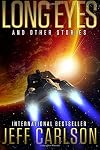
If you had a chatty friend who was a good cook and he force fed you a meal, the experience might be like reading this collection. The stories are all competently done even if they’re not all to your taste and you might prefer being served the dishes in a different order, but you still would have a good time.
In fact, I haven’t had this much fun with a book of short stories in a long time, and I’ve read a lot of them lately. The variety Carlson serves up and his chatty story notes remind show more me of Isaac Asimov and Roger Zelazny story collections. It’s not that the stories are like those two authors’ in style or theme, but the sheer fun of reading the collection is similar, and all three authors wandered from genre to genre as Carlson goes from mainstream stories to horror to science fiction and even one fantasy.
Maybe Carlson’s “Caninus” brought the Zelazny comparison to mind. It’s a story of vampirism and dogs and reminded me of Zelazny’s “Dayblood” about vampires who feed on vampires. “Pressure”, with its hero who finds himself modified to live unaided below the sea in order to build a turbine generator system, put me in mind of sections of Zelazny’s My Name Is Legion and all those late ‘60s and ‘70s underwater science fiction tales (not to mention the alienation of a similar human science project in Frederik Pohl’s Man Plus).
In fact, several of these stories reminded me favorably of other science fiction works – not ripoffs or copies, but playful and meaningful variations of classic setups and themes. “Long Eyes” has a survey ship crewed by a woman cyborg who enjoys the isolation of deep space. She comes across the ruins of a crashed colony ship and the much altered descendants of its survivors. They have taken extreme steps to survive on a resource poor world. It is a well worked out hard science fiction story. “Planet of the Sealies” comes at some of the same themes through a story of clones, with a sort of technologically mediated telepathy, conducting archaeology. But what they hope to find in the garbage dumps of our time turns out to be a surprise and a clever play on the title.
Carlson has his romantic side too as evidenced by the title “Romance”, a Quentin Tarantinoesque mainstream short short about a mob boss’ daughter running away with a mob bagman. “Gunfight at the Sugarloaf Pet Food & Taxidermy” adds robotic deer and a fish out of water plot with black Miami transplant Julie Beauchain encountering drug smugglers in Montana and wishing Indian Highsong would start thinking of her as more than just a co-worker in the Department of Fish, Wildlife, and Parks. It was a pleasant enough story, but I much preferred the couple’s second adventure, “A Lovely Little Christmas Fire”, when they must prevent Missoula, Montana from being literally devoured by a menace that has escaped from the lab. Future sports, specifically Lunar Smashball,, get mixed up with romance in “Enter Sandman”.
Of course, not all romances end happily. When the sculptor hero of “Pattern Masters”, who has taken to stealing unsecured photos from developing shops in order to use them in a collage skin on a work in progress, encounters a woman who appreciates his work, offers helpful advice – and even gets his credit card bills cancelled, things are too good to be true. Another story, “Meme”, is also inspired by the photographic records of strangers that can be found at the photo shop. Its musician hero encounters pictures of a strange script that may just be a tune – a really, really infectious tune. Carlson takes the idea of an infectious meme new places.
It’s no surprise, since Carlson is best known for his apocalyptic Plague series, that disasters of one sort or another show up here. Sometimes the disaster is very personal as in “Monsters”. Carlson, in what he calls the most disturbing thing he has ever done, takes the old urban legend of HIV-tainted needles waiting to infect unsuspecting users of public restrooms, gas pumps, and movie theaters as a starting point. His protagonist encounters just such a booby trap, and this story is his psychological and moral journey after that. I was reminded me of the talk radio host Dennis Praeger’s argument that unhappy people cause most of the world’s evils. Only slightly removed from the mainstream “Monsters” is “Nurture” which has a young coroner in Oakland, California investigating strange deformities in the temporal lobes of those she examines. She finds that adapting to the stress of urban environments can carry its own unexpected risks. (It is the one previously unpublished story here, and Carlson argues that it was never accepted by an editor due to its unusual ending, an ending I found credible and satisfying.) “Interrupt” is a very fine apocalypse story in which solar storms are not only powerful enough to fry Earth’s electronic infrastructure but the human brain and prevent it from forming short term memories. Its protagonist, an American physicist stranded in Latin America, finds himself trying to defend his research station against native mobs, find food and fuel, and somehow work out a way to protect his brain. His journal documenting mental deterioration reminded me of the classic “Flowers for Algernon” by Daniel Keyes and Arthur Herzog’s IQ 83. I am quite pleased that a novel expansion of the story seems to be in the works.
Off by themselves are two other stories. The jokey “Snack Food” is set in a future where hordes of people walk around recording everything and hope to sell it to reality tv. One such member of the Watch threatens to reveal the narrator’s habit of eating the hair of his customer’s at a salon. Carlson has said he does not read much fantasy and doesn’t, as a rule, write it which may explain why “Damned When You Do” didn’t do much for me. The voice of its narrator, father of the future, much beloved messiah Albert, is well-done, and the notion of Albert’s footsteps literally turning the Earth under his feet was interesting, but I found the ending unsatisfying, and the tall tale tone an uneasy fit with Albert’s role as messiah and scapegoat.
Rounding out the collection are a couple of essays on writing and readers’ reactions to Carlson, a poem, and some nice artwork illustrating or promoting specific stories.
I have read collections lately that may have had more skillful stories, a higher level of art if you will, and more complex presentations, but I haven’t read any that were as much fun in working out speculative ideas or varying horror and science fiction with such personable material. show less
In fact, I haven’t had this much fun with a book of short stories in a long time, and I’ve read a lot of them lately. The variety Carlson serves up and his chatty story notes remind show more me of Isaac Asimov and Roger Zelazny story collections. It’s not that the stories are like those two authors’ in style or theme, but the sheer fun of reading the collection is similar, and all three authors wandered from genre to genre as Carlson goes from mainstream stories to horror to science fiction and even one fantasy.
Maybe Carlson’s “Caninus” brought the Zelazny comparison to mind. It’s a story of vampirism and dogs and reminded me of Zelazny’s “Dayblood” about vampires who feed on vampires. “Pressure”, with its hero who finds himself modified to live unaided below the sea in order to build a turbine generator system, put me in mind of sections of Zelazny’s My Name Is Legion and all those late ‘60s and ‘70s underwater science fiction tales (not to mention the alienation of a similar human science project in Frederik Pohl’s Man Plus).
In fact, several of these stories reminded me favorably of other science fiction works – not ripoffs or copies, but playful and meaningful variations of classic setups and themes. “Long Eyes” has a survey ship crewed by a woman cyborg who enjoys the isolation of deep space. She comes across the ruins of a crashed colony ship and the much altered descendants of its survivors. They have taken extreme steps to survive on a resource poor world. It is a well worked out hard science fiction story. “Planet of the Sealies” comes at some of the same themes through a story of clones, with a sort of technologically mediated telepathy, conducting archaeology. But what they hope to find in the garbage dumps of our time turns out to be a surprise and a clever play on the title.
Carlson has his romantic side too as evidenced by the title “Romance”, a Quentin Tarantinoesque mainstream short short about a mob boss’ daughter running away with a mob bagman. “Gunfight at the Sugarloaf Pet Food & Taxidermy” adds robotic deer and a fish out of water plot with black Miami transplant Julie Beauchain encountering drug smugglers in Montana and wishing Indian Highsong would start thinking of her as more than just a co-worker in the Department of Fish, Wildlife, and Parks. It was a pleasant enough story, but I much preferred the couple’s second adventure, “A Lovely Little Christmas Fire”, when they must prevent Missoula, Montana from being literally devoured by a menace that has escaped from the lab. Future sports, specifically Lunar Smashball,, get mixed up with romance in “Enter Sandman”.
Of course, not all romances end happily. When the sculptor hero of “Pattern Masters”, who has taken to stealing unsecured photos from developing shops in order to use them in a collage skin on a work in progress, encounters a woman who appreciates his work, offers helpful advice – and even gets his credit card bills cancelled, things are too good to be true. Another story, “Meme”, is also inspired by the photographic records of strangers that can be found at the photo shop. Its musician hero encounters pictures of a strange script that may just be a tune – a really, really infectious tune. Carlson takes the idea of an infectious meme new places.
It’s no surprise, since Carlson is best known for his apocalyptic Plague series, that disasters of one sort or another show up here. Sometimes the disaster is very personal as in “Monsters”. Carlson, in what he calls the most disturbing thing he has ever done, takes the old urban legend of HIV-tainted needles waiting to infect unsuspecting users of public restrooms, gas pumps, and movie theaters as a starting point. His protagonist encounters just such a booby trap, and this story is his psychological and moral journey after that. I was reminded me of the talk radio host Dennis Praeger’s argument that unhappy people cause most of the world’s evils. Only slightly removed from the mainstream “Monsters” is “Nurture” which has a young coroner in Oakland, California investigating strange deformities in the temporal lobes of those she examines. She finds that adapting to the stress of urban environments can carry its own unexpected risks. (It is the one previously unpublished story here, and Carlson argues that it was never accepted by an editor due to its unusual ending, an ending I found credible and satisfying.) “Interrupt” is a very fine apocalypse story in which solar storms are not only powerful enough to fry Earth’s electronic infrastructure but the human brain and prevent it from forming short term memories. Its protagonist, an American physicist stranded in Latin America, finds himself trying to defend his research station against native mobs, find food and fuel, and somehow work out a way to protect his brain. His journal documenting mental deterioration reminded me of the classic “Flowers for Algernon” by Daniel Keyes and Arthur Herzog’s IQ 83. I am quite pleased that a novel expansion of the story seems to be in the works.
Off by themselves are two other stories. The jokey “Snack Food” is set in a future where hordes of people walk around recording everything and hope to sell it to reality tv. One such member of the Watch threatens to reveal the narrator’s habit of eating the hair of his customer’s at a salon. Carlson has said he does not read much fantasy and doesn’t, as a rule, write it which may explain why “Damned When You Do” didn’t do much for me. The voice of its narrator, father of the future, much beloved messiah Albert, is well-done, and the notion of Albert’s footsteps literally turning the Earth under his feet was interesting, but I found the ending unsatisfying, and the tall tale tone an uneasy fit with Albert’s role as messiah and scapegoat.
Rounding out the collection are a couple of essays on writing and readers’ reactions to Carlson, a poem, and some nice artwork illustrating or promoting specific stories.
I have read collections lately that may have had more skillful stories, a higher level of art if you will, and more complex presentations, but I haven’t read any that were as much fun in working out speculative ideas or varying horror and science fiction with such personable material. show less
This review was written for LibraryThing Member Giveaways.
Spoiler warning: This review may contain spoilers for the previous book in the series.
Plague War starts right where Plague Year left off. Ruth, Cam, and Newcombe are trekking across the country below 'the barrier' with a vaccine for the machine plague coursing through their veins, searching the mountains for other survivors to pass it on to. America is at war with itself, and without a vaccine it is more like an island war as they battle for control of habitable mountaintops. Ruth and the show more guys watch in horror as an aerial war is fought over their heads, never knowing quite who is winning and concerning themselves only with not being captured by either side.
For the most part Plague War was a more enjoyable read than the first book in my opinion. There was a bit more tension, suspense, and excitement to be found. There was also a bit more science, because the characters knew more about the nano-plague that wiped out a huge portion of humanity, and the conflict between the surviving militaries added a bit more intensity to the novel.
These were fairly well balanced out by the infuriating relationship between Cam and Ruth, however, and the fact that at times the nanotechnology just became a bit absurd. A vaccine, an anti-vaccine, and anti-anti-vaccine, and super-mega-ultra-anti-anti-anti-vaccine. Okay, I made that last one up, but you get the idea. Then again, maybe that's a perfectly accurate prediction of a futuristic nano arms race.
Regardless, I enjoyed the book. It's science fiction for a reason. It's fun and interesting, and I'm okay with that. show less
Plague War starts right where Plague Year left off. Ruth, Cam, and Newcombe are trekking across the country below 'the barrier' with a vaccine for the machine plague coursing through their veins, searching the mountains for other survivors to pass it on to. America is at war with itself, and without a vaccine it is more like an island war as they battle for control of habitable mountaintops. Ruth and the show more guys watch in horror as an aerial war is fought over their heads, never knowing quite who is winning and concerning themselves only with not being captured by either side.
For the most part Plague War was a more enjoyable read than the first book in my opinion. There was a bit more tension, suspense, and excitement to be found. There was also a bit more science, because the characters knew more about the nano-plague that wiped out a huge portion of humanity, and the conflict between the surviving militaries added a bit more intensity to the novel.
These were fairly well balanced out by the infuriating relationship between Cam and Ruth, however, and the fact that at times the nanotechnology just became a bit absurd. A vaccine, an anti-vaccine, and anti-anti-vaccine, and super-mega-ultra-anti-anti-anti-vaccine. Okay, I made that last one up, but you get the idea. Then again, maybe that's a perfectly accurate prediction of a futuristic nano arms race.
Regardless, I enjoyed the book. It's science fiction for a reason. It's fun and interesting, and I'm okay with that. show less
I don't know why I bother. I should stop looking for good post-apocalyptic fiction. So much of it is simply terrible.
The idea here is fun. Nanotechnology gets lose and replicates like mad, killing everything, but it's pressure-limited—it can't survive above 10,000 feet. Humanity is reduced to habitable islands. I don't know if everyone likes this idea, but I do. Nor does Carlson's idea entirely give out. I wanted to know more about it, and the details that came were interesting show more enough.
Everything else, however, doesn't work. I didn't care for the characters—heck, I barely cared enough to tell them apart. In certain contexts I don't need complex psychologies and revealing changes. But you need something. Even an author doing his best to imitate Michael Crichton's indifference to complex emotions ought to be able to work with base ones, like fear and excitement. (I've read half of Crichton's nanotech novel, Prey, and he handled them well enough.) But I never cared about what Carlson's characters were up to either. Live or die, it was the same to me. Like Twain on James Fennimore Cooper, I "disliked the good people in it, was indifferent to the others, and wished they would all get drowned together."
More problems. There are plot holes. Characters do things that simply don't make sense. Stuff happens that doesn't make sense. The worst offense? It doesn't even have the decency to end. It's just the first novel in a series—three books in total, or so I read.
What's up with this anyway? Science fiction thrives on ideas. But it also needs to limit ideas—to change only a few things, and let the rest play out. Monkeys take over the world is a science fiction novel; if aliens also arrive and there are zombies it's just a silly mess. That limitation ought to militate against series, because a single good idea can only be dragged out so far. Good characters, of course, could work--"come for the ideas, stay for the characters." But so few novels of this sort have good characters. Plague Year certainly doesn't.
Honestly, why would anyone keep going on a series like this? Competeism? Why did I finish it? Boredom, completeism and a fatal lowering of standards. No more, damn it. show less
The idea here is fun. Nanotechnology gets lose and replicates like mad, killing everything, but it's pressure-limited—it can't survive above 10,000 feet. Humanity is reduced to habitable islands. I don't know if everyone likes this idea, but I do. Nor does Carlson's idea entirely give out. I wanted to know more about it, and the details that came were interesting show more enough.
Everything else, however, doesn't work. I didn't care for the characters—heck, I barely cared enough to tell them apart. In certain contexts I don't need complex psychologies and revealing changes. But you need something. Even an author doing his best to imitate Michael Crichton's indifference to complex emotions ought to be able to work with base ones, like fear and excitement. (I've read half of Crichton's nanotech novel, Prey, and he handled them well enough.) But I never cared about what Carlson's characters were up to either. Live or die, it was the same to me. Like Twain on James Fennimore Cooper, I "disliked the good people in it, was indifferent to the others, and wished they would all get drowned together."
More problems. There are plot holes. Characters do things that simply don't make sense. Stuff happens that doesn't make sense. The worst offense? It doesn't even have the decency to end. It's just the first novel in a series—three books in total, or so I read.
What's up with this anyway? Science fiction thrives on ideas. But it also needs to limit ideas—to change only a few things, and let the rest play out. Monkeys take over the world is a science fiction novel; if aliens also arrive and there are zombies it's just a silly mess. That limitation ought to militate against series, because a single good idea can only be dragged out so far. Good characters, of course, could work--"come for the ideas, stay for the characters." But so few novels of this sort have good characters. Plague Year certainly doesn't.
Honestly, why would anyone keep going on a series like this? Competeism? Why did I finish it? Boredom, completeism and a fatal lowering of standards. No more, damn it. show less
Plague Year begins rather interestingly with scenes of cannibalism and you find yourself wondering what the heck is even going on, initially anyway. After 20-30 pages things become much clearer and the struggles of an almost defeated group struggling to stay alive on a freezing hilltop resorting to eating their fellow survivors paints quite the grim picture of society in the new world.
I found the story to be entertaining and quite compelling, whilst initially the changing of perspectives show more seemed a little jarring once you're used to the flow of the book it works well.
The ending was a good cap for the experiences told within this installment of the story line leaving plenty of action left to unfold in the following installments. show less
I found the story to be entertaining and quite compelling, whilst initially the changing of perspectives show more seemed a little jarring once you're used to the flow of the book it works well.
The ending was a good cap for the experiences told within this installment of the story line leaving plenty of action left to unfold in the following installments. show less
Awards

You May Also Like


Associated Authors
Statistics
- Works
- 32
- Also by
- 5
- Members
- 1,257
- Popularity
- #20,409
- Rating
- 3.5
- Reviews
- 80
- ISBNs
- 216
- Languages
- 6
- Favorited
- 2
