

Paul Bailey (1) (1937–2024)
Author of Gabriel's Lament
For other authors named Paul Bailey, see the disambiguation page.
About the Author
Paul Bailey has been the recipient of the Somerset Maugham Award, the E. M. Forster Award, & the George Orwell Memorial Prize. He is the author of six novels, including "Old Soldiers" & "Gabriel's Lament", both short-listed for the Booker Prize. He lives in England. (Bowker Author Biography)
Image credit: Paul Bailey
Works by Paul Bailey
Three Queer Lives: An Alternative Biography of Naomi Jacob, Fred Barnes, and Arthur Marshall (2001) 43 copies, 1 review
Associated Works
Tagged
Common Knowledge
- Legal name
- Bailey, Peter Harry
- Other names
- Bailey, Paul
- Birthdate
- 1937-02-16
- Date of death
- 2024-10-27
- Gender
- male
- Education
- Sir Walter St John's Grammar School For Boys, Battersea, London
Central School of Speech and Drama - Occupations
- actor
writer
critic - Organizations
- Harrods
British Council
The Oldie - Awards and honors
- E. M. Forster Award (1974)
Royal Society of Literature (Fellow, 1999) - Agent
- Matthew Marland (RCW Literary)
- Short biography
- Paul Bailey (born 16 February 1937) was a British writer and critic, author of several novels as well as biographies of Cynthia Payne and Quentin Crisp.
- Nationality
- UK
- Birthplace
- London, England, UK
- Places of residence
- London, England, UK
North Dakota, USA - Place of death
- Londen, Engeland, Groot-Brittannië
- Associated Place (for map)
- UK
Members
Discussions
British Author Challenge April 2025: PD James & Paul Bailey in 75 Books Challenge for 2025 (April 2025)
Reviews
I keep bouncing from 4 and 5 stars on this one. Wish I could do a 4.5. I feel that the writing in this piece is beautiful and fits the setting and characters along with the theme. I had no idea what I was getting into as I was just looking to read a novel in 1st POV (Point of View). I fell in love with it all; the characters, settings, events, the language, voice, style...EVERYTHING. I knew I was falling in love with it. I knew things were going to happen and I waited for them in the way show more that one waits to watch the sunset, knowing that it is the end of another day and yet the ending is too beautiful to neglect.
And, this novel did much more than to entertain. I learned things about history and art. Marcel Proust, a French novelist, was a person I had never heard of and now I'm determined to read at least one of his works. I didn't have a full understanding of the role that Romania played during WWII and now I'm looking into that history to learn more. There are other examples, throughout the book, that I am leaving out.
And there was so much to explore, human sexuality, religion, politics, and bigotry. All of these subjects touched and done so in a way that led me to not sympathy for the characters, but empathy. Interesting, I picked this book up before the elections, not knowing what it was about, and here it touches on many of the fears that many Americans, and many others around the world, are facing. A fitting read for me during these days. show less
And, this novel did much more than to entertain. I learned things about history and art. Marcel Proust, a French novelist, was a person I had never heard of and now I'm determined to read at least one of his works. I didn't have a full understanding of the role that Romania played during WWII and now I'm looking into that history to learn more. There are other examples, throughout the book, that I am leaving out.
And there was so much to explore, human sexuality, religion, politics, and bigotry. All of these subjects touched and done so in a way that led me to not sympathy for the characters, but empathy. Interesting, I picked this book up before the elections, not knowing what it was about, and here it touches on many of the fears that many Americans, and many others around the world, are facing. A fitting read for me during these days. show less
I feel as if I was introduced to Paul Bailey by Elizabeth Taylor – it is said (how true this is I don’t know) that the young Paul Bailey was the inspiration behind the character of Ludo in her 1971 novel Mrs Palfrey at the Claremont. He has also written introductions to many VMC titles, so despite having been aware of Paul Bailey for a number of years I had yet to read one of his novels. I seem to have started with Bailey’s most recent novel – despite having his first novel already show more tbr.
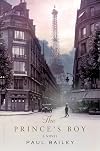
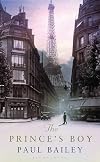
I bought The Prince’s Boy in Shakespeare and company while I was on a little trip to Paris – admittedly I was rather attracted to the cover. Reading it was a lovely little reminder of that trip – and the all too brief minutes I spent in that famous shop.
The story spans approximately forty years, moving from Paris to Bucharest and London, as we follow the emotional life of Dinu Grigorescu. In many ways, not a huge amount happens in this novel, it is the characters and their emotional and artistic lives which we explore here. The prose is deceptively simple – but flawless, and not a word is wasted in this short novel, which can be surprisingly moving at times.
In 1927 Dinu a naïve nineteen-year-old, newly arrived in Paris from Bucharest, is still deeply grieving the death of his beloved mother. Dinu is met by his older worldlier cousin Eduard. Ready at last, to taste something of life, Dinu is drawn, nervously to the Bains du Ballon d’Alsace a place notorious in Paris for offering men ‘something different’ – whatever that might be. Here Dinu meets Răzvan, (professionally named Honoré) a man already in his thirties – who Dinu is immediately captivated by. Răzvan is a fellow Rumanian, once the adopted child of a respected, wealthy man, he was the Prince’s boy, and now entrances Dinu with stories of Proust. Răzvan is Dinu’s teacher in so many ways of the world and in the ways of love. The love between these two men is sensual and very touching – destined to last a lifetime.
“It is love I am writing about here, in this memoir of a life half-lived. I have mentioned the railway porter and my inexplicable longing for him and his re-emergence as Honoré and then Răzvan. I have documented as a fact that I was drawn in my youth to men who were hairy and muscular, who represented a manliness denied me by nature. That fact, which alarmed and mystified me in the summer of 1927, causes me wry amusement now, for the brute I met in squalid circumstances on May 26 of that fateful year was none other than a prince’s boy, the adopted child of a man of exquisite refinement, who had shaken the limp hand of Marcel Proust and mingled with artists I could only dream of meeting.”
However, the summer in Paris at Dinu’s wealthy father’s expense cannot last forever – and soon Dinu is headed back to his father’s house in Bucharest. Here he finds a new stepmother installed at home – and a stepsister – and Dinu is swamped by memories of his gentle mother. It is Amalia, Dinu’s step-mother who first realises that Dinu is hiding a secret. Life in Bucharest is slower and more traditional than the life he lived in Bohemian Paris – and Dinu misses Răzvan who he knows he won’t be able to see for ages.
“Where could I hide the photograph of Răzvan? That was my first thought as I walked into the room I had been absent from all summer. Then I wondered if there was any reason why I should conceal it. He was the friend I had made in Paris, who had turned out to be the ideal companion and guide to the city for the uninformed and guileless Dinu Grigorescu. I had no cause to be secretive about this man in his late thirties, handsome as he was, captured smiling at the camera by a street photographer on the Champs-Elysées. No one was to know, unless I told them, that he was my deflowerer, my consummate and passionate love, my precious Răzvanel.”
Dinu and Răzvan’s relationship is complicated by very long periods apart, surviving on occasional letters – largely written in code. Over time, Dinu starts to learn a bit about Răzvan’s early life – and struggles to help him with the dark depressions that swamp him from time to time.
From his home in London in the 1960s – where he fled following the political upheaval of the 1940s – Dinu remembers Răzvan, and the years they spent together – years he describes as having been like a marriage.
The Prince’s Boy is something of a slow burn but I really enjoyed it – subtle and very evocative of place – it is elegantly moving, and eminently readable. show less
I bought The Prince’s Boy in Shakespeare and company while I was on a little trip to Paris – admittedly I was rather attracted to the cover. Reading it was a lovely little reminder of that trip – and the all too brief minutes I spent in that famous shop.
The story spans approximately forty years, moving from Paris to Bucharest and London, as we follow the emotional life of Dinu Grigorescu. In many ways, not a huge amount happens in this novel, it is the characters and their emotional and artistic lives which we explore here. The prose is deceptively simple – but flawless, and not a word is wasted in this short novel, which can be surprisingly moving at times.
In 1927 Dinu a naïve nineteen-year-old, newly arrived in Paris from Bucharest, is still deeply grieving the death of his beloved mother. Dinu is met by his older worldlier cousin Eduard. Ready at last, to taste something of life, Dinu is drawn, nervously to the Bains du Ballon d’Alsace a place notorious in Paris for offering men ‘something different’ – whatever that might be. Here Dinu meets Răzvan, (professionally named Honoré) a man already in his thirties – who Dinu is immediately captivated by. Răzvan is a fellow Rumanian, once the adopted child of a respected, wealthy man, he was the Prince’s boy, and now entrances Dinu with stories of Proust. Răzvan is Dinu’s teacher in so many ways of the world and in the ways of love. The love between these two men is sensual and very touching – destined to last a lifetime.
“It is love I am writing about here, in this memoir of a life half-lived. I have mentioned the railway porter and my inexplicable longing for him and his re-emergence as Honoré and then Răzvan. I have documented as a fact that I was drawn in my youth to men who were hairy and muscular, who represented a manliness denied me by nature. That fact, which alarmed and mystified me in the summer of 1927, causes me wry amusement now, for the brute I met in squalid circumstances on May 26 of that fateful year was none other than a prince’s boy, the adopted child of a man of exquisite refinement, who had shaken the limp hand of Marcel Proust and mingled with artists I could only dream of meeting.”
However, the summer in Paris at Dinu’s wealthy father’s expense cannot last forever – and soon Dinu is headed back to his father’s house in Bucharest. Here he finds a new stepmother installed at home – and a stepsister – and Dinu is swamped by memories of his gentle mother. It is Amalia, Dinu’s step-mother who first realises that Dinu is hiding a secret. Life in Bucharest is slower and more traditional than the life he lived in Bohemian Paris – and Dinu misses Răzvan who he knows he won’t be able to see for ages.
“Where could I hide the photograph of Răzvan? That was my first thought as I walked into the room I had been absent from all summer. Then I wondered if there was any reason why I should conceal it. He was the friend I had made in Paris, who had turned out to be the ideal companion and guide to the city for the uninformed and guileless Dinu Grigorescu. I had no cause to be secretive about this man in his late thirties, handsome as he was, captured smiling at the camera by a street photographer on the Champs-Elysées. No one was to know, unless I told them, that he was my deflowerer, my consummate and passionate love, my precious Răzvanel.”
Dinu and Răzvan’s relationship is complicated by very long periods apart, surviving on occasional letters – largely written in code. Over time, Dinu starts to learn a bit about Răzvan’s early life – and struggles to help him with the dark depressions that swamp him from time to time.
From his home in London in the 1960s – where he fled following the political upheaval of the 1940s – Dinu remembers Răzvan, and the years they spent together – years he describes as having been like a marriage.
The Prince’s Boy is something of a slow burn but I really enjoyed it – subtle and very evocative of place – it is elegantly moving, and eminently readable. show less
Captivating little book of a young man from Bucharest who travels to Paris and discovers himself (and his sexuality) in 1927. His story, one of finding the love of his life, is bigger in its brevity - saying so much in the jewel-like aspect of what is not said. The darker moments remind us of what coming out could be all about prior to these latter days of liberating freedom. The confessional nature of the pseudo-memoir should jar us out of any of the lingering guilt we might feel as perverts.

Paul Bailey's collection of odd-ball characters that make up Gabriel's lament are treated with a humanity that made them real. The overbearing father, the clever but shy, reserved son, the mother that appears to leave for no reason, the van Pelts: the fathers crony friends, Katherine the mad aunt and the collection of character that the son Gabriel Harvey meets in his struggle for independence all pack the novel with characters that feel might live round the corner. The story is told in the show more first person by Gabriel who blames his father for his mothers disappearance and for all that appears wrong in his world.
Oswald Harvey; Gabriel's father dominates this book. His presence is felt in almost every aspect of his son's life even though he left home when he was seventeen. Bailey's portrait of Oswald Harvey is nothing short of magnificent, A working class man with all the prejudices of a working class conservative inherits a large sum of money from a titled employer that he served for a number of years. The money entitles him to become the snob he had always been, but it drives away his wife who is thirty years younger and the lecturing hectoring father becomes too much for his shy son. The trick that Bailey pulls off is that however bad the son's view of his father appears to be, the reader never loses the sight that Oswald is probably doing his best and that the son can also appear ungrateful and difficult. The book is set mainly in London from the 1950's onwards and certainly the racist, sexist, snobbish views of Oswald are not surprising to anybody who remembers those times in a working class community. The problem for Gabriel is that he cannot cope with his father's presence and takes to hero worshipping his mother.
Gabriel eventually becomes a writer and his only novel 'Lords of Light' hits pay-dirt and an invitation for a reading in Minnesota (America) when he is still a 40 year old virgin, and a legacy from his father Oswald who has died a double amputee focuses his attention on the past that haunts him, but he realises that there is still much work to do before he can move on.
Bailey gives Oswald all the best stories and all the best lines, it is a portrait slightly grotesque, but alway humorous: a loveable old rogue might be stretching it a bit, but this is how Oswald must appear to his cronies down at the local public house. When he comes into the money he stops drinking beer and takes to drinking whiskey with his new friends in his splendid new house. Gabriel nicknamed the starch-angel by his school friends and Piss-a-bed by his father cannot compete and must get away for his own sanity. However Gabriel's stories taken from his novel 'Lords of Light' which he quotes to his new American audience, do not compete with the stories his father told. Much of the book is focused on Gabriel's issues with his family and his own prejudices and fantasies, but in the final section a new theme emerges and it is the power of religious preachers, con-artists and charlatans over the working classes. Gabriel's book and his American visit introduces this aspect to the novel and while it is easy to ridicule some of the American TV evangelists it does not quite sit with the majority of the novel.
It is a bildungsroman and the story is told mainly in linear fashion, but Bailey is able to include some flashes forward and flashes backwards that intrigue the reader and help fill out the story, without turning into a stream of conscious type puzzle. The writing is good throughout with some wit, but no self serving wisecracks, it feels a little old fashioned in places (the book was first published in 1986), but this fits well with the period that the story covers and the milieu of 1950's London. [Gabriel's Lament] was shortlisted for the 1986 Booker prize and Bailey a grammar school boy from Battersea in London is perfectly at home with his subject matter. The book does not pretend to deal with most of the grand themes of literature, but within it's perhaps limited aims it strikes me as entirely successful, if a little quaint. A four star read for me, but if this is the only book that I read by Paul Bailey I will be satisfied. show less
Oswald Harvey; Gabriel's father dominates this book. His presence is felt in almost every aspect of his son's life even though he left home when he was seventeen. Bailey's portrait of Oswald Harvey is nothing short of magnificent, A working class man with all the prejudices of a working class conservative inherits a large sum of money from a titled employer that he served for a number of years. The money entitles him to become the snob he had always been, but it drives away his wife who is thirty years younger and the lecturing hectoring father becomes too much for his shy son. The trick that Bailey pulls off is that however bad the son's view of his father appears to be, the reader never loses the sight that Oswald is probably doing his best and that the son can also appear ungrateful and difficult. The book is set mainly in London from the 1950's onwards and certainly the racist, sexist, snobbish views of Oswald are not surprising to anybody who remembers those times in a working class community. The problem for Gabriel is that he cannot cope with his father's presence and takes to hero worshipping his mother.
Gabriel eventually becomes a writer and his only novel 'Lords of Light' hits pay-dirt and an invitation for a reading in Minnesota (America) when he is still a 40 year old virgin, and a legacy from his father Oswald who has died a double amputee focuses his attention on the past that haunts him, but he realises that there is still much work to do before he can move on.
Bailey gives Oswald all the best stories and all the best lines, it is a portrait slightly grotesque, but alway humorous: a loveable old rogue might be stretching it a bit, but this is how Oswald must appear to his cronies down at the local public house. When he comes into the money he stops drinking beer and takes to drinking whiskey with his new friends in his splendid new house. Gabriel nicknamed the starch-angel by his school friends and Piss-a-bed by his father cannot compete and must get away for his own sanity. However Gabriel's stories taken from his novel 'Lords of Light' which he quotes to his new American audience, do not compete with the stories his father told. Much of the book is focused on Gabriel's issues with his family and his own prejudices and fantasies, but in the final section a new theme emerges and it is the power of religious preachers, con-artists and charlatans over the working classes. Gabriel's book and his American visit introduces this aspect to the novel and while it is easy to ridicule some of the American TV evangelists it does not quite sit with the majority of the novel.
It is a bildungsroman and the story is told mainly in linear fashion, but Bailey is able to include some flashes forward and flashes backwards that intrigue the reader and help fill out the story, without turning into a stream of conscious type puzzle. The writing is good throughout with some wit, but no self serving wisecracks, it feels a little old fashioned in places (the book was first published in 1986), but this fits well with the period that the story covers and the milieu of 1950's London. [Gabriel's Lament] was shortlisted for the 1986 Booker prize and Bailey a grammar school boy from Battersea in London is perfectly at home with his subject matter. The book does not pretend to deal with most of the grand themes of literature, but within it's perhaps limited aims it strikes me as entirely successful, if a little quaint. A four star read for me, but if this is the only book that I read by Paul Bailey I will be satisfied. show less
Lists
Awards


You May Also Like


Associated Authors
Statistics
- Works
- 24
- Also by
- 17
- Members
- 827
- Popularity
- #30,853
- Rating
- 4.0
- Reviews
- 18
- ISBNs
- 125
- Languages
- 5