
John Drake (1) (1944–)
Author of Flint and Silver: A Prequel to Treasure Island
For other authors named John Drake, see the disambiguation page.
About the Author
Image credit: via Amazon.com
Series
Works by John Drake
Tagged
Common Knowledge
- Other names
- Edwards, John C. (real name)
Drake, John (pseudonym)
Edwards, J. C. - Birthdate
- 1944
- Gender
- male
- Nationality
- UK
Members
Reviews
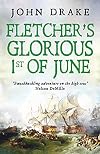
This is the second book in the series and continues the story of the chequered career of Jacob Fletcher, the illegitimate son of Lord Coignwood who was pressed into the Royal Navy in order to prevent him from inheriting his father's estates. In fact, Lady Coignwood, Jacob's stepmother is behind this because she and her children were disinherited by the late lord. Having failed to have Seaman Fletcher killed in the previous book in this one she hires the thief catcher, Samuel Slym, to kill show more him for her.
This book has two naval battles, one, the 'Glorious First of June', is a well documented fleet action and the other is a seemingly fictional engagement. Both are well written and vividly described but are not to the standard of either CS Forester, Patrick O’Brian or Alexander Kent IMHO. The real problem with this book comes when Fletcher returns to England.
Lady Sarah Coignwood is an excellent villain, a total sexual predator who has an almost mystical power over men. She will perform every sexual act imaginable with anybody whom she thinks will help her own personal cause and then throw then off without a flicker of conscience despite being close to 40. She’ll stop at nothing to get hold of the Coignwood estate. Sam Slym is totally captivated by her and is an interesting character . However, none of the other characters are either well drawn or particularly believable.
Personally I feel that this was a mish-mash that would have made two pretty good books but as one it just doesn't really work. That said and done I still found it a compulsive read that I struggled to put down. show less
This book has two naval battles, one, the 'Glorious First of June', is a well documented fleet action and the other is a seemingly fictional engagement. Both are well written and vividly described but are not to the standard of either CS Forester, Patrick O’Brian or Alexander Kent IMHO. The real problem with this book comes when Fletcher returns to England.
Lady Sarah Coignwood is an excellent villain, a total sexual predator who has an almost mystical power over men. She will perform every sexual act imaginable with anybody whom she thinks will help her own personal cause and then throw then off without a flicker of conscience despite being close to 40. She’ll stop at nothing to get hold of the Coignwood estate. Sam Slym is totally captivated by her and is an interesting character . However, none of the other characters are either well drawn or particularly believable.
Personally I feel that this was a mish-mash that would have made two pretty good books but as one it just doesn't really work. That said and done I still found it a compulsive read that I struggled to put down. show less
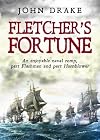
It is 1783 and as per usual Britain is at war with France. Jacob Fletcher, uncertain of his parentage, is an apprentice to a local magistrate and mayor in the Cornish sea port of Polmouth. Being an apprentice should exempt young Fletcher from being 'pressed' but the Navy is short of men and the pressgang have been directed to grab him in particular. Fletcher soon finds himself on his majesty's frigate Phiandra, about to set sail to take on the French Navy.
Meanwhile at Coignwood Hall, the show more late Sir Henry, one of the richest men in Britain, lies face down in his soup whilst his beautiful but evil widow, along with their two unscrupulous sons search though his personal papers, where they learn to their horror that virtually the entire family fortune has been left to a previously unidentified illegitimate son.
The story is told with alternate chapters following the machinations of the loathsome step-family ashore and events aboard ship. The shipboard chapters are written in the first person by the likeable if not always credible ex-apprentice and its refreshing to see the Royal Navy viewed from its lower decks.
The story certainly doesn't lack action and generally I felt that Drake handled his onboard elements, the sailing, ship-board rivalries and gunnery, reasonably well. However, Drake does ask his readers to stretch their credulity to near breaking point to believe that within a few weeks of boarding a ship for the first time in his life our ex-apprentice is able not only master the seaman’s craft enough to for all intensive purposes take command of a frigate, but also to become the strongest, toughest and bravest hand on aboard.
Similarly I felt that the author rather over-egged hid on-land machinations a little more than was strictly necessary. However, I’m a sucker for an engaging historical yarn, and even if the ending requires one final leap of faith, Drake has produced one here. I found myself thoroughly engaged as I raced through it and will certainly be on the look out for the next book in the series. show less
Meanwhile at Coignwood Hall, the show more late Sir Henry, one of the richest men in Britain, lies face down in his soup whilst his beautiful but evil widow, along with their two unscrupulous sons search though his personal papers, where they learn to their horror that virtually the entire family fortune has been left to a previously unidentified illegitimate son.
The story is told with alternate chapters following the machinations of the loathsome step-family ashore and events aboard ship. The shipboard chapters are written in the first person by the likeable if not always credible ex-apprentice and its refreshing to see the Royal Navy viewed from its lower decks.
The story certainly doesn't lack action and generally I felt that Drake handled his onboard elements, the sailing, ship-board rivalries and gunnery, reasonably well. However, Drake does ask his readers to stretch their credulity to near breaking point to believe that within a few weeks of boarding a ship for the first time in his life our ex-apprentice is able not only master the seaman’s craft enough to for all intensive purposes take command of a frigate, but also to become the strongest, toughest and bravest hand on aboard.
Similarly I felt that the author rather over-egged hid on-land machinations a little more than was strictly necessary. However, I’m a sucker for an engaging historical yarn, and even if the ending requires one final leap of faith, Drake has produced one here. I found myself thoroughly engaged as I raced through it and will certainly be on the look out for the next book in the series. show less
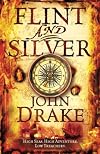
This is the first in a series of prequel novels to Stevenson's classic Treasure Island. As its title suggests, it is about the earlier lives of Long John Silver and his feared Captain, (Joe in this novel) Flint. Other characters from Treasure Island also make appearances here, including Billy Bones, the old pirate who first appears in Jim Hawkins's inn, Blind Pew, the beggar who gives Bones the infamous Black Spot, Flint's gunner Israel Hands and (very briefly) future castaway Ben Gunn. And show more Silver's famous parrot, originally belonging to Flint and indeed called Cap'n Flint, is a character in its own right here. Silver and Flint are initially friends, but quickly become rivals and then deadly enemies, with their originally joint crews split into two bitterly fighting factions. Silver comes across well in this novel - while clearly a rogue, he is a good leader of men, trusting his crew and enforcing discipline largely through a generally fair and consistently applied set of rules, the ship's "articles", while Flint rules through terror and brute force. He is here little more than a brutal and greedy sadist, whom his crew fear, but also believe when he tries to deceive them. There is one female character here, Selena, an escaped slave from a South Carolina plantation, who is initially treated well and deceived by Flint's superficial charm, but then turns to Silver. While I generally quite enjoyed this novel, it does not in spirit feel like a prequel to Treasure Island, as (unlike the sequel Flint's Island I read before this) it is not written in Stevenson's style, but like a modern historical novel from the pen of Bernard Cornwell, or Michael Crichton's Pirate Latitudes, i.e. with fairly graphic descriptions of violence and torture, though there is plenty of good old fashioned adventure as well. Finally, the early part of the novel was a little confusing as the action kept flitting backwards and forwards in the lives of the main protagonists within a three year period, before the main narrative emerged. Overall, a decent read and I will probably read the other prequels. show less
The indomitable Jacob Fletcher reappears in this sequel to Fletcher’s Fortune. Having renounced the immense Coignwood riches to which he is heir, he sets out to make his own fortune in the triangular trade. He is captured by privateers and begins a series of adventures which culminate in his pivotal role in Howe’s victory at the Glorious First of June. Meanwhile, the utterly wicked temptress, Lady Sarah Coignwood and her depraved son are plotting to destroy Fletcher and regain the show more Coignwood millions. Working with the London thief-taker, Samuel Slym (pronounced slime), they set up a nasty surprise for Fletcher upon his return to England.
Part of the fun is Edwards’ overdrawn characters. Fletcher is larger than life – bigger, tougher and smarter than anyone else, he is a natural sailor, businessman, mathematician, gunner and leader of men. He can make maidens melt into a swoon at a single smoky glance. He is also a bit of a rogue. He cares nothing for high-falootin’ notions like honor and patriotism. Still, he is (mostly) loyal to his friends and winds up doing the right thing, even if for the wrong reasons. The Coignwoods are so evil that we want to hiss when they appear and the delightful Slym is a hard but upright man who is tempted to the dark side by Lady Sarah.
Edwards sets this melodrama in a rich and authentic portrayal of 18th century England, the shore side worlds of London and Portsmouth as well as aboard ship. There is plenty of action, spiced with a little sex, and it is compelling enough to make this book a page-turner. Edwards’ ending leaves room for more adventures but, alas, no Jacob Fletcher books have followed Fletcher’s Glorious 1st of June, and that’s a shame. show less
Part of the fun is Edwards’ overdrawn characters. Fletcher is larger than life – bigger, tougher and smarter than anyone else, he is a natural sailor, businessman, mathematician, gunner and leader of men. He can make maidens melt into a swoon at a single smoky glance. He is also a bit of a rogue. He cares nothing for high-falootin’ notions like honor and patriotism. Still, he is (mostly) loyal to his friends and winds up doing the right thing, even if for the wrong reasons. The Coignwoods are so evil that we want to hiss when they appear and the delightful Slym is a hard but upright man who is tempted to the dark side by Lady Sarah.
Edwards sets this melodrama in a rich and authentic portrayal of 18th century England, the shore side worlds of London and Portsmouth as well as aboard ship. There is plenty of action, spiced with a little sex, and it is compelling enough to make this book a page-turner. Edwards’ ending leaves room for more adventures but, alas, no Jacob Fletcher books have followed Fletcher’s Glorious 1st of June, and that’s a shame. show less
You May Also Like


Associated Authors
Statistics
- Works
- 19
- Members
- 403
- Popularity
- #60,269
- Rating
- 3.5
- Reviews
- 20
- ISBNs
- 58
- Languages
- 1