
Jane Ray (1) (1960–)
Author of The Story of Christmas: Words from the Gospels of Matthew and Luke
For other authors named Jane Ray, see the disambiguation page.
About the Author
Image credit: Brian Voce
www.janeray.com
Works by Jane Ray
Associated Works
The Book of The Thousand Nights and One Night {complete} (1964) — Illustrator, some editions; Illustrator — 388 copies, 5 reviews
A Collection of Rudyard Kipling's Just So Stories (2004) — Illustrator, some editions — 286 copies, 3 reviews
Lugalbanda: The Boy Who Got Caught Up in a War: An Epic Tale From Ancient Iraq (2006) — Illustrator — 183 copies, 9 reviews
Dare to be Different - A Cebration Of Freedom In association With Amnesty International (1999) — Illustrator — 13 copies
Tagged
Common Knowledge
- Birthdate
- 1960-06-10
- Gender
- female
- Education
- Middlesex University
- Occupations
- illustrator
- Nationality
- UK
- Birthplace
- London, England, UK
- Places of residence
- North London, England, UK
- Associated Place (for map)
- England, UK
Members
Reviews

Celebrated English children's author/artist Jane Ray, so well-known for her fairy-tale retellings - her lovely illustrations can be seen in such titles as The Twelve Dancing Princesses and Hansel and Gretel - here turns to an original fairy story, spinning the tale of a young girl who discovers that a tiny fairy has taken up residence in her dollhouse. Rosy, whose close and loving relationship with her father involves lots of time caring for and playing with the dollhouse, is at something of show more a loss when he is taken away to the hospital in the middle of the night. Assured by her grandmother and mother that her Dad will be well soon, she is still unnerved, until Thistle - a diminutive fairy with a strong sense of fun, but very messy habits - appears out of the blue in her dollhouse and keeps her occupied.
With a story that works on a number of levels, and can be read in a variety of ways - as the tale of a young girl coping with her father's illness, as a magical adventure that combines both dollhouses and fairies, as an exploration of the borders between fantasy and (possible) make-believe - and gorgeous artwork that is both beautiful and expressive, The Dollhouse Fairy is a lovely picture-book. I am so glad that one of the members of the Children's Books group I co-moderate recommended it - thank you, Jenny! - as I enjoyed it immensely. I appreciated the fact that it is the father-daughter relationship that is central here, as I feel that paternal involvement in child-rearing, although more visible than it has been in the past, is still under-represented in the world of children's books. I also appreciate the fact that Rosy appears to be a bi-racial child - Jane Ray also features a possible bi-racial romance, in her delightful version of The Twelve Days of Christmas - but that this is just accepted as a part of the visual story, rather than being a cause for comment in the text.
All in all, The Dollhouse Fairy is a wonderful book - entertaining, moving, a pleasure to peruse - one that I would recommend to young doll and fairy lovers, to children whose parents are ill, and to fans of Jane Ray. show less
With a story that works on a number of levels, and can be read in a variety of ways - as the tale of a young girl coping with her father's illness, as a magical adventure that combines both dollhouses and fairies, as an exploration of the borders between fantasy and (possible) make-believe - and gorgeous artwork that is both beautiful and expressive, The Dollhouse Fairy is a lovely picture-book. I am so glad that one of the members of the Children's Books group I co-moderate recommended it - thank you, Jenny! - as I enjoyed it immensely. I appreciated the fact that it is the father-daughter relationship that is central here, as I feel that paternal involvement in child-rearing, although more visible than it has been in the past, is still under-represented in the world of children's books. I also appreciate the fact that Rosy appears to be a bi-racial child - Jane Ray also features a possible bi-racial romance, in her delightful version of The Twelve Days of Christmas - but that this is just accepted as a part of the visual story, rather than being a cause for comment in the text.
All in all, The Dollhouse Fairy is a wonderful book - entertaining, moving, a pleasure to peruse - one that I would recommend to young doll and fairy lovers, to children whose parents are ill, and to fans of Jane Ray. show less

In this gorgeous original fairy-tale from English author/artist Jane Ray, an elderly king - weighed down by sorrow after the death of his wife - proclaims that, of his three daughters, his kingdom will go to the one who makes the greatest 'mark' on their land. Suzanna, the clever eldest, decides to build a massive wooden tower, in order to demonstrate her importance; while Miranda, the vain middle one, builds a metal tower to mirror her beauty. It is the youngest daughter, humble Serenity, show more who has no idea what to do, who triumphs in the end, however, using her mother's box of blessings to transform the land itself into a lush paradise...
Visually stunning - as usual with her books, I loved Ray's artwork here, with its beautiful colors, golden accents, and mosaic-like sensibility - and boasting an appealing tale, The Apple-Pip Princess is structured like a traditional tale (three sisters, a competition, etc.), but imparts a very contemporary ethic of caring for the environment. I appreciated the message, and the fact that it was embedded in an entertaining story, I appreciated the fact that the royal family here are of African descent/appearance (one can't describe them as being "African-American," as I have seen some reviewers do, as this is not, of course, an American book), and I simply loved the artwork! All in all, a top-notch picture-book, one I recommend to all young fairy-tale lovers, and to fans of Jane Ray. show less
Visually stunning - as usual with her books, I loved Ray's artwork here, with its beautiful colors, golden accents, and mosaic-like sensibility - and boasting an appealing tale, The Apple-Pip Princess is structured like a traditional tale (three sisters, a competition, etc.), but imparts a very contemporary ethic of caring for the environment. I appreciated the message, and the fact that it was embedded in an entertaining story, I appreciated the fact that the royal family here are of African descent/appearance (one can't describe them as being "African-American," as I have seen some reviewers do, as this is not, of course, an American book), and I simply loved the artwork! All in all, a top-notch picture-book, one I recommend to all young fairy-tale lovers, and to fans of Jane Ray. show less

English artist Jane Ray, whose many lovely picture-books include numerous fairy-tale retellings - Snow White, Hansel and Gretel, and The Twelve Dancing Princesses, to name but a few! - turns her attention to that beloved Christmas carol, The Twelve Days of Christmas, and the results are charming. Here, the twelve days-worth of gifts arrive at the canal-side doorstep of a young woman, while the "True Love" lurks in the margins of each scene, bashfully observing the object of his affection. show more Finally, at the very end, he shows up in person.
The artwork here is just gorgeous, with Ray's distinctive style (her human faces always have circles on/in their cheeks), and brilliant use of color. Each two-page spread is skillfully composed, and suits the gift being depicted: the five golden rings are hoops, being driven along by children; the six geese a-laying appear in a more domestic scene, surrounding the sleeping young woman. Altogether, this is a lovely presentation of this favorite song. It's unfortunate it came out during the same season as Laurel Long's version, as I think it might be overlooked as a result, and that would be a shame. Recommended to anyone who loves this carol, and to fans of Jane Ray. show less
The artwork here is just gorgeous, with Ray's distinctive style (her human faces always have circles on/in their cheeks), and brilliant use of color. Each two-page spread is skillfully composed, and suits the gift being depicted: the five golden rings are hoops, being driven along by children; the six geese a-laying appear in a more domestic scene, surrounding the sleeping young woman. Altogether, this is a lovely presentation of this favorite song. It's unfortunate it came out during the same season as Laurel Long's version, as I think it might be overlooked as a result, and that would be a shame. Recommended to anyone who loves this carol, and to fans of Jane Ray. show less
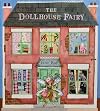
Rosy and her dad create a beautiful dollhouse together. They have a loving and warm relationship. But one day, Dad is taken to the hospital and, for the first Saturday ever, Rosy and her father don’t share hot chocolate and French toast for breakfast. When Rosy goes to play with her dollhouse, she discovers an injured fairy named Thistle. The bulk of the story consists of Rosy helping the messy, mischievous fairy, named Thistle, to recover. When Dad returns from the hospital, Thistle is show more gone. Together, father and daughter clean and repair the dollhouse. Dad leaves out “a tiny piece of cake for Thistle, just in case….”
The possibility of losing a parent is probably the most frightening concept a child encounters. Rosy copes with this terrifying thought by fantasizing a relationship with the fairy and acting out her frustration on the little dollhouse. Young children will believe that the fairy was real, that this was Rosy’s way of using her imagination to cope. Thistle is an expression of her pain.
This story would be a gentle way to open discussion with a child whose parent has been hospitalized. It lends itself well to conversation about changes in behavior. I would not suggest that the adult explain that Thistle wasn’t real and Rosy actually made the mess. You might want to let the story work its own magic. The Dollhouse Fairy is a story for adults as much as children. The father provides a beautiful example of how adults need to accept, without judgment, the way children cope with grief and fear.
Jane Ray’s illustrations, once again, are detailed and fascinating. Children will be intrigued by all the tiny items in the dollhouse. The love between parent and child and family is apparent in the body language and expression of the characters. I especially like that the family is interracial and intergenerational.
Well recommended. show less
The possibility of losing a parent is probably the most frightening concept a child encounters. Rosy copes with this terrifying thought by fantasizing a relationship with the fairy and acting out her frustration on the little dollhouse. Young children will believe that the fairy was real, that this was Rosy’s way of using her imagination to cope. Thistle is an expression of her pain.
This story would be a gentle way to open discussion with a child whose parent has been hospitalized. It lends itself well to conversation about changes in behavior. I would not suggest that the adult explain that Thistle wasn’t real and Rosy actually made the mess. You might want to let the story work its own magic. The Dollhouse Fairy is a story for adults as much as children. The father provides a beautiful example of how adults need to accept, without judgment, the way children cope with grief and fear.
Jane Ray’s illustrations, once again, are detailed and fascinating. Children will be intrigued by all the tiny items in the dollhouse. The love between parent and child and family is apparent in the body language and expression of the characters. I especially like that the family is interracial and intergenerational.
Well recommended. show less
Lists
Awards


You May Also Like


Associated Authors
Statistics
- Works
- 21
- Also by
- 26
- Members
- 1,330
- Popularity
- #19,351
- Rating
- 4.1
- Reviews
- 35
- ISBNs
- 122
- Languages
- 10
- Favorited
- 1