
Caroline Gordon (1) (1895–1981)
Author of The Collected Stories of Caroline Gordon
For other authors named Caroline Gordon, see the disambiguation page.
About the Author
Caroline Gordon's controlled use of her craft ,as well as her conservative attitudes, stamped her as a traditionalist among modern writers. Born in Kentucky as the daughter of a classics teacher and graduated from Bethany College in 1916, she married the poet Allen Tate in 1924 and became an show more associate of the Fugitives and Southern Agrarian groups that helped to make Nashville a vital mecca for southern intellectuals during the 1970s. Her first novel, Penhally (1931), traces the decline brought about by pride and jealousy as well as the devastation of the Civil War. None Shall Look Back (1937), which had the misfortune to appear shortly after Margaret Mitchell's Gone with the Wind, is a distinguished but neglected novel with a theme similar to her first. Against the story of the Allard family, which, like the house of Penhally, deteriorates through internal weaknesses, as well as because of the Civil War, Gordon sets off the heroic figure of the Confederate General Nathan Bedford Forrest. The Garden of Adonis (1937) picks up the story of the Allards, this time during the depression of the 1930s, and shows how social conditions, as well as the family's own incapacities, have put the men of the family at the mercy of their spoiled and neurotic women. Aleck Maury, Sportsman (1934), like Gordon's most famous short story "Old Red," is remarkable for its vivid hunting scenes. Probably no other woman has written so knowledgeably and sympathetically about the outdoor man's love of the fields and streams of his native region and the almost sacramental view of nature that accompanies such allegiance. (Bowker Author Biography) show less
Works by Caroline Gordon
The glory of Hera 8 copies
Associated Works
Joyce's Portrait: Criticisms and Critiques (1962) — Contributor, some editions — 14 copies, 1 review
Great American Short Stories: O. Henry Memorial Prize Winning Stories, 1919-1934 (1935) — Contributor — 11 copies, 1 review
Tagged
Common Knowledge
- Legal name
- Gordon, Caroline Ferguson
- Birthdate
- 1895-10-06
- Date of death
- 1981-04-11
- Gender
- female
- Education
- Bethany College (AB|1916)
Clarksville Classical School for Boys - Occupations
- novelist
short story writer
literary critic
teacher
reporter
professor - Organizations
- Chattanooga News
Columbia University
University of Dallas
Alpha Xi Delta - Awards and honors
- Guggenheim Fellowship (1932)
Litt.D., Bethany College (1946)
D.Litt., St. Mary's College, South Bend, Indiana, USA (1964)
National Institute Grant in Literature (1950)
National Arts Council grant (1966)
National Endowment for the Arts grant (1967) - Relationships
- Tate, Allen (husband)
Ford, Ford Madox (friend)
Percy, Walker (friend) - Nationality
- USA
- Birthplace
- Trenton, Kentucky, USA
- Places of residence
- Chattanooga, Tennessee, USA
Clarksville, Tennessee, USA - Place of death
- San Cristobal de las Casas, Chiapas, Mexico
- Burial location
- San Cristóbal de las Casas, Chiapas, Mexico
- Associated Place (for map)
- USA
Members
Reviews
4.5 stars
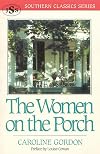
Set in the South in the early 40’s, Women on the Porch is the story of Catherine Lewis Chapman, a woman living in New York, who has just caught her husband in the middle of an affair. She packs her bags and returns to her roots, Swan Quarter, a home place occupied exclusively by the women of the Lewis family, in Tennessee. At Swan Quarter, we find the elderly Miss Kit, Catherine’s grandmother, Catherine’s aunt Willy, and Willy’s cousin, Daphne, living without men and show more subsisting on a farm that was mortgaged and partially sold away by Willy’s now deceased brother, Jack.
It seems to me that life at Swan Quarter is in suspension. These women live in the past, trapped in a routine that is seldom broken and which shields them from life and perhaps from disaster. The men who have stepped through the lives of these women have mostly left them trampled and scarred, and Catherine promises to join their number if not very careful. Catherine steps into this world, fully alive, and she struggles with her urges to continue living or to sink into the rocking chair existence that lulls and pulls here.
One of the most marked themes, to me, seems to be nature vs. man and city vs. country. The contrast between Tom Manigualt and Jim Chapman is stark and striking--they are not just two different men, they are two different ways of life. Tom is a younger, verile, but troubled man, who lives as close to the earth as he can manage, much to the chagrin of his pompous society mother. Jim is a professor, who roams the city, has little understanding of this woman who shares his name, and has sacrificed most of his early promise to a life that is unfilling and undistinguished. But, Jim lives in the future and Tom is frantically trying to recapture the past.
Much of what Gordon shows us is life moving on, change taking root, and the women of Swan Quarter left behind, trying to cling to something long gone and nearly forgotten. Over and over again we see illustrations of how disastrous attempts to expand beyond this limited horizon can be for them.
When Catherine arrives, her Aunt Willy begins to think about Catherine’s mother, Agnes. She sometimes had to remind herself that Agnes was dead. It was as if she were living on there in New York, only they did not get letters from her as they used to. They live so isolated a life that they can hardly realize the effect upon themselves, even when the outside event touches their lives intimately.
There are elements of this book that will make a person squirm with discomfort. Those elements deal with the relationship of these people and the blacks who work for them. The depiction is a true one, however, and serves to remind us that some changes are worth their weight in gold. Gordon’s view is not unkind or unappreciative, but the character’s views often are. I was encouraged by the fact that the black characters are accorded personality and intelligence. Life is changing for them as well, and Maria and Joe, particularly, seem to realize that the future is not going to look anything like the past for them.
In the end, each of these women has an individual story that reeks of disappointed hopes and dreams, and they are as isolated from others, and indeed from each other, as the farm is isolated from the world it inhabits.
What we are seeing is a way of life crumbling and sweeping its inhabitants into the future or out of the world altogether. show less
Set in the South in the early 40’s, Women on the Porch is the story of Catherine Lewis Chapman, a woman living in New York, who has just caught her husband in the middle of an affair. She packs her bags and returns to her roots, Swan Quarter, a home place occupied exclusively by the women of the Lewis family, in Tennessee. At Swan Quarter, we find the elderly Miss Kit, Catherine’s grandmother, Catherine’s aunt Willy, and Willy’s cousin, Daphne, living without men and show more subsisting on a farm that was mortgaged and partially sold away by Willy’s now deceased brother, Jack.
It seems to me that life at Swan Quarter is in suspension. These women live in the past, trapped in a routine that is seldom broken and which shields them from life and perhaps from disaster. The men who have stepped through the lives of these women have mostly left them trampled and scarred, and Catherine promises to join their number if not very careful. Catherine steps into this world, fully alive, and she struggles with her urges to continue living or to sink into the rocking chair existence that lulls and pulls here.
One of the most marked themes, to me, seems to be nature vs. man and city vs. country. The contrast between Tom Manigualt and Jim Chapman is stark and striking--they are not just two different men, they are two different ways of life. Tom is a younger, verile, but troubled man, who lives as close to the earth as he can manage, much to the chagrin of his pompous society mother. Jim is a professor, who roams the city, has little understanding of this woman who shares his name, and has sacrificed most of his early promise to a life that is unfilling and undistinguished. But, Jim lives in the future and Tom is frantically trying to recapture the past.
Much of what Gordon shows us is life moving on, change taking root, and the women of Swan Quarter left behind, trying to cling to something long gone and nearly forgotten. Over and over again we see illustrations of how disastrous attempts to expand beyond this limited horizon can be for them.
When Catherine arrives, her Aunt Willy begins to think about Catherine’s mother, Agnes. She sometimes had to remind herself that Agnes was dead. It was as if she were living on there in New York, only they did not get letters from her as they used to. They live so isolated a life that they can hardly realize the effect upon themselves, even when the outside event touches their lives intimately.
There are elements of this book that will make a person squirm with discomfort. Those elements deal with the relationship of these people and the blacks who work for them. The depiction is a true one, however, and serves to remind us that some changes are worth their weight in gold. Gordon’s view is not unkind or unappreciative, but the character’s views often are. I was encouraged by the fact that the black characters are accorded personality and intelligence. Life is changing for them as well, and Maria and Joe, particularly, seem to realize that the future is not going to look anything like the past for them.
In the end, each of these women has an individual story that reeks of disappointed hopes and dreams, and they are as isolated from others, and indeed from each other, as the farm is isolated from the world it inhabits.
What we are seeing is a way of life crumbling and sweeping its inhabitants into the future or out of the world altogether. show less
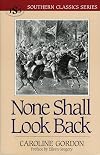
I read this book for a LT group theme read "American Civil War". (I also read it in college for a Southern Lit class many years ago). It was a quick and compelling read and Gordon's writing is excellent. She really captures the South and Southerner not just through her story, but through her use of language (and without being confusing and inaccessible). The novel takes place in Kentucky during the last year of the Civil War primarily and tells the story of a wealthy land owning family plus show more friends and cousins-- those who go to war, and those left behind at home. The chapters trade back and forth telling of the battles and of the difficulties at home.
I personally found the the battle scenes overly detailed and somewhat tedious-- troop movements, breastworks, flanks, etc. I'm just not terribly interested in this stuff. I also kept getting all the Generals mixed up-- you can't just refer to "The General" when there's ~10 of them. The scenes on the farm were much more interesting to me. It was a bit hard to be all broken up by the ending since it was pretty obvious all along how it would end. (The South loses and the hero gets killed!!). Gordon is not known for happy endings, but she doesn't tell her sad tales with a bit of melodrama or sappiness, which I appreciate.
The most interesting aspect of the novel was the perspective on the war. It's told by a war-fighter with close access to the leadership. There's strong insinuation that the leadership of the Confederate Army was weak, slow in making critical decisions, drunken, and ultimately at fault for their loss (most of the leaders were historical characters). I don't know how historically accurate the details of the leaders or the battles are. I had not seen the war painted this way before. The folks at home were also shown to have faults-- overly proud, stubborn, etc. Gordon was a Southerner herself, and certainly the book has a "pro-South" feel to it, but she didn't hide the defects or paint a picture of perfection and bliss. It's much more real than many Civil War stories. Recommended. 3.5 stars. show less
I personally found the the battle scenes overly detailed and somewhat tedious-- troop movements, breastworks, flanks, etc. I'm just not terribly interested in this stuff. I also kept getting all the Generals mixed up-- you can't just refer to "The General" when there's ~10 of them. The scenes on the farm were much more interesting to me. It was a bit hard to be all broken up by the ending since it was pretty obvious all along how it would end. (The South loses and the hero gets killed!!). Gordon is not known for happy endings, but she doesn't tell her sad tales with a bit of melodrama or sappiness, which I appreciate.
The most interesting aspect of the novel was the perspective on the war. It's told by a war-fighter with close access to the leadership. There's strong insinuation that the leadership of the Confederate Army was weak, slow in making critical decisions, drunken, and ultimately at fault for their loss (most of the leaders were historical characters). I don't know how historically accurate the details of the leaders or the battles are. I had not seen the war painted this way before. The folks at home were also shown to have faults-- overly proud, stubborn, etc. Gordon was a Southerner herself, and certainly the book has a "pro-South" feel to it, but she didn't hide the defects or paint a picture of perfection and bliss. It's much more real than many Civil War stories. Recommended. 3.5 stars. show less
Beautiful writing but confusing narrative - chapters jump between characters, and sometimes it is not clear who is speaking and at what time period. The sense of ghosts and/or spirits in this novel did not work for me. Things are referred to as having happened - but when/where/why is unclear. The ending bothered me and was disturbing. The aspect I enjoyed was the descriptive writing - there was a clear sense of place, mood etc.
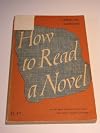
This should have been titled “How to Write a Novel.”
A few writers are considered here, most especially Henry James. But Gordon chose to use extremely long quotes from authors she considers superior and honestly, it just turned into one long, tiresome exercise in literary snobbism. One expects the snobbery from this kind of book, really. But overall the book does nothing to help or guide a young or fairly new serious reader, and becomes a vehicle for some side-eyed swipes at people like show more Somerset Maugham and E. M. Forster. I did appreciate her praise of my favorite book, The Good Soldier.
Recommended only if you’re into literary curiosities and bypaths. show less
A few writers are considered here, most especially Henry James. But Gordon chose to use extremely long quotes from authors she considers superior and honestly, it just turned into one long, tiresome exercise in literary snobbism. One expects the snobbery from this kind of book, really. But overall the book does nothing to help or guide a young or fairly new serious reader, and becomes a vehicle for some side-eyed swipes at people like show more Somerset Maugham and E. M. Forster. I did appreciate her praise of my favorite book, The Good Soldier.
Recommended only if you’re into literary curiosities and bypaths. show less
Lists
Awards

You May Also Like


Associated Authors
Statistics
- Works
- 16
- Also by
- 5
- Members
- 445
- Popularity
- #55,081
- Rating
- 3.8
- Reviews
- 8
- ISBNs
- 42
- Favorited
- 1