
Tony Harrison (1) (1937–2025)
Author of Selected Poems
For other authors named Tony Harrison, see the disambiguation page.
About the Author
Tony Harrison is the acclaimed author of numerous poems for the stage, screen, & television. His most recent volume of work is "Laureate's Block & Other Occasional Poems". He lives in Newcastle-upon-Tyne. (Bowker Author Biography)
Series
Works by Tony Harrison
The Passion: Selected from the 15th century cycle of York mystery plays in a version (1977) 2 copies
“National Trust” 1 copy
My z Leedsu 1 copy
The Nativity 1 copy
The Common Chorus (Pt. 2) 1 copy
Associated Works
Smetana : The bartered bride [libretto : English only] (1986) — Translator, some editions — 5 copies
Tagged
Common Knowledge
- Birthdate
- 1937-04-30
- Date of death
- 2025-09-26
- Gender
- male
- Education
- Leeds Grammar School, Leeds, UK
University of Leeds (Bx|Linguistics/classics) - Occupations
- poet
playwright
translator
journalist - Organizations
- Ahmadu Bello University, Nigeria
The Guardian newspaper - Awards and honors
- Northern Rock Foundation Writer's Award (2004)
PEN Pinter prize (2009)
European Prize for Literature (2010) - Relationships
- Soyinka, Wole (friend at university)
Teresa Stratas, Teresa (second spouse|divorced)
Thomas, Siân (longtime partner, collaborator)
Bryden, Bill (collaborator) - Nationality
- UK
- Birthplace
- Leeds, Yorkshire, England, UK
- Places of residence
- Beeston, Leeds, England, UK
northern Nigeria
Prague, Czechoslovakia
Newcastle upon Tyne, England, UK - Associated Place (for map)
- England, UK
Members
Reviews

The one thing everyone remembers about Tony Harrison ("everyone" in this case being a not-so-random sample of half-a-dozen of my friends...) is that he's the poet who got into trouble for making a film full of "four-letter words" in the early days of Channel Four. The film version of his long poem "v.", broadcast in 1987, led to fulminations in the tabloid press and questions in the House of Commons, so it's no surprise that Penguin rushed out a new version of the Selected Poems including show more "v." and with a still from the film on the front cover...
Harrison is a provocative poet, who's always felt it important to speak out on issues he cares about and to challenge his audience. Since this book came out he's been in trouble for his outspoken work on Bosnia and Iraq as a war-poet, and been attacked by the Archbishop of Canterbury over another television film, The blasphemers' banquet. So he doesn't show any sign of settling down to a quiet life.
Outside the arena of scandal, Harrison is probably known as much for his work in the theatre as for his lyric poetry. He has a string of successful adaptations of Greek and Latin works to his credit (his original subject at Leeds University was classics), he made the famous 1985 adaptation of the Yorkshire Mystery Plays for the National Theatre, and he's written and translated numerous opera libretti (amongst many other things, he's a noted translator from Czech...).
What struck me in this collection, in particular, were the poems from From the School of eloquence (1978) and Continuous (1981) where Harrison digs into his own working-class family background in Leeds to explore - mostly in a classical sonnet form with slight variations - the way powerlessness in society is linked to inarticulateness. He has gone on beyond the limited scope his parents had to live their lives through the freedom he has as a poet to express himself in the world, but he has never been able to discuss that with his parents because they simply don't have the tools for it. Obviously it's in the light of those poems that we have to read his more famous lyrics about the Sikh bearer on the coffee label ("Old soldiers") and about the paperhanger who left one "perfect" line of verse hidden on the wall of Wordsworth's cottage ("Remains").
But "v.", in which he tries to get into the mind of the skinheads who have sprayed obscene graffiti on his parents' tombstone,is quite something, too...! And so are the poems from his time in Nigeria where he digs, via the characters of the "White Queen" and the "PWD man", into the not-merely-metaphorical connection between colonialism and sexual exploitation. And so is "Skywriting", where the poet's glass desktop turns into the surface of a Hockney swimming-pool... show less
Harrison is a provocative poet, who's always felt it important to speak out on issues he cares about and to challenge his audience. Since this book came out he's been in trouble for his outspoken work on Bosnia and Iraq as a war-poet, and been attacked by the Archbishop of Canterbury over another television film, The blasphemers' banquet. So he doesn't show any sign of settling down to a quiet life.
Outside the arena of scandal, Harrison is probably known as much for his work in the theatre as for his lyric poetry. He has a string of successful adaptations of Greek and Latin works to his credit (his original subject at Leeds University was classics), he made the famous 1985 adaptation of the Yorkshire Mystery Plays for the National Theatre, and he's written and translated numerous opera libretti (amongst many other things, he's a noted translator from Czech...).
What struck me in this collection, in particular, were the poems from From the School of eloquence (1978) and Continuous (1981) where Harrison digs into his own working-class family background in Leeds to explore - mostly in a classical sonnet form with slight variations - the way powerlessness in society is linked to inarticulateness. He has gone on beyond the limited scope his parents had to live their lives through the freedom he has as a poet to express himself in the world, but he has never been able to discuss that with his parents because they simply don't have the tools for it. Obviously it's in the light of those poems that we have to read his more famous lyrics about the Sikh bearer on the coffee label ("Old soldiers") and about the paperhanger who left one "perfect" line of verse hidden on the wall of Wordsworth's cottage ("Remains").
But "v.", in which he tries to get into the mind of the skinheads who have sprayed obscene graffiti on his parents' tombstone,is quite something, too...! And so are the poems from his time in Nigeria where he digs, via the characters of the "White Queen" and the "PWD man", into the not-merely-metaphorical connection between colonialism and sexual exploitation. And so is "Skywriting", where the poet's glass desktop turns into the surface of a Hockney swimming-pool... show less
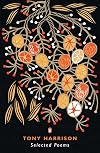
I arrive here at Tony Harrison's selected poems via the TV film for which he wrote the screenplay in 1993, Black Daisies for the Bride. It's such a coruscant film that Harrison's work has been on my radar ever since.
The poems in this collection did not disappoint me. Both in range and depth they are quite exceptional. They are also hard-going for the casual reader, for whom the subject matter is not served up on a plate. Rather, the reader has to work at understanding the meaning and show more significance of many of the titles and the references used (for example: Schwiegermutterlieder, Durham and Lines to my Grandfathers I, II).
Reading aloud helps. This is when the full metre and measure of Harrison's words echo round the body and its environment. The now-notorious poem called "v" about the desecration of his parents' graves is one such example.
I'd say that Harrison's poems are challenging, but that careful reading (even declaiming) helps. Not a word, a pause or a change of pace is wasted, so the reader is rewarded well for this effort. show less
The poems in this collection did not disappoint me. Both in range and depth they are quite exceptional. They are also hard-going for the casual reader, for whom the subject matter is not served up on a plate. Rather, the reader has to work at understanding the meaning and show more significance of many of the titles and the references used (for example: Schwiegermutterlieder, Durham and Lines to my Grandfathers I, II).
Reading aloud helps. This is when the full metre and measure of Harrison's words echo round the body and its environment. The now-notorious poem called "v" about the desecration of his parents' graves is one such example.
I'd say that Harrison's poems are challenging, but that careful reading (even declaiming) helps. Not a word, a pause or a change of pace is wasted, so the reader is rewarded well for this effort. show less
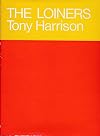
Thanks to the previous owner of my copy, who left a slip of paper in it, I know that “Loiners” refers not only to a body part but also to natives of Leeds in Northern England. In the 1950s and 1960s, the North was the source of a raw, working-class sensibility that transformed the tone of theater, film, music, and literature. Tony Harrison’s debut collection fits in this trend.
The collection has six parts, roughly corresponding to the outward chronology and stations of the first show more thirty-five years of Harrison’s life. Many of the poems in the first section describe the hormone-driven travails of an adolescent in the closing days of World War Two. One involves young lovers who resort to a cemetery to be alone (a quest embarrassingly frustrated). This juxtaposition of sex and death sets the tone for much of what follows.
The second part, the longest, reflects Harrison’s time as a teacher in Northern Nigeria. These poems deal with the predatory sex lives of British expats there. Part Three draws on the time Harrison spent in Eastern Europe, much of it as a teacher in Prague, long before the fall of the Iron Curtain. The location shifts back to England in Part Four, specifically Newcastle. The remaining two parts contain one long poem each, the final one painfully recounting the loss at birth of a first child.
Like the subject matter, the language is not genteel, but Harrison demonstrates through meter, rhyme, and alliteration a secure mastery of poetic technique. There are many striking images, such as “[t]he road’s a royal python’s dark digestive tract.” He loves history and the Latin classics and has a weakness for puns. These interests collide in the groaner “Julius Seizure.”
These poems are accessible to anyone prepared to devote the attention good poetry deserves, but I still don’t know who or what a PWD man is. show less
The collection has six parts, roughly corresponding to the outward chronology and stations of the first show more thirty-five years of Harrison’s life. Many of the poems in the first section describe the hormone-driven travails of an adolescent in the closing days of World War Two. One involves young lovers who resort to a cemetery to be alone (a quest embarrassingly frustrated). This juxtaposition of sex and death sets the tone for much of what follows.
The second part, the longest, reflects Harrison’s time as a teacher in Northern Nigeria. These poems deal with the predatory sex lives of British expats there. Part Three draws on the time Harrison spent in Eastern Europe, much of it as a teacher in Prague, long before the fall of the Iron Curtain. The location shifts back to England in Part Four, specifically Newcastle. The remaining two parts contain one long poem each, the final one painfully recounting the loss at birth of a first child.
Like the subject matter, the language is not genteel, but Harrison demonstrates through meter, rhyme, and alliteration a secure mastery of poetic technique. There are many striking images, such as “[t]he road’s a royal python’s dark digestive tract.” He loves history and the Latin classics and has a weakness for puns. These interests collide in the groaner “Julius Seizure.”
These poems are accessible to anyone prepared to devote the attention good poetry deserves, but I still don’t know who or what a PWD man is. show less

Chemistry and poetry? Strange bedfellows. The evolution of modern weaponry, from TNT to nerve gas, is explored in rhyme and dance, with magicians and strange surreal effects to complete the picture. Another play in the terrified of science genre, which spawned many good plays, but I've been reading so many in a row lately that it's difficult to be objective, since they are presenting a decidedly biased and one-sided view of science. However, I will insist on reviewing this play based on its show more merits and not on the unfortunate juxtaposition with other anti-science plays, and I will say that it is a very well written and interesting work. show less
Lists
Awards


You May Also Like


Associated Authors
Statistics
- Works
- 52
- Also by
- 10
- Members
- 939
- Popularity
- #27,356
- Rating
- 3.7
- Reviews
- 10
- ISBNs
- 95
- Languages
- 3
- Favorited
- 3