

Stephen Taylor (1) (1948–)
Author of Caliban's Shore: The Wreck of the Grosvenor and the Strange Fate of Her Survivors
For other authors named Stephen Taylor, see the disambiguation page.
About the Author
Stephen Taylor grew up in South Africa and now works for The Times of London
Works by Stephen Taylor
Caliban's Shore: The Wreck of the Grosvenor and the Strange Fate of Her Survivors (2004) 270 copies, 8 reviews
Tagged
Common Knowledge
- Birthdate
- 1948
- Gender
- male
- Education
- St. David's Marist College, Inanda (Sandton, Gauteng, South Africa)
Members
Reviews
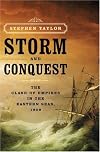
Napoleonic history is not my normal beat, nor am I a devotee of Patrick O'Brien's novels, but I was curious as to what "Mauritius" meant apart from being an obscure battle honor of the Royal Navy and that was sufficient reason to make me pick up this history.
What you get for your time and money is a roundabout chronicle of how the British finally reduced one of the last redoubts of French naval force projection, in spite of cheapness on the part of the India Company, inter-service strife, show more hurricanes, failures of command, and, yes, more hurricanes. If you want proof that God is an Englishman you'll find it in this book.
While the chronicle of events is interesting enough in and of itself, Taylor's heart is in depicting the characters that populate his tale. There is the esteemed Adm. Pellew, with his somewhat spoiled sons. There's the put-upon India Company high official George Barlow, who while being cuckolded by his wife is at the same time trying to bring a recalcitrant Company army establishment to heel. There are RN captains such as Robert Corbet and Nesbit Willoughby, in hot pursuit of honor to the point of being unbalanced and as much a menace to their men as to the French. Amidst all the others there are the real heroes of this book, the captains of the ships of the East India Company who, in the face of lack of respect from the gentlemen of The Royal Navy, have to cope with terrible weather and the lack of naval support to try and bring their ships, crews, and passengers home. show less
What you get for your time and money is a roundabout chronicle of how the British finally reduced one of the last redoubts of French naval force projection, in spite of cheapness on the part of the India Company, inter-service strife, show more hurricanes, failures of command, and, yes, more hurricanes. If you want proof that God is an Englishman you'll find it in this book.
While the chronicle of events is interesting enough in and of itself, Taylor's heart is in depicting the characters that populate his tale. There is the esteemed Adm. Pellew, with his somewhat spoiled sons. There's the put-upon India Company high official George Barlow, who while being cuckolded by his wife is at the same time trying to bring a recalcitrant Company army establishment to heel. There are RN captains such as Robert Corbet and Nesbit Willoughby, in hot pursuit of honor to the point of being unbalanced and as much a menace to their men as to the French. Amidst all the others there are the real heroes of this book, the captains of the ships of the East India Company who, in the face of lack of respect from the gentlemen of The Royal Navy, have to cope with terrible weather and the lack of naval support to try and bring their ships, crews, and passengers home. show less
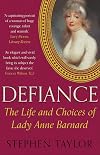
I found this biography by searching the library catalogue for 'French Revolution'; I have never heard of Lady Anne Barnard nee Lindsay, and she apparently hobnobbed with the big names in the eighteenth century, which is one of my pet historical eras. She was apparently even friends with Prinny's secret first wife, Maria 'Fitz' Fitzherbert and I've definitely read about her life!
Anyway, the blurb makes Lady Anne sound fascinating, a sort of eccentric bluestocking professional spinster who show more wrote songs and charmed the ton, but this biography is more like the lead character in a novel that the author really, really wants the reader to love, but who never lives up to the promise. All adjective, no action; all tell, no show. The woman wrote thousands of letters, travel diaries and eventually her own memoirs, but her supposed wit is never really in evidence. What did she do? Refuse to marry perfectly decent men who for some reason remained devoted and even left all their money to her (even if she never saw any), and wasted years of her life on a Georgian fuck boy who was probably in love with his best friend. After all that, I sort of wanted her to make a name for herself as a middle-aged novelist who moves in with her 'very dear friend' and cocks a final snook at society's expectations - but no. She married a toyboy, used her connections to finagle him into a post overseas, and set sail to help colonise South Africa. Apparently Anne is better known there, for her epic eighteenth century travelogues of the country. They didn't have children of their own, because Anne was in her forties when they married, but he fathered various illegitimate offspring - one with a slave while married to Anne! - and she later helped to raise them. She was either ahead of her time or a complete sap - the young Mr Barnard did have fine teeth, which is obviously why she was so eager to forgive him.
I did like the young Anne, with her bohemian sense of fashion, usually handmade, and 'frank, vulgar sort of half-Scotch' appraisal of society. When most women were getting married in their teens, Anne held off and her widowed mother allowed her the choice - but her indecision and teasing was bit much for even for 250 years ago. She 'attracted innumerable admirers, more than twenty serious suitors and eleven more proposals' after receiving her first offer at sixteen! As the adverts say, what was her secret? I still can't tell after reading this biography. show less
Anyway, the blurb makes Lady Anne sound fascinating, a sort of eccentric bluestocking professional spinster who show more wrote songs and charmed the ton, but this biography is more like the lead character in a novel that the author really, really wants the reader to love, but who never lives up to the promise. All adjective, no action; all tell, no show. The woman wrote thousands of letters, travel diaries and eventually her own memoirs, but her supposed wit is never really in evidence. What did she do? Refuse to marry perfectly decent men who for some reason remained devoted and even left all their money to her (even if she never saw any), and wasted years of her life on a Georgian fuck boy who was probably in love with his best friend. After all that, I sort of wanted her to make a name for herself as a middle-aged novelist who moves in with her 'very dear friend' and cocks a final snook at society's expectations - but no. She married a toyboy, used her connections to finagle him into a post overseas, and set sail to help colonise South Africa. Apparently Anne is better known there, for her epic eighteenth century travelogues of the country. They didn't have children of their own, because Anne was in her forties when they married, but he fathered various illegitimate offspring - one with a slave while married to Anne! - and she later helped to raise them. She was either ahead of her time or a complete sap - the young Mr Barnard did have fine teeth, which is obviously why she was so eager to forgive him.
I did like the young Anne, with her bohemian sense of fashion, usually handmade, and 'frank, vulgar sort of half-Scotch' appraisal of society. When most women were getting married in their teens, Anne held off and her widowed mother allowed her the choice - but her indecision and teasing was bit much for even for 250 years ago. She 'attracted innumerable admirers, more than twenty serious suitors and eleven more proposals' after receiving her first offer at sixteen! As the adverts say, what was her secret? I still can't tell after reading this biography. show less
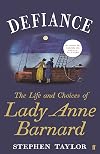
This was a great biography, I can't recommend it highly enough. The author has grasped that whilst the details of someone's life are fascinating, sometimes less is more. So I've finished 'her story' wanting to go and read the original memoirs written by Anne herself, rather than going never too hear about the person again. Also, he doesn't do the really annoying 'why my person is so significant reading this book is going to change your life'. The book speaks for itself.
Anne had a fascinating show more life: she was a young witness to the Edinburgh Enlightenment, meeting Hume and Rousseau. She was a friend of the mistress (then wife) of the Prince of Wales. She turned down repeated offers of marriage, gained a reputation as a flirt, and had her heart broken by one leading British politician, and rejecting another. But she is famous for her diaries and letters recording her time in the Cape as the wife of the Secretary to the Governor.
I really liked this. If you're interested in the regency period, colonialism, early travel narratives, or even Scottish history (even Walter Scott appears) you might like this too.(ARC from Netgalley) show less
Anne had a fascinating show more life: she was a young witness to the Edinburgh Enlightenment, meeting Hume and Rousseau. She was a friend of the mistress (then wife) of the Prince of Wales. She turned down repeated offers of marriage, gained a reputation as a flirt, and had her heart broken by one leading British politician, and rejecting another. But she is famous for her diaries and letters recording her time in the Cape as the wife of the Secretary to the Governor.
I really liked this. If you're interested in the regency period, colonialism, early travel narratives, or even Scottish history (even Walter Scott appears) you might like this too.(ARC from Netgalley) show less
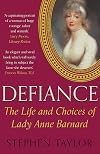
Lady Anne Barnard is a character who existed on the fringes of both nobility and political high society in the late 18th century. Born into a financially constrained titles family in Scotland, her family was much older than her mother and her upbringing did not afford many luxuries. Entering into Edinburgh society at 16 Anne was expected to marry for money, to support her younger siblings, but this did not happen and Anne moved to London. Juggling various suitors Anne married late and to a show more man socially her inferior but it appears to have been a love match. What make Anne Barnard such an engaging character is that she kept much of her correspondence over the years and published it.
I really enjoyed this book because Anne was such a relatively obscure character. She witnessed many atrocities in the French Revolution, was a friend to the Prince of Wales and assisted his secret marriage to Maria Fitzherbert, was a close friend to many major politicians and helped to develop diplomatic relationships in South Africa as Britain took power. All-in-all she was a fascinating woman and this biography more than does her justice. Taylor has researched his book deeply, drawing on both contemporary sources and Anne's own meticulously kept papers, and produced a lively story of a remarkable woman show less
I really enjoyed this book because Anne was such a relatively obscure character. She witnessed many atrocities in the French Revolution, was a friend to the Prince of Wales and assisted his secret marriage to Maria Fitzherbert, was a close friend to many major politicians and helped to develop diplomatic relationships in South Africa as Britain took power. All-in-all she was a fascinating woman and this biography more than does her justice. Taylor has researched his book deeply, drawing on both contemporary sources and Anne's own meticulously kept papers, and produced a lively story of a remarkable woman show less
Lists
Awards


You May Also Like


Associated Authors
Statistics
- Works
- 10
- Members
- 886
- Popularity
- #28,919
- Rating
- 3.9
- Reviews
- 26
- ISBNs
- 129
- Languages
- 1