
Gary Hart (1) (1936–)
Author of James Monroe
For other authors named Gary Hart, see the disambiguation page.
About the Author
Gary Hart represented the state of Colorado in the U.S. Senate from 1975 to 1987. A cochair, with Warren Rudman, of the U.S. Commission on National Security for the 21st Century, he is the author of 12 books
Image credit: Wikimedia Commons (U.S. Congressional Photo)
Works by Gary Hart
Associated Works
Reader's Digest Condensed Books 1985 v05: Voices on the Wind / Trauma / The Donkey's Gift / The Double Man (1985) — Author — 32 copies
Tagged
Common Knowledge
- Canonical name
- Hart, Gary
- Other names
- Blackthorn, John (pseudonym)
- Birthdate
- 1936-11-28
- Gender
- male
- Education
- Bethany Nazarene College (now Southern Nazarne University)
Yale University (Divinity School, Law School)
University of Oxford (St Anthony's College) - Occupations
- lawyer (admitted to bar, 1965, Colorado and District of Columbia)
Camaign manager for George McGovern presidental campaign (1972)
U.S. Senator (Colorado, 1975-1987, Democrat)
novelist - Organizations
- U.S. Department of Justice (attorney, 1964-1965)
U.S. Department of the Interior (special asst. to the solicitor, 1965-1967)
Coudert Brothers (senor counsel, international law firm)
U.S. Commission on National Security/21st Century (co-chair, 1998-2001, also known as National Commission on Terrorism)
Global Green (president, 2003-2004)
Council for a Livable World (chairman) (show all 7)
Council on Foreign Relations (member) - Relationships
- Nolan, Janne (advisee)
- Nationality
- USA
- Birthplace
- Ottawa, Kansas, USA
- Places of residence
- Bethany, Oklahoma, USA (education)
New Haven, Connecticut, USA (education)
Washington, D.C., USA
Denver, Colorado, USA
Kittredge, Colorado, USA - Associated Place (for map)
- USA
Members
Reviews
James Monroe: The American Presidents Series: The 5th President, 1817-1825 (American Presidents (Times)) by Gary Hart
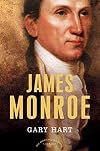
Is it possible that Gary Hart didn't know the meaning of the word "biography"?
Arthur M. Schlesinger's American Presidents offer a series of short biographies on, guess what, the American Presidents. They run between 150 and 200 pages, usually toward the shorter end of that range, so naturally they can't cover every detail. But the flip side of that is, it means that every word is precious and not to be wasted.
So why, I ask seriously, all the philosophy about the Monroe Doctrine? Yes, it's show more the only reason anyone remembers James Monroe. And, yes, it's one of the few things that Monroe did that really endures. Of course a biography of Monroe needs to discuss it. But, as the book makes clear, it is not an official government policy -- Congress never ratified it, e.g. It's just a policy that Monroe enunciated. It came to be important, but no one knew that until long after Monroe was dead. It has meant different things to different presidents (witness the Roosevelt Corollary) -- and, at the time it was enunciated, the United States didn't even have the means to enforce it!
But the book isn't even about the Doctrine's history; it's just about the thinking that went into it. Given that, even by the standards of the American Presidents books, this biography is short, it's clear that a lot of other things went out the window. I definitely felt the lack.
Readers should probably also know that there isn't much original research here. Hart is constantly quoting sources -- but not primary sources; he's quoting other Monroe biographers! Nor does he use this information to substantiate a thesis he is trying to offer; he has a thesis (that Monroe, who was a soldier as a young man, was the first "National Security" president), but all those quotations don't strengthen it; they simply show an author who didn't go to the primary sources. If this had been presented to me as a class paper, I frankly would have had a long talk with the author about plagiarism and originality.
I'm the sort of guy who likes to study less well-known figures (in the American Presidents series, e.g., I have read the biographies of presidents such as John Tyler and Zachary Taylor and Franklin Pierce and Chester A. Arthur, but not Washington or Lincoln or the Roosevelts) -- but that means that, when I do read one of these biographies, I want to read something that I couldn't get from a general history. For me, this volume failed the "obscure enough for you?" tests; be aware that it might do the same for you.
[Modifications to review: 11/25 corrected the missing word "So why, I ask seriously....] show less
Arthur M. Schlesinger's American Presidents offer a series of short biographies on, guess what, the American Presidents. They run between 150 and 200 pages, usually toward the shorter end of that range, so naturally they can't cover every detail. But the flip side of that is, it means that every word is precious and not to be wasted.
So why, I ask seriously, all the philosophy about the Monroe Doctrine? Yes, it's show more the only reason anyone remembers James Monroe. And, yes, it's one of the few things that Monroe did that really endures. Of course a biography of Monroe needs to discuss it. But, as the book makes clear, it is not an official government policy -- Congress never ratified it, e.g. It's just a policy that Monroe enunciated. It came to be important, but no one knew that until long after Monroe was dead. It has meant different things to different presidents (witness the Roosevelt Corollary) -- and, at the time it was enunciated, the United States didn't even have the means to enforce it!
But the book isn't even about the Doctrine's history; it's just about the thinking that went into it. Given that, even by the standards of the American Presidents books, this biography is short, it's clear that a lot of other things went out the window. I definitely felt the lack.
Readers should probably also know that there isn't much original research here. Hart is constantly quoting sources -- but not primary sources; he's quoting other Monroe biographers! Nor does he use this information to substantiate a thesis he is trying to offer; he has a thesis (that Monroe, who was a soldier as a young man, was the first "National Security" president), but all those quotations don't strengthen it; they simply show an author who didn't go to the primary sources. If this had been presented to me as a class paper, I frankly would have had a long talk with the author about plagiarism and originality.
I'm the sort of guy who likes to study less well-known figures (in the American Presidents series, e.g., I have read the biographies of presidents such as John Tyler and Zachary Taylor and Franklin Pierce and Chester A. Arthur, but not Washington or Lincoln or the Roosevelts) -- but that means that, when I do read one of these biographies, I want to read something that I couldn't get from a general history. For me, this volume failed the "obscure enough for you?" tests; be aware that it might do the same for you.
[Modifications to review: 11/25 corrected the missing word "So why, I ask seriously....] show less
In spite of being the author of the Monroe doctrine (and, yes, there's some debate about that), James Monroe isn't usually high in the rankings of US Presidents. The last of the Virginian revolutionary-era Presidents, he falls under some pretty big shadows and so tends to get short-changed a bit. Gary Hart's study of Monroe helps to fill in the gaps in the life of a President that isn't so well known these days.
Hart's theme is that Monroe should be considered our first "national security show more President". Certainly, his administration during aftermath of the Louisiana Purchase and the War of 1812 concentrated on issues of national boundaries and border protection - some themes that resonate today. This is the era when, especially in South America, colonies in the Western Hemisphere were shucking off European control. Monroe had to deal with how to support these new states without ruining relations with Spain and other European nations, making the spread of democracy a foreign policy agenda even through today's events. Out of these considerations came the Monroe doctrine, that the Western Hemisphere is closed to European colonization and influence and that the US would treat European meddling as an attack while remaining neutral in European affairs. While there's been a lot of debate about the source of the doctrine, what it means, and how (or even whether) it should be implemented, this foreign policy approach was the guiding principle for the US response to the Soviet Union as it acted in Central and South America during the Cold War, and continues to be implemented today.
James Monroe is a good discussion of the Monroe Presidency as relates to issues of national security. It isn't a general biography, so there are gaps in the history and discussion of other aspects of his career are missing. In spite of the somewhat narrow focus of the book, it was well worth the time spent for a new look at an interesting man. show less
Hart's theme is that Monroe should be considered our first "national security show more President". Certainly, his administration during aftermath of the Louisiana Purchase and the War of 1812 concentrated on issues of national boundaries and border protection - some themes that resonate today. This is the era when, especially in South America, colonies in the Western Hemisphere were shucking off European control. Monroe had to deal with how to support these new states without ruining relations with Spain and other European nations, making the spread of democracy a foreign policy agenda even through today's events. Out of these considerations came the Monroe doctrine, that the Western Hemisphere is closed to European colonization and influence and that the US would treat European meddling as an attack while remaining neutral in European affairs. While there's been a lot of debate about the source of the doctrine, what it means, and how (or even whether) it should be implemented, this foreign policy approach was the guiding principle for the US response to the Soviet Union as it acted in Central and South America during the Cold War, and continues to be implemented today.
James Monroe is a good discussion of the Monroe Presidency as relates to issues of national security. It isn't a general biography, so there are gaps in the history and discussion of other aspects of his career are missing. In spite of the somewhat narrow focus of the book, it was well worth the time spent for a new look at an interesting man. show less
James Monroe: The American Presidents Series: The 5th President, 1817-1825 (American Presidents (Times)) by Gary Hart
As is the intent of this series, this book offers a once-over-lightly coverage of the life and presidency of Monroe, with an emphasis on identifying one or two big themes which summarize his importance. In the author's case, he focuses on Monroe as a "national security" president. This is reasonable enough and the book is competently written and an interesting read. Hart goes off-the-rez at his peril, though; some of his bigger ideas strike this reader as specious. For example, he cites the show more Monroe Doctrine as remaining intact until Bush 43's mideastern wars, but it is not clear to me why two world wars, Bush 41's near eastern war, occupations of Germany and the Philippines, two Asian land wars, and indeed, neutrality or even a pro-UK slant during the Falkland War don't represent much earlier blows against the rather vague doctrine. show less
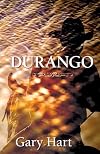
This is a tale of the modern west that has its beginnings long, long ago. It deals with water rights, always a volatile subject in Colorado, especially in the Durango area. Ranchers, farmers and oil folks are all vying for enough, not to mention just the basic needs of the cities and towns down there. Hart humanizes the conflict through Daniel Sheridon, a small time rancher who got burned by politics a long time ago in a raw deal that a young reporter is now trying to stir up once again. The show more drama moves on to include the Ute reservation and their fight for the rights of the water that is on their land. The themes are old--progress versus protecting the past, money versus quality of life, people versus corporations--all subjects very much in the news these days. This is a political story, a love story, and character study of the West, its people and places. It also gave me a goal of going to explore the Weminuche Wilderness to discover more of Colorado's amazing beauty and unique wilderness. show less
Awards


You May Also Like


Associated Authors
Statistics
- Works
- 22
- Also by
- 1
- Members
- 671
- Popularity
- #37,613
- Rating
- 3.2
- Reviews
- 11
- ISBNs
- 55
- Languages
- 1
