
Gerard Jones (1) (1957–)
Author of Men of Tomorrow: Geeks, Gangsters, and the Birth of the Comic Book
For other authors named Gerard Jones, see the disambiguation page.
About the Author
Gerard Jones's work has appeared in Harper's, The New York Times, and other publications. He is also a former comic-book and screen writer whose credits include Batman, Spider-Man, and Pokemon, and whose own creations have been turned into video games and cartoon series. More recently he has show more developed the Art & Story Workshops for children and adolescents. Jones is the founder of Media Power for Children and serves on the advisory board of the Comparative Media Studies Program at M.I.T. He lives in San Francisco with his wife and son show less
Image credit: http://marvel.wikia.com/Gerard_Jones
Series
Works by Gerard Jones
Killing Monsters: Why Children Need Fantasy, Super Heroes, and Make-Believe Violence (2000) 236 copies, 3 reviews
Green Lantern [1990] Annual #1 3 copies
Guy Gardner 2 copies
2099 Unlimited #4 2 copies
Green Lantern [1990] Annual #2 2 copies
Green Lantern [1990] #33 2 copies
El Diablo #1 2 copies
Elongated Man #1-4 2 copies
Green Lantern: Mosaic #5 2 copies
Justice League America #97 1 copy
Justice League America #98 1 copy
Malibu Ashcan: Ultraforce 1 copy
Justice League America #96 1 copy
Justice League America #94 1 copy
Hulk 2099 #8 1 copy
Hulk 2099 #3 1 copy
Justice League America #93 1 copy
Hulk 2099 #2 1 copy
Wonder Man # 14 1 copy
Hulk 2099 #9 1 copy
Hulk 2099 #6 1 copy
Hulk 2099 #7 1 copy
Justice League America #99 1 copy
Freex #8 1 copy
Justice League America #100 1 copy
Justice League America #101 1 copy
Justice League America #112 1 copy
Justice League America #103 1 copy
Justice League America #104 1 copy
Justice League America #105 1 copy
Justice League America #106 1 copy
Justice League America #107 1 copy
Justice League America #108 1 copy
Justice League America #109 1 copy
Justice League America #110 1 copy
Justice League America #111 1 copy
Justice League America #113 1 copy
DC Universe: Trinity 11 1 copy
DC Universe: Trinity 12 1 copy
The Shadow Strikes! #17 1 copy
Wonder Man (1991) #15 1 copy
Fantastic Four: Fireworks #1 1 copy
DC Universe: Trinity 9 1 copy
Wonder Man (1991) #4 1 copy
The Trouble with Girls #10 1 copy
Wonder Man (1991) #5 — Author — 1 copy
DC Universe: Trinity 10 1 copy
DC Universe: Trinity 8 1 copy
Wonder Man (1991) #6 — Author — 1 copy
Freex #3 1 copy
Solitaire #2 1 copy
Solitaire #5 1 copy
Prime (1995) #1 1 copy
Wonder Man (1991) #7 — Author — 1 copy
Wonder Man (1991) #9 — Author — 1 copy
Wonder Man (1991) #8 — Author — 1 copy
Green Lantern: Mosaic 1 copy
DC Universe: Trinity 7 1 copy
Green Lantern [1990] #28 1 copy
DC Universe: Trinity 1 1 copy
DC Universe: Trinity 2 1 copy
DC Universe: Trinity 3 1 copy
DC Universe: Trinity 4 1 copy
DC Universe: Trinity 5 1 copy
DC Universe: Trinity 6 1 copy
Guy Gardner # 3 1 copy
The Trouble with Girls #18 1 copy
Green Lantern: Mosaic #8 1 copy
Green Lantern [1990] #42 1 copy
The Shadow Strikes! #08 1 copy
Solitaire #8 1 copy
Associated Works
Adolf, Volume 5: 1945 and All That Remains (1983) — Introduction, some editions — 133 copies, 4 reviews
Hana-Kimi (3-in-1 Edition), Vol. 1: Includes vols. 1, 2 & 3 (1) (2012) — Translator, some editions — 68 copies, 1 review
Hana-Kimi, Volumes 7, 8 & 9 (Hana-Kimi (3-in-1 Edition)) (2012) — Translator, some editions — 39 copies
Tagged
Common Knowledge
- Birthdate
- 1957-07-10
- Gender
- male
- Short biography
- Arrested in 2016 and sentenced in 2018 to six years in prison "for distributing and possessing child pornography."
- Nationality
- USA
- Associated Place (for map)
- USA
Members
Reviews

Access a version of the below that includes illustrations on my blog.
This is a weird book, no doubt about it. A rock musician that Robin's really into commits a crime, or seems to, Batman decides the team will investigate, as a favor to Robin. It turns out that Batman utterly despises rock music, and he and Robin (quite temporarily) split up. It also turns out that in additional to homicidal maniacs (right down the hall from them, in fact), Arkham Asylum houses rock managers who did too much show more drugs. Also also: the ghost of Elvis Presley, but blond, and only ever referred to as "God"!
Yet... I cannot imagine a better story of Batman and rock music. The weirdness of the story doesn't bother me, because it's operating by its own rules; this is a heightened world where rock music is powerful, where it instigates riots and sweeps people up at the drop of a beat. It's weird and kind of mystical without being magical or fantastical. People can be hypnotized by it, and terrible crimes can be committed by its adherents, all because of the music. It can do great good, but also great evil, and people will do anything to harness its power. You might now be saying, "this world sounds an awful lot like our world." That's the point!
Of course Batman hates rock music, then. Even at its best, it's disorderly, it's suspect. You don't need the scene where young Bruce Wayne is told to turn off that rock music, because it's time to go to the theatre, to make him hate it. Rock is about changing the world, but through disorder. It's accomplishing what Batman stands for the most, through means that are utterly alien to him.
I should also say that I really liked the look of Gene Ha's art, though his storytelling was often confusing. He draws Batman like a guy in costume, if that makes sense; you can tell his suit is something he's wearing, especially his cowl, not something that magically molds into his body. I don't think that approach would work for every Batman story (it's hard to imagine it in my next read, Batgirl: Year One, for example), but it is the right approach for this one, a story which emphasizes the fragility of who Batman is and what he does.
Batman "Year One" Stories: « Previous in sequence | Next in sequence » show less
This is a weird book, no doubt about it. A rock musician that Robin's really into commits a crime, or seems to, Batman decides the team will investigate, as a favor to Robin. It turns out that Batman utterly despises rock music, and he and Robin (quite temporarily) split up. It also turns out that in additional to homicidal maniacs (right down the hall from them, in fact), Arkham Asylum houses rock managers who did too much show more drugs. Also also: the ghost of Elvis Presley, but blond, and only ever referred to as "God"!
Yet... I cannot imagine a better story of Batman and rock music. The weirdness of the story doesn't bother me, because it's operating by its own rules; this is a heightened world where rock music is powerful, where it instigates riots and sweeps people up at the drop of a beat. It's weird and kind of mystical without being magical or fantastical. People can be hypnotized by it, and terrible crimes can be committed by its adherents, all because of the music. It can do great good, but also great evil, and people will do anything to harness its power. You might now be saying, "this world sounds an awful lot like our world." That's the point!
Of course Batman hates rock music, then. Even at its best, it's disorderly, it's suspect. You don't need the scene where young Bruce Wayne is told to turn off that rock music, because it's time to go to the theatre, to make him hate it. Rock is about changing the world, but through disorder. It's accomplishing what Batman stands for the most, through means that are utterly alien to him.
I should also say that I really liked the look of Gene Ha's art, though his storytelling was often confusing. He draws Batman like a guy in costume, if that makes sense; you can tell his suit is something he's wearing, especially his cowl, not something that magically molds into his body. I don't think that approach would work for every Batman story (it's hard to imagine it in my next read, Batgirl: Year One, for example), but it is the right approach for this one, a story which emphasizes the fragility of who Batman is and what he does.
Batman "Year One" Stories: « Previous in sequence | Next in sequence » show less
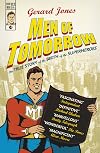
It is hard to praise enough this detailed (perhaps an edge too much so in the very first chapters), well researched, well sourced, well judged and readable account of the creation of the comic books industry.
Jones balances the human, creative and business stories and makes a convincing case for this being a peculiarly Jewish-American phenomenon grounded initially (though not today) in a particular milieu.
Comic book production in New York in the 1940s was a classic case of an urban centre of show more excellence feeding off its own pool of talent and networks.
And if you see a non-Jewish name (Kane, Kirby, Lee), don't be fooled, these are just second generation Jewish immigrants coming to terms with assimilation.
The American comic book is a Jewish invention to all intents and purposes and Jones has some important insights as to why that should be.
Creatively, comic books might be seen as a Jewish re-translation into fantasy of the dialectic between Protestant America and the attempt to configure a new identity.
The book should be read as much as a history of the creation of American capitalism as anything else, with a three-way struggle between anarcho-socialism, unregulated capitalism and regulated capitalism.
The role of organised crime (aka unregulated capitalism) and the Jewish mobsters as they shift into legitimate business is an essential part of this story and explanatory of much American exceptionalism.
One of the reasons America is in trouble today in the wider world is that the necessity of regulation and moral fervour has become a habit, upsetting peoples that really require neither.
Screwing over Swiss and French bankers is just an extension of WASP determination to tame the new immigrants into good conduct and moral conformity. It's just how they are.
As for the books themselves, they should be studied in and for themselves but the psychological origins of some key characters such as Superman are well argued for.
It is fun to read again the polyamorous sado-masochistic origins of Wonder Woman but the personal hurt behind the creation of Superman and Batman is very real and well argued by Jones.
The characters, with exceptions such as Stan Lee, are not very attractive. There is a disproportionate number of neurotic losers and outright unpleasant bastards but that's American capitalism for you.
Invaluable social history, this book is highly recommended. show less
Jones balances the human, creative and business stories and makes a convincing case for this being a peculiarly Jewish-American phenomenon grounded initially (though not today) in a particular milieu.
Comic book production in New York in the 1940s was a classic case of an urban centre of show more excellence feeding off its own pool of talent and networks.
And if you see a non-Jewish name (Kane, Kirby, Lee), don't be fooled, these are just second generation Jewish immigrants coming to terms with assimilation.
The American comic book is a Jewish invention to all intents and purposes and Jones has some important insights as to why that should be.
Creatively, comic books might be seen as a Jewish re-translation into fantasy of the dialectic between Protestant America and the attempt to configure a new identity.
The book should be read as much as a history of the creation of American capitalism as anything else, with a three-way struggle between anarcho-socialism, unregulated capitalism and regulated capitalism.
The role of organised crime (aka unregulated capitalism) and the Jewish mobsters as they shift into legitimate business is an essential part of this story and explanatory of much American exceptionalism.
One of the reasons America is in trouble today in the wider world is that the necessity of regulation and moral fervour has become a habit, upsetting peoples that really require neither.
Screwing over Swiss and French bankers is just an extension of WASP determination to tame the new immigrants into good conduct and moral conformity. It's just how they are.
As for the books themselves, they should be studied in and for themselves but the psychological origins of some key characters such as Superman are well argued for.
It is fun to read again the polyamorous sado-masochistic origins of Wonder Woman but the personal hurt behind the creation of Superman and Batman is very real and well argued by Jones.
The characters, with exceptions such as Stan Lee, are not very attractive. There is a disproportionate number of neurotic losers and outright unpleasant bastards but that's American capitalism for you.
Invaluable social history, this book is highly recommended. show less
The Comic Book Heroes: The First History of Modern Comic Books - From the Silver Age to the Present by Gerard Jones

Here's a history of comics that does have a point of view, which is great to read. I don't always agree with that point of view, but the book is better for having one. My bigger problem is where the point of view of the authors compromises the work; more weight is given to projects in which the authors were involved then I think history would find appropriate.
The quality doesn't rise too much above Saturday morning cartoon level, but given some of the other meandering super-hero epics out there, this moves pretty briskly.
Lists
Awards

You May Also Like


Associated Authors
Statistics
- Works
- 243
- Also by
- 16
- Members
- 1,644
- Popularity
- #15,623
- Rating
- 3.8
- Reviews
- 15
- ISBNs
- 38
- Languages
- 7
- Favorited
- 2