
William Hogarth (1) (1697–1764)
Author of Engravings by Hogarth
For other authors named William Hogarth, see the disambiguation page.
About the Author
Image credit: Self-portrait, 1745
(Yorck Project)
(Yorck Project)
Works by William Hogarth
Hogarth's England: A Selection of the Engravings with Descriptive Text (1957) — Illustrator — 21 copies, 2 reviews
Delphi Complete Paintings of William Hogarth (Illustrated) (Delphi Masters of Art Book 62) (2021) 7 copies
The Works of William Hogarth, Including the Analysis of Beauty and Five Days Peregrination, Vol. 5 (Classic Reprint) (2012) 2 copies
Works of William Hogarth [volume 2] 2 copies
The works of William Hogarth in a series of engravings and a comment on their moral tendency 2 copies
Masterpieces of English Painting 2 copies
Industry and Idleness: Exemplified in the Conduct of Two Fellow Apprentices in Twelve Moral and nstructive Prints (1978) 1 copy
The Graham Children 1 copy
Hogarth on the Will 1 copy
Hogarth and his house 1 copy
Works 1 copy
Hogarth's drawings 1 copy
Associated Works
A Modest Proposal and Other Satirical Works (1729) — Cover artist, some editions — 1,485 copies, 20 reviews
Neoclassicism and Romanticism, 1750-1850, Vol. 1: Enlightenment/Revolution (1970) — Contributor — 28 copies
Tagged
Common Knowledge
- Canonical name
- Hogarth, William
- Birthdate
- 1697-12-10
- Date of death
- 1764-03-23
- Gender
- male
- Education
- St Martin's Lane Academy
- Occupations
- artist
painter
engraver - Organizations
- Rose and Crown Club
Freemason - Awards and honors
- Royal Society of Arts (Fellow)
Serjeant Painter to the King (1757) - Cause of death
- aneurysm
- Nationality
- UK
- Birthplace
- London, England, UK
- Places of residence
- London, England, UK
- Place of death
- London, England, UK
- Burial location
- St. Nicholas Church, Chiswick, London, England, UK
- Map Location
- England, UK
Members
Reviews
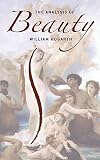
More interesting (and readable) than expected but largely incomprehensible. Back in 1966, my sister gave me an original print (1753) of the Analysis of Beauty from a large book of Hogarth's etchings. It wasn't until recently, when trying to decide what to throw out, that I thought I'd better find out more about this curious collection of illustrations. The print I have is at the front of this book without the peripheral illustrations that make up most of the illustrations for the book. For show more Hogarth there is a curvaceous line of beauty that is enhanced (or not) by qualities he identifies as: fitness, variety, uniformity, simplicity, intricacy and quantity. There are moments when the usefulness of this line becomes bizarre. Not least when he offers a remedy for children with lowered heads
Hogarth is not the only person to attempt an understand of what makes us respond so some things as beautiful and others as ugly. My favourite theorist is Christopher Alexander. In his 4 volume epic [b:The Nature of Order: An Essay on the Art of Building and the Nature of the Universe|3131171|The Nature of Order An Essay on the Art of Building and the Nature of the Universe (4 Volume Set)|Christopher W. Alexander|https://i.gr-assets.com/images/S/compressed.photo.goodreads.com/books/1328004160l/3131171._SX50_.jpg|2726766], he proposes 15 fundamental properties that help us identify a living work (as opposed to a dead one). These are as follows:
While there are parallels with Hogarth's qualities, his illustrated explanations do not necessarily lead to aha moments. In part, this could be my lack of familiarity with his meandering sentences, but although I tried, I could not follow his reasoning. show less
..an ugly habit prevented, at a proper age, by fastening a ribbon to a quantity of platted hair, or to the cap as it may be kept fast in its place, and the other end to the back of the coat, as figure 5 plate 31, as such a length as may prevent them drawing their chins into their necks; p.233-234.
Hogarth is not the only person to attempt an understand of what makes us respond so some things as beautiful and others as ugly. My favourite theorist is Christopher Alexander. In his 4 volume epic [b:The Nature of Order: An Essay on the Art of Building and the Nature of the Universe|3131171|The Nature of Order An Essay on the Art of Building and the Nature of the Universe (4 Volume Set)|Christopher W. Alexander|https://i.gr-assets.com/images/S/compressed.photo.goodreads.com/books/1328004160l/3131171._SX50_.jpg|2726766], he proposes 15 fundamental properties that help us identify a living work (as opposed to a dead one). These are as follows:
- Levels of scale
- Strong centers
- Thick boundaries
- Alternating repetition
- Positive space
- Good shape
- Local symmetries
- Deep interlock and ambiguity
- Contrast
- Gradients
- Roughness
- Echoes
- The void
- Simplicity and inner calm
- Not-separateness
While there are parallels with Hogarth's qualities, his illustrated explanations do not necessarily lead to aha moments. In part, this could be my lack of familiarity with his meandering sentences, but although I tried, I could not follow his reasoning. show less
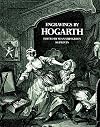
Hogarth's serial and satirical engravings are the great-great-grandparents of comic strips and graphic novels. Dover Publications sometimes promises more than it delivers, but this edition of 101 Hogarth engravings does not disappoint. It's a moderately priced, large-format, clearly printed volume with a commentary for each plate. The commentaries decipher the detailed and densely-packed prints for modern viewers. The only complaint I have is that most of the prints are positioned sideways, show more so you have to turn the book back and forth as you examine the pictures.
Includes A Rake's Progress, A Harlot's Progress, Marriage à la Mode, and Beer Street and Gin Lane. show less
Includes A Rake's Progress, A Harlot's Progress, Marriage à la Mode, and Beer Street and Gin Lane. show less
I liked seeing the works together and reading the commentary but the art history content was usually dry and sometimes unconvincing. Skimmed.
The analysis of beauty : (Written with a view of fixing the fluctuating ideas of taste by William Hogarth
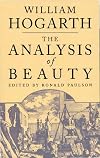
This book outlines Hogarth's ideas on what constitutes a beautiful composition in painting and drawing--light and shadow, simplicity and complexity, proportion and action.
You May Also Like


Associated Authors
Statistics
- Works
- 54
- Also by
- 6
- Members
- 702
- Popularity
- #36,076
- Rating
- 3.9
- Reviews
- 8
- ISBNs
- 139
- Languages
- 8

