
Mick Cooper (1)
Author of Working at Relational Depth in Counselling and Psychotherapy
For other authors named Mick Cooper, see the disambiguation page.
About the Author
Mick Cooper is Professor of Counselling Psychology at the University of Roehampton.
Works by Mick Cooper
Essential Research Findings in Counselling and Psychotherapy: The Facts are Friendly (2008) 35 copies
The Tribes of the Person-centred Nation: an Introduction to the Schools of Therapy Related to the Person-centred Approach. 2nd Edition (2004) 12 copies, 1 review
The Existential Counselling Primer: a Concise, Accessible and Comprehensive Introduction (A Steps in Counselling Supplement) (2012) 7 copies
Person-Centered and Experiential Therapies Work: A Review of the Research on Counselling, Psychotherapy and Related Practices: A Review of the ... Psychotherapy and Related… (2010) — Editor — 6 copies
Personalizing Psychotherapy: Assessing and Accommodating Patient Preferences (2021) 3 copies, 1 review
Associated Works
Anti-Discriminatory Practice in Counselling & Psychotherapy (2003) — Foreword, some editions — 8 copies
Tagged
Common Knowledge
- Birthdate
- 20th Century
- Gender
- male
- Organizations
- University of Strathclyde
- Short biography
- Mick Cooper DPhil CPsychol is a leading international authority in the fields of person-centred, humanistic and existential approaches to counselling and psychotherapy. He is a Chartered Counselling Psychologist, co-Director of the Doctorate in Counselling Psychology and editor of Person-Centred and Experiential Psychotherapies.
- Nationality
- UK
- Map Location
- England, UK
Members
Reviews

I loved this book! Whilst dealing with a technical aspect of person-centered theory (examining Rogers' notion of presence and advocating the blending of the seperate 'core conditions' into an holistic therapist attitude), the presentation is immediate and personable, the chapter divisions building one upon the other, but discrete enough to facilitate individual referencing later on.
The core of the book for me are the two chapters of client-therapist transcripts, which clearly illustrate the show more concept in vivo. Comfortingly for the trainee counsellor I presently am, Mearns is not afraid to show where he gets it 'wrong'. When the therapeutic relationship is there, when client and counsellor have trust in each other, getting it 'wrong' isn't a catastrophe and, if acknowledged and worked with, can act to deepen the relationship (just as long as it's not too often wrong). Phew!
This is undoubtedly one of the books I will be returning to again and again. show less
The core of the book for me are the two chapters of client-therapist transcripts, which clearly illustrate the show more concept in vivo. Comfortingly for the trainee counsellor I presently am, Mearns is not afraid to show where he gets it 'wrong'. When the therapeutic relationship is there, when client and counsellor have trust in each other, getting it 'wrong' isn't a catastrophe and, if acknowledged and worked with, can act to deepen the relationship (just as long as it's not too often wrong). Phew!
This is undoubtedly one of the books I will be returning to again and again. show less
The Tribes of the Person-Centred Nation: An Introduction to the Schools of Therapy Related to the Person-Centred Approach (2nd Edition) by Pete Sanders
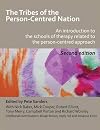
Essential reading for the course I'm doing, but beyond that it's generally enlightening and thought-provoking.
In examining the different ways of working that are generally identified as belonging to the person-centred approach, the book has helped me to reflect upon what I feel is acceptable to my own principles, and that which lies outside them. Not that I'm now without questions or am free of tension between what I believe and what I find myself practicising, but I am better informed and show more more able to reconcile those tensions to find the path that feels right for me in being in relation with my clients.
I find that I position myself in principle toward the classical client-centred pole, but perhaps in practice, at this stage in my development, veering toward a need to introduce some elements of instrumentality as a prop for a lack of confidence in my ability to embody Rogerian attitudes. My supervisor is helping me to explore this!
Despite misgivings about the title, I found Richard Worsley's chapter, Integrating with Integrity really helpful. His description of how he, in his view, fully maintains a Rogerian attitude whilst giving some rein to his spontaneity and inventiveness was attractive, and I'm now less dubious about having shelled out for his book, Process Work in Person-Centred Therapy, which I'll try to read at some point this year.
I'm rather turned off from Eugene T. Gendlin's Focusing approach, and the process experiential approaches that developed from it, as I'm unhappy with the unequal therapist/client power dynamic inherent in these approaches, although that is an issue they address and seek to redress by therapist ethical awareness of not intruding upon the client's experiencing and autonomy. I've got a couple of Gendlin's books, so I will give him a fair crack of the whip at some point.
Over against my wariness of the experiential approaches is a recognition that the present UK health care provision via the NHS values brief interventions, outcome measures and manualised treatments above the freer-spirit of client-centred therapy, so if I want to work in that setting, the practical (venal?) part of me is attracted towards Counselling for Depression, a manualised integration of client-centred and experiential modalities which the NHS accepts as part of its approved methods of providing therapy from a person-centred orientation.
If nothing else, this book has shown me that I've got a long way to go and, in the best Rogerian sense, that the process has no final end. show less
In examining the different ways of working that are generally identified as belonging to the person-centred approach, the book has helped me to reflect upon what I feel is acceptable to my own principles, and that which lies outside them. Not that I'm now without questions or am free of tension between what I believe and what I find myself practicising, but I am better informed and show more more able to reconcile those tensions to find the path that feels right for me in being in relation with my clients.
I find that I position myself in principle toward the classical client-centred pole, but perhaps in practice, at this stage in my development, veering toward a need to introduce some elements of instrumentality as a prop for a lack of confidence in my ability to embody Rogerian attitudes. My supervisor is helping me to explore this!
Despite misgivings about the title, I found Richard Worsley's chapter, Integrating with Integrity really helpful. His description of how he, in his view, fully maintains a Rogerian attitude whilst giving some rein to his spontaneity and inventiveness was attractive, and I'm now less dubious about having shelled out for his book, Process Work in Person-Centred Therapy, which I'll try to read at some point this year.
I'm rather turned off from Eugene T. Gendlin's Focusing approach, and the process experiential approaches that developed from it, as I'm unhappy with the unequal therapist/client power dynamic inherent in these approaches, although that is an issue they address and seek to redress by therapist ethical awareness of not intruding upon the client's experiencing and autonomy. I've got a couple of Gendlin's books, so I will give him a fair crack of the whip at some point.
Over against my wariness of the experiential approaches is a recognition that the present UK health care provision via the NHS values brief interventions, outcome measures and manualised treatments above the freer-spirit of client-centred therapy, so if I want to work in that setting, the practical (venal?) part of me is attracted towards Counselling for Depression, a manualised integration of client-centred and experiential modalities which the NHS accepts as part of its approved methods of providing therapy from a person-centred orientation.
If nothing else, this book has shown me that I've got a long way to go and, in the best Rogerian sense, that the process has no final end. show less
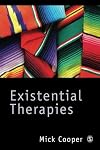
This is the book you want to start with if you are interested in this type of therapy. It will give you a nice, clear overview of the different philosophies and approaches to existential therapy, and then you can choose which one to hone in on. It also includes some lovely practical examples.
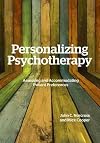
Are you reading this before February 26 2021? 3 hour workshop on this topic 40% discount on the price of the book:
https://www.eventbrite.co.uk/e/personalizing-psychotherapy-mick-cooper-john-norc...
https://www.eventbrite.co.uk/e/personalizing-psychotherapy-mick-cooper-john-norc...
Lists
You May Also Like


Associated Authors
Statistics
- Works
- 18
- Also by
- 1
- Members
- 276
- Popularity
- #84,077
- Rating
- 3.7
- Reviews
- 5
- ISBNs
- 64
- Languages
- 3