
Nellie Bly (1) (1864–1922)
Author of Ten Days in a Mad-House
For other authors named Nellie Bly, see the disambiguation page.
Works by Nellie Bly
Around the World in Seventy-Two Days and Other Writings (Penguin Classics) (2014) 146 copies, 1 review
The Complete Works of Nellie Bly: Ten Days in a Mad-House, Around the World in Seventy-Two Days and More (2015) 25 copies
The Love Of Three Girls: The Rivalry Between An Heiress, A Beauty, And A Factory Girl (The Lost Novels of Nellie Bly) (2021) 3 copies
Alta Lynn, M.D.: The Romance Of Two Girls Who Married For Fun (The Lost Novels of Nellie Bly Book 4) (2021) 3 copies
New York By Night: A Female Reporter Tracking A $500,000 Robbery (The Lost Novels of Nellie Bly Book 3) (2021) 3 copies
Associated Works
World War I and America: Told by the Americans Who Lived It (1918) — Contributor — 226 copies, 1 review
Shaking the Foundations: 200 Years of Investigative Journalism in America (Nation Books) (2003) — Contributor — 45 copies
Tagged
Common Knowledge
- Canonical name
- Bly, Nellie
- Legal name
- Cochrane, Elizabeth Jane
Seaman, Elizabeth Cochrane - Other names
- Cochrane, Pink (nickname)
Cochrane, Elizabeth (birth)
Seaman, Elizabeth Cochrane - Birthdate
- 1864-05-05
- Date of death
- 1922-01-27
- Gender
- female
- Education
- Indiana Normal School
- Occupations
- journalist
investigative journalist
columnist
foreign correspondent
travel writer
businesswoman - Organizations
- New York World
- Relationships
- Bisland, Elizabeth (competitor)
- Short biography
- Nellie Bly, who would grow up to pioneer new kind of investigative journalism in the USA, was born Elizabeth Jane Cochran in the small town of Cochran's Mills, Pennsylvania. The town was named after her father Michael Cochran, a landowner, judge, and businessman. She was six years old when her father died and the family was thrown into financial straits. Her mother hastily remarried to a man who abused her; she later sought a divorce. Elizabeth attended the Indiana Normal School to train to become a teacher, one of the few professions open to women of that era. But she lacked the money to continue after one semester. She moved with her mother to Pittsburgh, where they ran a boarding house. In 1885, she wrote a scathing reply to an editorial in The Pittsburgh Dispatch entitled "What Girls Are Good For." The editor of the Dispatch was so impressed by her writing that he offered her a full-time job at the paper. She took the pen name Nellie Bly from a popular song by Stephen Foster. Although originally assigned to the "women's pages," Nellie Bly wrote about poor working girls and the need for reform of the state's laws on divorce. She convinced her editors to send her as a foreign correspondent to Mexico for a while. Her articles filed there would later be collected in the book Six Months in Mexico. When she returned home, the Dispatch again tried to confine her to the women's page. She quit, and moved to New York City, where she talked her way into the office of the managing editor of Joseph Pulitzer's newspaper The New York World. He asked Nellie to write a story about the mentally ill housed in a large asylum on Blackwell's Island. She convinced doctors there that she was insane, and spent 10 days undercover in the institution, emerging with stories of cruel treatment that were published, along with illustrations, in The New York World. Her reports stirred public reaction and brought much needed attention, money, and reforms to the asylum. In the ensuing years, Nellie Bly exposed corruption, poverty, injustice, shady lobbying, the abuse of women prisoners by police, and more. In 1894, she went to Chicago to cover the Pullman Railroad strike from the workers' perspective. She won interviews with celebrities such as John L. Sullivan, Susan B. Anthony, and Emma Goldman. One of the highlights of her career was a trip around the world in 1889-1890 in a stunt to beat the record of the fictional Phileas Fogg, hero of Jules Verne's novel Around the World in Eighty Days, and boost her paper's circulation. It became a contest when she was challenged by Elizabeth Bisland of Cosmopolitan magazine. Nellie returned to New York the winner, greeted by cheering crowds. She went on lecture tours and wrote Nellie Bly's Book: Around The World In Seventy-Two Days. During this time, her brother Charles died, and Nellie began taking care of his wife and children. In 1895, she married Robert Seaman, an industrialist 40 years her senior. When he died in 1904, she ran the business until it went bankrupt, and then returned to reporting. She served as a foreign correspondent on the Russian and Serbian fronts in World War I for The New York Evening Journal. She died of pneumonia in 1922 at the age of 57.
- Nationality
- USA
- Birthplace
- Cochran's Mills, Armstrong County, Pennsylvania, USA
- Places of residence
- Cochran's Mills, Armstrong County, Pennsylvania, USA
Pittsburgh, Pennsylvania, USA
New York, New York, USA - Place of death
- New York, New York, USA
- Associated Place (for map)
- USA
Members
Reviews
Ten Days in A Mad-House: Illustrated and Annotated: A First-Hand Account of Life At Bellevue Hospital on Blackwell's Island in 1887 by Nellie Bly
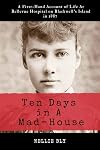
My fascination with this book came when my students had to read an excerpt in my Middle School English class. They struggled to understand why someone would purposely get themselves committed to an asylum. Nellie Bly had a lot of guts in my mind. First of all she was a female living in a male dominated world. Many women were put away by husbands who no longer wanted them around. Nellie Bly wished to let the world know what actually went on inside. Why you may ask. There was no one to speak show more for those women. Bly came up with a plan to tell their story. She got herself committed by acting like she was insane and used a fake last name. They sent her to the asylum where she spoke with these women and documented the abuses they suffered. She had pre-arranged with her editor to have them get her out after ten days. She exposed the atrocities and created change. show less
Ten days in a Mad-House (with miscellaneous sketches "Trying to be a Servant," and "Nellie Bly as a White Slave") by Nellie Bly

Well, this was a sobering read. It’s also really good, and it’s freely available online.
Nellie Bly, an investigative journalist from the 1880s, had herself temporarily committed to an asylum for insane women in New York, in order to write a series of articles documenting the (mal)treatments that the inmates were subjected to. This book was a reissue of those articles to satisfy the high demand.
Things start off amusingly, when Bly has to try and convince people to section her -- show more essentially, she shows up at a short-term lodging place for women and acts suspiciously, while pitying the kind people she is deceiving in the process. But once she is transported to the asylum, she puts on her journalist hat, acts completely normal, and records what is allowed to happen to her.
It’s not pretty. The inmates are always cold (due to insufficient clothing, non-existent heating, and cold baths); the food is execrable; they are under constant threat of violence; and humiliations are frequent and issued with glee by the power-tripping staff. The maltreatment of the patients rises to the level of prison camp torture: they are deliberately and methodically kept in a state of sleep deprivation, malnourishment and under-stimulation. Worse: there is no way to prove their sanity, nor will the staff be even willing to listen. A diagnosis equals a sentence for life.
Bly describes a typical day as she underwent them, which is a terrible enough ordeal, and adds other inmates’ stories and experiences -- which are worse (lifelong imprisonment for not speaking English? How xenophobic can your medical system get?). Bly uses no rhetorical flourishes; there is no need for jokes or cutesy asides: drily narrated reality is harsh and unforgiving and undermines trust in fellow human beings, if not in society at large. I knew 19th-century treatment of The Other was atrocious, but reading contemporary reports really drives home that message.
The only good thing about Bly’s undercover stint is that, as a response to this exposé, the city of New York increased the funding (and, through increased inspections, the living standards) of its asylums.
Finally: my edition of this book also contains two shorter articles, in which Bly goes undercover to secure a job as a maid, and works briefly as an inner-city factory girl. Those as well show off her on-point observational skills. Good stuff! show less
Nellie Bly, an investigative journalist from the 1880s, had herself temporarily committed to an asylum for insane women in New York, in order to write a series of articles documenting the (mal)treatments that the inmates were subjected to. This book was a reissue of those articles to satisfy the high demand.
Things start off amusingly, when Bly has to try and convince people to section her -- show more essentially, she shows up at a short-term lodging place for women and acts suspiciously, while pitying the kind people she is deceiving in the process. But once she is transported to the asylum, she puts on her journalist hat, acts completely normal, and records what is allowed to happen to her.
It’s not pretty. The inmates are always cold (due to insufficient clothing, non-existent heating, and cold baths); the food is execrable; they are under constant threat of violence; and humiliations are frequent and issued with glee by the power-tripping staff. The maltreatment of the patients rises to the level of prison camp torture: they are deliberately and methodically kept in a state of sleep deprivation, malnourishment and under-stimulation. Worse: there is no way to prove their sanity, nor will the staff be even willing to listen. A diagnosis equals a sentence for life.
Bly describes a typical day as she underwent them, which is a terrible enough ordeal, and adds other inmates’ stories and experiences -- which are worse (lifelong imprisonment for not speaking English? How xenophobic can your medical system get?). Bly uses no rhetorical flourishes; there is no need for jokes or cutesy asides: drily narrated reality is harsh and unforgiving and undermines trust in fellow human beings, if not in society at large. I knew 19th-century treatment of The Other was atrocious, but reading contemporary reports really drives home that message.
The only good thing about Bly’s undercover stint is that, as a response to this exposé, the city of New York increased the funding (and, through increased inspections, the living standards) of its asylums.
Finally: my edition of this book also contains two shorter articles, in which Bly goes undercover to secure a job as a maid, and works briefly as an inner-city factory girl. Those as well show off her on-point observational skills. Good stuff! show less
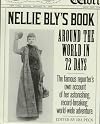
This is an abridged version of Bly’s book about her trip in 1889-1890, but it’s a decent length at 117 pages and definitely worth reading, since the full version is so hard to locate. It’s lively, and even though the necessity for speed made some sections of it – especially about Europe where transportation was more efficient – unavoidably brief, there’s still plenty of fascinating descriptions in it.
I’ve quite enjoyed the author’s personable tone. For instance, she writes show more about the necessity to get up early enough to make it for the 9:40 ship out of New York: “Those who think that night is the best part of the day and that morning was made for sleep, know how uncomfortable they feel when for some reason they have to get up with – well, with the milkman…. I thought lazily that if some of those good people who spend so much time trying to invent flying machines would only devote a little of that same energy towards promoting a system by which boats and trains would always make their start at noon or afterwards, they would be of greater assistance to suffering humanity.” Sure, it’s not a practical proposal, and anyway most people don’t travel so often as to make it so much of an inconvenience to humanity, but for someone whose organism operates on the same schedule as Bly’s it’s gratifying to see somebody describe one’s discomfort with the way the world generally operates as perfectly natural and reasonable.
Bly’s book provides a window into a world of long ago in ways not covered in history books. For instance, she mentions how, when she wanted to send a telegram to New York from Italy, the operator asked her where New York is. And when she was onboard of a ship bound for Sri Lanka, the British passengers asked her what the American flag looked like. Freezing on an overnight train ride through Italy, Bly envied the people who had taken this trip the previous week and had been attacked by bandits, which must have helped “to make their blood circulate.” But improving technology was already helping make the world safer, and Bly lamented that the pirates who used to ply the seas around the Straits of Malacca were no longer there to enliven the tedium of the sea voyage.
Her other descriptions, on the other hand, proved surprisingly contemporary. For instance, she mentions how a priest at a Buddhist college in Sri Lanka told her that he received hundreds of letters from the USA every year and that they found more converts there than anywhere else. Bly also noted repeatedly how the USA stood out in not allowing people to smoke in confined public spaces, such as trains – but back then it was out of consideration for women rather than out of health concerns.
There were places, however, when her references to the common knowledge of her day were lost on me, and the editor, usually generous with footnotes, didn’t provide any on these occasions. For example, when Bly was in London, the correspondent for her newspaper there asked her how she found London streets in comparison with New York. “‘They are not bad,’ I said with a patronizing air, thinking shamefacedly of the dreadful streets of New York, although determined to hear no word against them.” I wonder what was so dreadful about the New York streets of the time, compared to those of London. On another occasion, when Bly wasn’t allowed to enter a Hindu temple in Singapore because she was a woman, she was “curious to know why my sex in heathen lands should exclude me from a temple, as in America it confines me to the side entrances of hotels and other strange things.” I found it extremely strange indeed that a woman in America couldn’t use a hotel’s main entrance and wondered what other strange things Bly may have been referring to.
Nellie Bly had made an excellent observer: curios, indefatigable (she chose to leave the ship for an excursion in Yemen despite the 100 degrees heat) and unbiased. For example, although she was clearly patriotic and considered republic the best form of government, she admitted that the British passengers' loyalty to their queen (Victoria) had won her admiration, and even added that she experienced "a shamed feeling that there I was, a free-born American girl, a native of the grandest country on earth, forced to be silent because I could not in honesty speak proudly of the rulers of my land, unless I went back to those two kings of manhood, George Washington and Abraham Lincoln" - about whom she most likely could only know from the deifying sort of books, I suspect. This makes one see the advantage of having a ceremonial head of state not involved in politics or any actual governing to whom everybody can relate as a symbol of the country, although Bly doesn't make this distinction about the position of a ceremonial versus an actual head of state. Her favorite country of all she’d seen on her trip was Japan of which she wrote in part:
"The Japanese are very progressive people. They cling to their religion and their modes of life, which are in many ways superior to ours, but they readily adopt any trade or habit that is an improvement on their own. Finding the European male attire more serviceable than their native dress, in some cases they promptly adopted it. The women tested the European dress, and finding it barbarously uncomfortable and inartistic, went back to their exquisite kimonos…. It is true that a little while ago the Japanese were totally ignorant of modern conveniences…. They sent to other countries for men who understood the secret of such things, and at fabulous prices and under contracts of three, five, and occasionally ten years’ duration brought them to their land… and with them toiled steadily and watchfully the cleverest of Japanese. When the contract is up, it is no longer necessary to fill the coffers of a foreigner. The employee is released, and their own man, fully qualified for the work, steps into the position."
However, Bly didn't shy from describing something she couldn’t approve of, although she mostly let her descriptions stand for themselves. For instance, not satisfied with seeing Hong Kong - “the British China,” she went to the mainland to see the “real” China, where she described the execution ground where the earth was red from the blood of the eleven men beheaded there the day before her visit:
"The guide also told us that in one year, 1855, over 55,000 rebels were beheaded in this narrow valley. While he was talking, I noticed some roughly-fashioned wooden crosses leaned up against the high wall…. I asked Ah Cum [the guide] about them. A shiver waggled down my spinal cord when he answered: 'When women are condemned to death in China they are bound to wooden crosses and cut to pieces. Men are beheaded with one clean stroke unless they are the worst kind of criminals…. Then they are given the death of a woman to make it more discreditable.'”
However, Bly added, “if a man of wealth is condemned to death in China, he can with little effort buy a substitute.”
She followed Phileas Fogg’s route, with one exception: she stopped at Sri Lanka instead of going through India. When Jules Verne whom she’d made a special detour to see, asked her why she didn’t go to Bombay like his hero, she replied, “Because I’m more anxious to save time than a young widow.” Unlike Fogg, she also didn’t have a bag full of cash to bribe owners and captains of ships, hire personal transportation and smooth her way in general, as did her rival started by another newspaper on the same day unbeknownst to Bly till mid-voyage (Bly won anyway). However, there was one instance when her newspaper did intercede on her behalf: when Bly arrived in San Francisco, she found that it had hired a special train for her to take her across the western states via a more southerly route because heavy snow had blockaded the regular train’s route through Sierra Nevada, and that a host of customs and quarantine officials had sat up all night, presumably on their own initiative, so that there’d be no delay in her transfer from the ship to the train. Huge welcoming crowds met her all along her route to New York, but in one respect her trip across America eerily resembled Fogg’s: at one point her train ran across a bridge which was held in place only by jackscrews and fell the moment the train had passed it.
On the whole, I've found this a very enjoyable and interesting book. show less
I’ve quite enjoyed the author’s personable tone. For instance, she writes show more about the necessity to get up early enough to make it for the 9:40 ship out of New York: “Those who think that night is the best part of the day and that morning was made for sleep, know how uncomfortable they feel when for some reason they have to get up with – well, with the milkman…. I thought lazily that if some of those good people who spend so much time trying to invent flying machines would only devote a little of that same energy towards promoting a system by which boats and trains would always make their start at noon or afterwards, they would be of greater assistance to suffering humanity.” Sure, it’s not a practical proposal, and anyway most people don’t travel so often as to make it so much of an inconvenience to humanity, but for someone whose organism operates on the same schedule as Bly’s it’s gratifying to see somebody describe one’s discomfort with the way the world generally operates as perfectly natural and reasonable.
Bly’s book provides a window into a world of long ago in ways not covered in history books. For instance, she mentions how, when she wanted to send a telegram to New York from Italy, the operator asked her where New York is. And when she was onboard of a ship bound for Sri Lanka, the British passengers asked her what the American flag looked like. Freezing on an overnight train ride through Italy, Bly envied the people who had taken this trip the previous week and had been attacked by bandits, which must have helped “to make their blood circulate.” But improving technology was already helping make the world safer, and Bly lamented that the pirates who used to ply the seas around the Straits of Malacca were no longer there to enliven the tedium of the sea voyage.
Her other descriptions, on the other hand, proved surprisingly contemporary. For instance, she mentions how a priest at a Buddhist college in Sri Lanka told her that he received hundreds of letters from the USA every year and that they found more converts there than anywhere else. Bly also noted repeatedly how the USA stood out in not allowing people to smoke in confined public spaces, such as trains – but back then it was out of consideration for women rather than out of health concerns.
There were places, however, when her references to the common knowledge of her day were lost on me, and the editor, usually generous with footnotes, didn’t provide any on these occasions. For example, when Bly was in London, the correspondent for her newspaper there asked her how she found London streets in comparison with New York. “‘They are not bad,’ I said with a patronizing air, thinking shamefacedly of the dreadful streets of New York, although determined to hear no word against them.” I wonder what was so dreadful about the New York streets of the time, compared to those of London. On another occasion, when Bly wasn’t allowed to enter a Hindu temple in Singapore because she was a woman, she was “curious to know why my sex in heathen lands should exclude me from a temple, as in America it confines me to the side entrances of hotels and other strange things.” I found it extremely strange indeed that a woman in America couldn’t use a hotel’s main entrance and wondered what other strange things Bly may have been referring to.
Nellie Bly had made an excellent observer: curios, indefatigable (she chose to leave the ship for an excursion in Yemen despite the 100 degrees heat) and unbiased. For example, although she was clearly patriotic and considered republic the best form of government, she admitted that the British passengers' loyalty to their queen (Victoria) had won her admiration, and even added that she experienced "a shamed feeling that there I was, a free-born American girl, a native of the grandest country on earth, forced to be silent because I could not in honesty speak proudly of the rulers of my land, unless I went back to those two kings of manhood, George Washington and Abraham Lincoln" - about whom she most likely could only know from the deifying sort of books, I suspect. This makes one see the advantage of having a ceremonial head of state not involved in politics or any actual governing to whom everybody can relate as a symbol of the country, although Bly doesn't make this distinction about the position of a ceremonial versus an actual head of state. Her favorite country of all she’d seen on her trip was Japan of which she wrote in part:
"The Japanese are very progressive people. They cling to their religion and their modes of life, which are in many ways superior to ours, but they readily adopt any trade or habit that is an improvement on their own. Finding the European male attire more serviceable than their native dress, in some cases they promptly adopted it. The women tested the European dress, and finding it barbarously uncomfortable and inartistic, went back to their exquisite kimonos…. It is true that a little while ago the Japanese were totally ignorant of modern conveniences…. They sent to other countries for men who understood the secret of such things, and at fabulous prices and under contracts of three, five, and occasionally ten years’ duration brought them to their land… and with them toiled steadily and watchfully the cleverest of Japanese. When the contract is up, it is no longer necessary to fill the coffers of a foreigner. The employee is released, and their own man, fully qualified for the work, steps into the position."
However, Bly didn't shy from describing something she couldn’t approve of, although she mostly let her descriptions stand for themselves. For instance, not satisfied with seeing Hong Kong - “the British China,” she went to the mainland to see the “real” China, where she described the execution ground where the earth was red from the blood of the eleven men beheaded there the day before her visit:
"The guide also told us that in one year, 1855, over 55,000 rebels were beheaded in this narrow valley. While he was talking, I noticed some roughly-fashioned wooden crosses leaned up against the high wall…. I asked Ah Cum [the guide] about them. A shiver waggled down my spinal cord when he answered: 'When women are condemned to death in China they are bound to wooden crosses and cut to pieces. Men are beheaded with one clean stroke unless they are the worst kind of criminals…. Then they are given the death of a woman to make it more discreditable.'”
However, Bly added, “if a man of wealth is condemned to death in China, he can with little effort buy a substitute.”
She followed Phileas Fogg’s route, with one exception: she stopped at Sri Lanka instead of going through India. When Jules Verne whom she’d made a special detour to see, asked her why she didn’t go to Bombay like his hero, she replied, “Because I’m more anxious to save time than a young widow.” Unlike Fogg, she also didn’t have a bag full of cash to bribe owners and captains of ships, hire personal transportation and smooth her way in general, as did her rival started by another newspaper on the same day unbeknownst to Bly till mid-voyage (Bly won anyway). However, there was one instance when her newspaper did intercede on her behalf: when Bly arrived in San Francisco, she found that it had hired a special train for her to take her across the western states via a more southerly route because heavy snow had blockaded the regular train’s route through Sierra Nevada, and that a host of customs and quarantine officials had sat up all night, presumably on their own initiative, so that there’d be no delay in her transfer from the ship to the train. Huge welcoming crowds met her all along her route to New York, but in one respect her trip across America eerily resembled Fogg’s: at one point her train ran across a bridge which was held in place only by jackscrews and fell the moment the train had passed it.
On the whole, I've found this a very enjoyable and interesting book. show less

In an early foray in investigative journalism, Nellie Bly got herself committed to a New York insane asylum. She took advantage of an opportunity to secure her release after ten days, then she published an account of the time she spent there. The nurses and attendants who were paid to care for the patients proved the opposite of caring. The patients received poor food, poor sanitation, indifference (at best), and cruelty (at worst). By the time Bly returned to the asylum in company with a show more grand jury, the cover-up had already begun. What Bly described is consistent with the experience of Elizabeth Packard, whose plight is analyzed in Kate Moore’s The Woman They Could Not Silence. show less
Lists
You May Also Like


Associated Authors
Statistics
- Works
- 22
- Also by
- 3
- Members
- 1,256
- Popularity
- #20,421
- Rating
- 3.8
- Reviews
- 56
- ISBNs
- 154
- Languages
- 11
- Favorited
- 2

