
Thomas Gordon (1) (1918–2002)
Author of Parent Effectiveness Training
For other authors named Thomas Gordon, see the disambiguation page.
About the Author
Thomas Gordon founded Gordon Training International (www.gordontraining.com), a human relations training organization with programs for parents, teachers, and businesspeople.
Works by Thomas Gordon
Client-Centered Therapy: Its Current Practice, Implications and Theory (1951) — Contributor — 340 copies, 5 reviews
Relations efficaces : Comment construire et maintenir de bonnes relations (2002) 18 copies, 1 review
Making the Patient Your Partner: Communication Skills for Doctors and Other Caregivers (1995) 12 copies
Luisteren naar elkaar harmonisch samenleven door een betere communicatie binnen het gezin (1996) 2 copies
Gordon Dr. Thomas : P.E.T. Parent Effectiveness Training (Plume) by Thomas Gordon (1975-09-01) (1743) 1 copy
Manualul parintilor eficace 1 copy
Tagged
Common Knowledge
- Birthdate
- 1918-03-11
- Date of death
- 2002-08-26
- Gender
- male
- Education
- University of Chicago (PhD | 1949)
- Occupations
- psychological consultant
- Birthplace
- Paris, Illinois, USA
- Place of death
- Los Angeles, California, USA
- Associated Place (for map)
- USA
Members
Reviews
Teacher Effectiveness Training: The Program Proven to Help Teachers Bring Out the Best in Students of All Ages by Thomas Gordon
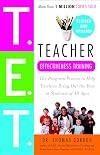
The typical program for "classroom management" focuses either on discipline (how to be assertive and fair) or procedures (how to plan ahead to avoid problems). These are both useful tools, but there is a subtext to these discussions: the ideal classroom is free of conflict, and if there is conflict, it is either the fault of the teacher or the student. But, as any real teacher will tell you, a classroom free of conflict is a fantasy.
Students and teachers can't help but bring their clashing show more values, hopes, fears, struggles at home and with their friends and innumerable other issues into the classroom. And these issues are bound to cause conflict. Teachers are typically presented with two options: be strict, or be permissive; either the teacher uses his/her power to quell the students regardless of their needs, or students use their power to get what they want, regardless of how the teacher and the class suffer, and the teacher lets it slide hoping to get back to teaching. There has to be a better way!
In T.E.T., Thomas Gordon applies the highly successful and popular method developed for families in P.E.T. (Parent Effectiveness Training) to the classroom. Very schematically, T.E.T. involves 3 steps. First, identify who is really having the problem. If a students are talking too loudly for the teacher to be heard, the teacher is having a problem and needs to communicate that to the students as a first step. If a student is daydreaming instead of working, the student is having a problem and the teacher needs to be able to listen dispassionately to find out what is wrong. Second, use "I Messages" and "Active Listening" to get to the heart of the problem (both these techniques are described in detail). Third, if a solution doesn't present itself immediately, T.E.T. describes a conflict resolution method that can help both teacher and student get their needs met without using power plays. Gordon suggests (I think rightly) that it is the use of power to solve problems that engenders the defensiveness and resentment so common to student-teacher relationships.
T.E.T. won't solve everything. Good procedures are still needed to reduce the number of situations that lead to conflict. And power based discipline is still needed in extreme cases (e.g. weapons in the classroom). But, by using the methods described in T.E.T., teachers can establish more honest and respectful relationships with their students and reduce the time wasted on power plays and petty games, leaving more time for real teaching.
Three final notes. Teachers may run into kids who have had such bad relationships with the adults in their lives that they can't help seeing teachers as enemies, to pushed and attacked whenever possible. T.E.T. may not work right away with these kids, making classic discipline neccesary.
People who don't like T.E.T. on the first read usually see it as simply another version of anything-goes permissiveness. But Gordon tries to make clear that anything that is a problem for the teacher 'is' out of bounds and 'needs to be fixed'. Its just a question of fixing the problem through dialogue instead of force.
Finally, I was basically raised on P.E.T. by my parents and I have never met anyone who has a more open, honest, and mutually respectful realtionship with their parents than I have with mine. It really can work!! show less
Students and teachers can't help but bring their clashing show more values, hopes, fears, struggles at home and with their friends and innumerable other issues into the classroom. And these issues are bound to cause conflict. Teachers are typically presented with two options: be strict, or be permissive; either the teacher uses his/her power to quell the students regardless of their needs, or students use their power to get what they want, regardless of how the teacher and the class suffer, and the teacher lets it slide hoping to get back to teaching. There has to be a better way!
In T.E.T., Thomas Gordon applies the highly successful and popular method developed for families in P.E.T. (Parent Effectiveness Training) to the classroom. Very schematically, T.E.T. involves 3 steps. First, identify who is really having the problem. If a students are talking too loudly for the teacher to be heard, the teacher is having a problem and needs to communicate that to the students as a first step. If a student is daydreaming instead of working, the student is having a problem and the teacher needs to be able to listen dispassionately to find out what is wrong. Second, use "I Messages" and "Active Listening" to get to the heart of the problem (both these techniques are described in detail). Third, if a solution doesn't present itself immediately, T.E.T. describes a conflict resolution method that can help both teacher and student get their needs met without using power plays. Gordon suggests (I think rightly) that it is the use of power to solve problems that engenders the defensiveness and resentment so common to student-teacher relationships.
T.E.T. won't solve everything. Good procedures are still needed to reduce the number of situations that lead to conflict. And power based discipline is still needed in extreme cases (e.g. weapons in the classroom). But, by using the methods described in T.E.T., teachers can establish more honest and respectful relationships with their students and reduce the time wasted on power plays and petty games, leaving more time for real teaching.
Three final notes. Teachers may run into kids who have had such bad relationships with the adults in their lives that they can't help seeing teachers as enemies, to pushed and attacked whenever possible. T.E.T. may not work right away with these kids, making classic discipline neccesary.
People who don't like T.E.T. on the first read usually see it as simply another version of anything-goes permissiveness. But Gordon tries to make clear that anything that is a problem for the teacher 'is' out of bounds and 'needs to be fixed'. Its just a question of fixing the problem through dialogue instead of force.
Finally, I was basically raised on P.E.T. by my parents and I have never met anyone who has a more open, honest, and mutually respectful realtionship with their parents than I have with mine. It really can work!! show less

I'd read bits and pieces of this book over the last 12 months in order to get references for essays. Having those snippets of Rogers' thoughts was useful, but I felt a duty to read from cover-to-cover the foundational work of the person-centred approach if I was serious in training to be a counsellor. So, during the summer break, that's what I've done and found it definitely worthwhile.
It took me a while to get through, not because I found it difficult or boring, but because it was show more thought-provoking and challenging. Many times I've had to put the book down to work through a chain of thought, to reflect upon my own values and ways of being. If I had some of the bricks of the edifice of a person-centred way of being (forgive the in-reference), I think this provides the mortar. Now all I need to do is build something! show less
It took me a while to get through, not because I found it difficult or boring, but because it was show more thought-provoking and challenging. Many times I've had to put the book down to work through a chain of thought, to reflect upon my own values and ways of being. If I had some of the bricks of the edifice of a person-centred way of being (forgive the in-reference), I think this provides the mortar. Now all I need to do is build something! show less
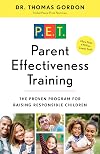
This book isn't just for helping communication between you and your children, this book also helped me communicate and compromise better with my husband, stopped a lot of arguments in their tracks. Can't speak highly enough of it.
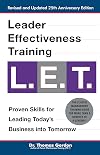
My initial impression was that it has to many anecdotes and not enough meat there is no bibliography, a skimpy table of contents et cetera. However as I started reading it I enjoyed it, and found that the contents actually seem useful.
I first encountered these concepts about 1983 as Parent Effectiveness Training which is based on his original work Group Centered Leadership published in 1955.
Parent Effectiveness Training did not work very well for me and my wife, and we eventually stopped show more using it.
However having gone through a Leader Effectiveness Training class this week, I now understand better when to apply to those tools and when they won't work, and feel that I will be much more effective using them now.
The world needs leaders, and good communication is essential to good leadership. show less
I first encountered these concepts about 1983 as Parent Effectiveness Training which is based on his original work Group Centered Leadership published in 1955.
Parent Effectiveness Training did not work very well for me and my wife, and we eventually stopped show more using it.
However having gone through a Leader Effectiveness Training class this week, I now understand better when to apply to those tools and when they won't work, and feel that I will be much more effective using them now.
The world needs leaders, and good communication is essential to good leadership. show less
Lists
You May Also Like


Associated Authors
Statistics
- Works
- 33
- Members
- 1,702
- Popularity
- #15,076
- Rating
- 3.8
- Reviews
- 16
- ISBNs
- 222
- Languages
- 18