
Keith Topping (1) (1963–)
Author of The Discontinuity Guide
For other authors named Keith Topping, see the disambiguation page.
About the Author
Keith Topping is a freelance journalist, novelist and critic who has good reason to remember the first night he saw The Clash in 1978. He lives, works and occasionally sleeps in Newcastle
Image credit: Gallifrey One 2008, photo by pinguino k
Works by Keith Topping
Inside Bartlet's White House: An Unofficial and Unauthorized Guide to the West Wing (2002) 107 copies
X-Treme Possibilities: A Comprehensively Expanded Rummage Through Five Years of the X-Files (1997) 82 copies, 1 review
Slayer: An Expanded and Updated Unofficial and Unauthorized Guide to Buffy the Vampire Slayer (2002) 71 copies
Associated Works
Time, Unincorporated: The Doctor Who Fanzine Archives, Vol. 3: Writings on the New Series (2011) — Contributor — 18 copies
In●Vision: The Legacy (2003) — Contributor "What If... 1963: Doctor Who had a different producer..." — 1 copy
Tagged
Common Knowledge
- Legal name
- Topping, Keith Andrew
- Birthdate
- 1963-10-26
- Gender
- male
- Nationality
- UK
- Birthplace
- Walker, Northumberland, England, UK
- Associated Place (for map)
- England, UK
Members
Reviews
http://nwhyte.livejournal.com/1252990.html
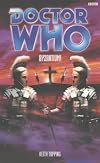
There are some aspects of this book that are so awful that I almost wanted to claw my eyes out. It is set in the city of Byzantium (the future Constantinople / Istanbul) in the first century AD. The city's population appears to be mainly Jewish (divided between Zealots, Christians and those in between), with a Greek minority and a settled Roman ruling class. It has minarets. Huge thudding mistakes and discrepancies abound in the Latin phrases (one show more recurring example - the senior Roman government official in the city lives in the villa praefectus). And the first century city has minarets. The presentation of characters' names is horrendously inconsistent - some are Latinised, some Grecianised, some Hebrew (or possibly Yiddish), and one who is called 'Fabulous' (sic). And he seems to think that there were minarets in the city before the Turkish conquest of 1453, and six centuries before the foundation of Islam. Even the transcription of the opening of St Mark's Gospel in Greek is incorrect, which is pretty astonishing as all you have to do is find a copy of Nestlé-Aland - I've got one I can lend you if you like. But (as you may have noticed) I keep coming back to the minarets; it's only one word in one of the book's rare descriptive passages, but it demonstrates the utter superficiality of the author's research into the historical setting.
The train-wreck of the author's attempts at world-building made it difficult to absorb the actual plot, but I did my best. It is set between the first and second scenes of The Romans - it turns out that the Tardis falls off a cliff near Byzantium and the Doctor, Ian, Barbara and Vicki all get separated when they get swept up in a riot in the city. A thinly contrived sequence keeps them separated until the end of the book when they discover the Tardis has been taken to Italy; in the meantime the Doctor has helped the local Christians write the Gospel of St Mark. Topping writes Barbara rather well, Ian very badly, and the Doctor and Vicki tolerably. (There is a framing narrative with Ian and Barbara, now married in 1973, taking their son to a museum where they see Ian's old sword.) The most memorable of the supporting characters are some nymphomaniac Roman ladies, and that is not saying much.
I am having difficulty deciding whether or not this is the worst Doctor Who book I have read. The only ones that approach it in awfulness are Eric Saward's novelisation of The Twin Dilemma and Topping's Telos novella Ghost Ship. In the end I think Byzantium! takes the prize for sheer quantity of awfulness; it is roughly twice as long as the other two combined. show less
There are some aspects of this book that are so awful that I almost wanted to claw my eyes out. It is set in the city of Byzantium (the future Constantinople / Istanbul) in the first century AD. The city's population appears to be mainly Jewish (divided between Zealots, Christians and those in between), with a Greek minority and a settled Roman ruling class. It has minarets. Huge thudding mistakes and discrepancies abound in the Latin phrases (one show more recurring example - the senior Roman government official in the city lives in the villa praefectus). And the first century city has minarets. The presentation of characters' names is horrendously inconsistent - some are Latinised, some Grecianised, some Hebrew (or possibly Yiddish), and one who is called 'Fabulous' (sic). And he seems to think that there were minarets in the city before the Turkish conquest of 1453, and six centuries before the foundation of Islam. Even the transcription of the opening of St Mark's Gospel in Greek is incorrect, which is pretty astonishing as all you have to do is find a copy of Nestlé-Aland - I've got one I can lend you if you like. But (as you may have noticed) I keep coming back to the minarets; it's only one word in one of the book's rare descriptive passages, but it demonstrates the utter superficiality of the author's research into the historical setting.
The train-wreck of the author's attempts at world-building made it difficult to absorb the actual plot, but I did my best. It is set between the first and second scenes of The Romans - it turns out that the Tardis falls off a cliff near Byzantium and the Doctor, Ian, Barbara and Vicki all get separated when they get swept up in a riot in the city. A thinly contrived sequence keeps them separated until the end of the book when they discover the Tardis has been taken to Italy; in the meantime the Doctor has helped the local Christians write the Gospel of St Mark. Topping writes Barbara rather well, Ian very badly, and the Doctor and Vicki tolerably. (There is a framing narrative with Ian and Barbara, now married in 1973, taking their son to a museum where they see Ian's old sword.) The most memorable of the supporting characters are some nymphomaniac Roman ladies, and that is not saying much.
I am having difficulty deciding whether or not this is the worst Doctor Who book I have read. The only ones that approach it in awfulness are Eric Saward's novelisation of The Twin Dilemma and Topping's Telos novella Ghost Ship. In the end I think Byzantium! takes the prize for sheer quantity of awfulness; it is roughly twice as long as the other two combined. show less
http://nwhyte.livejournal.com/1835481.html
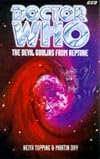
This was the first of the BBC Past Doctor Adventure novels, from 1997, featuring the Third Doctor and Liz Shaw with the core UNIT team of the Brigadier, Benton and Mike Yates. It has its moments, particularly in injecting a past history to the Brigadier and Benton and attributing (separate) sex lives to Liz and Yates. But there's a lot of Stuff here, some of which works OK - Chancellor Goth was responsible for sending the Doctor to Peladon, show more apparently - and some of which doesn't - the convoluted international back-story to UNIT, the fifth Beatle, the aliens of the title. I suppose it catches the spirit of the very early Pertwee shows quite well, but this isn't necessarily an entirely good thing. show less
This was the first of the BBC Past Doctor Adventure novels, from 1997, featuring the Third Doctor and Liz Shaw with the core UNIT team of the Brigadier, Benton and Mike Yates. It has its moments, particularly in injecting a past history to the Brigadier and Benton and attributing (separate) sex lives to Liz and Yates. But there's a lot of Stuff here, some of which works OK - Chancellor Goth was responsible for sending the Doctor to Peladon, show more apparently - and some of which doesn't - the convoluted international back-story to UNIT, the fifth Beatle, the aliens of the title. I suppose it catches the spirit of the very early Pertwee shows quite well, but this isn't necessarily an entirely good thing. show less
http://nwhyte.livejournal.com/1590612.html
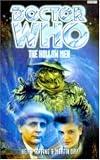
A Seventh Doctor / Ace novel set before Survival, thus outside the New Adventures continuity which I am used to. Despite the fact that Keith Topping is a co-author, I thought it was rather good, a sort-of sequel to The Awakening and to a lesser extent The Dæmons, with occult practices in a remote English village connecting both to ancient aliens and the highest levels of today's government; lots of good moments for Ace and her Doctor, and managing show more to engage with the genre of The Wicker Man while still being more or less a Doctor Who story. Two things I didn't like: the scene-setting seventeenth-century dialogue in the opening chapter is terrible (though oddly later chapters do it better) and there seemed to be a geographical delusion that Liverpool is the nearest large city to Wiltshire. But apart from that it worked for me. show less
A Seventh Doctor / Ace novel set before Survival, thus outside the New Adventures continuity which I am used to. Despite the fact that Keith Topping is a co-author, I thought it was rather good, a sort-of sequel to The Awakening and to a lesser extent The Dæmons, with occult practices in a remote English village connecting both to ancient aliens and the highest levels of today's government; lots of good moments for Ace and her Doctor, and managing show more to engage with the genre of The Wicker Man while still being more or less a Doctor Who story. Two things I didn't like: the scene-setting seventeenth-century dialogue in the opening chapter is terrible (though oddly later chapters do it better) and there seemed to be a geographical delusion that Liverpool is the nearest large city to Wiltshire. But apart from that it worked for me. show less

http://www.infinityplus.co.uk/nonfiction/ghostship.htm
For me, Tom Baker will always be the Doctor that the others have to measure up to, and in my completely unbiased opinion the best single story of the Tom Baker years was The Deadly Assassin. A novella set immediately after The Deadly Assassin, especially one told in the first person from the Doctor's point of view, seemed to me an ambitious project but I was prepared to give it a fair wind.
I was somewhat put off by the attached press show more release, and the foreword (by Hugh Lamb), both of which stressed how impressive it was that the author had written a ghost story with a Doctor Who setting. As far as I remember the TV series often dealt with supernatural themes, which sometimes turned out to have vaguely respectable scientific explanations, and sometimes did not. The publicists' insistence on the originality of the plot in Ghost Ship reminded me a bit of Samuel Johnson's quip about a woman preaching being like a dog walking on its hind legs: the impressive thing being "not that it is done well, but that it is done at all."
And so it was to be. The eventual pseudo-scientific "explanation" for the ghosts haunting the Queen Mary, on which the story is set, is flagged up almost at the beginning. One minor character is killed off horribly and pointlessly halfway through, and another at the end. Yet another is introduced to us in great detail via a long and tedious conversation with the Doctor and never appears again. The prose is purple. One particularly lurid sentence describes the Doctor's reaction to a spectral apparition: "A repulsion from the hard-headed scientist within me rose to a shouting crescendo of outraged disbelief." Thog, take note.
The Doctor portrayed here is not the witty, know-it-all Fourth Doctor I remember, but a much less interesting version of the depressed and gloomy Tom Baker revealed in the actor's autobiography. It's quite extraordinary to take one of the greatest sf characters of all time and turn him into a miserable git, like Levin from Anna Karenina but without the love interest. On top of that, the Doctor's occasional allusions to past adventures or historical events seem strangely out of whack, for example a reference to the non-existent Christ's College, Oxford.
The choice of October 1963 as the setting also seemed utterly inexplicable. The following month would surely have been much more appropriate for a ghost story, seeing as how it saw John F. Kennedy, Aldous Huxley and C.S. Lewis all shuffling off their mortal coils on the 22nd. (And wasn't there a new BBC science fiction programme that started the following day?) There are a number of whacking huge holes in the plot, but you probably get the idea. It's a shame, because I have enjoyed Keith Topping's non-fiction work.
I see that this story has been quite well reviewed on some of the fan websites. Perhaps if it is considered purely as a psychological exploration of the more reflective "I walk in eternity"/"Have I the right?" aspects of the Fourth Doctor's character, it could be rated a partial success. It should also be said that the presentation is attractive and the Dariusz Jasiczak frontispiece for the deluxe edition striking. But if Doctor Who fiction is to amount to anything it must surely be able to stand up to scrutiny as good writing, not merely as nicely packaged slightly-above-average fan-fic, and this does not. show less
For me, Tom Baker will always be the Doctor that the others have to measure up to, and in my completely unbiased opinion the best single story of the Tom Baker years was The Deadly Assassin. A novella set immediately after The Deadly Assassin, especially one told in the first person from the Doctor's point of view, seemed to me an ambitious project but I was prepared to give it a fair wind.
I was somewhat put off by the attached press show more release, and the foreword (by Hugh Lamb), both of which stressed how impressive it was that the author had written a ghost story with a Doctor Who setting. As far as I remember the TV series often dealt with supernatural themes, which sometimes turned out to have vaguely respectable scientific explanations, and sometimes did not. The publicists' insistence on the originality of the plot in Ghost Ship reminded me a bit of Samuel Johnson's quip about a woman preaching being like a dog walking on its hind legs: the impressive thing being "not that it is done well, but that it is done at all."
And so it was to be. The eventual pseudo-scientific "explanation" for the ghosts haunting the Queen Mary, on which the story is set, is flagged up almost at the beginning. One minor character is killed off horribly and pointlessly halfway through, and another at the end. Yet another is introduced to us in great detail via a long and tedious conversation with the Doctor and never appears again. The prose is purple. One particularly lurid sentence describes the Doctor's reaction to a spectral apparition: "A repulsion from the hard-headed scientist within me rose to a shouting crescendo of outraged disbelief." Thog, take note.
The Doctor portrayed here is not the witty, know-it-all Fourth Doctor I remember, but a much less interesting version of the depressed and gloomy Tom Baker revealed in the actor's autobiography. It's quite extraordinary to take one of the greatest sf characters of all time and turn him into a miserable git, like Levin from Anna Karenina but without the love interest. On top of that, the Doctor's occasional allusions to past adventures or historical events seem strangely out of whack, for example a reference to the non-existent Christ's College, Oxford.
The choice of October 1963 as the setting also seemed utterly inexplicable. The following month would surely have been much more appropriate for a ghost story, seeing as how it saw John F. Kennedy, Aldous Huxley and C.S. Lewis all shuffling off their mortal coils on the 22nd. (And wasn't there a new BBC science fiction programme that started the following day?) There are a number of whacking huge holes in the plot, but you probably get the idea. It's a shame, because I have enjoyed Keith Topping's non-fiction work.
I see that this story has been quite well reviewed on some of the fan websites. Perhaps if it is considered purely as a psychological exploration of the more reflective "I walk in eternity"/"Have I the right?" aspects of the Fourth Doctor's character, it could be rated a partial success. It should also be said that the presentation is attractive and the Dariusz Jasiczak frontispiece for the deluxe edition striking. But if Doctor Who fiction is to amount to anything it must surely be able to stand up to scrutiny as good writing, not merely as nicely packaged slightly-above-average fan-fic, and this does not. show less
Lists
Buffyverse (1)
You May Also Like


Associated Authors
Statistics
- Works
- 26
- Also by
- 5
- Members
- 1,909
- Popularity
- #13,484
- Rating
- 3.4
- Reviews
- 18
- ISBNs
- 68
- Languages
- 1