
Sapphire (1) (1950–)
Author of Push
For other authors named Sapphire, see the disambiguation page.
About the Author
Sapphire was born Ramona Lofton in Fort Ord, California on August 4, 1950. She attended City College of New York and received her master's degree at Brooklyn College. Before starting her writing career, she worked as a performance artist and a teacher of reading and writing. Her works include the show more poetry collection American Dreams and the novel Push, which won the Book-of-the-Month Club Stephen Crane award for First Fiction, the Black Caucus of the American Library Association's First Novelist Award, and the Mind Book of the Year Award in Great Britain. Precious, the film adaption of her novel Push, won the Grand Jury Prize and the Audience Awards in the U.S. dramatic competition at Sundance (2009). Her work has appeared in The New Yorker, The New York Times Magazine, The New York Times Book Review, The Black Scholar, Spin, and Bomb. In 2009, she was the recipient of a Fellow Award in Literature from United States Artists. (Bowker Author Biography) show less
Image credit: By Ryan from Canada - Saphire, CC BY-SA 2.0, https://commons.wikimedia.org/w/index.php?curid=7805009
Series
Works by Sapphire
Associated Works
New Daughters of Africa: An International Anthology of Writing by Women of African Descent (2019) — Contributor — 117 copies, 1 review
Women on Women 3: A New Anthology of American Lesbian Fiction (1996) — Contributor — 112 copies, 2 reviews
Go the Way Your Blood Beats: An Anthology of Lesbian and Gay Fiction by African-American Writers (1996) — Contributor — 92 copies
Tagged
Common Knowledge
- Canonical name
- Sapphire
- Legal name
- Lofton, Ramona
- Birthdate
- 1950-08-04
- Gender
- female
- Education
- City College of San Francisco
City College of New York - Occupations
- writer
Performance artist
Social worker
teacher - Nationality
- USA
- Birthplace
- Fort Ord, California, USA
- Places of residence
- New York, New York, USA
San Francisco, California, USA - Associated Place (for map)
- California, USA
Members
Reviews
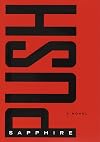
Digital audiobook narrated by the author
I’ve wanted to read this ever since the Oscars ceremony that highlighted the film (which I have yet to see).
Precious Jones is a young pregnant black teenager, who is functionally illiterate and the product of an abusive home. But Precious has a fierce determination to care for the baby growing inside her and to better her life. She WILL learn to read. She WILL keep her baby. She WILL succeed.
The issues raised are horrific and difficult to read show more about and process. Brava to Sapphire for highlighting the plight of young people such as her protagonist. The writing is raw and brutal; the story is gripping and inspiring. My heart broke for Precious, even as I cheered her on.
I did have a copy of the text handy, as I typically do for audiobooks. But I didn’t look at it until I had finished listening. On opening that first page I am struck by the author’s use of vernacular dialect, and the kind of misspellings a person like Precious would resort to in writing her own story. I’m reminded of Zora Neale Hurston’s Their Eyes Were Watching God, and how listening to the audio of that work made it easier to absorb the story.
The author narrates the audiobook herself, and I cannot imagine that anyone else would have done a better job. show less
I’ve wanted to read this ever since the Oscars ceremony that highlighted the film (which I have yet to see).
Precious Jones is a young pregnant black teenager, who is functionally illiterate and the product of an abusive home. But Precious has a fierce determination to care for the baby growing inside her and to better her life. She WILL learn to read. She WILL keep her baby. She WILL succeed.
The issues raised are horrific and difficult to read show more about and process. Brava to Sapphire for highlighting the plight of young people such as her protagonist. The writing is raw and brutal; the story is gripping and inspiring. My heart broke for Precious, even as I cheered her on.
I did have a copy of the text handy, as I typically do for audiobooks. But I didn’t look at it until I had finished listening. On opening that first page I am struck by the author’s use of vernacular dialect, and the kind of misspellings a person like Precious would resort to in writing her own story. I’m reminded of Zora Neale Hurston’s Their Eyes Were Watching God, and how listening to the audio of that work made it easier to absorb the story.
The author narrates the audiobook herself, and I cannot imagine that anyone else would have done a better job. show less
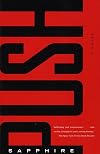
This book was the source material for the 2009 film Precious. Never realized it was a book, and I avoided the film for a long time because I thought it was just too depressing, but as an adult, and because talk of the movie and the book kept finding it's way into my YouTube recommendations, I figured I'd give it a shot.
The book should come with every trigger warning you could ever imagine, telling the story of Precious Jones, who's lived her whole life being sexually assaulted by both show more parents, impregnated by her father twice, basically lives as a servant and punching bag to her mother (who's relying on welfare), struggles in school and with her mental health due to the abuse at home, and even gets kicked out of school due to her second pregnancy and referred to an alternative school. And the trauma conga line only continues when Precious discovers she could have AIDS, because of the repeated sexual assault she's had to endure from her father (assault that she struggles with due to the shame, the knowledge that it's wrong for him to be hurting her, but also the physical pleasure that seems to keep happening with each assault).
It's not a book for the feint of heart...
Granted, I've consumed other media with serious and horrible subject matter, so I was very much prepared. But in Precious, we really see the raw, horrible experience that the black protagonist who's living through abuse in 1980s New York City, and how she wants to better herself, even disobeying her mother and continuing to pursue school when she's been told all her life that school won't do any good, and how she should go to the welfare office instead. Precious LOVES school. She knows that school can help her better her life, despite the difficulty with understanding the work, her difficulty speaking, having two children but only having custody over one - struggling to stay out of abusive situations (even trying to avoid outright getting killed by her mother) and get any help she can possibly get to survive.
Anyone who's been reliant on social services, especially when they've been the victim of abuse could easily relate to Precious' story; and her navigating the system, particularly needing to rely heavily on the system while also being a parent and getting an education for herself, while counselors and welfare officers try to convince her to do different so she won't be a burden on the system forever feels even more relevant in 2025. Her advocating for herself and her struggle is moving, but we as the audience know that she deserves so much more, and that she never deserved to be in this position in the first place. Even she knows that, and watching her as she realizes she never deserved the life she was born into as she learns to read, write and improve her speech makes the story even more painful.
And the most painful of all, is that women and girls like Precious Jones, and evil people like her mother and father exist in the real world; and that this sort of abuse happens every day, flying under the radar, ignored, regardless of social class, wealth, race, or location - many of which never face any punishment for their crimes against their victims. And not every victim ends up getting the help they need, no matter how much they pursue it and try to find resources. Precious ends up being one of the lucky ones, and yet she still goes through so much, and the universe continues throwing more hardship at her...
Push is a story of pain and trauma, where no monsters get punished, where victims have to keep moving forward, facing adversity absolutely everywhere. Some end up better than others, thriving and escaping the system once and for all, but for most? Only more pain awaits. show less
The book should come with every trigger warning you could ever imagine, telling the story of Precious Jones, who's lived her whole life being sexually assaulted by both show more parents, impregnated by her father twice, basically lives as a servant and punching bag to her mother (who's relying on welfare), struggles in school and with her mental health due to the abuse at home, and even gets kicked out of school due to her second pregnancy and referred to an alternative school. And the trauma conga line only continues when Precious discovers she could have AIDS, because of the repeated sexual assault she's had to endure from her father (assault that she struggles with due to the shame, the knowledge that it's wrong for him to be hurting her, but also the physical pleasure that seems to keep happening with each assault).
It's not a book for the feint of heart...
Granted, I've consumed other media with serious and horrible subject matter, so I was very much prepared. But in Precious, we really see the raw, horrible experience that the black protagonist who's living through abuse in 1980s New York City, and how she wants to better herself, even disobeying her mother and continuing to pursue school when she's been told all her life that school won't do any good, and how she should go to the welfare office instead. Precious LOVES school. She knows that school can help her better her life, despite the difficulty with understanding the work, her difficulty speaking, having two children but only having custody over one - struggling to stay out of abusive situations (even trying to avoid outright getting killed by her mother) and get any help she can possibly get to survive.
Anyone who's been reliant on social services, especially when they've been the victim of abuse could easily relate to Precious' story; and her navigating the system, particularly needing to rely heavily on the system while also being a parent and getting an education for herself, while counselors and welfare officers try to convince her to do different so she won't be a burden on the system forever feels even more relevant in 2025. Her advocating for herself and her struggle is moving, but we as the audience know that she deserves so much more, and that she never deserved to be in this position in the first place. Even she knows that, and watching her as she realizes she never deserved the life she was born into as she learns to read, write and improve her speech makes the story even more painful.
And the most painful of all, is that women and girls like Precious Jones, and evil people like her mother and father exist in the real world; and that this sort of abuse happens every day, flying under the radar, ignored, regardless of social class, wealth, race, or location - many of which never face any punishment for their crimes against their victims. And not every victim ends up getting the help they need, no matter how much they pursue it and try to find resources. Precious ends up being one of the lucky ones, and yet she still goes through so much, and the universe continues throwing more hardship at her...
Push is a story of pain and trauma, where no monsters get punished, where victims have to keep moving forward, facing adversity absolutely everywhere. Some end up better than others, thriving and escaping the system once and for all, but for most? Only more pain awaits. show less
I picked this book up in high school because I'd read it on a booklist somewhere. In any case, I was not expecting it.
I read it in one sitting. It's phenomenal, but every time you think it can't get worse, it does. I found myself continuing on in horror, convinced that surely, a moment full of light and puppies or something would happen. I couldn't see the movie when it came out, even though the book was fabulous. I can't reread this book. Ever. However, I recommend it to read once because show more the story is worth hearing. show less
I read it in one sitting. It's phenomenal, but every time you think it can't get worse, it does. I found myself continuing on in horror, convinced that surely, a moment full of light and puppies or something would happen. I couldn't see the movie when it came out, even though the book was fabulous. I can't reread this book. Ever. However, I recommend it to read once because show more the story is worth hearing. show less
Sapphire pulls no punches with her story of Precious Jones, an illiterate, inner-city, 16-year old who is yet again pregnant with her father's child. Through her eyes, life is indeed precious; even riven as hers is. Raw, angry, bleak and disturbing, this story is, surprisingly, too beautiful to dismiss. Push through the unbearable and you will find grace.
Lists
Awards


You May Also Like


Associated Authors
Statistics
- Works
- 5
- Also by
- 11
- Members
- 4,710
- Popularity
- #5,350
- Rating
- 3.8
- Reviews
- 191
- ISBNs
- 81
- Languages
- 12
- Favorited
- 7
