
Colin Clark (1) (1932–2002)
Author of My Week with Marilyn: The Prince, the Showgirl, and Me
For other authors named Colin Clark, see the disambiguation page.
About the Author
Colin Clark (1932-2002) was a British writer and filmmaker. After The Prince and the Showgirl, he became a personal assistant to Laurence Olivier. He later produced and directed more than a hundred documentary film in America and Britain.
Works by Colin Clark
The Prince, the Showgirl, and Me: Six Months on the Set With Marilyn and Olivier (1995) 75 copies, 4 reviews
Associated Works
Tagged
Common Knowledge
- Birthdate
- 1932-10-09
- Date of death
- 2002-12-17
- Gender
- male
- Education
- Eton College, Eton, Berkshire, England, UK
University of Oxford (Christ Church) - Occupations
- filmmaker
writer - Organizations
- Royal Air Force
Granada Television
Associated Television - Relationships
- Clark, Alan (brother)
Clark, Sir Kenneth (father) - Nationality
- UK
- Birthplace
- London, England, UK
- Place of death
- London, England, UK
- Associated Place (for map)
- London, England, UK
Members
Reviews

I was expecting this to be a lightweight story of romance between a nobody (who happened to have a job on a movie set due to lots of hard work and a bit of luck) and Marilyn Monroe, which would be mildly entertaining for me. It ended up being two completely different things. One was the story of an entitled cad who got only got the job working on the movie because his family was BFFs with "Larry" (Sir Laurence Olivier) and Vivien (Leigh), and because he had nothing better to do than sit show more outside a movie producer's office 9 hours a day for weeks and wait to be handed a job. This story did not amuse me in the least.
However, there's another story here. The book takes place towards the end of Marilyn Monroe's career, and life. By this point she has just gotten married for the third time, she's addicted to pills, and she's surrounded by enablers who don't think she's anything more than money and a pretty face. Her American entourage exploit her, while keeping her self-esteem low so that she will continue to think she needs them. The British cast and crew of the movie (and her husband, Arthur Miller) have no respect for her and think she's an airhead, and make sure she knows how they feel. It's no wonder she fumbled her lines and couldn't sleep.
This short story is a really insightful glimpse of Marilyn Monroe's life, but not a great story.
The audiobook I listened to also included The Prince, the Showgirl, and Me, which is the transcribed diary written by Colin Clark before and during the filming of "The Prince and the Showgirl" (the movie he worked on which starred Sir Laurence Olivier and Marilyn Monroe). This was so. long. and. boring. I skimmed through most of it as much as I could. I did not care at all about the minutiae of producing a movie in the 1950s (and I do mean MINUTIAE), nor the gossip of the cast and crew. The diary reveals Colin to be a womanizer and an ass. In an effort to protect Marilyn and himself (mostly just himself), he did not write in his diary at all about the week that he spent with Marilyn. (Despite the fact that they did not do anything interesting.)
Throughout the whole filming of the movie, the British cast and crew treat the American cast and crew like total dirt. They exclude and belittle the Americans at every opportunity. And then, at the end of his diary, Colin Clark is astonished to realize that the Americans think the Brits are a bunch of cold, stuck-up assholes, and absolutely despise them! Serves you right, jerk.
In short: read the short story (it is short! you can't go wrong!) but the diaries should definitely be skipped, unless you're really really into that kind of thing. show less
However, there's another story here. The book takes place towards the end of Marilyn Monroe's career, and life. By this point she has just gotten married for the third time, she's addicted to pills, and she's surrounded by enablers who don't think she's anything more than money and a pretty face. Her American entourage exploit her, while keeping her self-esteem low so that she will continue to think she needs them. The British cast and crew of the movie (and her husband, Arthur Miller) have no respect for her and think she's an airhead, and make sure she knows how they feel. It's no wonder she fumbled her lines and couldn't sleep.
This short story is a really insightful glimpse of Marilyn Monroe's life, but not a great story.
The audiobook I listened to also included The Prince, the Showgirl, and Me, which is the transcribed diary written by Colin Clark before and during the filming of "The Prince and the Showgirl" (the movie he worked on which starred Sir Laurence Olivier and Marilyn Monroe). This was so. long. and. boring. I skimmed through most of it as much as I could. I did not care at all about the minutiae of producing a movie in the 1950s (and I do mean MINUTIAE), nor the gossip of the cast and crew. The diary reveals Colin to be a womanizer and an ass. In an effort to protect Marilyn and himself (mostly just himself), he did not write in his diary at all about the week that he spent with Marilyn. (Despite the fact that they did not do anything interesting.)
Throughout the whole filming of the movie, the British cast and crew treat the American cast and crew like total dirt. They exclude and belittle the Americans at every opportunity. And then, at the end of his diary, Colin Clark is astonished to realize that the Americans think the Brits are a bunch of cold, stuck-up assholes, and absolutely despise them! Serves you right, jerk.
In short: read the short story (it is short! you can't go wrong!) but the diaries should definitely be skipped, unless you're really really into that kind of thing. show less

THE PRINCE, THE SHOWGIRL, AND ME: SIX MONTHS ON THE SET WITH MARILYN AND OLIVIER, by Colin Clark.
When possibly the greatest actor in the world joined forces with the biggest movie star in the world for a romantic comedy, one could justifiably hope for a Great Event in cinema history. One could just as justifiably wonder how these astonishingly different people could possibly work together.
Colin Clark (son of the great art historian Sir Kenneth Clark) worked as a third assistant director on show more the film, which was called THE PRINCE AND THE SHOWGIRL. Sir Laurence Olivier repeated his stage role as the pompous prince regent of a Balkan nation. Marilyn Monroe played the slightly ditzy yet actually quite bright (and adorable) American actress who catches the prince's fancy then shows him a thing or two about being human. Olivier directed the film, and he and Monroe, through their respective production companies, produced it. Though the film itself is rather lovely, the making of it is a bit of a horror legend in the film world. Clark's daily diary entries take the reader through a close-up view of the normally difficult world of movie making, with special emphasis on the abnormally difficult making of this particular film.
Olivier was the most professional of actors: letter-perfect on his lines (and everyone else's), punctual, assured, and deeply prepared. Monroe was a limping fawn with little self-esteem, virtually no professionalism, and an unfailing ability to live without awareness of any needs but her own. That her life before fame had been a battered one, and that her need for affirmation and adoration revealed itself by ignoring anything that *wasn't* affirmation and adoration, are well-known. In Clark's view, she was not an awful person who deliberately dismissed the concerns of others. Rather she was incapable of seeing any needs but her own, which meant that the world revolved around her needs and she was blind to all else. Blind, as in cannot be blamed for not seeing. In normal circumstances, one can accommodate the needs of someone so wounded, so helpless. But when millions of dollars are at stake, when people's entire careers are on the line, and when one's entire being is centered on an ideal of professionalism, it's easy to see how pity would quickly subside, to be replaced by anger and contempt.
Monroe was never on time. She found it difficult to remember any lines that required her to change her course of thinking in a scene. She was sometimes dazed or bewildered, sometimes tipsy, sometimes drugged. She was freshly married to famed playwright Arthur Miller, who apparently treated her abominably. She was pregnant and apparently suffered a miscarriage during filming. She was unable to accept direction from anyone except her acting coach (actually, the *wife* of her acting coach). She often left early or missed entire shooting days without notice. Olivier lost patience quickly, struggled mightily to maintain the production, had difficulty with his own performance, and was so traumatized by the experience that he didn't direct another film for 13 years.
But it is Monroe who, in my reading, comes off the most sympathetic. It's not that Olivier should have done anything different--perhaps he would better have coddled her than confronted her as often as he did, perhaps not--but rather that the situation was simply impossible. When Colin Clark mentioned a few years later to director Billy Wilder that he, too, had worked with Monroe, Wilder exclaimed, "Ah. Then you too know the meaning of pure pain." Monroe was most certainly incapable of being anything or anyone but who she was, and to get what was indeed her special magic on screen, it was necessary to live with who and what she was, to go through the crucible of fire that working with her entailed. Olivier, on the other hand, (despite being one of my two favorite actors and a figure I esteem higher than anyone in the profession), comes off as unfeeling and short of understanding and flexibility. There is probably nothing he could have done to make the situation better, but his rigidity on and off camera might have made it worse.
Colin Clark himself seems like a likeable fellow with a fine eye for detail and a rare insight into human nature. Though but a callow youth at the time of his experience, he shows an admirable realism about the people he cares about (particularly Olivier and his wife Vivien Leigh) while making it clear that Monroe's often abominable behavior was not entirely condemnable, in light of who she was. Clark is a wonderful guide behind the scenes in the making of a film that, considering how awful the making of it was for all concerned, came off as a not unenjoyable piece of cinema.
On the day Monroe finished the film, she presented presents to the entire crew. Upon her departure, to a one, the crew tossed the gifts unopened into the waste bin. Clark's book makes it very understandable how such a gesture of disdain could be possible. It also makes it very clear that the gesture was not entirely justified.
By the way, I read this book and saw the movie more or less simultaneously. If you ever get a chance to do it that way, I highly recommend it. It made every moment richer, both in reading and in watching. show less
When possibly the greatest actor in the world joined forces with the biggest movie star in the world for a romantic comedy, one could justifiably hope for a Great Event in cinema history. One could just as justifiably wonder how these astonishingly different people could possibly work together.
Colin Clark (son of the great art historian Sir Kenneth Clark) worked as a third assistant director on show more the film, which was called THE PRINCE AND THE SHOWGIRL. Sir Laurence Olivier repeated his stage role as the pompous prince regent of a Balkan nation. Marilyn Monroe played the slightly ditzy yet actually quite bright (and adorable) American actress who catches the prince's fancy then shows him a thing or two about being human. Olivier directed the film, and he and Monroe, through their respective production companies, produced it. Though the film itself is rather lovely, the making of it is a bit of a horror legend in the film world. Clark's daily diary entries take the reader through a close-up view of the normally difficult world of movie making, with special emphasis on the abnormally difficult making of this particular film.
Olivier was the most professional of actors: letter-perfect on his lines (and everyone else's), punctual, assured, and deeply prepared. Monroe was a limping fawn with little self-esteem, virtually no professionalism, and an unfailing ability to live without awareness of any needs but her own. That her life before fame had been a battered one, and that her need for affirmation and adoration revealed itself by ignoring anything that *wasn't* affirmation and adoration, are well-known. In Clark's view, she was not an awful person who deliberately dismissed the concerns of others. Rather she was incapable of seeing any needs but her own, which meant that the world revolved around her needs and she was blind to all else. Blind, as in cannot be blamed for not seeing. In normal circumstances, one can accommodate the needs of someone so wounded, so helpless. But when millions of dollars are at stake, when people's entire careers are on the line, and when one's entire being is centered on an ideal of professionalism, it's easy to see how pity would quickly subside, to be replaced by anger and contempt.
Monroe was never on time. She found it difficult to remember any lines that required her to change her course of thinking in a scene. She was sometimes dazed or bewildered, sometimes tipsy, sometimes drugged. She was freshly married to famed playwright Arthur Miller, who apparently treated her abominably. She was pregnant and apparently suffered a miscarriage during filming. She was unable to accept direction from anyone except her acting coach (actually, the *wife* of her acting coach). She often left early or missed entire shooting days without notice. Olivier lost patience quickly, struggled mightily to maintain the production, had difficulty with his own performance, and was so traumatized by the experience that he didn't direct another film for 13 years.
But it is Monroe who, in my reading, comes off the most sympathetic. It's not that Olivier should have done anything different--perhaps he would better have coddled her than confronted her as often as he did, perhaps not--but rather that the situation was simply impossible. When Colin Clark mentioned a few years later to director Billy Wilder that he, too, had worked with Monroe, Wilder exclaimed, "Ah. Then you too know the meaning of pure pain." Monroe was most certainly incapable of being anything or anyone but who she was, and to get what was indeed her special magic on screen, it was necessary to live with who and what she was, to go through the crucible of fire that working with her entailed. Olivier, on the other hand, (despite being one of my two favorite actors and a figure I esteem higher than anyone in the profession), comes off as unfeeling and short of understanding and flexibility. There is probably nothing he could have done to make the situation better, but his rigidity on and off camera might have made it worse.
Colin Clark himself seems like a likeable fellow with a fine eye for detail and a rare insight into human nature. Though but a callow youth at the time of his experience, he shows an admirable realism about the people he cares about (particularly Olivier and his wife Vivien Leigh) while making it clear that Monroe's often abominable behavior was not entirely condemnable, in light of who she was. Clark is a wonderful guide behind the scenes in the making of a film that, considering how awful the making of it was for all concerned, came off as a not unenjoyable piece of cinema.
On the day Monroe finished the film, she presented presents to the entire crew. Upon her departure, to a one, the crew tossed the gifts unopened into the waste bin. Clark's book makes it very understandable how such a gesture of disdain could be possible. It also makes it very clear that the gesture was not entirely justified.
By the way, I read this book and saw the movie more or less simultaneously. If you ever get a chance to do it that way, I highly recommend it. It made every moment richer, both in reading and in watching. show less
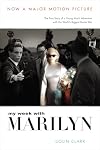
Read from Feb 5-Jul 27, 2012
I started this in February. I finished the first part -- the "My Week with Marilyn" portion -- in a matter of days. It was definitely interesting and I understand why the started of with that one. The second half -- "The Prince, the Showgirl, and Me" part and the first book published -- was far more painful to get through.
The second half was interesting. I learned a lot about film making that I never knew about or hadn't thought about at all. It just didn't have show more enough Marilyn.
However after reading the second half, I have SERIOUS doubts about the truthfulness of that first half. I mean, you're a young man working on a film set and suddenly the MOST FAMOUS and MOST BEAUTIFUL woman on the PLANET gives you attention and you don't yell it from the rooftops? I mean, there wasn't an INKLING in the second part about his time with Marilyn. It's suspect, I think.
A good story though and if it is true, then that's cool and good for him. But...I don't know.
An interesting read -- the first half is definitely fun for Marilyn fans. The second half is far more for fans of film...just not enough MM. show less
I started this in February. I finished the first part -- the "My Week with Marilyn" portion -- in a matter of days. It was definitely interesting and I understand why the started of with that one. The second half -- "The Prince, the Showgirl, and Me" part and the first book published -- was far more painful to get through.
The second half was interesting. I learned a lot about film making that I never knew about or hadn't thought about at all. It just didn't have show more enough Marilyn.
However after reading the second half, I have SERIOUS doubts about the truthfulness of that first half. I mean, you're a young man working on a film set and suddenly the MOST FAMOUS and MOST BEAUTIFUL woman on the PLANET gives you attention and you don't yell it from the rooftops? I mean, there wasn't an INKLING in the second part about his time with Marilyn. It's suspect, I think.
A good story though and if it is true, then that's cool and good for him. But...I don't know.
An interesting read -- the first half is definitely fun for Marilyn fans. The second half is far more for fans of film...just not enough MM. show less
The only reason that I have given this book a 3-star rating is because of my impression that the author was rather condescending toward a woman who is one of my heroes.
Monroe? A hero?
A beautiful, brilliant actor who showed all the signs of Bipolar disorder, who struggled every day of her too-short life to be THE WOMAN, only to lose what little of herself that was under her control.
Today, Monroe would have been put into talk therapy when she signed her first contract (not psychoanalysis). show more She would have discovered that the things that happened to her as a child (including, I believe, sexual abuse as a very young girl) were not her fault. She might have been able to live a long time.
However, she would not have been a better actor. Monroe was consistently underappreciated by the Hollywood community. Her comedic timing was amazing, but so, too, was her dramatic acumen.
Clark's book gives us a tiny glimpse of who Monroe really was. And when I finished reading it, I wished there had been a lot more. show less
Monroe? A hero?
A beautiful, brilliant actor who showed all the signs of Bipolar disorder, who struggled every day of her too-short life to be THE WOMAN, only to lose what little of herself that was under her control.
Today, Monroe would have been put into talk therapy when she signed her first contract (not psychoanalysis). show more She would have discovered that the things that happened to her as a child (including, I believe, sexual abuse as a very young girl) were not her fault. She might have been able to live a long time.
However, she would not have been a better actor. Monroe was consistently underappreciated by the Hollywood community. Her comedic timing was amazing, but so, too, was her dramatic acumen.
Clark's book gives us a tiny glimpse of who Monroe really was. And when I finished reading it, I wished there had been a lot more. show less
Lists
You May Also Like


Associated Authors
Statistics
- Works
- 4
- Also by
- 1
- Members
- 275
- Popularity
- #84,338
- Rating
- 3.6
- Reviews
- 11
- ISBNs
- 90
- Languages
- 7