
David Barton (1) (1954–)
Author of Original intent: the courts, the constitution, and religion.
For other authors named David Barton, see the disambiguation page.
About the Author
Image credit: © WallBuilders
Series
Works by David Barton
The Jefferson Lies: Exposing the Myths You've Always Believed About Thomas Jefferson (2012) 274 copies, 7 reviews
The Myth of Separation: What Is the Correct Relationship Between Church and State? (1989) 233 copies
The spirit of the American revolution: a booklet based on the video by the same title, 2nd ed. 1 copy
Foundations of Freedom: One Nation Under God, Great American Myths, A Republic that Stands (Disc 6) 1 copy
Associated Works
Wives of the Signers: The Women Behind the Declaration of Independence (1997) — Foreword, some editions — 241 copies
Tagged
Common Knowledge
- Birthdate
- 1954-01-28
- Gender
- male
- Education
- Oral Roberts University (BA|Religious Education|1976)
- Occupations
- church youth director
math and science teacher
principal (Aledo Christian School)
political activist
evangelist
author - Organizations
- Specialty Research Associates (founder)
WallBuilders (founder)
Republican Party of Texas (vice-chair, 1997-2006)
National Council on Bible Curriculum in Public Schools (Board of Advisors)
Providence Foundation (Board of Advisors)
Aledo Christian School, Aledo, Texas, USA - Awards and honors
- Angel Award (Excellence in Media)
- Nationality
- USA
- Birthplace
- Aledo, Texas, USA
- Places of residence
- Aledo, Texas, USA
- Associated Place (for map)
- Aledo, Texas, USA
Members
Reviews
The Jefferson lies : exposing the myths you've always believed about Thomas Jefferson by David Barton
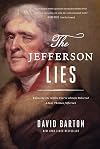
Does this author cite sources? Absolutely.
That doesn't make him a good historian though, given that he cherry-picks and misquotes his sources extensively in the name of "historical reclamation".
Using sources doesn't mean anything if you're not using them correctly.
It's a disgrace that this book even made it to a publisher, at least the publisher was smart enough to pull the book off the shelves when the fraud was revealed.
There needs to be a much stricter standard set for history books show more because as this proves, it's all too easy to twist history with bias. show less
That doesn't make him a good historian though, given that he cherry-picks and misquotes his sources extensively in the name of "historical reclamation".
Using sources doesn't mean anything if you're not using them correctly.
It's a disgrace that this book even made it to a publisher, at least the publisher was smart enough to pull the book off the shelves when the fraud was revealed.
There needs to be a much stricter standard set for history books show more because as this proves, it's all too easy to twist history with bias. show less

Twenty-three-year-old Colonel George Washington offers some advice to his commanding officer, General Braddock, recently arrived from England. In his arrogance, Braddock discounts Washington, Franklin, and everyone else who warns him about about using British methods to fight Indians.
“The Indians,” said Braddock, “may frighten continental troops, but they can make no impression on the King's regulars!”
This book covers one battle of the French and Indian war – the battle on the show more Monongahela, on July 9th, 1755.
En-route to where they planned to fight, the British were ambushed by Indians who sided with the French. Braddock ordered his officers to remain on their horses, and for his men to maintain their formation and shoot from where they were. They were open targets for the Indians who shot from the woods. It was a slaughter that lasted two hours. Excepting Washington, Braddock was the last mounted officer to fall. When he fell, his regulars fled, abandoning everything. In letters home to his brother, Washington says,
...by the all-powerful dispensations of Providence, I have been protected beyond all human probability or expectation; for I had four bullets through my coat, and two horses shot under me, yet escaped unhurt, although death was leveling my companions on every side of me!
Fifteen years after that battle, during an exploratory trip west, a band of Indians approach Washington's group. Their chief speaks through an interpreter:
I am a chief and ruler over my tribes. My influence extends to the waters of the great lakes and to the far blue mountains. I have traveled a long and weary path that I might see the young warrior of the great battle. It was on the day when the white man's blood mixed with the streams of our forest that I first beheld this chief. I called to my young men and said, mark yon tall and daring warrior? He is not of the red-coat tribe—he hath an Indian's wisdom, and his warriors fight as we do—himself is alone exposed. Quick, let your aim be certain, and he dies. Our rifles were leveled, rifles which, but for you, knew not how to miss--'twas all in vain, a power mightier far than we, shielded you. Seeing you were under the special guardianship of the Great Spirit, we immediately ceased to fire at you. I am old and soon shall be gathered to the great council fire of my fathers in the land of shades, but ere I go, there is something bids me speak in the voice of prophecy. Listen! The Great Spirit protects that man, and guides his destinies—he will become the chief of nations, and a people yet unborn will hail him as the founder of a mighty empire. I am come to pay homage to the man who is the particular favorite of Heaven, and who can never die in battle.”
The book is heavily illustrated with woodcuts, paintings and illustrations from over 150 years ago. Appendices include a map of the battle area, a time line of events, bibliography, and sources of illustrations.
This was a fascinating read, covering the events that led up to the French and Indian War and giving much detail of that particular battle. Although this is a juvenile/young adult book, there are many sources noted in the bibliography to get a more detailed read on the subject. It is interesting that this particular moment in history and Washington's response to it, was common knowledge for over one hundred and fifty years, until it was excised from American history books in the 1930s. show less
“The Indians,” said Braddock, “may frighten continental troops, but they can make no impression on the King's regulars!”
This book covers one battle of the French and Indian war – the battle on the show more Monongahela, on July 9th, 1755.
En-route to where they planned to fight, the British were ambushed by Indians who sided with the French. Braddock ordered his officers to remain on their horses, and for his men to maintain their formation and shoot from where they were. They were open targets for the Indians who shot from the woods. It was a slaughter that lasted two hours. Excepting Washington, Braddock was the last mounted officer to fall. When he fell, his regulars fled, abandoning everything. In letters home to his brother, Washington says,
...by the all-powerful dispensations of Providence, I have been protected beyond all human probability or expectation; for I had four bullets through my coat, and two horses shot under me, yet escaped unhurt, although death was leveling my companions on every side of me!
Fifteen years after that battle, during an exploratory trip west, a band of Indians approach Washington's group. Their chief speaks through an interpreter:
I am a chief and ruler over my tribes. My influence extends to the waters of the great lakes and to the far blue mountains. I have traveled a long and weary path that I might see the young warrior of the great battle. It was on the day when the white man's blood mixed with the streams of our forest that I first beheld this chief. I called to my young men and said, mark yon tall and daring warrior? He is not of the red-coat tribe—he hath an Indian's wisdom, and his warriors fight as we do—himself is alone exposed. Quick, let your aim be certain, and he dies. Our rifles were leveled, rifles which, but for you, knew not how to miss--'twas all in vain, a power mightier far than we, shielded you. Seeing you were under the special guardianship of the Great Spirit, we immediately ceased to fire at you. I am old and soon shall be gathered to the great council fire of my fathers in the land of shades, but ere I go, there is something bids me speak in the voice of prophecy. Listen! The Great Spirit protects that man, and guides his destinies—he will become the chief of nations, and a people yet unborn will hail him as the founder of a mighty empire. I am come to pay homage to the man who is the particular favorite of Heaven, and who can never die in battle.”
The book is heavily illustrated with woodcuts, paintings and illustrations from over 150 years ago. Appendices include a map of the battle area, a time line of events, bibliography, and sources of illustrations.
This was a fascinating read, covering the events that led up to the French and Indian War and giving much detail of that particular battle. Although this is a juvenile/young adult book, there are many sources noted in the bibliography to get a more detailed read on the subject. It is interesting that this particular moment in history and Washington's response to it, was common knowledge for over one hundred and fifty years, until it was excised from American history books in the 1930s. show less
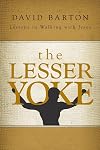
I won this book through the first-reads program.
This book is a collection of sermons of sorts, all based upon the line in scripture that the title of the book itself comes from. The sections are labeled by topic (i.e. Self-Discipline, Stewardship, Holiness, Thanksgiving, etc.) and each topic is discussed for a number of pages.
The book is a highly personal project, and may of the topics are referenced with anecdotes from the author [a:David Barton|58232|David show more Barton|http://photo.goodreads.com/authors/1290468544p2/58232.jpg]'s own life, or the life of others that he has met within his parish. This gives the book a bit of a confessional quality, and also a certain level of comfort. 'Ah, so someone else has gone through this trouble' one might think.
The first two thirds of Section I of the book I quite enjoyed. The book had a message that was both religious and secular, and essentially was there to remind one to do good for good's sake. Don't worry too much, but don't slack off. The advice was good, and [a:David Barton|58232|David Barton|http://photo.goodreads.com/authors/1290468544p2/58232.jpg] deferred to common sense above all else for the most part. I found a great deal of comfort in this section. My trouble with the book arose in the final third of Section I where the book took up a more religious message, which is to be expected.
Section II of the book is divided in a similar fashion to the first, and contains the basis of lesson plans based around the different topics. This way, a Bible Study course, or an action person of religious authority could build their own preachings off of it. These outlines were well thought out, and I would like to hear what some would come up with based on them. It'd be entertaining to listen to, and as I said previously, the message of doing good for good's sake is one I enjoy.
All in all, this book was quite solid. I took a good deal of comfort in it, and in the Further Thinking questions found some aspects of my life that I would much like to improve. show less
This book is a collection of sermons of sorts, all based upon the line in scripture that the title of the book itself comes from. The sections are labeled by topic (i.e. Self-Discipline, Stewardship, Holiness, Thanksgiving, etc.) and each topic is discussed for a number of pages.
The book is a highly personal project, and may of the topics are referenced with anecdotes from the author [a:David Barton|58232|David show more Barton|http://photo.goodreads.com/authors/1290468544p2/58232.jpg]'s own life, or the life of others that he has met within his parish. This gives the book a bit of a confessional quality, and also a certain level of comfort. 'Ah, so someone else has gone through this trouble' one might think.
The first two thirds of Section I of the book I quite enjoyed. The book had a message that was both religious and secular, and essentially was there to remind one to do good for good's sake. Don't worry too much, but don't slack off. The advice was good, and [a:David Barton|58232|David Barton|http://photo.goodreads.com/authors/1290468544p2/58232.jpg] deferred to common sense above all else for the most part. I found a great deal of comfort in this section. My trouble with the book arose in the final third of Section I where the book took up a more religious message, which is to be expected.
Section II of the book is divided in a similar fashion to the first, and contains the basis of lesson plans based around the different topics. This way, a Bible Study course, or an action person of religious authority could build their own preachings off of it. These outlines were well thought out, and I would like to hear what some would come up with based on them. It'd be entertaining to listen to, and as I said previously, the message of doing good for good's sake is one I enjoy.
All in all, this book was quite solid. I took a good deal of comfort in it, and in the Further Thinking questions found some aspects of my life that I would much like to improve. show less
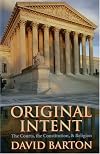
David Barton makes a compelling case that the 1st amendment to the U.S Constitution has been changed dramatically from the founding fathers original intent. In numerous citations and excerpts of letters from founding fathers it becomes apparent that the Supreme Court has changed the orignal meaning of the 1st amendment. Barton cites lists of case law that has slowly but inexorably moved the country away from religious artifacts in schools/government buildings and into a more secular show more society.
Barton also spends a significant amount of time establishing that the vast majority of the founding fathers were indeed religious, and that the United States was created and founded in Christianity.
An interesting read, it certainly changes my viewpoint when I realize that "separation of Church and State" is NOT in the Constitution at all. show less
Barton also spends a significant amount of time establishing that the vast majority of the founding fathers were indeed religious, and that the United States was created and founded in Christianity.
An interesting read, it certainly changes my viewpoint when I realize that "separation of Church and State" is NOT in the Constitution at all. show less
You May Also Like


Associated Authors
Statistics
- Works
- 95
- Also by
- 2
- Members
- 3,901
- Popularity
- #6,489
- Rating
- 4.0
- Reviews
- 31
- ISBNs
- 259
- Languages
- 3
- Favorited
- 2