
Edwin Smith (1) (1912–1971)
Author of English Parish Churches
For other authors named Edwin Smith, see the disambiguation page.
About the Author
Image credit: Edwin Smith
Works by Edwin Smith
England 6 copies
All about sunshine and your camera 4 copies
Associated Works
The Dawn of Civilization: The First World Survey of Human Cultures in Early Times (1961) — Photographer — 127 copies, 2 reviews
Tagged
Common Knowledge
- Legal name
- Smith, Edwin George Herbert
- Birthdate
- 1912-05-15
- Date of death
- 1971-12-29
- Gender
- male
- Occupations
- photographer
- Relationships
- Cook, Olive (wife)
- Nationality
- UK
- Birthplace
- Canonbury, Islington, London, England
- Place of death
- Saffron Walden, Essex, England
- Associated Place (for map)
- England
Members
Reviews

Awe-inspiring black-and-white photos abound throughout this slim and surprisingly heavy volume. This photographic history of includes detailed historical notes as well as explanatory glosses on the 200+ photos. The small type in the historical essays makes it hard to read, and the even smaller type on the plate descriptions is that much more difficult. But the information is valuable enough to make the struggle worthwhile. Photography enthusiasts, architecture fans, and religionists with a show more sense of historical gravitas will all find a home in this volume. show less
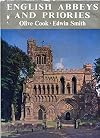
This excellent oversized book, published in 1960, contains 136 b/w photogravure portraits of English abbeys and priories, many of them full-page prints. The photos include ruins as well as buildings still in use, and there are good closeups of architectural and sculptural details. The photographer, Edwin Smith, clearly had a talent for composition and creating evocative images.
A section called "Notes on the Gravure Plates" provides details for most of the photographs. Olive Cook, the show more author, clearly knew her abbeys. The Notes are well worth reading. Here are a couple of examples:
"Pershore Abbey....It was usual at the Dissolution, as we have seen, for the parishioners to retain the nave of an abbey church for their own use while the choir and transept were either destroyed or left to moulder. The people of Pershore, with admirable sense, exchanged the nave for choir and transept; so what we see here are choir and transept and the tower which rose over the crossing of the original cruciform church. There was a great fire in 1223, as a result of which the choir was rebuilt; this is the work we see now."
"Tintern Abbey, Monmouthshire (Cistercian). To many writers of the present as well as the past, Tintern, remotely set beside the Wye in a narrow valley between great rocky cliffs, has seemed the ideal of a monastic ruin. Though the gable-ends hurt Gilpin's eye with their regularity and disgusted him with the 'vulgarity of their shape', Tintern has probably given more poetic pleasure to lovers of ruins than any other of our fallen abbeys, not only to those with instinctive feeling for the Picturesque like Wordsworth and Turner, but to a scientist like Humphry Davy who in one of his early notebooks writes movingly of the abbey by moonlight and of the broken and trembling light shining through the great west window upon the monks' burial ground." show less
A section called "Notes on the Gravure Plates" provides details for most of the photographs. Olive Cook, the show more author, clearly knew her abbeys. The Notes are well worth reading. Here are a couple of examples:
"Pershore Abbey....It was usual at the Dissolution, as we have seen, for the parishioners to retain the nave of an abbey church for their own use while the choir and transept were either destroyed or left to moulder. The people of Pershore, with admirable sense, exchanged the nave for choir and transept; so what we see here are choir and transept and the tower which rose over the crossing of the original cruciform church. There was a great fire in 1223, as a result of which the choir was rebuilt; this is the work we see now."
"Tintern Abbey, Monmouthshire (Cistercian). To many writers of the present as well as the past, Tintern, remotely set beside the Wye in a narrow valley between great rocky cliffs, has seemed the ideal of a monastic ruin. Though the gable-ends hurt Gilpin's eye with their regularity and disgusted him with the 'vulgarity of their shape', Tintern has probably given more poetic pleasure to lovers of ruins than any other of our fallen abbeys, not only to those with instinctive feeling for the Picturesque like Wordsworth and Turner, but to a scientist like Humphry Davy who in one of his early notebooks writes movingly of the abbey by moonlight and of the broken and trembling light shining through the great west window upon the monks' burial ground." show less

large folio photographs B&W of English Houses, rather dull

You May Also Like


Associated Authors
Statistics
- Works
- 26
- Also by
- 8
- Members
- 473
- Popularity
- #52,093
- Rating
- 3.9
- Reviews
- 4
- ISBNs
- 24
- Languages
- 1