
Ian Jeffrey
Author of Photography: A Concise History
Works by Ian Jeffrey
Ma Hied's Wasted 1 copy
Φωτογραφία συνοπτική ιστορία 1 copy
Associated Works
La France, images of woman and ideas of nation, 1789-1989: Hayward Gallery London, 26 January to 16 April : Walker Art G (1989) — Contributor — 10 copies
Tagged
Common Knowledge
- Gender
- male
- Occupations
- historian (photography)
curator
professor - Organizations
- Goldsmith College, University of London
- Awards and honors
- J. Dudley Johnston Award (2005)
- Nationality
- England
United Kingdom - Places of residence
- London, England, UK
Ipswich, Suffolk, England, UK - Map Location
- United Kingdom
Members
Reviews
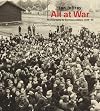
In September 1939, thousands of German soldiers were turned loose on Poland. In 1940, they descended on Holland, Belgium and France. In 1941 they went to the Balkans, and then to the USSR. Armed with Leica and Rolleiflex cameras, some of these soldiers were officially commissioned as photographers, while others were asked by their commanders to snap records of events. Among them were trainees who knew about the Bauhaus, and other, older, men who could remember Weimar. Some excelled at formal show more portraiture, others were storytellers, stylists or humanists who wept at what they saw. The style and content of their work changed along with the collective mood after 1942, a change that is discernible in the photographs themselves.
Celebrated author and art historian Ian Jeffrey the author of Photography: A Concise History and The Photography Book has trawled through these albums, picking out the most compelling of these works to create an intimate record of anonymous lives experiencing the unprecedented. show less
Celebrated author and art historian Ian Jeffrey the author of Photography: A Concise History and The Photography Book has trawled through these albums, picking out the most compelling of these works to create an intimate record of anonymous lives experiencing the unprecedented. show less
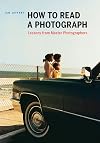
I haven't actually finished yet, but am pausing halfway. I love the way this book is set up, relatively chronologically by photographer, with a sampling of excellent photos and discussion.
I just finished reading Ian Jeffrey’s How to Read a Photograph: Lessons from Master Photographers. Huh... Lots of issues with this book. First of all, don’t get this book for the second part of the title. The book is really not about the lessons you can learn from great photographers - most photographs are printed way too small for that, although the overall quality of reproduction is excellent. The photographers are very rarely allowed to speak for themselves and the reader is subjected show more to often quite far fetched and quite subjective musings on individual photographer’s work. The book reminded me of my high school philosophy textbook where each chapter ended with “The Marxist view of....” section. In this case you are subjected to “The Jeffrey’s view of...” As amusing as that is, it wasn’t always very enlightening or even factually correct. For example, Cartier-Bresson and Robert Capa were quite misrepresented, in my opinion.
That’s the bad news. The good news is that this is a very useful overview of the history of photography. It is heavily slanted towards anglo-saxon photographers and there are, I think, significant omissions. Nonetheless, it is as good a survey of photography up to the mid 20th century as any out there and its worth a read. Get it from the library, though. show less
That’s the bad news. The good news is that this is a very useful overview of the history of photography. It is heavily slanted towards anglo-saxon photographers and there are, I think, significant omissions. Nonetheless, it is as good a survey of photography up to the mid 20th century as any out there and its worth a read. Get it from the library, though. show less
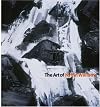
The introductory essay, while providing a brief background to the artists development, concerns itself primarily with the paintings that influenced Kyffin Williams. This is no mere assumption, but is backed by Williams own words, and if that were not enough, one has only to look at the works concerned and one can instantly identify the influence. There is a brief concluding essay entitled Defining Horizons which considers the boundaries that define Williams work. The book concludes with a show more Further Reading list and a short Index.
The main section of the book, pages 31 to 125, is devoted to William's work. There are about 95 of the artist's works reproduced here, all in colour, along with a further dozen or more photographic portraits of Williams, or reproductions of the work of other artists who influenced him. The quality of the illustrations is very good, often revealing the texture of the palette knife. The range of the works included is broad, and includes many sketches a well as finished paintings, and a lino cut.
This is a well produced book which provides a good overview of the artist and his work. show less
The main section of the book, pages 31 to 125, is devoted to William's work. There are about 95 of the artist's works reproduced here, all in colour, along with a further dozen or more photographic portraits of Williams, or reproductions of the work of other artists who influenced him. The quality of the illustrations is very good, often revealing the texture of the palette knife. The range of the works included is broad, and includes many sketches a well as finished paintings, and a lino cut.
This is a well produced book which provides a good overview of the artist and his work. show less
You May Also Like


Associated Authors
Statistics
- Works
- 32
- Also by
- 3
- Members
- 929
- Popularity
- #27,632
- Rating
- 3.9
- Reviews
- 8
- ISBNs
- 53
- Languages
- 8