

Paul Strand (1890–1976)
Author of Paul Strand (Aperture Masters of Photography Series, Number One)
About the Author
Image credit: Jon Goell
Works by Paul Strand
Paul Strand (Aperture Masters of Photography Series, Number One) (1987) — Photographer — 288 copies, 1 review
Paul Strand 3 copies
Paul Strand. The Hebridean Photographs. A Scottish Photography Group Exhibition. 1978. Paper. (1978) 2 copies
By Paul Strand Paul Strand: Sixty Years Of Photographs (Aperture Monograph) (1st First Edition) [Hardcover] (2005) 1 copy
Associated Works
Tagged
Common Knowledge
- Canonical name
- Strand, Paul
- Other names
- Stransky, Nathaniel Paul
- Birthdate
- 1890-10-16
- Date of death
- 1976-03-31
- Gender
- male
- Education
- Ethical Culture School
- Occupations
- photographer
filmmaker - Organizations
- Photo League
- Awards and honors
- International Photography Hall of Fame (1994)
- Relationships
- Engel, Morris (colleague)
Sheeler, Charles (colleague)
Stieglitz, Alfred (teacher) - Short biography
- Studied with Lewis Hine and Alfred Stieglitz. In the 30s and 40s made social commentary films in Mexico and the US.
- Nationality
- USA
- Birthplace
- Brooklyn, New York, USA
- Places of residence
- New York, New York, USA
Orgeval, France - Place of death
- Orgeval, Yvelines, France
- Associated Place (for map)
- USA
Members
Reviews

With the support of President Kwame Nkrumah, Strand’s last major geographic portrait was of Ghana, where he took photographs over the course of roughly three months between 1963 and 1964. This body of work resulted in the publication of the book Ghana: An African Portrait, which featured a companion text by the great Africanist scholar Basil Davidson. This journey was also captured briefly in the documentary about Strand’s life, Under the Dark Cloth.
The book depicts Ghana as a new show more African nation of peoples poised for industrial ascension. In his illustration of this theme, Strand produced portraits of students, vibrant marketplaces and technical machinery.
Though he believed in the honesty and objectivity of the camera as an artistic tool, Strand was also well aware of the photographer’s control over their images. Thus, images of technological advancement in the book, are sometimes paired with those depicting traditional cultures and natural environments. While all the images represent the visual “truth” of what Strand’s camera documented, the manner of their juxtaposition implies Strand’s idea of “modernity” comes from a diet of increasing industrial growth and Westernization.
However, it must be said that Strand, throughout his career, took great pains to ensure his portraits of people captured their humanity and their dignity. Unlike some of his Western contemporaries taking patronizing anthropological photographs throughout the continent, Strand’s images identify his subjects by name and often mention their communities as well. The portrait of Anna Attinga Frafra for example, depicts a quiet moment, in which Ms. Frafra rests three books comfortably on her head. An image of such grace could only be taken with the trust of the model.
In the few months Strand spent in Ghana he could not possibly have captured his surroundings with the ease and nuance of Ghanaian photographic great, James Barnor or the newer generation of incredibly talented Ghanaian imagemakers such as TJ Letsela, Nana Kofi Acquah, Ofoe Amegavie and Nyani Quarmyne, yet Strand’s photographs endure nonetheless as windows through the Western lens into the optimism and dignity of post-colonial Ghana.
In Strand’s words again, this time from a 1973 interview:
“The People I photograph are very honorable members of this family of man and my concept of a portrait is the image of somebody looking at is as someone they come to know as fellow human beings with all the attributes and potentialities one can expect from all over the world.” show less
The book depicts Ghana as a new show more African nation of peoples poised for industrial ascension. In his illustration of this theme, Strand produced portraits of students, vibrant marketplaces and technical machinery.
Though he believed in the honesty and objectivity of the camera as an artistic tool, Strand was also well aware of the photographer’s control over their images. Thus, images of technological advancement in the book, are sometimes paired with those depicting traditional cultures and natural environments. While all the images represent the visual “truth” of what Strand’s camera documented, the manner of their juxtaposition implies Strand’s idea of “modernity” comes from a diet of increasing industrial growth and Westernization.
However, it must be said that Strand, throughout his career, took great pains to ensure his portraits of people captured their humanity and their dignity. Unlike some of his Western contemporaries taking patronizing anthropological photographs throughout the continent, Strand’s images identify his subjects by name and often mention their communities as well. The portrait of Anna Attinga Frafra for example, depicts a quiet moment, in which Ms. Frafra rests three books comfortably on her head. An image of such grace could only be taken with the trust of the model.
In the few months Strand spent in Ghana he could not possibly have captured his surroundings with the ease and nuance of Ghanaian photographic great, James Barnor or the newer generation of incredibly talented Ghanaian imagemakers such as TJ Letsela, Nana Kofi Acquah, Ofoe Amegavie and Nyani Quarmyne, yet Strand’s photographs endure nonetheless as windows through the Western lens into the optimism and dignity of post-colonial Ghana.
In Strand’s words again, this time from a 1973 interview:
“The People I photograph are very honorable members of this family of man and my concept of a portrait is the image of somebody looking at is as someone they come to know as fellow human beings with all the attributes and potentialities one can expect from all over the world.” show less

Good selection of Strand's best-known photos.
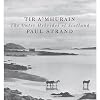
Boidheach, direach boidheach.
Simply beautiful.
Simply beautiful.

You May Also Like


Associated Authors
Statistics
- Works
- 32
- Also by
- 4
- Members
- 865
- Popularity
- #29,594
- Rating
- 4.1
- Reviews
- 8
- ISBNs
- 43
- Languages
- 5