
Matt Haig (1) (1975–)
Author of The Midnight Library
For other authors named Matt Haig, see the disambiguation page.
About the Author
Matt Haig was born on July 3, 1975 in Sheffield. He attended the University of Hull where he studied English and History. He has since become a British novelist and journalist. He has authored both fiction and non-fiction for children and adults. His non-fiction title "Reasons to Stay Alive" became show more a Sunday Times bestseller. His bestselling children's novel, A Boy Called Christmas is now being adapted for film. His other works include: The Last Family in England, The Dead Fathers Club, Shadow Forest, The Possession of Mr. Cave, How to Stop Time and Runaway Troll. (Bowker Author Biography) show less
Series
Works by Matt Haig
Tales of Connection 3 copies
Cornelsen English Library - Fiction: 10. Schuljahr, Stufe 2 - The Humans: Lektüre mit Annotationen (2020) 1 copy
Christmas Gift Set: A Boy Called Christmas, The Girl Who Saved Christmas, Father Christmas and Me (2019) 1 copy
Matt Haig 4 Books Set ( The Comfort Book, How to Stop Time, The Humans, Notes on a Nervous Planet, ) (2022) 1 copy
Associated Works
Tagged
Common Knowledge
- Birthdate
- 1975-07-03
- Gender
- male
- Education
- University of Hull (BA)
Leeds University (MA) - Occupations
- journalist
novelist
Internet marketer
nightclub employee - Awards and honors
- Carnegie Medal (2008)
- Agent
- Caradoc King (A. P. Watt)
- Relationships
- Semple, Andrea (spouse)
- Nationality
- England
UK - Birthplace
- Sheffield, South Yorkshire, England, UK
- Places of residence
- York, England, UK
Ibiza, Spain
Brighton, Sussex, England, UK
Newark, Nottinghamshire, England, UK
Leeds, Yorkshire, England, UK - Map Location
- England, UK
Members
Discussions
Found: Sci-fi book I've forgotten nearly everything about! in Name that Book (May 9)
Reviews
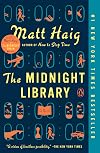
The Midnight Library by Matt Haig is a powerful story, made more so knowing that Mr. Haig struggles with depression and suicidal thoughts. Because of this, it makes everything Nora feels and believes more convincing.
Based on the synopsis, it would be easy to say that The Midnight Library is an updated version of It's a Wonderful Life. While the main idea might be similar, the two stories are not the same. Nora doesn't see what life would be like without her but gets to experience the many show more different lives she might have lived. Yes, her choices affect others' lives as well, but unlike Frank Capra's story, her time in the library does not focus on their lives.
The library is all about providing answers to the many what-ifs people ask about their lives. It is a brilliant way to show that different life choices do not always make for better lives. Mr. Haig also emphasizes that sometimes the smallest choices have the most profound impact. It is a brilliant way to highlight that there is no way to identify one single past decision as a turning point in your life. This idea then eliminates the need for regrets because it strengthens the argument that we are all making the best choices we can based on the knowledge we have and gut instinct. No decision is correct, and no decision is wrong. Each decision just is.
Knowing Mr. Haig's past, The Midnight Library is an excellent method by which you can get an idea of what it is like to suffer from depression. Every time Nora returns from a potential future, she finds reasons to justify her decision to end her life. It isn't rational. Often there is much evidence to contradict her decision, but sometimes there is no arguing with brain chemistry.
The thing is that you understand why Nora feels so hopeless. Her feelings make sense based on what you know about her life to that point in the story. Mr. Haig makes her decision relatable in a way that can only happen if someone has been in Nora's shoes. That being said, as much as you empathize with Nora and accept her decision, sitting with Nora as she takes the pills and uses the library is not an effortless thing to do. Nora is too raw and too lost to be an easy character to love.
However, because Nora is so depressed for most of the novel, it makes her redemption story much sweeter. In that way, The Midnight Library is a gentle reminder for anyone struggling with depression that what they feel is just their brain telling them lies.
But The Midnight Library is not just for people with depression. It is for all of us and the regrets we obsess about in the middle of the night. Nora's journey reminds us all that there is light at the end of the tunnel, even if you can't see it yet, and you have a bigger influence on people's lives than you know. It is a beautiful message within an impressive story.
Carey Mulligan handles Nora's story with the delicacy it requires. She perfectly captures the entire range of Nora's emotions with her masterful performance. Similarly, she makes it easy to distinguish between the many people with whom Nora engages in her many lives. Ms. Mulligan's voice is pleasant without being soporific and engaging. Her performance made me want to keep listening. I cannot say Ms. Mulligan's performance enhanced the story, but she did make it easier to experience. I recommend this audiobook recording to anyone who is on the fence about listening to it. show less
Based on the synopsis, it would be easy to say that The Midnight Library is an updated version of It's a Wonderful Life. While the main idea might be similar, the two stories are not the same. Nora doesn't see what life would be like without her but gets to experience the many show more different lives she might have lived. Yes, her choices affect others' lives as well, but unlike Frank Capra's story, her time in the library does not focus on their lives.
The library is all about providing answers to the many what-ifs people ask about their lives. It is a brilliant way to show that different life choices do not always make for better lives. Mr. Haig also emphasizes that sometimes the smallest choices have the most profound impact. It is a brilliant way to highlight that there is no way to identify one single past decision as a turning point in your life. This idea then eliminates the need for regrets because it strengthens the argument that we are all making the best choices we can based on the knowledge we have and gut instinct. No decision is correct, and no decision is wrong. Each decision just is.
Knowing Mr. Haig's past, The Midnight Library is an excellent method by which you can get an idea of what it is like to suffer from depression. Every time Nora returns from a potential future, she finds reasons to justify her decision to end her life. It isn't rational. Often there is much evidence to contradict her decision, but sometimes there is no arguing with brain chemistry.
The thing is that you understand why Nora feels so hopeless. Her feelings make sense based on what you know about her life to that point in the story. Mr. Haig makes her decision relatable in a way that can only happen if someone has been in Nora's shoes. That being said, as much as you empathize with Nora and accept her decision, sitting with Nora as she takes the pills and uses the library is not an effortless thing to do. Nora is too raw and too lost to be an easy character to love.
However, because Nora is so depressed for most of the novel, it makes her redemption story much sweeter. In that way, The Midnight Library is a gentle reminder for anyone struggling with depression that what they feel is just their brain telling them lies.
But The Midnight Library is not just for people with depression. It is for all of us and the regrets we obsess about in the middle of the night. Nora's journey reminds us all that there is light at the end of the tunnel, even if you can't see it yet, and you have a bigger influence on people's lives than you know. It is a beautiful message within an impressive story.
Carey Mulligan handles Nora's story with the delicacy it requires. She perfectly captures the entire range of Nora's emotions with her masterful performance. Similarly, she makes it easy to distinguish between the many people with whom Nora engages in her many lives. Ms. Mulligan's voice is pleasant without being soporific and engaging. Her performance made me want to keep listening. I cannot say Ms. Mulligan's performance enhanced the story, but she did make it easier to experience. I recommend this audiobook recording to anyone who is on the fence about listening to it. show less
The premise for this book was irresistible. Who hasn't longed for a "do over"? Our protagonist, Nora, attempts suicide and finds herself half way between life and death, in a library full of books detailing alternate lives she could have lived. Maybe a bit predictable; maybe too improbable -- but somehow it works. This a fantasy that celebrates the ordinary. It deconstructs what we do every day and shows how small decisions create a life. I especially liked the idea of a Book of Regrets and show more the uplifting message that regrets don't serve anyone. show less
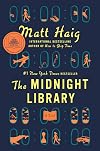
Short summary:
The story follows Nora, a woman who feels completely overwhelmed by regret and the feeling that her life has gone wrong in every possible way. After attempting to end her life, she finds herself in a mysterious place called the Midnight Library, a space between life and death. In this library, every book represents a different version of the life she could have lived if she had made different choices. With the help of the librarian, Mrs. Elm, Nora begins to explore these show more alternative lives. She tries lives where she followed different dreams, became successful in various ways, or stayed with people she once loved. Through these experiences, Nora slowly begins to understand that every life carries its own struggles and imperfections. Eventually, she realizes that the value of life lies not in finding the perfect version of it, but in choosing to live the one she has.
Review:
I really loved this book.
What stood out to me most is the central idea: the concept of a library containing all the lives you could have lived. It’s such a simple but powerful metaphor for regret. So many people wonder what would have happened if they had made different choices, taken a different path, or stayed with different people. This book explores that feeling in a very creative and thoughtful way. Honestly, I want such a library for myself.
Following Nora through these different versions of her life was fascinating. Some of the lives seem perfect at first, but slowly reveal their own problems and sacrifices. Whether she becomes a famous musician, an Olympic athlete, or a scientist studying glaciers, each life shows that happiness isn’t guaranteed just because a dream comes true. I liked how the book keeps reminding the reader that every life is complicated and that there is no perfect version of reality.
Another thing I really appreciated is how the book talks about mental health. Nora begins the story feeling completely hopeless, convinced that she has wasted her life. The Midnight Library gives her the chance to see her life from a different perspective. Instead of judging herself only by her failures, she starts noticing the ways she has affected others and the possibilities that still exist for her.
The writing itself is very accessible and easy to read, but that doesn’t make the ideas less meaningful. In fact, I think that simplicity helps the message reach the reader more directly. The book discusses regret, depression, purpose, and hope in a way that feels thoughtful without becoming too heavy or complicated.
I really appreciated this book for how relatable it is. Almost everyone has moments where they think about the paths they didn’t take. The Midnight Library turns that universal feeling into an actual place you can explore.
I also liked how the book doesn’t pretend that all problems disappear. Nora’s realization is not that life suddenly becomes easy, but that it is still meaningful and valuable even with its difficulties.
Final Thoughts:
This book is thoughtful, comforting, and hopeful. It explores regret and possibility in a very creative way and reminds the reader that every life contains both joy and struggle. The concept is simple but powerful, and the message stayed with me long after I finished reading it. I truly loved this book. show less
Review:
I really loved this book.
What stood out to me most is the central idea: the concept of a library containing all the lives you could have lived. It’s such a simple but powerful metaphor for regret. So many people wonder what would have happened if they had made different choices, taken a different path, or stayed with different people. This book explores that feeling in a very creative and thoughtful way. Honestly, I want such a library for myself.
Following Nora through these different versions of her life was fascinating. Some of the lives seem perfect at first, but slowly reveal their own problems and sacrifices. Whether she becomes a famous musician, an Olympic athlete, or a scientist studying glaciers, each life shows that happiness isn’t guaranteed just because a dream comes true. I liked how the book keeps reminding the reader that every life is complicated and that there is no perfect version of reality.
Another thing I really appreciated is how the book talks about mental health. Nora begins the story feeling completely hopeless, convinced that she has wasted her life. The Midnight Library gives her the chance to see her life from a different perspective. Instead of judging herself only by her failures, she starts noticing the ways she has affected others and the possibilities that still exist for her.
The writing itself is very accessible and easy to read, but that doesn’t make the ideas less meaningful. In fact, I think that simplicity helps the message reach the reader more directly. The book discusses regret, depression, purpose, and hope in a way that feels thoughtful without becoming too heavy or complicated.
I really appreciated this book for how relatable it is. Almost everyone has moments where they think about the paths they didn’t take. The Midnight Library turns that universal feeling into an actual place you can explore.
I also liked how the book doesn’t pretend that all problems disappear. Nora’s realization is not that life suddenly becomes easy, but that it is still meaningful and valuable even with its difficulties.
Final Thoughts:
This book is thoughtful, comforting, and hopeful. It explores regret and possibility in a very creative way and reminds the reader that every life contains both joy and struggle. The concept is simple but powerful, and the message stayed with me long after I finished reading it. I truly loved this book. show less
Usually I put trigger warnings at the end of reviews, but I want to start this one out with a blatant one. This book is about Suicide. It starts, discusses, and ends with talks of Suicide. There are more than one Suicides happening in this book. If you are at all sensitive to this topic, please read through reviews before starting this book because it's an intensely emotional read.
That being said. If you are deep into suicidal thoughts, depression and such I truly think that you will show more appreciate this read. You're going to need tissues, but it's worth it. By the time we meet Nora, her regrets and depressive thoughts have eaten away at her. She is leading a very dull life, that she doesn't want to be apart of anymore. The first chapters made me so sad for her, and where she was at in life.
She walks us through her deepest regrets, and her reasons for choosing the path she does so elegantly, it's hard not to put myself in her shoes. She knows depression like an old friend, and battles it to keep her head above water. But even with all that despair this book takes you through a journey of self actualization that ends with a beautiful message. Which I don't think is 'just change your attitude, and your depression will be gone' but more along the lines of 'self acceptance, and letting go of regrets'. There is no instant cure for depression, but life is about choices, and we make them with every breath we take.
“The paradox of volcanoes was that they were symbols of destruction but also life. Once the lava slows and cools, it solidifies and then breaks down over time to become soil - rich, fertile soil.
She wasn't a black hole, she decided. She was a volcano. And like a volcano she couldn't run away from herself. She'd have to stay there and tend to that wasteland.
She could plant a forest inside herself.”
― Matt Haig, The Midnight Library
TL;DR - I ABSOLUTELY LOVE THIS BOOK. In all my years of struggling with depression and feeling like the worst possible person, never have I come across a more beautifully written walk through of why to not choose suicide. Normally I am not one of parallel universe theories, but this makes so much sense to me.
I love the use of the 'library' and 'librarian', the fact that she meets others struggling as she is, and how works through all her regrets. Ugh. It is so beautifully done.
The side characters as all well crafted, well meaning friends and family. They are relatable, and I feel like I've met them all in my own life. This book is a must read. show less
That being said. If you are deep into suicidal thoughts, depression and such I truly think that you will show more appreciate this read. You're going to need tissues, but it's worth it. By the time we meet Nora, her regrets and depressive thoughts have eaten away at her. She is leading a very dull life, that she doesn't want to be apart of anymore. The first chapters made me so sad for her, and where she was at in life.
She walks us through her deepest regrets, and her reasons for choosing the path she does so elegantly, it's hard not to put myself in her shoes. She knows depression like an old friend, and battles it to keep her head above water. But even with all that despair this book takes you through a journey of self actualization that ends with a beautiful message. Which I don't think is 'just change your attitude, and your depression will be gone' but more along the lines of 'self acceptance, and letting go of regrets'. There is no instant cure for depression, but life is about choices, and we make them with every breath we take.
“The paradox of volcanoes was that they were symbols of destruction but also life. Once the lava slows and cools, it solidifies and then breaks down over time to become soil - rich, fertile soil.
She wasn't a black hole, she decided. She was a volcano. And like a volcano she couldn't run away from herself. She'd have to stay there and tend to that wasteland.
She could plant a forest inside herself.”
― Matt Haig, The Midnight Library
TL;DR - I ABSOLUTELY LOVE THIS BOOK. In all my years of struggling with depression and feeling like the worst possible person, never have I come across a more beautifully written walk through of why to not choose suicide. Normally I am not one of parallel universe theories, but this makes so much sense to me.
I love the use of the 'library' and 'librarian', the fact that she meets others struggling as she is, and how works through all her regrets. Ugh. It is so beautifully done.
The side characters as all well crafted, well meaning friends and family. They are relatable, and I feel like I've met them all in my own life. This book is a must read. show less
Lists
READ IN 2021 (1)
el (1)
Check Library (1)
FAB 2020 (1)
Guilty Pleasures (1)
Gelesen (1)
To Read (1)
To Read (1)
READ in 2024 (3)
Christmas Books (3)
READ IN 2020 (2)
Seeking the Soul (1)
Five star books (1)
Movies/Shows (1)
Booktok Books (1)
READ 2025 (1)
Cats in Fiction (1)
Awards


You May Also Like


Associated Authors
Statistics
- Works
- 42
- Also by
- 3
- Members
- 35,815
- Popularity
- #524
- Rating
- 3.8
- Reviews
- 1,395
- ISBNs
- 813
- Languages
- 29
- Favorited
- 18
