
Peter Abrahams (1) (1919–2017)
Author of Mine Boy
For other authors named Peter Abrahams, see the disambiguation page.
About the Author
Peter Henry Abrahams Deras was born in Vrededorp, South Africa on March 3, 1919. Before entering school at the age of 11, he sold firewood and worked for a local tinsmith. He completed a three-year course at a colored school in Vrededorp in one year and won a scholarship to the Diocesan Training show more College in Grace Dieu. He later studied at St. Peter's, an elite school for blacks in Rosettenville. While working as an editor at a socialist magazine in Durban in 1939, he found work as a stoker aboard a freighter and made his way to London. Once there, he was hired as a dispatch clerk at a socialist bookstore and did editing for The Daily Worker, the newspaper of the British Communist Party. He eventually moved to Jamaica and broadcast political commentaries on Radio Jamaica for four decades. His novels and journalism explored the injustices of apartheid and the complexities of racial politics. His novels included Song of the City, Mine Boy, The Path of Thunder, A Night of Their Own, The View from Coyaba, A Wreath for Udomo, and This Island, Now. His other works included Dark Testament, Return to Goli, Jamaica: An Island Mosaic, Tell Freedom: Memories of Africa, and The Black Experience in the 20th Century: An Autobiography and Meditation. He died on January 18, 2017 at the age of 97. (Bowker Author Biography) show less
Image credit: Carl Van Vechten (1880-1964), via Wikimedia Commons [http://en.wikipedia.org/wiki/File:Peter_Abrahams.jpg].
Works by Peter Abrahams
Associated Works
Tagged
Common Knowledge
- Legal name
- Deras, Peter Henry Abrahams
- Birthdate
- 1919-03-19
1919-03-03 (Britannica) - Date of death
- 2017-01-18
- Gender
- male
- Occupations
- novelist
journalist
sailor - Awards and honors
- South African Literary Award Lifetime Achievement (2006)
- Nationality
- South Africa (birth)
Jamaica (naturalized) - Birthplace
- Vrededorp, South Africa
- Places of residence
- London, England, UK
Jamaica
Polokwane, Limpopo, South Africa
Cape Town, South Africa
Durban, South Africa - Place of death
- Kingston, Jamaica
- Associated Place (for map)
- South Africa
Members
Reviews

Published two years before Cry the beloved country, this explores similar themes, but in a subtly different way. The viewpoint is that of Xuma, the young black man from the country who comes to the big city to work in the mines, and it's the noisy, lively, disorderly world of the townships — and of Leah's shebeen, in particular — where he finds solidarity and companionship, whilst the values of "civilised" white society are often made to seem strange, arbitrary, and threatening. Where show more Paton's African rhythms are slow, disciplined and stately, the rumble of old men's conversations, this is written to a much rougher, wilder beat. And it can't help pulling us in.
And Abrahams wrote this whilst he was mixing with the future leaders of post-colonial Africa and the Caribbean in London: Paton's young man is doomed to his tragic fate, but we leave Xuma at a point where he has seen that black people cannot rely on white liberals and have to take leadership themselves to defend their rights. Maybe he will be crushed by the system all the same, but Abrahams doesn't see that as inevitable, and the ending of the book allows us to imagine that he will be able to do something to work towards change. Although perhaps not so much if we're reading it 75 years on and know how South Africa's history progressed...
The AWS edition comes with attractive, if slightly Sunday-schoolish, illustrations by Ruth Yudelowitz. All I could find out about her on the internet is that she was an artist working for the East Africa Literature Bureau in Nairobi in the 1950s, and illustrated a lot of African school-books. show less
And Abrahams wrote this whilst he was mixing with the future leaders of post-colonial Africa and the Caribbean in London: Paton's young man is doomed to his tragic fate, but we leave Xuma at a point where he has seen that black people cannot rely on white liberals and have to take leadership themselves to defend their rights. Maybe he will be crushed by the system all the same, but Abrahams doesn't see that as inevitable, and the ending of the book allows us to imagine that he will be able to do something to work towards change. Although perhaps not so much if we're reading it 75 years on and know how South Africa's history progressed...
The AWS edition comes with attractive, if slightly Sunday-schoolish, illustrations by Ruth Yudelowitz. All I could find out about her on the internet is that she was an artist working for the East Africa Literature Bureau in Nairobi in the 1950s, and illustrated a lot of African school-books. show less
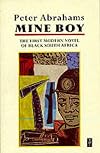
Mine Boy is an unsung gem, amazing and much more potent than Alan Paton's Cry the Beloved Country. In fact, the two do not necessarily warrant comparison except for the fact that Paton's book is one of the few classic South African novels taught in U.S. schools. Some readers have complained of the simplicity of Abraham's language or "cardboard" characters. For me, it's that very simplicity that makes the story such a dramatic tale; it's language that anyone can understand. It's primitive, if show more you will, or embryonic. As for the characters being underdeveloped, again, I think this adds to the effectiveness of this particular story. Caste systems, apartheid, and other types of sanctioned discrimination force people to come across as stereotypes. When we view our neighbors as "other," we're not seeing them as fully human. This is effectively dramatized in Mine Boy. It put me in a time and place that I would not have experienced otherwise, despite the universality of feeling that comes with the hardships of life. This is the knife's edge of thinking only in terms of black and white. show less

This is a gripping account of growing up in the South Africa of the 1920s to 1940s. Abrahams recounts life in the Coloured location of Vrededorp in Johannesburg during his childhood and youth in the late 1920s and early 30s. He describes how he managed by luck to acquire a primary education in Vrededorp, and a secondary/post-secondary education at teachers' college. His descriptions of life as an activist and teacher in Johannesburg, Cape Town, and Durban are gripping. So is the tale of his show more departure from his homeland, the police having decided that they could do with one fewer activist in the country. There are moments of true horror in the book, and moments of astounding decency. show less
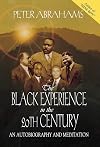
This combines memoir and political analysis of the condition of Africa and the African diaspora in the twentieth century. Abrahams has lived a very long life (he was 89 when this book was published and is still alive when I'm writing this at 94) and encountered many of the most important figures of the black struggles (American civil rights, African and Caribbean independence, South African anti-apartheid) of the past 80+ years. As a novelist and activist he has been well-placed both to show more observe and to participate in those struggles. This is both an analysis and a personal recollection of his life and family (and a reader of his earlier memoir *Tell Freedom* will benefit a great deal from having read that first).. It is a work of immense worth to anyone wanting to understand the past century from the perspective of those underneath. show less
Lists
Awards


You May Also Like


Associated Authors
Statistics
- Works
- 13
- Also by
- 6
- Members
- 492
- Popularity
- #50,225
- Rating
- 3.7
- Reviews
- 13
- ISBNs
- 378
- Languages
- 15
- Favorited
- 6