
Johan Harstad
Author of 172 Hours on the Moon
About the Author
Image credit: Photo: Jarle Vines
Works by Johan Harstad
Associated Works
Words Without Borders: The World Through the Eyes of Writers: An Anthology (2007) — Contributor — 159 copies, 6 reviews
Donald Duck & Co. - De komplette årgangene - 1963 III — Foreword — 1 copy
Tagged
Common Knowledge
- Canonical name
- Harstad, Johan
- Birthdate
- 1979-02-10
- Gender
- male
- Nationality
- Norway
- Birthplace
- Stavanger, Norway
- Associated Place (for map)
- Norway
Members
Reviews
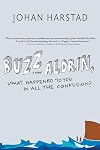
http://iwriteinbooks.wordpress.com/2011/08/10/buzz-aldrin-what-happened-to-you-i...
When I first came across Harstad’s book, I, like many probably, thought that it would actually be about Buzz Aldrin or perhaps, maybe about, you know, space. What it turned out to be, instead, was a really intense study of socio-emotional interactions between self and others.
The now famous downward spiral of the second man on the moon is merely a catalyst for our protagonist, Mattias, as he explores his own show more life crisis. A successful gardener and self-proclaimed nobody, Mattias is perfectly content to be but a cog in the works, claiming no attention for himself. This means no pesky fanfare but also no personal relationships to speak of.
When he finds himself shipwrecked on the Faroe Islands, taken in by a psychologist and his merry band of misfits, his life begins to unravel quickly. Of course, like with most deconstruction, there is a period of rebuilding that follows. Through humor and tragedy, darkness and light, Mattias is able to navigate the rough waters of interpersonal relationships, sometimes floating, sometimes sinking.
This is a big, thick, complex book that is emotionally heavy but also, at most moments, just a seriously good story. Schizophrenia and other serious conditions are well worked through in the story but there’s more to it than simple science. Even those who do not fall into the category of mentally ill are run along in a journey of personal discovery that knocks all previously constructed assumptions about human interaction. It’s a beautiful look into the way we correspond and live with each other, or really, without each other.
As a side note: I found it pretty helpful to have my phone or computer around while flipping through the story, not as a neccessity but more as an interest tool for researching mentioned people and places. show less
When I first came across Harstad’s book, I, like many probably, thought that it would actually be about Buzz Aldrin or perhaps, maybe about, you know, space. What it turned out to be, instead, was a really intense study of socio-emotional interactions between self and others.
The now famous downward spiral of the second man on the moon is merely a catalyst for our protagonist, Mattias, as he explores his own show more life crisis. A successful gardener and self-proclaimed nobody, Mattias is perfectly content to be but a cog in the works, claiming no attention for himself. This means no pesky fanfare but also no personal relationships to speak of.
When he finds himself shipwrecked on the Faroe Islands, taken in by a psychologist and his merry band of misfits, his life begins to unravel quickly. Of course, like with most deconstruction, there is a period of rebuilding that follows. Through humor and tragedy, darkness and light, Mattias is able to navigate the rough waters of interpersonal relationships, sometimes floating, sometimes sinking.
This is a big, thick, complex book that is emotionally heavy but also, at most moments, just a seriously good story. Schizophrenia and other serious conditions are well worked through in the story but there’s more to it than simple science. Even those who do not fall into the category of mentally ill are run along in a journey of personal discovery that knocks all previously constructed assumptions about human interaction. It’s a beautiful look into the way we correspond and live with each other, or really, without each other.
As a side note: I found it pretty helpful to have my phone or computer around while flipping through the story, not as a neccessity but more as an interest tool for researching mentioned people and places. show less
 This review was written for LibraryThing Early Reviewers.
“Some people just want to be a part of a whole. Useful, if inconsequential. Not everybody needs the whole world. I just want to be in peace.”
Johan Harstad’s novel Buzz Aldrin, What Happened to You in All the Confusion (an unfortunate title) is the story of Mattias, an anti-hero, or perhaps a non-hero, a second best, the one who does not take the spotlight but nevertheless whose life is just as filled with longing, angst and the need for fulfillment. Perhaps he is the Buzz Aldrin of show more Norway, the one who came second, the set-up man and, more important, was quite satisfied in that role.
After a series of personal and professional reversals, Mattias wakes up lying on a rain-soaked road alone in the middle of the Faroe Islands, with 15,000 kroner in his pocket and no memory of how he had come to be there. He is picked up by Havstein, a psychiatrist and taken to the Factory where the story and his life begin again.
Harstad writes a steady, high-speed, stream-of-conscience narrative that is impossible to put down. There is nothing visible at the center of his hero Mattias but he churns up the landscape and events around him — makes them pulse with meaning and beauty — so that as the book progresses external events become a part of his inner landscape.
There is an angelic saintliness to Mattias’ persona but it is crooked and uneven — the good he does is tempered by the thoughtless and perhaps cruel — you want to scream and shake him for his persistent lack of drive. He is surrounded by a cast of well written characters that carry the story to it’s ultimate fate. show less
Johan Harstad’s novel Buzz Aldrin, What Happened to You in All the Confusion (an unfortunate title) is the story of Mattias, an anti-hero, or perhaps a non-hero, a second best, the one who does not take the spotlight but nevertheless whose life is just as filled with longing, angst and the need for fulfillment. Perhaps he is the Buzz Aldrin of show more Norway, the one who came second, the set-up man and, more important, was quite satisfied in that role.
After a series of personal and professional reversals, Mattias wakes up lying on a rain-soaked road alone in the middle of the Faroe Islands, with 15,000 kroner in his pocket and no memory of how he had come to be there. He is picked up by Havstein, a psychiatrist and taken to the Factory where the story and his life begin again.
Harstad writes a steady, high-speed, stream-of-conscience narrative that is impossible to put down. There is nothing visible at the center of his hero Mattias but he churns up the landscape and events around him — makes them pulse with meaning and beauty — so that as the book progresses external events become a part of his inner landscape.
There is an angelic saintliness to Mattias’ persona but it is crooked and uneven — the good he does is tempered by the thoughtless and perhaps cruel — you want to scream and shake him for his persistent lack of drive. He is surrounded by a cast of well written characters that carry the story to it’s ultimate fate. show less
This review was written for LibraryThing Early Reviewers.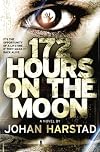
4.5/5
This books was terrifying. It was so intense and frightening that at some points I sat there shaking, my heart was ridiculously pounding and I couldn't breathe. It was that suspenseful that I couldn't put it down and had to read through the night, which wasn't exactly the best idea in the dark.
The whole plot, the suspense, it all blew me away. The idea that NASA would send three teenagers to the moon, disguising the mission as a research one was a bit unrealistic but it was all made up show more for.
Most of the characters were also really great and pretty well developed which isn't something I commonly see in these books. There was Mia who got forced into entering the contest by her parents(which I did expect to be the case for one of the winners), was in a band, and was a generally powerful character when it came to the end. Midori entered because she wanted to escape to New York and leave everything behind which is a good reason as any but towards the beginning, I did find her to be somewhat annoying. The third contestant was Antoine I thought for the most part was fantastic. I mean his whole reason to go to the moon was to get away from his girlfriend. Mia's and Antoine's relationship seemed too rushed though on his part considering he was just utterly in love with his ex and then was very forward with Mia.
Of course, there were certain gaps in the story line, mostly because some previous knowledge was required that wasn't really touched on, but that's one thing that you end up getting used to and expect of such a fast paced thriller. When I noticed the fact that the whole plot was based off an actual event that occurred left me wondering much more than usually, where the signal could've come from and what's actually out there in space.
What happened towards the end was just completely mind blowing. Based on all the other chapter cliffhangers I should've expected it but it was completely epic. What made it even more terrifying was how realistic and possible the author made what happened to the characters.
Overall just WHOA. Definitely a book I recommend to read, just not in the dark.
I also probably would decline the offer to go to the moon if I got the chance now. show less
This books was terrifying. It was so intense and frightening that at some points I sat there shaking, my heart was ridiculously pounding and I couldn't breathe. It was that suspenseful that I couldn't put it down and had to read through the night, which wasn't exactly the best idea in the dark.
The whole plot, the suspense, it all blew me away. The idea that NASA would send three teenagers to the moon, disguising the mission as a research one was a bit unrealistic but it was all made up show more for.
Most of the characters were also really great and pretty well developed which isn't something I commonly see in these books. There was Mia who got forced into entering the contest by her parents(which I did expect to be the case for one of the winners), was in a band, and was a generally powerful character when it came to the end. Midori entered because she wanted to escape to New York and leave everything behind which is a good reason as any but towards the beginning, I did find her to be somewhat annoying. The third contestant was Antoine I thought for the most part was fantastic. I mean his whole reason to go to the moon was to get away from his girlfriend. Mia's and Antoine's relationship seemed too rushed though on his part considering he was just utterly in love with his ex and then was very forward with Mia.
Of course, there were certain gaps in the story line, mostly because some previous knowledge was required that wasn't really touched on, but that's one thing that you end up getting used to and expect of such a fast paced thriller. When I noticed the fact that the whole plot was based off an actual event that occurred left me wondering much more than usually, where the signal could've come from and what's actually out there in space.
What happened towards the end was just completely mind blowing. Based on all the other chapter cliffhangers I should've expected it but it was completely epic. What made it even more terrifying was how realistic and possible the author made what happened to the characters.
Overall just WHOA. Definitely a book I recommend to read, just not in the dark.
I also probably would decline the offer to go to the moon if I got the chance now. show less
"The person you love is 72.8 percent water and there's been no rain for weeks."
With that opening sentence to set the tone, Johan Harstad moves us gently into the world of Mattias, age 29, a gardener, a resident of Stavanger, Norway, a man who wants nothing out of life than to be unnoticed and unnoticeable.
"I was the kid in your class in elementary school, in high school, in college, whose name you can't remember when you take out the class photo ten years later...the one you didn't miss when show more I left your class and started at another school, or when I didn't come to your party...the one you thought didn't have a life....I was practically invisible, wasn't I? And I was perhaps the happiest person you could have known."
Mattias lives with his girlfriend Helle and works at a nursery. He idolizes Buzz Aldrin, the second man on the moon, because he was second. One fine day, he loses both job and girlfriend and decides to accompany his friends' band to a gig in the Faroe Islands as their sound tech. But something happens....and the next thing both we and Mattias know, he's in a residential psychiatric facility in Torshavn.
Mattias spends the next year navigating his new surroundings and coming to terms with his illness. During that time, he integrates himself into a community, making a human connection, with his psychiatrist Havstein, with the other residents, for perhaps the first time.
Havstein runs the facility with a loose rein and dreams of moving to the Caribbean. Ennen listens to The Cardigans and rides buses obsessively and believes she isn't real.
"Ennen gets it into her head that she is, in fact, that person, that person from nowhere, the person who looks at you that way, on a bus, on a train, or catching a plane, the woman you never see again, she's convinced that anyone who mentions such an experience has in fact seen her, which is why she doesn't exist."
Palli, a welder and sailor, barely speaks. Anna is the mother hen, the domestic goddess, the quiet center who keeps the household running. Together with Mattias, a family of sorts forms...or, more accurately, Mattias is adopted into the family already formed, each member with a weakness, a fragile hold on reality, each strengthened and perfected by the solidarity of the group.
Mattias's thoughts tell the story, streaming in clear, spare prose and paragraphs punctuated almost solely by commas. This run-on running train-of-thought style provoked the occasional "Oh, come on, give me a period already!" response, but for the most part was unobtrusive and served the story well. The bleak far northern European locale -- unfamiliar enough to this untraveled American that I had to find it on a map -- is so fundamental to the psyche and behavior of Mattias and the others that it can be considered a character of the novel itself. And the story is bleak, gray, cold, like its locale, locked in a perpetual winter, but in the end, spring comes round again, and there's warmth and sweetness and just the merest hint of sunshine for Mattias. show less
With that opening sentence to set the tone, Johan Harstad moves us gently into the world of Mattias, age 29, a gardener, a resident of Stavanger, Norway, a man who wants nothing out of life than to be unnoticed and unnoticeable.
"I was the kid in your class in elementary school, in high school, in college, whose name you can't remember when you take out the class photo ten years later...the one you didn't miss when show more I left your class and started at another school, or when I didn't come to your party...the one you thought didn't have a life....I was practically invisible, wasn't I? And I was perhaps the happiest person you could have known."
Mattias lives with his girlfriend Helle and works at a nursery. He idolizes Buzz Aldrin, the second man on the moon, because he was second. One fine day, he loses both job and girlfriend and decides to accompany his friends' band to a gig in the Faroe Islands as their sound tech. But something happens....and the next thing both we and Mattias know, he's in a residential psychiatric facility in Torshavn.
Mattias spends the next year navigating his new surroundings and coming to terms with his illness. During that time, he integrates himself into a community, making a human connection, with his psychiatrist Havstein, with the other residents, for perhaps the first time.
Havstein runs the facility with a loose rein and dreams of moving to the Caribbean. Ennen listens to The Cardigans and rides buses obsessively and believes she isn't real.
"Ennen gets it into her head that she is, in fact, that person, that person from nowhere, the person who looks at you that way, on a bus, on a train, or catching a plane, the woman you never see again, she's convinced that anyone who mentions such an experience has in fact seen her, which is why she doesn't exist."
Palli, a welder and sailor, barely speaks. Anna is the mother hen, the domestic goddess, the quiet center who keeps the household running. Together with Mattias, a family of sorts forms...or, more accurately, Mattias is adopted into the family already formed, each member with a weakness, a fragile hold on reality, each strengthened and perfected by the solidarity of the group.
Mattias's thoughts tell the story, streaming in clear, spare prose and paragraphs punctuated almost solely by commas. This run-on running train-of-thought style provoked the occasional "Oh, come on, give me a period already!" response, but for the most part was unobtrusive and served the story well. The bleak far northern European locale -- unfamiliar enough to this untraveled American that I had to find it on a map -- is so fundamental to the psyche and behavior of Mattias and the others that it can be considered a character of the novel itself. And the story is bleak, gray, cold, like its locale, locked in a perpetual winter, but in the end, spring comes round again, and there's warmth and sweetness and just the merest hint of sunshine for Mattias. show less
This review was written for LibraryThing Early Reviewers.Lists
Awards


You May Also Like


Associated Authors
Statistics
- Works
- 18
- Also by
- 3
- Members
- 1,444
- Popularity
- #17,805
- Rating
- 3.7
- Reviews
- 88
- ISBNs
- 93
- Languages
- 13
- Favorited
- 6
