
Jean-Yves Leloup (1) (1950–)
Author of The Gospel of Mary Magdalene
For other authors named Jean-Yves Leloup, see the disambiguation page.
About the Author
Jean-Yves Leloup is the founder of the Institute of Other Civilization Studies and the International College of Therapists. He lives in France.
Works by Jean-Yves Leloup
The Gospel of Philip: Jesus, Mary Magdalene, and the Gnosis of Sacred Union (2003) 136 copies, 5 reviews
Compassion and Meditation: The Spiritual Dynamic between Buddhism and Christianity (2000) 42 copies, 2 reviews
The Sacred Embrace of Jesus and Mary: The Sexual Mystery at the Heart of the Christian Tradition (2005) 28 copies, 1 review
Un obscur et lumineux silence - la théologie mystique de Denys l'aréopagite (2013) 9 copies, 1 review
Ecrits Sur L'Hesychasme, Une Tradition Contemplative Oubliee (Collections Spiritualites) (French Edition) (1990) 9 copies, 1 review
L'évidence de l'invisible: Anamnèse essentielle (Souffle de l'esprit) (French Edition) (2018) 2 copies
Un homme trahi : Le roman de Judas suivi de Réflexions autour d'uné énigme (2006) 2 copies, 1 review
Espírito na saúde 1 copy
Qui est "je suis"? Connaissance de soi et connaissance du Soi (livre et CD audio) (2009) 1 copy, 1 review
Jesus e Maria Madalena 1 copy
A arte de morrer 1 copy
Tagged
Common Knowledge
- Other names
- Seraphim, Father Jean
- Birthdate
- 1950-01-24
- Gender
- male
- Education
- Syracuse University
- Occupations
- Orthodox theologian
author
translator - Organizations
- Institute of Other Civilization Studies
International College of Therapists
French Orthodox Church - Nationality
- France
- Birthplace
- Angers, France
- Associated Place (for map)
- Angers, France
Members
Reviews

The Gospel of Philip is from the large and important Codex II of the Nag Hammadi Library, and it consists of mystical pronouncements having to do with salvation and the Christian sacraments, notably the nymphon ("bridal chamber"). This edition is one of a set of ancient Gnostic scriptures in double translation being issued by the Inner Traditions imprint; they are translated from the Coptic into French by Orthodox theologian Jean-Yves LeLoup, and in this case Englished by Joseph Rowe. I have show more previously read and appreciated Leloup's treatment of The Gospel of Mary Magdalene. As in that case, the translated text is printed in parallel with a typeset version of the Coptic original. The sequence of the contents is different than I have seen in other editions of the Gospel of Philip, but it evidently follows the first translation by H.M. Schenke (1960). Leloup provides reference to the original codex pagination, and also supplies a division into 127 numbered logia ("sayings") that may be original here.
Again, consistent with the presentation in The Gospel of Mary Magdalene, the English edition of Leloup's Gospel of Philip features a foreword by American scholar of religions Jacob Needleman. While I had found Needleman's contribution in the Mary volume to be a bit credulous and underwhelming, he was more restrained and effective in his remarks leading into Philip.
In Leloup's thirty-page interpretive introduction, he is at pains to present the Gospel of Philip as standing in a mutually illuminating dialogue with the gospels of the biblical canon, rather than a heretical deviation or more authentic alternative. His reading (followed by Needleman) is that the nymphon is a mystically enhanced approach to the conjugal act of human sex. To arrive at this perspective, Leloup draws on more recent kabbalistic materials, including Abulafian doctrines, as interpreted by Charles Mopsik. Leloup reads a number of logia as enjoining what I would characterize as magical eugenics.
This understanding is at variance with an interpretation of the Gospel of Philip I have previously encountered in the work of Kurt Rudolph, who took the nymphon to be the site of "the union of the gnostic with his ‘angel image’." I think the translation provided by Leloup can equally support either reading. Furthermore, I think that both readings are likely to be of value to esoteric practitioners of my own neo-gnostic stripe. show less
Again, consistent with the presentation in The Gospel of Mary Magdalene, the English edition of Leloup's Gospel of Philip features a foreword by American scholar of religions Jacob Needleman. While I had found Needleman's contribution in the Mary volume to be a bit credulous and underwhelming, he was more restrained and effective in his remarks leading into Philip.
In Leloup's thirty-page interpretive introduction, he is at pains to present the Gospel of Philip as standing in a mutually illuminating dialogue with the gospels of the biblical canon, rather than a heretical deviation or more authentic alternative. His reading (followed by Needleman) is that the nymphon is a mystically enhanced approach to the conjugal act of human sex. To arrive at this perspective, Leloup draws on more recent kabbalistic materials, including Abulafian doctrines, as interpreted by Charles Mopsik. Leloup reads a number of logia as enjoining what I would characterize as magical eugenics.
This understanding is at variance with an interpretation of the Gospel of Philip I have previously encountered in the work of Kurt Rudolph, who took the nymphon to be the site of "the union of the gnostic with his ‘angel image’." I think the translation provided by Leloup can equally support either reading. Furthermore, I think that both readings are likely to be of value to esoteric practitioners of my own neo-gnostic stripe. show less
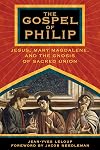
From my journal notes in 2005, when I read this book. It was a new acquisition at my previous place of work. Though I am not religious, I always strive to read items about religion to learn more about others as well as about history:
>>This Gospel, along with others, was suppressed by the mainstream church for being against dogma. Yet, upon reading this book, one gets such a better sense of the roots of Christianity, and those roots were for inclusiveness and more egalitarian roles for men show more and women. Fascinating on the view of the divine as balanced between male and female, and the concept of the nuptial chamber as the holy of holies certainly counters the repressive dogma of mainstream Christianity of sex as sinful. Sex between two people who love each other is not only beautiful, but is an expression of the divine. That Pope Innocent III (1160-1216) stated that "the sexual act is so shameful that it is intrinsically evil" is just repression and hypocrisy at its worst, a "power trip" that seems to get away from nature and likely from Jesus's teachings. After all, Jesus was human as well as divine. If he was human, why would he not love a woman? And even if he did not love Mary Magdalene, would Jesus really condemn married couples and the nature of love? Probably not, and this book seems to make Jesus closer to humans as well as more loving, and the sexual act of love as the beautiful expression it is. That some arrogant pope and a few males seeking to keep their power made such horrible pronouncements that have led so many to feel guilty or dirty over something natural is simply terrible, and in my view, at least, unconscionable. . . . The book overall was good with a solid introduction to put the text in context, and the text itself is short, simple, yet thought provoking. You really get a sense of how early Christians, some at least, were like. show less
>>This Gospel, along with others, was suppressed by the mainstream church for being against dogma. Yet, upon reading this book, one gets such a better sense of the roots of Christianity, and those roots were for inclusiveness and more egalitarian roles for men show more and women. Fascinating on the view of the divine as balanced between male and female, and the concept of the nuptial chamber as the holy of holies certainly counters the repressive dogma of mainstream Christianity of sex as sinful. Sex between two people who love each other is not only beautiful, but is an expression of the divine. That Pope Innocent III (1160-1216) stated that "the sexual act is so shameful that it is intrinsically evil" is just repression and hypocrisy at its worst, a "power trip" that seems to get away from nature and likely from Jesus's teachings. After all, Jesus was human as well as divine. If he was human, why would he not love a woman? And even if he did not love Mary Magdalene, would Jesus really condemn married couples and the nature of love? Probably not, and this book seems to make Jesus closer to humans as well as more loving, and the sexual act of love as the beautiful expression it is. That some arrogant pope and a few males seeking to keep their power made such horrible pronouncements that have led so many to feel guilty or dirty over something natural is simply terrible, and in my view, at least, unconscionable. . . . The book overall was good with a solid introduction to put the text in context, and the text itself is short, simple, yet thought provoking. You really get a sense of how early Christians, some at least, were like. show less
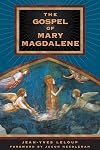
The Gospel of Mary Magdalene -- Translation and Notes by Joseph Rowe.
This is a translation by Joseph Rowe of a translation by Jean-Yves Leloup of the Coptic gospel of Mary Magdalene. It’s an excellent book for anyone unfamiliar with the Gnostic gospels because its well-footnoted Preface and Introduction give concise explanations of the history of these gospels, along with a fair bit of information on the compiling of the Bible. In Part One, the book has the side-by-side Coptic text and show more English translation, followed by Part Two with translation and commentary on the Mary Magdalene Coptic text by Jean-Yves Leloup. Although some readers may find the commentary part the most interesting; for me--and I’m only slightly familiar through online reading of the Gnostic gospels--I found that the summarizing of the historical certainties is what held my attention. Even more noteworthy for me was the care given to how Mary Magdalene’s role in Jesus’s life had been interpreted, diminished, and marginalized by some disciples (men) and followers throughout the early years of Christianity, only for her role to reemerge centuries later after Mary’s Coptic gospel texts were found in Egypt in 1896 (now held in the Berlin Museum). This is an excellent and worthwhile read on a captivating subject and it highlights the pivotal role that Mary Magdalene played in early Christianity. show less
This is a translation by Joseph Rowe of a translation by Jean-Yves Leloup of the Coptic gospel of Mary Magdalene. It’s an excellent book for anyone unfamiliar with the Gnostic gospels because its well-footnoted Preface and Introduction give concise explanations of the history of these gospels, along with a fair bit of information on the compiling of the Bible. In Part One, the book has the side-by-side Coptic text and show more English translation, followed by Part Two with translation and commentary on the Mary Magdalene Coptic text by Jean-Yves Leloup. Although some readers may find the commentary part the most interesting; for me--and I’m only slightly familiar through online reading of the Gnostic gospels--I found that the summarizing of the historical certainties is what held my attention. Even more noteworthy for me was the care given to how Mary Magdalene’s role in Jesus’s life had been interpreted, diminished, and marginalized by some disciples (men) and followers throughout the early years of Christianity, only for her role to reemerge centuries later after Mary’s Coptic gospel texts were found in Egypt in 1896 (now held in the Berlin Museum). This is an excellent and worthwhile read on a captivating subject and it highlights the pivotal role that Mary Magdalene played in early Christianity. show less

The gospel of Mary Magdalene was discovered in the late 19th century as part of the Berlin Codex; it is not part of the later Nag Hammadi finds, although they may have stoked interest in it. Translators and readers in the first few decades after its discovery tended to pass over it in favor of the Pistis Sophia. The text itself is brief and amply intriguing. Perhaps a third of the book-in-hand consists of front matter and the nine surviving pages of the Gospel. This English edition includes show more the original Coptic on facing pages, almost as an ornamental touch, since the book is clearly addressed more to a popular than to an academic audience. The remaining two-thirds of the volume provide a decidedly modern commentary on the text, by its translator into French, Jean-Yves Leloup.
As appetizing as I found the ancient text, I was actually a little put off by the front matter. Jacob Needleman, whom I have read with enjoyment in more scholarly contexts, effuses in his foreword about "the way that is offered by all the spiritual traditions of the world." (vi) English editors Tresemer and Cannon provide a preface called "Who Is Mary Magdalene?" in which they exhibit various sorts of credulity, including praise for the "meticulous research" in Baigent, Leigh and Lincoln's Holy Blood, Holy Grail. (x, n.)
But Leloup's commentary is worth reading, and on the evidence of his notes, French-to-English translator Joseph Rowe has done a capable and thoughtful job. I was not entirely sympathetic to Leloup's perspective: his being-based metaphysic, his emphasis on deity as "creator," and even his borderline monism were all features I could live without. Still, he artfully invokes Corbin's mundus imaginalis, and his final pages exhort the reader to self-overcoming in a way I could not help but admire. Most surprisingly, he offered philologically-informed readings of the great Abrahamic "mountaintop" dicta, i.e. the Decalogue of Mount Sinai and the Beatitudes of Mount Eremos, that I found palatable as a Thelemite.
The ancient text has a tone rather comparable to the Gospel of Thomas. I can imagine both Christian and Thelemic neo-Gnostics putting it to good use. show less
As appetizing as I found the ancient text, I was actually a little put off by the front matter. Jacob Needleman, whom I have read with enjoyment in more scholarly contexts, effuses in his foreword about "the way that is offered by all the spiritual traditions of the world." (vi) English editors Tresemer and Cannon provide a preface called "Who Is Mary Magdalene?" in which they exhibit various sorts of credulity, including praise for the "meticulous research" in Baigent, Leigh and Lincoln's Holy Blood, Holy Grail. (x, n.)
But Leloup's commentary is worth reading, and on the evidence of his notes, French-to-English translator Joseph Rowe has done a capable and thoughtful job. I was not entirely sympathetic to Leloup's perspective: his being-based metaphysic, his emphasis on deity as "creator," and even his borderline monism were all features I could live without. Still, he artfully invokes Corbin's mundus imaginalis, and his final pages exhort the reader to self-overcoming in a way I could not help but admire. Most surprisingly, he offered philologically-informed readings of the great Abrahamic "mountaintop" dicta, i.e. the Decalogue of Mount Sinai and the Beatitudes of Mount Eremos, that I found palatable as a Thelemite.
The ancient text has a tone rather comparable to the Gospel of Thomas. I can imagine both Christian and Thelemic neo-Gnostics putting it to good use. show less
Lists
el (2)
Awards
You May Also Like


Associated Authors
Statistics
- Works
- 67
- Members
- 1,712
- Popularity
- #14,991
- Rating
- 3.6
- Reviews
- 68
- ISBNs
- 179
- Languages
- 8
- Favorited
- 1
