
Marvin W. Meyer (1948–2012)
Author of The Gospel of Judas
About the Author
Marvin Meyer is Griset Professor of Bible and Christian Studies and director of the Albert Schweitzer Institute at Chapman University, Orange, California.
Works by Marvin W. Meyer
The Gnostic Gospels of Jesus: The Definitive Collection of Mystical Gospels and Secret Books about Jesus of Nazareth (2005) 219 copies, 1 review
The Gospels of Mary: The Secret Tradition of Mary Magdalene, the Companion of Jesus (2004) 186 copies
Judas: The Definitive Collection of Gospels and Legends About the Infamous Apostle of Jesus (2007) 61 copies, 1 review
Associated Works
The Complete Gospels : Annotated Scholars Version (Revised & expanded) (1992) — Contributor — 754 copies, 5 reviews
The Nag Hammadi Library in English, Fourth Revised Edition (1996) — Contributor — 612 copies, 3 reviews
Images of the Feminine in Gnosticism (Studies in Antiquity & Christianity) (1988) — Contributor — 35 copies, 1 review
Tagged
Common Knowledge
- Canonical name
- Meyer, Marvin W.
- Legal name
- Meyer, Marvin Wayne
- Birthdate
- 1948-04-16
- Date of death
- 2012-08-16
- Gender
- male
- Education
- Claremont Graduate University (Ph.D | 1979 | Early Christian Studies)
Calvin Theological Seminary (M.Div | 1974 | Theological Studies)
Calvin College (BA | 1970 | Greek) - Occupations
- professor
biblical scholar - Organizations
- Chapman University
Jesus Seminar (fellow)
American Academy of Religion
Society of Biblical Literature (president)
Albert Schweitzer Institute - Relationships
- Meyer, Bonnie (wife)
- Short biography
- Dr. Marvin Meyer (Ph.D., Claremont Graduate University; M.Div., Calvin Theological Seminary) is Griset Professor of Bible and Christian Studies and Co-Chair of the Department of Religious Studies, Chapman University. He is also Director of the Chapman University Albert Schweitzer Institute. Recently he has served as Chair of the Chapman University Faculty and President of the Faculty Senate. He is Director of the Coptic Magical Texts Project of the Institute for Antiquity and Christianity, Claremont Graduate University, Fellow of the Jesus Seminar, and a past President of the Society of Biblical Literature (Pacific Coast).
Dr. Meyer is the author of numerous books and articles on Greco-Roman and Christian religions in antiquity and late antiquity, and on Albert Schweitzer's ethic of reverence for life. - Cause of death
- melanoma
- Nationality
- USA
- Birthplace
- Grand Rapids, Michigan, USA
- Places of residence
- Orange, California, USA
- Place of death
- Orange, California, USA
- Associated Place (for map)
- California, USA
Members
Reviews

I think this is the third translation of the Gospel of Thomas I've read, and possibly the most recently published (1992). Translator Marvin Meyer's introduction conspicuously suspends judgment about the "gnostic" character of the text, and thus side-steps the terminological morass surrounding "Gnosticism." Instead, he emphasizes a shared culture with the Cynic philosophers of antiquity.
This "gospel" is one of the most significant components of the Nag Hammadi Library discovered in Egypt in show more the mid-20th century. It differs from the canonical gospels by entirely lacking a narrative spine, and consisting solely of purported teachings of Jesus. It thus provides another point of reference for the text-critical approach that postulates a Q (Ger. Quelle, "source") text to serve as a prior reference common to Matthew and Luke, as well as demonstrating that a document of this form did exist among Christians of the first centuries. The text in this edition is printed with a typeset Coptic original on facing pages, and there are endnotes for each logion ("saying"). The notes supply alternate readings of the Coptic, along with parallels in canonical and extra-canonical Christian scriptures, ancient theological writings, and other literature of the period.
Appended to this edition is "A Reading" of the gospel by literary critic and academic Harold Bloom. I found myself fairly sympathetic to most of this "sermon" from Bloom, although it does repeatedly advert to his idiosyncratic identification of American Protestantisms and Mormonism as "gnostic." The one point at which he lost me altogether was when he wrote, "What is surely peculiar is the modern habit of employing 'gnosis' or 'gnosticism' as a conservative or institutionalized Christian term of abuse" (120). Bloom overlooked Irenaeus and Hippolytus somehow, along with the many centuries of theologians who took them as authorities, I guess.
Both Meyer and Bloom drew my attention to logion 13, which had not arrested me in previous readings of this gospel. Jesus rewards Thomas with three secret "sayings" or "words," not themselves reproduced in the text. Meyer's notes about other references to three secret words are intriguing (75); they include "IAO IAO IAO" from Pistis Sophia 136, and other non-canonical gospels intimate identities with divine father, mother, and son. Hippolytus offered what seem to be corrupted forms of the three instructions "precept upon precept," "line upon line,"and "here a little, there a little" from Isaiah 28. Bloom's highly speculative and metaphysical explication did not persuade me, but there are Thelemic doctrines which I think can be curiously enhanced by reference to this logion. show less
This "gospel" is one of the most significant components of the Nag Hammadi Library discovered in Egypt in show more the mid-20th century. It differs from the canonical gospels by entirely lacking a narrative spine, and consisting solely of purported teachings of Jesus. It thus provides another point of reference for the text-critical approach that postulates a Q (Ger. Quelle, "source") text to serve as a prior reference common to Matthew and Luke, as well as demonstrating that a document of this form did exist among Christians of the first centuries. The text in this edition is printed with a typeset Coptic original on facing pages, and there are endnotes for each logion ("saying"). The notes supply alternate readings of the Coptic, along with parallels in canonical and extra-canonical Christian scriptures, ancient theological writings, and other literature of the period.
Appended to this edition is "A Reading" of the gospel by literary critic and academic Harold Bloom. I found myself fairly sympathetic to most of this "sermon" from Bloom, although it does repeatedly advert to his idiosyncratic identification of American Protestantisms and Mormonism as "gnostic." The one point at which he lost me altogether was when he wrote, "What is surely peculiar is the modern habit of employing 'gnosis' or 'gnosticism' as a conservative or institutionalized Christian term of abuse" (120). Bloom overlooked Irenaeus and Hippolytus somehow, along with the many centuries of theologians who took them as authorities, I guess.
Both Meyer and Bloom drew my attention to logion 13, which had not arrested me in previous readings of this gospel. Jesus rewards Thomas with three secret "sayings" or "words," not themselves reproduced in the text. Meyer's notes about other references to three secret words are intriguing (75); they include "IAO IAO IAO" from Pistis Sophia 136, and other non-canonical gospels intimate identities with divine father, mother, and son. Hippolytus offered what seem to be corrupted forms of the three instructions "precept upon precept," "line upon line,"and "here a little, there a little" from Isaiah 28. Bloom's highly speculative and metaphysical explication did not persuade me, but there are Thelemic doctrines which I think can be curiously enhanced by reference to this logion. show less

This volume presents a full English translation of the surviving text of the Gospel of Judas from the Codex Tchacos, with evaluative and interpretive essays by several conspicuous modern scholars of Gnosticism, all of whom (except for Ehrman) were party to the edition presented. That word "surviving" is key, because, as Rodolphe Kasser details in his contribution, the Codex Tchacos was subjected to the most pernicious effects of antiquities speculators in the 20th century. Much of the text show more is now missing or illegible as a result of damage sustained in the last few decades.
Like the Nag Hammadi Codices, to which it is clearly kin, the Codex Tchacos appears to consist of Coptic translations of Greek texts. The Gospel of Judas is the third of these, and represents an expression of Sethian Gnosticism. Gregor Wurst, in his useful essay making the case for identifying this text with the "Gospel of Judas" mentioned by the ancient heresiologist Iranaeus of Lyon, suggests that it is one of the earliest such texts available to us today. In fact, I think he sets a false limit on how early it could be. He writes that it could not have been written earlier than the canonical Acts of the Apostles (ca. 93 C.E.), because it refers to the event of Judas' replacement among the twelve apostles. But surely this overlooks the possibility that Judas and Acts could share a narrative source -- or even (though I doubt it) both be grounded in prior facts! The earliness of the Gospel of Judas and its likely translation from a Greek original are reasons to hold out hope that a more complete version may someday be recovered.
Bart Ehrman's essay is a primer of wide scope regarding the contents of the Gospel of Judas, which presumes a minimum of prior knowledge on the part of the reader. (One conspicuous feature of the text that Ehrman fails to note is its strident rejection of ritual sacramentalism.) The concluding essay by Meyer is more sophisticated, and helpfully draws comparisons with other literature of ancient Gnosticism, as well as Hellenized Judaism and Middle Platonism. All of the essays are very accessible, and the whole book can be read in just a few sittings.
Even in its degraded present condition, the Gospel of Judas is treasure comparable to the most provocative of the Nag Hammadi texts, or to the Bruce Codex materials, preserving scripture that was valued by the Gnostics who were eventually suppressed by what became Christian orthodoxy. This book serves as a well-constructed introduction for popular audiences to the good news of the man who sacrificed Jesus. May they go and do likewise. show less
Like the Nag Hammadi Codices, to which it is clearly kin, the Codex Tchacos appears to consist of Coptic translations of Greek texts. The Gospel of Judas is the third of these, and represents an expression of Sethian Gnosticism. Gregor Wurst, in his useful essay making the case for identifying this text with the "Gospel of Judas" mentioned by the ancient heresiologist Iranaeus of Lyon, suggests that it is one of the earliest such texts available to us today. In fact, I think he sets a false limit on how early it could be. He writes that it could not have been written earlier than the canonical Acts of the Apostles (ca. 93 C.E.), because it refers to the event of Judas' replacement among the twelve apostles. But surely this overlooks the possibility that Judas and Acts could share a narrative source -- or even (though I doubt it) both be grounded in prior facts! The earliness of the Gospel of Judas and its likely translation from a Greek original are reasons to hold out hope that a more complete version may someday be recovered.
Bart Ehrman's essay is a primer of wide scope regarding the contents of the Gospel of Judas, which presumes a minimum of prior knowledge on the part of the reader. (One conspicuous feature of the text that Ehrman fails to note is its strident rejection of ritual sacramentalism.) The concluding essay by Meyer is more sophisticated, and helpfully draws comparisons with other literature of ancient Gnosticism, as well as Hellenized Judaism and Middle Platonism. All of the essays are very accessible, and the whole book can be read in just a few sittings.
Even in its degraded present condition, the Gospel of Judas is treasure comparable to the most provocative of the Nag Hammadi texts, or to the Bruce Codex materials, preserving scripture that was valued by the Gnostics who were eventually suppressed by what became Christian orthodoxy. This book serves as a well-constructed introduction for popular audiences to the good news of the man who sacrificed Jesus. May they go and do likewise. show less
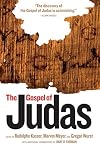
Let's get this straight. I finished the text, not the entire book. I'm sure the essays that followed The Gospel of Judasare interesting and provide historical insight to the lost text, it doesn't further my pursuit of reading as many religious texts as I promised - a stupid idea last year, but I bought all these books so I better damn read them.
It's hard to "review" a religious text - especially one that is considered a "lost book" of the Bible. Especially hard when said "lost book" also show more has several lines of text missing. We also know the ending - "Judas answered them as they wished. And he received some money and handed him over to them."
So what this book offers is an unique insight to the times before Judas' betrayal. It even offers a hint that Jesus already knew and warned Judas of said betrayal: "But you will exceed all of them. For you will sacrifice the man that clothes me./Already your horn has been raised,/your wrath has been kindled,/your star has shown brightly/and your heart has [...]."
It's a new look at Judas Iscariot, the betrayer, as well as, Jesus the messiah. It's also no wonder why this text will never make it into any canon. Interesting read and you should definitely pick it up. show less
It's hard to "review" a religious text - especially one that is considered a "lost book" of the Bible. Especially hard when said "lost book" also show more has several lines of text missing. We also know the ending - "Judas answered them as they wished. And he received some money and handed him over to them."
So what this book offers is an unique insight to the times before Judas' betrayal. It even offers a hint that Jesus already knew and warned Judas of said betrayal: "But you will exceed all of them. For you will sacrifice the man that clothes me./Already your horn has been raised,/your wrath has been kindled,/your star has shown brightly/and your heart has [...]."
It's a new look at Judas Iscariot, the betrayer, as well as, Jesus the messiah. It's also no wonder why this text will never make it into any canon. Interesting read and you should definitely pick it up. show less
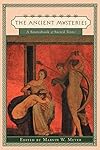
A valuable anthology of ancient texts describing the Mystery Religions (or Mystery Cults) -- the Greek and Roman religions that held secret initiations where members experienced trials, saw sacred dramas, re-evaluated life and death, and learned secrets of the cosmos. Part fraternal organization, part passion play/sacred drama, part pilgrimage, these religions have largely kept their secrets because worshipers were sworn to silence.
This book collects the contemporary texts that describe (or show more at least give clues) about the Mystery Religions of Isis, Demeter, Bacchus, Cybele, Mithras, and others -- and has an intriguing final chapter on how these religions influenced Judaism and Christianity. (You will never read the letters of Paul in the same way...)
A wonderful glimpse into one of the most interesting corners of Greco-Roman religion -- which was not all somber processions, Etruscan divinations, or animal sacrifices. A vividly human look at how religions create grandeur and meaning and an essential companion to any of the many fine scholarly studies of these ancient religions.
-Kushana show less
This book collects the contemporary texts that describe (or show more at least give clues) about the Mystery Religions of Isis, Demeter, Bacchus, Cybele, Mithras, and others -- and has an intriguing final chapter on how these religions influenced Judaism and Christianity. (You will never read the letters of Paul in the same way...)
A wonderful glimpse into one of the most interesting corners of Greco-Roman religion -- which was not all somber processions, Etruscan divinations, or animal sacrifices. A vividly human look at how religions create grandeur and meaning and an essential companion to any of the many fine scholarly studies of these ancient religions.
-Kushana show less
Lists
Spirituality (1)
Awards


You May Also Like


Associated Authors
Statistics
- Works
- 27
- Also by
- 7
- Members
- 5,578
- Popularity
- #4,449
- Rating
- 3.8
- Reviews
- 43
- ISBNs
- 94
- Languages
- 10