
Christobel Mattingley
Author of No Gun for Asmir
About the Author
Christobel Mattingley was born at Brighton, South Australia, on October 26, 1931. She started writing when she was 10, in the children's pages of a nature magazine. While her children were growing up, she worked as a librarian in schools and a teacher's college. Her first book was published in 1970 show more and she has been a full time writer since 1974. Mattingley is the author of 42 books. Some have been shortlisted for awards, and some have won awards. Cockawun and Cockatoo was named a Notable Book in the Children's Book Council Awards for 2000 and received a Certificate of Merit in the Whitley Awards for the Best Children's Novel of 2000 of the Royal Zoological Society of New South Wales.She has also received an Advance Australia Award, an Honorary Doctorate of the University of South Australia, and been made a Member of the Order of Australia for my contribution to literature. She won the inaugural Children¿s Book Council of Australia Junior Book of the Year Award in 1982 for Rummage. The Race was an Honour Book in the 1996 Children¿s Book Council of Australia Picture Book of the Year Awards. As well as writing for children, Christobel has written film scripts, short stories, articles and poetry. In 1990 she received the Advance Australia Award for Service to Literature, and in 1996 she was made a Member of the Order of Australia for service to literature, particularly children's literature, and for community service through her commitment to social and cultural issues. No Gun for Asmir received a High Commendation in the Australian Human Rights Awards of 1994. In 1990 she received the ultimate accolade an Advance Australia Medal for her contribution to literature in Australia. (Bowker Author Biography) show less
Image credit: Allen and Unwin Media Centre
Series
Works by Christobel Mattingley
Hurry Up, Alice! (Aussie Bites) 5 copies
¡Date Prisa, Alice! 1 copy
The Miracle tree 1 copy
MAT Asmir no quiere pistolas 1 copy
Associated Works
Tagged
Common Knowledge
- Birthdate
- 1931-10-26
- Gender
- female
- Awards and honors
- Pheme Tanner Award (1999)
Advance Australia Medal (1990) - Nationality
- Australia
- Places of residence
- Brighton, South Australia, Australia
- Associated Place (for map)
- South Australia, Australia
Members
Reviews

I've been looking for this book for ages but it was a bit expensive to buy new. Then found a great copy at the local market for $10. Bargain! It's a lovely book with truly lovely botanical illustrations. It seems to have been written for an exhibition held in the National Library of Australia and has a nice biographical article about Adam Forster. Actually, his real name was Carl Ludwig August Wiarda and he was German. But changed his name....understandably during the anti German attitudes show more of the first world war.....and adopting the name of a German English naturalist painter. Forster himself seems to have been quite a formidable character...emigrating first to South Africa (marrying there and having three children) thence to Australia to "establish himself". It took over 8 years before he was reunited with wife and children. Most of his career was spent as Registrar of the Pharmaceutical Board.
But, on the side he was a significant botanical painter ....in fact he did most ...if not all of the illustrations for the book Wild Flowers of Australia published in 1938 for the first time. At the time of his death (in 1928) Forster had painted 928 paintings of Australian wildflowers. They are lovely works and nicely reproduced in this book.....though it's a mini book and I would have liked to see a larger format. In a few cases there are enlargements of the individual works so one can see the brushwork and drawing more readily. One advantage (for the artist) of the small size is that the paintings look even more wizardly at the reduced scale....and any defects are minimised.
There are a nice selection of plants and flowers....most of them from around the Sydney region..and I recognise most of them. He has also painted a few of insects including all the cicadas that i remember from my youth: Double drummers, Greengrocers, Yellow Mondays. ......and lovely work. I know my friends with whom I meet for botanical painting sessions will be entranced by his work. Maybe, it's a bit more free-flowing and less detailed that some of theirs but the local subject matter will be familiar to all...and I know some of our group have painted the same species so will be really interested in how Adam Forster painted them.
No hesitation in awarding this book five stars. show less
But, on the side he was a significant botanical painter ....in fact he did most ...if not all of the illustrations for the book Wild Flowers of Australia published in 1938 for the first time. At the time of his death (in 1928) Forster had painted 928 paintings of Australian wildflowers. They are lovely works and nicely reproduced in this book.....though it's a mini book and I would have liked to see a larger format. In a few cases there are enlargements of the individual works so one can see the brushwork and drawing more readily. One advantage (for the artist) of the small size is that the paintings look even more wizardly at the reduced scale....and any defects are minimised.
There are a nice selection of plants and flowers....most of them from around the Sydney region..and I recognise most of them. He has also painted a few of insects including all the cicadas that i remember from my youth: Double drummers, Greengrocers, Yellow Mondays. ......and lovely work. I know my friends with whom I meet for botanical painting sessions will be entranced by his work. Maybe, it's a bit more free-flowing and less detailed that some of theirs but the local subject matter will be familiar to all...and I know some of our group have painted the same species so will be really interested in how Adam Forster painted them.
No hesitation in awarding this book five stars. show less
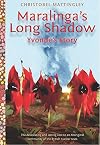
Maralinga’s Long Shadow: Yvonne’s Story is a book I picked up from the NAIDOC week display at the Parkdale branch of Kingston Libraries, and it raises an interesting issue in terms of authorship.
This week is Indigenous Literature Week, and I’ve always wanted it to be about books authored by Indigenous people. But in this instance, Yvonne Edwards died unexpectedly just as – after a long and busy life as an artist and activist – she had at last begun working with author Christobel show more Mattingley on writing her story. Mattingley has therefore constructed Yvonne’s story from interviews and conversations with Yvonne, an interview on ABC Radio’s Message Stick and some input from Yvonne’s family and friends. It is profusely illustrated with beautiful art works by Yvonne and there are some photographs as well.
While the artworks tell the vivid story of Yvonne’s people, the Anangu people of what is now known as Maralinga, the book is written in the third person in English that is simple and direct, and includes some use of Pitjantjatjara. It does not purport to be Yvonne’s own voice but it does appear to be written entirely from her perspective. Although there is a comprehensive author’s note at the back of the book which explains its genesis and her method, still, it’s not possible to glean from any signals in the text whether this perspective or parts of it have been inferred by the author or drawn directly from Mattingley’s interviews and conversations. The reader has no way of telling which of the opinions expressed are the sympathetic opinions of the author or the recorded opinions of the subject. The tone is always respectful of the subject and the draft was approved by members of Yvonne’s family. So it seems to me that the book sits awkwardly in a space between a rather naïve way of writing biography written for the children’s or YA market, and a genuine attempt to reproduce the story that Yvonne would herself have told, in words she would have used, and telling a story that otherwise might not have been told.
To read the rest of my review please visit https://anzlitlovers.com/2017/07/06/maralingas-long-shadow-yvonnes-story-by-chri... show less
This week is Indigenous Literature Week, and I’ve always wanted it to be about books authored by Indigenous people. But in this instance, Yvonne Edwards died unexpectedly just as – after a long and busy life as an artist and activist – she had at last begun working with author Christobel show more Mattingley on writing her story. Mattingley has therefore constructed Yvonne’s story from interviews and conversations with Yvonne, an interview on ABC Radio’s Message Stick and some input from Yvonne’s family and friends. It is profusely illustrated with beautiful art works by Yvonne and there are some photographs as well.
While the artworks tell the vivid story of Yvonne’s people, the Anangu people of what is now known as Maralinga, the book is written in the third person in English that is simple and direct, and includes some use of Pitjantjatjara. It does not purport to be Yvonne’s own voice but it does appear to be written entirely from her perspective. Although there is a comprehensive author’s note at the back of the book which explains its genesis and her method, still, it’s not possible to glean from any signals in the text whether this perspective or parts of it have been inferred by the author or drawn directly from Mattingley’s interviews and conversations. The reader has no way of telling which of the opinions expressed are the sympathetic opinions of the author or the recorded opinions of the subject. The tone is always respectful of the subject and the draft was approved by members of Yvonne’s family. So it seems to me that the book sits awkwardly in a space between a rather naïve way of writing biography written for the children’s or YA market, and a genuine attempt to reproduce the story that Yvonne would herself have told, in words she would have used, and telling a story that otherwise might not have been told.
To read the rest of my review please visit https://anzlitlovers.com/2017/07/06/maralingas-long-shadow-yvonnes-story-by-chri... show less

Poignant story about a difficult topic. Despair, loneliness, survival, remorse, forgiveness; this is a good book for introducing hard things.
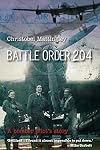
I have read many memoirs of men who flew in bombers over Europe & Japan but this is the first I have read about an Australian flier and this one was a pilot. Perhaps most interestingly, it was written by his wife, an accomplished Australian writer of 47 books. She chronicles his training and eventual arrival in Britain where he experienced life on a RAF bomber base. She used diaries of her husbands and other crew members plus official sources to fill out the events that the crew faced during show more their trips of terror over Europe. She spends a great amount of time explaining how air crews were briefed for each trip and how each member of the crew tested their part of the aircraft before they left the ground. Includes many photos taken by members of the crew. The title refers to the sortie number on which Mattingley's husband & his engineer were wounded ending their participation in the War. show less
Lists
Awards


You May Also Like


Associated Authors
Statistics
- Works
- 56
- Also by
- 4
- Members
- 776
- Popularity
- #32,779
- Rating
- 3.9
- Reviews
- 14
- ISBNs
- 154
- Languages
- 5