

George Henry Johnston (1912–1970)
Author of My Brother Jack
About the Author
George H. Johnston (1912-1970) was a distinguished correspondent and author of a number of books, including My Brother Jack and Clean Straw for Nothing, both winners of Australia's Miles Franklin Award. He was awarded an OBE by Queen Elizabeth II in 1969.
Image credit: George Henry Johnston
Works by George Henry Johnston
The Toughest Fighting in the World: The Australian and American Campaign for New Guinea in World War II (2011) 19 copies
The Cyprian woman : a novel 5 copies
The darkness outside 5 copies
Skyscrapers in the Mist 4 copies
Vegan Brot & Brötchen backen: 70 herzhafte und süße Rezepte - 100% Geschmack / GELINGGARANTIE / 100% pflanzlich (2025) 1 copy
Monsoon 1 copy
Mourners' Voyage 1 copy
Associated Works
Tagged
Common Knowledge
- Other names
- Martin, Shane
- Birthdate
- 1912-07-20
- Date of death
- 1970-07-22
- Gender
- male
- Education
- Brighton Technical School (Lithografie)
National Gallery schools (Kunst) - Occupations
- Schrijver
Cartoonist
Illustrator
Schilder
Journalist
Oorlogscorrespondent - Awards and honors
- Miles Franklin Literary Award (1964)
Miles Franklin Literary Award (1969)
The Order of the British Empire - Officer (Civil)(For service to literature)(1970) - Relationships
- Clift, Charmian (wife)
Johnston, Martin (son) - Nationality
- Australia
- Birthplace
- Caulfield, Melbourne, Victoria, Australia
- Places of residence
- London, England, UK
Hydra, Greece - Place of death
- Mosman, New South Wales, Australia
- Burial location
- Gecremeerd
- Associated Place (for map)
- Australia
Members
Reviews

While the weighted, staccato syllables of its title evoke the worst kind of sentimental Australian literature, My Brother Jack is—for the most part at least—anything but.
The novel begins with a lengthy evocation of suburban, working-class Melbourne in the years immediately after the first World War. David Meredith grows up in a house of death: his mother welcomes a number of injured veterans to convalesce in their front room, exposing an impressionable David to the grim realities of show more mortality. His father is a tyrannical abuser who whips the brothers on a weekly basis and discourages them from anything other than contributing to the household economy.
At this point, Jack is three years older, and his rambunctious self already appears fully formed. As David is drawn into a lifelong habit of melancholy and inhibition, the hedonistic Jack chides him for his sexual diffidence and bookishness. His virility is shameful and almost overpowering to David, and its not until he moves out of the family home and into his first marriage that he is able to gain some perspective on his own life. David is praised for his work as a journalist and writer (side note: David is able to buy a beautiful home and a brand new MG solely on an early-career journalist's salary—how things have changed), and is gradually welcomed into a more rarified enclave of intellectuals and an educated elite. Watching the relationship between David and Jack evolve is convincing and a genuine pleasure.
Though it is justly praised as a great Australian novel, you couldn't wear that particular crown without suffering from a number of the flaws implied by it. At times, the novel reads like a number of episodes strung together without enough coherence. To give one example, the characterisation of Helen, David's first wife, is deliberately inconsistent: she is portrayed as a sexually potent and ideologically militant young woman whose edges are bevelled by the banalities of suburban life. Nothing so strange in that, but Johnston's narrator fails to acknowledge this transition, or give much account to it at all, to the extent that she seems like two different characters entirely, rather than one struggling with her own internal contradictions.
Likewise, as an acutely self-conscious narrator, there are aspects of the David's experiences that are inconspicuously left unaddressed. As one astute reviewer on here has observed, David's growing distance from Australian culture as he becomes embroiled in a more wordly, cosmopolitan life, is not addressed in as meaningful a way as you'd expect.
What I liked most about My Brother Jack was its vigorous and unselfconscious use of the Australian idiom. Often, this kind of thing makes me cringe, especially when it comes from a university educated writer who would never in a million years use the word "struth" in earnest. But Johnston manages to navigate the linguistic tensions between a more elevated King's English and your classic post-convict Aussie slang. Johnston never places himself above Jack's manner of speech, and invests him with so much humour and vitality that its clear there's something in the Australian larrikin archetype he finds enduring.
The shifting relationship between David and Jack is handled deftly, and I do wish the second volume in this series was held in higher esteem, because I do want to see where it goes, but not enough to want to read the next one. show less
The novel begins with a lengthy evocation of suburban, working-class Melbourne in the years immediately after the first World War. David Meredith grows up in a house of death: his mother welcomes a number of injured veterans to convalesce in their front room, exposing an impressionable David to the grim realities of show more mortality. His father is a tyrannical abuser who whips the brothers on a weekly basis and discourages them from anything other than contributing to the household economy.
At this point, Jack is three years older, and his rambunctious self already appears fully formed. As David is drawn into a lifelong habit of melancholy and inhibition, the hedonistic Jack chides him for his sexual diffidence and bookishness. His virility is shameful and almost overpowering to David, and its not until he moves out of the family home and into his first marriage that he is able to gain some perspective on his own life. David is praised for his work as a journalist and writer (side note: David is able to buy a beautiful home and a brand new MG solely on an early-career journalist's salary—how things have changed), and is gradually welcomed into a more rarified enclave of intellectuals and an educated elite. Watching the relationship between David and Jack evolve is convincing and a genuine pleasure.
Though it is justly praised as a great Australian novel, you couldn't wear that particular crown without suffering from a number of the flaws implied by it. At times, the novel reads like a number of episodes strung together without enough coherence. To give one example, the characterisation of Helen, David's first wife, is deliberately inconsistent: she is portrayed as a sexually potent and ideologically militant young woman whose edges are bevelled by the banalities of suburban life. Nothing so strange in that, but Johnston's narrator fails to acknowledge this transition, or give much account to it at all, to the extent that she seems like two different characters entirely, rather than one struggling with her own internal contradictions.
Likewise, as an acutely self-conscious narrator, there are aspects of the David's experiences that are inconspicuously left unaddressed. As one astute reviewer on here has observed, David's growing distance from Australian culture as he becomes embroiled in a more wordly, cosmopolitan life, is not addressed in as meaningful a way as you'd expect.
What I liked most about My Brother Jack was its vigorous and unselfconscious use of the Australian idiom. Often, this kind of thing makes me cringe, especially when it comes from a university educated writer who would never in a million years use the word "struth" in earnest. But Johnston manages to navigate the linguistic tensions between a more elevated King's English and your classic post-convict Aussie slang. Johnston never places himself above Jack's manner of speech, and invests him with so much humour and vitality that its clear there's something in the Australian larrikin archetype he finds enduring.
The shifting relationship between David and Jack is handled deftly, and I do wish the second volume in this series was held in higher esteem, because I do want to see where it goes, but not enough to want to read the next one. show less

Clean Straw for Nothing is the second novel in George Johnston’s largely autobiographical Meredith trilogy. The first in the series, My Brother Jack, was Johnston’s first commercial success as a novelist. Fifteen years before its publication, he had relinquished a successful and secure career as a journalist to devote himself full time to writing books. His success came at the end of his life—a life cut short by tuberculosis, which he contracted while living in Greece. He returned to show more Australia in 1964 with his wife and four children. That same year, he won Australia’s Miles Franklin Literary Award for My Brother Jack. He finally succumbed to his illness in 1970 at the age of 58, a year after both his wife’s suicide and his second Miles Franklin Award—this time for Clean Straw for Nothing. The third novel in his Meredith trilogy, A Cartload of Clay, was published incomplete in 1971.
My Brother Jack is in my personal Top Twenty—maybe even Top Ten, if I give it careful thought. And that’s why I am so disappointed with Clean Straw for Nothing. It is the same truly fine writing, but it takes more than delicious prose to make a story. The novel is riddled with problems, the most prominent being the confusing jumps forward and backward in time. David Meredith, the story’s protagonist, is also the narrator—sometimes, that is. Occasionally, the narration lapses into third-person.
While I was puzzling through my conflicting thoughts about the novel’s random shufflings of time (not flashbacks), I encountered an Internet essay about William Burroughs’s Naked Lunch. I learned that Burroughs was a heroin addict, and under the influence, he undertook a daring literary adventure. He cut his manuscript into chunks and haphazardly rearranged them. Some of the chunks cut a sentence in half, its completion settling itself in a nonsense connection with entirely different subject matter. This insight into Burroughs’s work accomplished two things for me. First, I took Naked Lunch off my list of books to read. Next, I sensed a clue to what Johnston had done.
Johnston knew his illness was rapidly siphoning away his life, and he had yet to begin the third installment in his Meredith trilogy. By his own admission, through the journaling of his character David Meredith, he was struggling with his writing: “The trouble is that the kaleidoscope does not shake well any more. Perhaps something has gone wrong with it. . . . There are brief periods when it still comes up with perfectly clear, bright pictures, lucid little geometries, and at other times one can achieve only a kind of fragmentation of particles, a splintering, all the coloured bits flying in all directions.”
Johnston took his collection of “lucid little geometries” and pieced them into a book. The jerrymandering of past, present and time zones—masquerading as literary experiment—create a fog that draws a veil across the jagged edges of vignettes that don’t quite fit together. Clean Straw for Nothing is a collage of journal entries, snippets from an unfinished novel, notes (maybe even letters) from a European vacation, and ruminations on a life as jumbled as the novel.
There are two redeeming values in the book. First, the writing, detail that engages the senses, passages so rich you will savor them slowly:
"In a hospital ward, Meredith realized, there was no such thing as silence; there was always someone stirring, groaning, coughing, muttering, moving, the starchy stiff whisper of the night nurses’ uniforms behind the jabbing flashlight beams, the metallic click of equipment, the soft slow hiss of oxygen. From outside, too. The muted moan of the city’s night traffic, more stridently punctuated along the road beside the hospital, nocturnal shuntings in the adjacent railway yards, the running clangour of buffers, soft pantings of locomotives interspersed with quick shuddering snorts like animals in pain, and from a point far away, always the same point and at the same time, the nostalgic faint mournful cry of train whistles fading north towards Newcastle." (p. 126)
The novel’s second redeeming value is the insight into the lives of George Johnston and his wife Charmian Clift, significant figures in Australian literature, as well as in the international arts community of their day. In his prefatory Author’s Note to Clean Straw, Johnston cautions the reader that this is a work of fiction; yet biographers, acquaintances and old friends take it to be closely autobiographical.
What continues to haunt me about the book is how absent are Cressida Morley’s and David Meredith’s (Clift’s and Johnston’s) children—a bare few paragraphs here and there. The emphasis is on the relationship between the two and their place in their circle of friends. Clift’s suicide note suggests she is responding to a spousal act of emotional cruelty—another episode in a twenty-year narrative of clashing emotions? Johnston writes his fictional life with scant mention of his children, and his wife commits suicide in a drunken stupor, with no mention at all. As autobiography, this exclusion of the children may reflect a sad reality in their lives. As a novel, the functional invisibility of the protagonist's children is a flaw in character development.
I think Clean Straw is a case of far too many “coloured bits flying in all directions” for a sick man to bring together. Johnston’s lengthy, elegant descriptions reduce conversation and actions to still lifes. He describes them without engaging them. Dialogue is far too sparse. A series of disjointed passages of brilliant prose simply aren’t enough. Good enough for a memoir perhaps, but a novel needs a plot and good storytelling. Clean Straw for Nothing has neither. show less
My Brother Jack is in my personal Top Twenty—maybe even Top Ten, if I give it careful thought. And that’s why I am so disappointed with Clean Straw for Nothing. It is the same truly fine writing, but it takes more than delicious prose to make a story. The novel is riddled with problems, the most prominent being the confusing jumps forward and backward in time. David Meredith, the story’s protagonist, is also the narrator—sometimes, that is. Occasionally, the narration lapses into third-person.
While I was puzzling through my conflicting thoughts about the novel’s random shufflings of time (not flashbacks), I encountered an Internet essay about William Burroughs’s Naked Lunch. I learned that Burroughs was a heroin addict, and under the influence, he undertook a daring literary adventure. He cut his manuscript into chunks and haphazardly rearranged them. Some of the chunks cut a sentence in half, its completion settling itself in a nonsense connection with entirely different subject matter. This insight into Burroughs’s work accomplished two things for me. First, I took Naked Lunch off my list of books to read. Next, I sensed a clue to what Johnston had done.
Johnston knew his illness was rapidly siphoning away his life, and he had yet to begin the third installment in his Meredith trilogy. By his own admission, through the journaling of his character David Meredith, he was struggling with his writing: “The trouble is that the kaleidoscope does not shake well any more. Perhaps something has gone wrong with it. . . . There are brief periods when it still comes up with perfectly clear, bright pictures, lucid little geometries, and at other times one can achieve only a kind of fragmentation of particles, a splintering, all the coloured bits flying in all directions.”
Johnston took his collection of “lucid little geometries” and pieced them into a book. The jerrymandering of past, present and time zones—masquerading as literary experiment—create a fog that draws a veil across the jagged edges of vignettes that don’t quite fit together. Clean Straw for Nothing is a collage of journal entries, snippets from an unfinished novel, notes (maybe even letters) from a European vacation, and ruminations on a life as jumbled as the novel.
There are two redeeming values in the book. First, the writing, detail that engages the senses, passages so rich you will savor them slowly:
"In a hospital ward, Meredith realized, there was no such thing as silence; there was always someone stirring, groaning, coughing, muttering, moving, the starchy stiff whisper of the night nurses’ uniforms behind the jabbing flashlight beams, the metallic click of equipment, the soft slow hiss of oxygen. From outside, too. The muted moan of the city’s night traffic, more stridently punctuated along the road beside the hospital, nocturnal shuntings in the adjacent railway yards, the running clangour of buffers, soft pantings of locomotives interspersed with quick shuddering snorts like animals in pain, and from a point far away, always the same point and at the same time, the nostalgic faint mournful cry of train whistles fading north towards Newcastle." (p. 126)
The novel’s second redeeming value is the insight into the lives of George Johnston and his wife Charmian Clift, significant figures in Australian literature, as well as in the international arts community of their day. In his prefatory Author’s Note to Clean Straw, Johnston cautions the reader that this is a work of fiction; yet biographers, acquaintances and old friends take it to be closely autobiographical.
What continues to haunt me about the book is how absent are Cressida Morley’s and David Meredith’s (Clift’s and Johnston’s) children—a bare few paragraphs here and there. The emphasis is on the relationship between the two and their place in their circle of friends. Clift’s suicide note suggests she is responding to a spousal act of emotional cruelty—another episode in a twenty-year narrative of clashing emotions? Johnston writes his fictional life with scant mention of his children, and his wife commits suicide in a drunken stupor, with no mention at all. As autobiography, this exclusion of the children may reflect a sad reality in their lives. As a novel, the functional invisibility of the protagonist's children is a flaw in character development.
I think Clean Straw is a case of far too many “coloured bits flying in all directions” for a sick man to bring together. Johnston’s lengthy, elegant descriptions reduce conversation and actions to still lifes. He describes them without engaging them. Dialogue is far too sparse. A series of disjointed passages of brilliant prose simply aren’t enough. Good enough for a memoir perhaps, but a novel needs a plot and good storytelling. Clean Straw for Nothing has neither. show less

The story begins at the closing of World War I and ends at the culmination of World War II. The years in between furnish the backdrop against which two Australian working-class brothers grow into adolescence, young manhood, and the early years of maturity that are marked by marriage, children, and ageing parents. Though masterfully drawn as authentic Australian characters in an authentic Australian landscape, Dave, Jack, their parents, and their wives are true to archetypes that exist in show more every human culture.
After a childhood of games, fights, and mischief, Jack wholeheartedly romps through his hormonally driven skirt-chasing phase, then leaps into adulthood, brashly taking on the mantle of manhood, which means patriotic service to his country, responsibility to his family, and creation of the next generation of human beings. Jack is Everyman.
Dave occupies a sort of middle-management fringe that nature can afford because Jack is tending his never-ending job so well. Dave is pushed from behind by civilization's need for progress and pulled forward by Jack, who needs him to be better than he is. Each of them is driven by eternal forces, Jack the man of action and Dave the man whose decisions are almost always non-decisions that move him inexorably forward without feeling responsibility for where he's been or where he's going.
The tale is told in the first person by Dave, with such incredible self-scrutiny and painful insight into the foibles and weaknesses of a clever, gifted writer that the reader feels compelled to accept it as a true autobiography. But it most likely isn't, at least not in its entirety. The gift of a novel is that the writer can tell the entire, bald truth and hide behind the fiction of it. A secondary benefit that feeds the novelist's creative soul is that events can be changed that didn't turn out right in real life or maybe seemed too mundane to be worthy of printed expression. Life is stranger than fiction, and fiction is more honest.
Johnston is a superb writer, and My Brother Jack is on my Top Ten List of Things That Make Me Glad I Trekked to Australia—right up there with the magpie's morning song, the stark white bark of giant gum trees, fine red-orange sand, the haunting sound of the didjeridoo, and the aura of people who have been here so long that they are inseparable from the earth.
On the back cover of my fragile, yellowing 1971 paperback copy is an excerpt from a review published in the London Illustrated News in which the reviewer concludes, "I truly believe this to be one of the greatest books written this century." Well said. show less
After a childhood of games, fights, and mischief, Jack wholeheartedly romps through his hormonally driven skirt-chasing phase, then leaps into adulthood, brashly taking on the mantle of manhood, which means patriotic service to his country, responsibility to his family, and creation of the next generation of human beings. Jack is Everyman.
Dave occupies a sort of middle-management fringe that nature can afford because Jack is tending his never-ending job so well. Dave is pushed from behind by civilization's need for progress and pulled forward by Jack, who needs him to be better than he is. Each of them is driven by eternal forces, Jack the man of action and Dave the man whose decisions are almost always non-decisions that move him inexorably forward without feeling responsibility for where he's been or where he's going.
The tale is told in the first person by Dave, with such incredible self-scrutiny and painful insight into the foibles and weaknesses of a clever, gifted writer that the reader feels compelled to accept it as a true autobiography. But it most likely isn't, at least not in its entirety. The gift of a novel is that the writer can tell the entire, bald truth and hide behind the fiction of it. A secondary benefit that feeds the novelist's creative soul is that events can be changed that didn't turn out right in real life or maybe seemed too mundane to be worthy of printed expression. Life is stranger than fiction, and fiction is more honest.
Johnston is a superb writer, and My Brother Jack is on my Top Ten List of Things That Make Me Glad I Trekked to Australia—right up there with the magpie's morning song, the stark white bark of giant gum trees, fine red-orange sand, the haunting sound of the didjeridoo, and the aura of people who have been here so long that they are inseparable from the earth.
On the back cover of my fragile, yellowing 1971 paperback copy is an excerpt from a review published in the London Illustrated News in which the reviewer concludes, "I truly believe this to be one of the greatest books written this century." Well said. show less
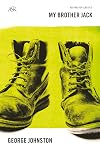
Put this one on your must read Classics list.
This book is really a memoir of the author (David Meredith) who just happens to admire his older brother Jack as he is the total opposite of himself. It takes place in Melbourne Australia between the 2 wars. It starts with his parents returning from the 1st World War, when the 2 boys are very young. It gives us a fantastic insight into the impact the War had on peoples lives and how they dealt with it, and how Australian society developed from it, show more through the roaring twenties and the Depression and into the 2nd World War. Jack is the quintiseential Aussie like his parents and their cohorts while David is quiet, reserved and out of place in that working-class suburban Melbourne world. Yet it is David that grows up to fill a space in society far greater than most people can imagine for themselves while Jack, the lively one, the adaptable one, the one in tune with his environment, never grows out of that environment.
The greatness of this book is its sheer honesty, and the honesty of the author. It portrays an Australian society that is violent, racist and sexist to levels that are embarrassing to admit today. It shows how characters react to what is happening around them and from these pieces build their lives. In this environment characters can be both kind and caring and at the same time rough and self-centred. Jack seems to blend all these elements into a rather balanced personality, but David admits early in the book, he is not a nice person - by the end of the book you have to agree with him.
My Brother Jack is the first of a trilogy which basically is a memoir of the author's life. The other books are Clean Straw for Nothing, and, A Cartload of Clay. show less
This book is really a memoir of the author (David Meredith) who just happens to admire his older brother Jack as he is the total opposite of himself. It takes place in Melbourne Australia between the 2 wars. It starts with his parents returning from the 1st World War, when the 2 boys are very young. It gives us a fantastic insight into the impact the War had on peoples lives and how they dealt with it, and how Australian society developed from it, show more through the roaring twenties and the Depression and into the 2nd World War. Jack is the quintiseential Aussie like his parents and their cohorts while David is quiet, reserved and out of place in that working-class suburban Melbourne world. Yet it is David that grows up to fill a space in society far greater than most people can imagine for themselves while Jack, the lively one, the adaptable one, the one in tune with his environment, never grows out of that environment.
The greatness of this book is its sheer honesty, and the honesty of the author. It portrays an Australian society that is violent, racist and sexist to levels that are embarrassing to admit today. It shows how characters react to what is happening around them and from these pieces build their lives. In this environment characters can be both kind and caring and at the same time rough and self-centred. Jack seems to blend all these elements into a rather balanced personality, but David admits early in the book, he is not a nice person - by the end of the book you have to agree with him.
My Brother Jack is the first of a trilogy which basically is a memoir of the author's life. The other books are Clean Straw for Nothing, and, A Cartload of Clay. show less
Lists
Awards


You May Also Like


Associated Authors
Statistics
- Works
- 40
- Also by
- 3
- Members
- 1,030
- Popularity
- #25,004
- Rating
- 3.7
- Reviews
- 18
- ISBNs
- 80
- Languages
- 3
- Favorited
- 1
