

Charmian Clift (1923–1969)
Author of Mermaid Singing
About the Author
Works by Charmian Clift
Το τραγούδι της γοργόνας 1 copy
Tagged
Common Knowledge
- Canonical name
- Clift, Charmian
- Legal name
- Clift, Charmian
- Birthdate
- 1923-08-30
- Date of death
- 1969-07-08
- Gender
- female
- Occupations
- journalist
novelist
essayist - Relationships
- Johnston, George Henry (husband)
Johnston, Martin (son)
Cohen, Leonard (friend) - Short biography
- Charmian Clift was born in Kiama, New South Wales, Australia, to Sydney Clift, a fitter and turner from England, and his native-born wife Amy Lila Currie. After leaving school in 1938, she worked at odd jobs around Kiama and then won a magazine beauty contest that enabled her to move to Sydney. There she became an usherette at the Minerva Theatre. During World War II, in 1943 she enlisted in the Australian Women's Army Service and served with a heavy anti-aircraft battery before being commissioned as a lieutenant. While editing an army magazine, she began to write and publish short stories. In 1946, she joined the staff of Argus, a Melbourne daily newpaper, and met war correspondent George Henry Johnston, 12 years her senior and married. Their employers disapproved of their relationship and both were fired. The couple married in 1947 and had three children. They collaborated on the novel High Valley (1949), which won them a £2000 prize from the Sydney Morning Herald and national recognition. In 1951, the family moved to London, where they spent five years before relocating to the Greek islands of Kálimnos and then Ídhra (Hydra). In a decade in Greece, between them, they published 14 books and numerous essays and articles, and became part of a community of expatriate artists and writers that included songwriter Leonard Cohen.
In 1964, they returned to Australia, where Charmian wrote a weekly column for The Sydney Morning Herald. She published two successful memoirs, Mermaid Singing (1956) and Peel Me a Lotus (1959); and a successful novel, Honour's Mimic (1964). In 1969, she committed suicide by taking an overdose of barbiturates. Many of her articles and essays were collected in the books Images in Aspic (1965) and The World of Charmian Clift (1970), which was illustrated by her son Martin. Her other essays were collected in two volumes, Trouble in Lotus Land (1990) and Being Alone With Oneself (1991). All her early books were republished in a uniform edition in 1989-1990). - Cause of death
- suicide
- Nationality
- Australia
- Birthplace
- Kiama, New South Wales, Australia
- Places of residence
- Sydney, New South Wales, Australia
Hydra, Greece
London, England, UK - Place of death
- Mosman, New South Wales, Australia
- Burial location
- Cremated, ashes were later scattered in the rose garden of the Northern Suburbs Crematorium in Sydney
- Associated Place (for map)
- Australia
Members
Reviews

Clift was a fine personal essayist, really superb and though these were written in the sixties they are surprisingly relevant - and sometimes in a way quite ironic to me - as the essay on being 'an Old' was to read now, when I am an Old, although when Clift wrote these essays I was a Young! Leaving Australia in her early twenties she settled in London for a short time, married George Johnston (not sure when) and eventually set up house in the 1950's on the (then) out of the way Peloponnesian show more island of Hydra. For fifteen years they lived there and then because Johnston was ill (not sure if it was lung cancer or TB) they went back to Australia where Clift lived for another 8 or so years before her early death in 1969. She wrote the essay during this time period after 'coming home' and many of the essays are her observations on the 'state' of Australia and Australians at that time (a bit too much on the smug side) and her own reactions to being home, what she loves, what she misses. Many of the essays are inspired pieces of writing: memories of her childhood, of being the first one up in early morning, of their time in Greece, of having the house to herself for a few days after twenty solid years of being surrounded by family, trips 'north' to the farthest reaches of Australia, to the center to Ayer's Rock and the Olgas. Other essays address the need for Australians to be more 'with it', for women to have more self-respect, for the aborogines to be treated properly. Generally those essays are less strong, but some are astonishingly a propos (plus ca change etc. as the motto goes).
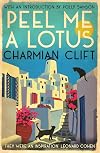
I found myself frequently looking at the picture of Clift on the front cover, a big smiling woman, who I imagine was larger than life in person with a big loud laugh and a mind like a steel trap, and yes a cigarette in one hand and a drink in the other, as was the custom in those days....but...... I do have a major complaint, not about Clift or her essays, but about the editorial choice not to include a biographical essay - and oddly - I think it is the result of the very Australian reticence and desire to be 'proper' that is to blame. Nowhere in the Introduction (or in an Afterword) is it mentioned that Clift committed suicide in July 1969 - before a couple of these essays were published, and it does throw the entire oeuvre into a different and soberer light. Not that she was writing falsely - she was writing those essays for money and she had to come up with topics, and like many creative complex people I expect her moods shifted from one day to the next and that by writing positively she hoped to make things work better..... it changes the glow and gleam of many of the essays to something less bright and more shadowed and nuanced. I learned of the suicide while poking about on the internet - and I also discovered that besides her three children with George Johnston (and a difficult marriage, I think) she had a child when young and put her up for adoption. This child, when she found out who her mother was, proceeded to write what sounds like a good memoir/biography..... and of course, none of any of THAT was mentioned in the foreword either, which I find, well, strange. Her three children also, had a very very difficult time adjusting to life in Australia after running wild in Hydra for most of their childhoods, also not mentioned. Perhaps we expect to know more than we should about writers, but in this case, where Clift is writing about herself and her reactions to the world around her more information about her would have been in order. **** show less
I found myself frequently looking at the picture of Clift on the front cover, a big smiling woman, who I imagine was larger than life in person with a big loud laugh and a mind like a steel trap, and yes a cigarette in one hand and a drink in the other, as was the custom in those days....but...... I do have a major complaint, not about Clift or her essays, but about the editorial choice not to include a biographical essay - and oddly - I think it is the result of the very Australian reticence and desire to be 'proper' that is to blame. Nowhere in the Introduction (or in an Afterword) is it mentioned that Clift committed suicide in July 1969 - before a couple of these essays were published, and it does throw the entire oeuvre into a different and soberer light. Not that she was writing falsely - she was writing those essays for money and she had to come up with topics, and like many creative complex people I expect her moods shifted from one day to the next and that by writing positively she hoped to make things work better..... it changes the glow and gleam of many of the essays to something less bright and more shadowed and nuanced. I learned of the suicide while poking about on the internet - and I also discovered that besides her three children with George Johnston (and a difficult marriage, I think) she had a child when young and put her up for adoption. This child, when she found out who her mother was, proceeded to write what sounds like a good memoir/biography..... and of course, none of any of THAT was mentioned in the foreword either, which I find, well, strange. Her three children also, had a very very difficult time adjusting to life in Australia after running wild in Hydra for most of their childhoods, also not mentioned. Perhaps we expect to know more than we should about writers, but in this case, where Clift is writing about herself and her reactions to the world around her more information about her would have been in order. **** show less

A great read, written as short story articles for The Sydney Morning Herald in the 60s. This style of writing always amazes me! The subject matter is eclectic and remarkably interesting. How did Charmian Clift come up with the idea to write about these trivial yet not-trivial subjects - reflections on a dripping tap, pilgrimage to a possibility and requiem for a spinster to name but a few. Her writing is punchy, humorous and very observant, she has a sharp eye for the small details. Chairman show more has an excellent turn of phrase and if you're looking for a book you can pick up and put down during the holidays, this is it. However, don't make the mistake of thinking it's a light bit of fluff....she had me thinking on many levels. show less
Gorgeous. Intimate. Moving.
This book tells the true-life story of Charmian Clift and George Johnston, a married couple, both of them novelists, with two young children. Having had some modest success with several published novels under their belt, and experiencing a growing distaste for the grim predictability of their middle-class existence in Australia, the couple decide to uproot their family and move to the small and incredibly beautiful Greek island of Hydra in the year 1955.
There they show more complete the purchase of a house, and settle in, - their new lives rapidly becoming unrecognizable as they deal with massive culture shock and acclimatize to the ‘simpler” and more physical world they both have been longing for - ostensibly the ideal backdrop for the life of a writer.
“Living simply, living in the sun, we are at least in touch again with reality; we have bridged that chasm that separates modern life from life’s beginnings and come back to the magic and wonder of such sensible mysteries as fire, water, earth and air. And, more than this, we have no masters but ourselves”.
The writing is gorgeous, evocative, haunting. For anyone who has ever visited, or dreamed of visiting Greece, I can’t imagine a more fitting read. Charmian’s descriptive prose of the Island’s delights is ecstatic and luminous, including some of the most beautiful and poetic passages I have ever read, and I found myself transcribing copious phrases I want to remember.
“Warm, mad, and wonderful the nights, wearing the soft bloom of purple grapes. The water lapping dark, and a huge mad moon extinguishing behind the shark mountain edges like every dream one ever had. “
Welcomed by the island natives but finding herself connecting more viscerally with a sub-community of expats - most of them American or other European artists, novelists, and other creatives - Charmian, our narrator, chronicles her first 3 seasons in Hydra, with a moving depiction of her joys, fears, hopes, identity issues, struggles with motherhood and the ongoing crippling poverty that come to plague her family’s existence on the island.
Charmian’s quickening disdain of the majority of the “artist” set on the island eventually replaces her sense of community. With sharpening insight, the author recognizes that the beauty, the physicality of the island and the accompanying life-style can not provide the “inner transformation” her strangely-cohesive community of misfit friends returns there seasonally seeking.
“We are here, all together, on the same small island, living more or less the same way, and looking - alas!- most definitely A Foreign Group, variations on a theme of escapism.”
There are no spoilers here. There’s a lot of information available online (and of course you need to read this wonderful book) to learn more about the life and work of this incredibly talented woman.
A great big thank you to NetGalley, the publisher, and the author for a review copy of this book. All thoughts presented are my own. show less
This book tells the true-life story of Charmian Clift and George Johnston, a married couple, both of them novelists, with two young children. Having had some modest success with several published novels under their belt, and experiencing a growing distaste for the grim predictability of their middle-class existence in Australia, the couple decide to uproot their family and move to the small and incredibly beautiful Greek island of Hydra in the year 1955.
There they show more complete the purchase of a house, and settle in, - their new lives rapidly becoming unrecognizable as they deal with massive culture shock and acclimatize to the ‘simpler” and more physical world they both have been longing for - ostensibly the ideal backdrop for the life of a writer.
“Living simply, living in the sun, we are at least in touch again with reality; we have bridged that chasm that separates modern life from life’s beginnings and come back to the magic and wonder of such sensible mysteries as fire, water, earth and air. And, more than this, we have no masters but ourselves”.
The writing is gorgeous, evocative, haunting. For anyone who has ever visited, or dreamed of visiting Greece, I can’t imagine a more fitting read. Charmian’s descriptive prose of the Island’s delights is ecstatic and luminous, including some of the most beautiful and poetic passages I have ever read, and I found myself transcribing copious phrases I want to remember.
“Warm, mad, and wonderful the nights, wearing the soft bloom of purple grapes. The water lapping dark, and a huge mad moon extinguishing behind the shark mountain edges like every dream one ever had. “
Welcomed by the island natives but finding herself connecting more viscerally with a sub-community of expats - most of them American or other European artists, novelists, and other creatives - Charmian, our narrator, chronicles her first 3 seasons in Hydra, with a moving depiction of her joys, fears, hopes, identity issues, struggles with motherhood and the ongoing crippling poverty that come to plague her family’s existence on the island.
Charmian’s quickening disdain of the majority of the “artist” set on the island eventually replaces her sense of community. With sharpening insight, the author recognizes that the beauty, the physicality of the island and the accompanying life-style can not provide the “inner transformation” her strangely-cohesive community of misfit friends returns there seasonally seeking.
“We are here, all together, on the same small island, living more or less the same way, and looking - alas!- most definitely A Foreign Group, variations on a theme of escapism.”
There are no spoilers here. There’s a lot of information available online (and of course you need to read this wonderful book) to learn more about the life and work of this incredibly talented woman.
A great big thank you to NetGalley, the publisher, and the author for a review copy of this book. All thoughts presented are my own. show less

In a restaurant in Crete, Australian Morgan Leigh casually mentions that he is in Greece looking for something to write about. “Go to Kalymnos,” says an American stranger. “Everywhere is changing, but most places you can’t see it. Too many things moving at once, too much clutter, everything too gummed up with too many things. But you can see it in Kalymnos. Past, present . . . All there right in front of your eyes. The world changing.”
Thus Australian writers George Johnston and show more Charmian Clift introduce three of their main characters in their novel, The Sea and the Stone—Australian Morgan Leigh, the American Telfs who befriends him, and the Greek island Kalymnos that is in the throes of change caused by the decline in its sponge-diving industry. Morgan Leigh becomes the observer for us. He wraps himself in the unique Kalymnian culture, learning about it but never really stepping inside it. He always is what he is—a witness to a culture’s passage into another era, a study of an economy in transition.
I found The Sea and the Stone to be a bit slow to engage my interest and often frustrating with its history and geography lessons holding up the progress of the story. I’ve read other work by each of these authors individually, and think I recognize their individual contributions to this joint effort. Johnston is a stunning writer; he is among a choice few with a decidedly unique gift for description. Clift, too, is superb in her own way. I am not so dazzled by her descriptions, which never smother the story, but only paint a backdrop.
The story here is strong enough that wading through the descriptions (which I attribute to Johnston) can feel more like a hindrance than the writer’s delight that they are. It is tempting to attribute Clift with only the story, but that would definitely be selling her short. I’ve read her memoir of Kalymnos, Mermaid Singing, and she can seamlessly bring life to landscapes and lifescapes like no one else. Perhaps that is what distinguishes the two: the one gets lost in the landscape; the other balances them seamlessly.
Clift and Johnston have brought us a tale of society in transition, the power of culture in the lives of people who have lived the same way for hundreds or thousands of years, the natural human resistance to the inevitability of change, the noblesse oblige of a wealthy business aristocracy, the importance of meaningful work, and of relationships that are simply a product of time and place. There’s more—a rich assortment of the eternal truths of human experience. And the promise of the experience of change contained in Telf’s advice to Morgan, “Go to Kalymnos,” is fulfilled, even though one of the themes may be said to be “the more things change, the more they stay the same.”
In the end, I’m glad I read it, slow-moving, rabbit-trail descriptions and all. I’m surprised that I can find so many little scabs to pick, when I have been left with a deeply satisfied feeling. show less
Thus Australian writers George Johnston and show more Charmian Clift introduce three of their main characters in their novel, The Sea and the Stone—Australian Morgan Leigh, the American Telfs who befriends him, and the Greek island Kalymnos that is in the throes of change caused by the decline in its sponge-diving industry. Morgan Leigh becomes the observer for us. He wraps himself in the unique Kalymnian culture, learning about it but never really stepping inside it. He always is what he is—a witness to a culture’s passage into another era, a study of an economy in transition.
I found The Sea and the Stone to be a bit slow to engage my interest and often frustrating with its history and geography lessons holding up the progress of the story. I’ve read other work by each of these authors individually, and think I recognize their individual contributions to this joint effort. Johnston is a stunning writer; he is among a choice few with a decidedly unique gift for description. Clift, too, is superb in her own way. I am not so dazzled by her descriptions, which never smother the story, but only paint a backdrop.
The story here is strong enough that wading through the descriptions (which I attribute to Johnston) can feel more like a hindrance than the writer’s delight that they are. It is tempting to attribute Clift with only the story, but that would definitely be selling her short. I’ve read her memoir of Kalymnos, Mermaid Singing, and she can seamlessly bring life to landscapes and lifescapes like no one else. Perhaps that is what distinguishes the two: the one gets lost in the landscape; the other balances them seamlessly.
Clift and Johnston have brought us a tale of society in transition, the power of culture in the lives of people who have lived the same way for hundreds or thousands of years, the natural human resistance to the inevitability of change, the noblesse oblige of a wealthy business aristocracy, the importance of meaningful work, and of relationships that are simply a product of time and place. There’s more—a rich assortment of the eternal truths of human experience. And the promise of the experience of change contained in Telf’s advice to Morgan, “Go to Kalymnos,” is fulfilled, even though one of the themes may be said to be “the more things change, the more they stay the same.”
In the end, I’m glad I read it, slow-moving, rabbit-trail descriptions and all. I’m surprised that I can find so many little scabs to pick, when I have been left with a deeply satisfied feeling. show less
Awards

You May Also Like


Associated Authors
Statistics
- Works
- 19
- Members
- 439
- Popularity
- #55,771
- Rating
- 3.7
- Reviews
- 15
- ISBNs
- 61
- Languages
- 4
- Favorited
- 1