

Drusilla Modjeska
Author of The Orchard
About the Author
Drusilla Modjeska is an Australian writer whose previous books include Poppy & The Orchard. (Publisher Provided) Drusilla Modjeska is an Australian author who wrote Second Half First, which made the Victorian Premier¿s Literary Awards 2016 shortlist in the Nonfiction category. (Bowker Author show more Biography) show less
Works by Drusilla Modjeska
Visitants: Text Classics 1 copy
Associated Works
Tagged
Common Knowledge
- Canonical name
- Modjeska, Drusilla
- Birthdate
- 1946-10-17
- Gender
- female
- Education
- University of New South Wales (PhD)
Australian National University - Occupations
- writer
editor - Nationality
- Australia
- Birthplace
- London, England, UK
- Places of residence
- Papua New Guinea
Sydney, New South Wales, Australia - Associated Place (for map)
- London, England, UK
Members
Reviews
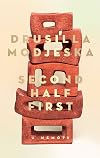
It was only to be expected that the author of the ground-breaking Poppy would confound expectations of the form of her own memoir. The memoir of her mother was experimental in form, filling gaps in the historical record with questions and imaginative reconstructions that treated her mother’s life with respect. In Second Half First, Modjeska subverts chronology and focusses as much on place and on literature as she does on people. It’s very interesting to read.
Beginning the memoir at a show more pivotal moment in her life – turning 40, breaking up with a long-term partner just as she was entertaining tentative thoughts about a child with him, Modjeska explores without self-pity the twists and turns of her life. She is one of that generation of women who were role models for women like me: a little older; and a good deal more high profile in terms of career; and forging through the stuffy conservatism of post war Australia to make it a more exciting place. Modjeska didn’t need a #ReadWomen hashtag to get reviewed in the major dailies: her books were part of mainstream conversations from the moment they were in print. But in middle age, she had to confront the tangle of her personal life. Her mother had died and she had hoped that a child could assuage her grief. It was not to be, and feminism had not prepared her for the emotional cost of some of the choices she had made.
Scraping back the layers of her life with disarming honesty, she tells us how The House on the Corner was more than just a place to live. It was interesting to see the disdain with which Modjeska describes suburban living and the concept of the family home, because her concept of communal living as a supportive home base is so different to mine. Simultaneously reading Anne Summers’ Damned Whores and God’s Police I understand why some feminists think that we need to reinvent family life in the suburbs, but I have found a great sense of community in my patch of the suburbs. As an incorrigible introvert, I would find the idea of communal living to be a sustained form of torture.
But it seems to have suited Modjeska.
To read the rest of my review please visit https://anzlitlovers.com/2017/01/24/second-half-first-by-drusilla-modjeswka/ show less
Beginning the memoir at a show more pivotal moment in her life – turning 40, breaking up with a long-term partner just as she was entertaining tentative thoughts about a child with him, Modjeska explores without self-pity the twists and turns of her life. She is one of that generation of women who were role models for women like me: a little older; and a good deal more high profile in terms of career; and forging through the stuffy conservatism of post war Australia to make it a more exciting place. Modjeska didn’t need a #ReadWomen hashtag to get reviewed in the major dailies: her books were part of mainstream conversations from the moment they were in print. But in middle age, she had to confront the tangle of her personal life. Her mother had died and she had hoped that a child could assuage her grief. It was not to be, and feminism had not prepared her for the emotional cost of some of the choices she had made.
Scraping back the layers of her life with disarming honesty, she tells us how The House on the Corner was more than just a place to live. It was interesting to see the disdain with which Modjeska describes suburban living and the concept of the family home, because her concept of communal living as a supportive home base is so different to mine. Simultaneously reading Anne Summers’ Damned Whores and God’s Police I understand why some feminists think that we need to reinvent family life in the suburbs, but I have found a great sense of community in my patch of the suburbs. As an incorrigible introvert, I would find the idea of communal living to be a sustained form of torture.
But it seems to have suited Modjeska.
To read the rest of my review please visit https://anzlitlovers.com/2017/01/24/second-half-first-by-drusilla-modjeswka/ show less

Exiles at Home was one of those books that was prominent in the 1980s, but although I read iconic feminist texts like The Female Eunuch, The Feminine Mystique, and The Second Sex, and almost all the novels I read in the 1980s were by women, I never got round to reading this survey of Australian women writers in the interwar period. What prompted me to buy a Kindle edition now, (for the princely sum of $AUD3.99!) was my reading of Eleanor Dark's 1934 Prelude to Christopher. I wanted to know show more more about its place in the history of modernist literature in Australia.
Alas, while Exiles at Home is interesting enough, it didn't help much with that. Modjeska, IMO, misrepresented Dark's novel as dealing with ‘women’s experience’, because it focussed on maternity and the psychology of motherhood (Loc 4458). Though I'm prepared to concede that perhaps today's greater awareness of mental health has influenced my opinion, I don't think that was the novel's major focus at all. As you can see in my review, I thought that Dark was primarily interested in how the mental health of her central character was always under question (because she was a woman who had been gaslighted) yet the collective madness of WW1 and the hysteria that surrounded it, was never questioned.
Exiles at Home is, as Judy Turner wrote in the first paragraph of her (paywalled) 1982 review for the ABR, primarily a political history of women's writing in the 1920s and 1930s. It barely mentions the literary qualities of these women's writing, because Modjeska was interested in feminist politics rather than literary developments. It ascribes the biggest influence on these writers to the conservative, nationalist Australian critic Nettie Palmer.
Perhaps like Judy Turner whose words imply discontent, I wanted this book to be more than it was. I wanted literary criticism of women writers which certainly at the time was in short supply if the reference books I have are anything to go by. But what Modjeska delivers instead is an assertion of the significance of women writers in the interwar years. Which makes it all the more obvious that the token literary criticism there that there was, had failed to grasp a significant literary movement. She interrogates women's fiction to see if they were writing about political issues that affect women rather than just the 'domestic' issues that marginalised women's fiction for so long. Part of that was redefining what 'domestic' issues are...
[Would anyone today suggest that Eleanor Dark's exposure of the way women experienced mental health services in Prelude to Christopher, was a 'domestic issue'?]
To read the rest of my review please visit https://anzlitlovers.com/2024/02/01/exiles-at-home-australian-women-writers-1925... show less
Alas, while Exiles at Home is interesting enough, it didn't help much with that. Modjeska, IMO, misrepresented Dark's novel as dealing with ‘women’s experience’, because it focussed on maternity and the psychology of motherhood (Loc 4458). Though I'm prepared to concede that perhaps today's greater awareness of mental health has influenced my opinion, I don't think that was the novel's major focus at all. As you can see in my review, I thought that Dark was primarily interested in how the mental health of her central character was always under question (because she was a woman who had been gaslighted) yet the collective madness of WW1 and the hysteria that surrounded it, was never questioned.
Exiles at Home is, as Judy Turner wrote in the first paragraph of her (paywalled) 1982 review for the ABR, primarily a political history of women's writing in the 1920s and 1930s. It barely mentions the literary qualities of these women's writing, because Modjeska was interested in feminist politics rather than literary developments. It ascribes the biggest influence on these writers to the conservative, nationalist Australian critic Nettie Palmer.
Exiles at Home is a fascinating work by a feminist of the 1970s about a group of anti-fascist feminists of the 1920s and 1930s. From it we learn as much about the world view of the author as we do about the politics of its subjects. A serious book, about serious writers, it examines novels for their historical rather than for their literary interest. It offers no real criticism of writing styles, and no comparison with modern feminist authors. Nor is it a book to be read in the hope of rediscovering almost forgotten characters from our literary past.
Perhaps like Judy Turner whose words imply discontent, I wanted this book to be more than it was. I wanted literary criticism of women writers which certainly at the time was in short supply if the reference books I have are anything to go by. But what Modjeska delivers instead is an assertion of the significance of women writers in the interwar years. Which makes it all the more obvious that the token literary criticism there that there was, had failed to grasp a significant literary movement. She interrogates women's fiction to see if they were writing about political issues that affect women rather than just the 'domestic' issues that marginalised women's fiction for so long. Part of that was redefining what 'domestic' issues are...
[Would anyone today suggest that Eleanor Dark's exposure of the way women experienced mental health services in Prelude to Christopher, was a 'domestic issue'?]
To read the rest of my review please visit https://anzlitlovers.com/2024/02/01/exiles-at-home-australian-women-writers-1925... show less

My favourite book which I turn to regularly, and each time come away with a new perspective. There is something about the insights of the narrator, Ettie and Clara that feel profound, universal and accessible. Multiple loose ends (who did move into Ettie/Clara's Kings Cross flat, what about the man who broke the narrator's heart, did Ettie and Clara talk about their truth? I started reading this book in my 30's, and now in my 60's am still struck by how current it feels.
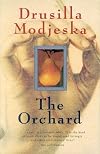
This is a beautifully written, wise and complex book. I read it with my Book Club last year, and then went out and bought my own copy - it will be one of the few books that I shall read a second time. Truly unique, she interweaves fact with fiction, essays with storytelling, biography with intellectual and feminist theory. Covering areas such as identity, adultery, solitude, education and autonomy, it is not an easy read; but definitely worth the effort.
Lists
Awards


You May Also Like


Associated Authors
Statistics
- Works
- 18
- Also by
- 4
- Members
- 836
- Popularity
- #30,568
- Rating
- 3.8
- Reviews
- 19
- ISBNs
- 42
- Languages
- 1
- Favorited
- 2