
About the Author
Thomas McNamee is the recipient of a 2016 John Simon Guggenheim Memorial Foundation fellowship for this book and is the author of The Grizzly Bear, and The Return of the Wolf to Yellowstone, among many other books. He lives in San Francisco.
Image credit: Thomas McNamee
Works by Thomas McNamee
Alice Waters and Chez Panisse: The Romantic, Impractical, Often Eccentric, Ultimately Brilliant Making of a Food Revolution (2007) 479 copies, 12 reviews
The Inner Life of Cats: The Science and Secrets of Our Mysterious Feline Companions (2017) 117 copies, 6 reviews
The Man Who Changed the Way We Eat: Craig Claiborne and the American Food Renaissance (2012) 85 copies, 4 reviews
Wolves of the World 1 copy
Associated Works
Tagged
Common Knowledge
- Birthdate
- 1947
- Gender
- male
- Education
- Yale University
- Occupations
- author
essayist - Nationality
- USA
- Places of residence
- San Francisco, California, USA
- Associated Place (for map)
- California, USA
Members
Reviews
The Inner Life of Cats: The Science and Secrets of Our Mysterious Feline Companions by Thomas McNamee
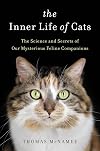
Some people think that the story of his cat Augusta detracts from the factual aspects of the book, but I think it's what keeps the book from getting too dry. And believe you me, there is nothing dry about the last chapter or two. It is kind of like Marley and Me in that way, but even more so for me because I'm a cat person. It also doesn't help that my beloved Sweetpea, 16 years old, has been diagnosed with cancer.
Whereas I read the end of Marley and Me on a plane, crying like a baby while show more some stranger had to sit next to me, I read the end of this book at home and had access to a lot of tissues and a cat to cuddle. I recommend the latter! show less
Whereas I read the end of Marley and Me on a plane, crying like a baby while show more some stranger had to sit next to me, I read the end of this book at home and had access to a lot of tissues and a cat to cuddle. I recommend the latter! show less
The inner life of cats : the science and secrets of our mysterious feline companions by Thomas McNamee
I'm going almost the full five stars on this because it's the best cat book I've read to date. I've not read a ton, to be honest, but McNamee manages to capture both the science and the essence of the relationship between a cat and its owner. He is undoubtedly a man coming at the subject with heartfelt appreciation and love for our feline overlords and his advice is rational, sound and passionate.
I learned a lot from this book. I never knew that the sticking out of the tongue was a sign of show more friendship and acceptance; I always thought Easter-cat just left her tongue sticking out sometimes. The front leg stretch isn't really a stretch, so much as it's a gesture of acceptance and friendship. McNamee has me a little stressed out about Easter-cat's insistence on only eating dry food. Small things like that, as well as much bigger issues like separation anxiety have given me much to think about.
McNamee also talks about a lot of very sticky issues, especially regarding breeding, the cat's need to hunt, and the feral population problem that plagues communities around the world. His overview of how Italy - specifically Rome - is tackling the issue is an inspiration, if not a complete solution. I think he does a phenomenal job bringing home the basic idea that cats (and any pet for that matter) are not merely personal possessions or accessories; they are living creatures with as much right to quality of life and dignity as we might and arrogant humans so.
This book is a weaving of science and personal anecdotes about the author's cat, Augusta. Those personal parts are brilliant, and sometimes nail-biting. Full disclosure: I flat-out skipped chapter 7 on sickness and death. I'm a sissy, and the first 6 chapters convinced me that McNamee was going to write chapter 7 with at least as much passion and heartfelt sincerity and there aren't enough tissues in the world to get me through that chapter.
I knocked off half a star because some figures at the start seemed to fantastical to be true, and though there is a notes section at the back, those figures weren't cited, leaving me and others feeling distrustful of the data. Otherwise, I thought this was a brilliantly written, fantastic resource for anybody who wants to be a better cat slave. show less
I learned a lot from this book. I never knew that the sticking out of the tongue was a sign of show more friendship and acceptance; I always thought Easter-cat just left her tongue sticking out sometimes. The front leg stretch isn't really a stretch, so much as it's a gesture of acceptance and friendship. McNamee has me a little stressed out about Easter-cat's insistence on only eating dry food. Small things like that, as well as much bigger issues like separation anxiety have given me much to think about.
McNamee also talks about a lot of very sticky issues, especially regarding breeding, the cat's need to hunt, and the feral population problem that plagues communities around the world. His overview of how Italy - specifically Rome - is tackling the issue is an inspiration, if not a complete solution. I think he does a phenomenal job bringing home the basic idea that cats (and any pet for that matter) are not merely personal possessions or accessories; they are living creatures with as much right to quality of life and dignity as we might and arrogant humans so.
This book is a weaving of science and personal anecdotes about the author's cat, Augusta. Those personal parts are brilliant, and sometimes nail-biting. Full disclosure: I flat-out skipped chapter 7 on sickness and death. I'm a sissy, and the first 6 chapters convinced me that McNamee was going to write chapter 7 with at least as much passion and heartfelt sincerity and there aren't enough tissues in the world to get me through that chapter.
I knocked off half a star because some figures at the start seemed to fantastical to be true, and though there is a notes section at the back, those figures weren't cited, leaving me and others feeling distrustful of the data. Otherwise, I thought this was a brilliantly written, fantastic resource for anybody who wants to be a better cat slave. show less
The Man Who Changed the Way We Eat: Craig Claiborne and the American Food Renaissance by Thomas McNamee
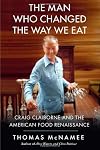
This was a fascinating book. My friends consider me a "foodie", though I don't agree. I love to eat at nice restaurants, try new dishes, and experiment with my cooking club. None of those things however make me a true "foodie". I am just not that knowledgeable. Craig Claiborne was a "foodie", perhaps the first in our country, and he brought a desire for that knowledge to a large percentage of people just like me. I never read one of Claiborne's columns but had I, I would have been one of his show more devoted followers. Learning about the life and career of such a man was a wonderful discovery for me.
McNamee makes Claiborne come alive. As I was reading the book I found myself making the journey with Claiborne and wishing that I was more than just a voyeur. I wanted to be a part of the lavish dinner parties, on the trips to Europe to explore the newest restaurants, and to have written some of the amazing cookbooks which carry the Claiborn byline.
However, as is true with anyone, Claiborne was not just his public persona. He had an unseen, and for that time period, scandalous personal life. He lived with the same demons a lot of us do and had the same character flaws too. This does not distract from the persona of Claiborne but serves to make him someone that more of us can relate to.
If you are interested in food at all I think that this biography is definitely worth the time to read. I not only learned a lot about the food revolution in America but I was left with a respect for what it took to make it come about, not to mention a compelling need to go out and buy The New York Times Cookbook. show less
McNamee makes Claiborne come alive. As I was reading the book I found myself making the journey with Claiborne and wishing that I was more than just a voyeur. I wanted to be a part of the lavish dinner parties, on the trips to Europe to explore the newest restaurants, and to have written some of the amazing cookbooks which carry the Claiborn byline.
However, as is true with anyone, Claiborne was not just his public persona. He had an unseen, and for that time period, scandalous personal life. He lived with the same demons a lot of us do and had the same character flaws too. This does not distract from the persona of Claiborne but serves to make him someone that more of us can relate to.
If you are interested in food at all I think that this biography is definitely worth the time to read. I not only learned a lot about the food revolution in America but I was left with a respect for what it took to make it come about, not to mention a compelling need to go out and buy The New York Times Cookbook. show less
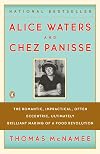
This is a very inconsistent book about a really interesting character. The first half of the biography, about how Waters got interested in food and the influences that led her to be a leader of the California/New American cuisine movement, was fascinating. The combination of hippie hedonism and classic French precision was a delight to read. Waters is quite a character. Then the book got bogged down into a recitation of the various chefs at the restaurant and the managers who helped deal show more with its financial problems. The book ends on an up-note, describing in great detail several dinners and how the Chez Panisse philosophy gets translated into food on the table. show less
Awards

You May Also Like


Associated Authors
Statistics
- Works
- 11
- Also by
- 2
- Members
- 867
- Popularity
- #29,520
- Rating
- 3.9
- Reviews
- 23
- ISBNs
- 40