
Karl Marx (1818–1883)
Author of The Communist Manifesto
About the Author
Karl Heinrich Marx, one of the fathers of communism, was born on May 5, 1818 in Trier, Germany. He was educated at a variety of German colleges, including the University of Jena. He was an editor of socialist periodicals and a key figure in the Working Man's Association. Marx co-wrote his show more best-known work, "The Communist Manifesto" (1848), with his friend, Friedrich Engels. Marx's most important work, however, may be "Das Kapital" (1867), an analysis of the economics of capitalism. He died on March 14, 1883 in London, England. (Bowker Author Biography) show less
Disambiguation Notice:
(ger)
- Karl Marx (1): Philosoph, 1818-1883.
- Karl Marx (2): Komponist, 1897-1985.
(ita)
- Karl Marx (1): Philosoph, 1818-1883.
(dut) 1. Karl Marx (1818-1883): filosoof
2. Karl Marx (1897-1985): componist#1 Karl Marx, 1818-1883 - Capital
#2 Marx, Karl 1897-1985, composer - Neue Lieder
#3 Marx, Karl 1897-1966, Journalist
Image credit: Wikipedia
Series
Works by Karl Marx
The Economic and Philosophic Manuscripts of 1844 and the Communist Manifesto (Great Books in Philosophy) (1988) 465 copies, 3 reviews
The First International and After: Political Writings, Vol. 3 (Penguin Classics) (1974) 177 copies, 2 reviews
The Communist Manifesto: A Road Map to History's Most Important Political Document (2005) 173 copies, 1 review
Communist Manifesto ; Wages, Price and Profit ; Capital [Selections] ; Socialism, Utopian and Scientific (2004) — Author — 132 copies, 1 review
Karl Marx on Society and Social Change: With Selections by Friedrich Engels (Heritage of Sociology Series) (1973) 62 copies
El Capital: Critica de la Economia Poliitca (Biblioteca del Pensamiento Socialista) (Spanish Edition) (1984) 59 copies
Collected Works of Karl Marx and Friedrich Engels, 1845-47, Vol. 5: Theses on Feuerbach, The German Ideology and Related Manuscripts (1976) 57 copies
Marx: Early Political Writings (Cambridge Texts in the History of Political Thought) (1994) 57 copies
The Communist Manifesto; The Condition of the Working Class in England in 1844; Socialism: Utopian and Scientific (2008) 54 copies
The Difference Between the Democritean and Epicurean Philosophy of Nature (1841) 45 copies, 1 review
Collected Works of Karl Marx and Friedrich Engels, 1844-45, Vol. 4: The Holy Family, The Condition of the Working Class in England, etc. (1975) 40 copies
Collected Works of Karl Marx and Friedrich Engels, 1845-48, Vol. 6: The Poverty of Philosophy, the Communist Manifesto, the Polish Question (1976) 34 copies
Collected Works of Karl Marx and Friedrich Engels, 1849-51, Vol. 10: The Class Struggles in France, the Peasant War in Germany, Etc. (1978) 31 copies
Textos de filosofía, política y economía ; Manuscritos de París ; Crítica del programa de Gotha (2014) 30 copies, 1 review
Collected Works of Karl Marx and Friedrich Engels, 1849, Vol. 9: The Journalism and Speeches of the Revolutionary Years in Germany (1978) 29 copies
Collected Works of Karl Marx and Friedrich Engels, 1851-53, Vol. 11: Revolution and Counter-Revolution in Germany, the 18th Brumaire, Etc. (1979) 27 copies
Collected Works of Karl Marx and Friedrich Engels, 1848-49, Vol. 8: The Journalism and Speeches of the Revolutionary Years in Germany (1977) 25 copies
The Cambridge Companion to The Communist Manifesto (Cambridge Companions to Philosophy) (2015) — Author — 23 copies
Collected Works of Karl Marx and Friedrich Engels, 1848, Vol. 7: Demands of the Communist Party in Germany, Articles, Speeches (1977) 23 copies
Karl Marx, Frederick Engels: Marx and Engels Collected Works 1858-60: 16 (KARL MARX, FREDERICK ENGELS: COLLECTED WORKS) (1980) 22 copies
Karl Marx - Friedrich Engels. Studienausgabe in 5 Bänden: Geschichte und Politik 1: Studienausgabe in 5 Bänden, Band III: BD 3 (1966) 22 copies
Karl Marx, Frederick Engels: Marx and Engels Collected Works 1870-71 (Karl Marx, Frederick Engels: Collected Works) (1987) 21 copies
Os Despossuídos. Debates Sobre a Lei Referente ao Furto de Madeira (Em Portuguese do Brasil) (2017) — Author — 21 copies
Karl Marx, Frederick Engels: Marx and Engels Collected Works 1857-62 (Karl Marx, Frederick Engels: Collected Works) (1982) 21 copies
Karl Marx, Frederick Engels: Marx and Engels Collected Works 1859-60 (Karl Marx, Frederick Engels: Collected Works) (1981) 20 copies
Karl Marx, Frederick Engels: Marx and Engels Collected Works 1861-64 (Karl Marx, Frederick Engels: Collected Works) (1982) 19 copies
Karl Marx, Frederick Engels: Marx and Engels Collected Works 1867-70 (Karl Marx, Frederick Engels: Collected Works) (1985) 18 copies
Karl Marx, Frederick Engels: Marx and Engels Collected Works 1856-58 (Karl Marx, Frederick Engels: Collected Works) (1986) 17 copies
Collected Works of Karl Marx and Friedrich Engels, Vol. 31: Theories of Surplus Value (1989) 16 copies
Grundrisse. 1857-1858. Vol. 2 (Biblioteca del pensamiento socialista) (Spanish Edition) (1996) 15 copies
Manifesto Comunista e Teses de Abril. Com Textos Introdutórios de Tariq Ali (Em Portuguese do Brasil) (2017) 15 copies
Collected Works: Karl Marx : Capital, Vol. 36 (Karl Marx, Frederick Engels: Collected Works) (1997) 15 copies
Karl Marx, Frederick Engels: Marx and Engels Collected Works 1871-1874 (KARL MARX, FREDERICK ENGELS: COLLECTED WORKS) (1987) 15 copies
Collected Works of Karl Marx and Friedrich Engels, Vol. 32: Concludes Theories of Surplus Value (1990) 15 copies
Obras escogidas 14 copies
Capital / Libro segundo. El proceso de circulacion del capital / 5 (Spanish Edition) (1976) 14 copies
Manuskripte und Drucke zur Deutschen Ideologie (Karl Marx; Friedrich Engels: Gesamtausgabe (MEGA). Werke, Artikel, Entwürfe) (1998) 14 copies
Karl Marx, Frederick Engels: Marx and Engels Collected Works 1882-89 (KARL MARX, FREDERICK ENGELS: COLLECTED WORKS) (1987) 13 copies
El Capital. Tomo III/Vol. 7: Crítica de la economía política (Biblioteca del pensamiento socialista) (Spanish Edition) (1977) 13 copies
Elementos fundamentales para la critica de la economia politica (Grundrisse) 1857-1858 / 3 (Spanish Edition) (1901) 12 copies
Collected Works of Karl Marx and Friedrich Engels, Vol. 33: Continues the Economic Manuscripts of 1861-63 (1987) 12 copies
Manuscrits de 1844 ; Manifeste du parti communiste ; Le Capital (Livre I, sections 1 et 2) (2011) 11 copies
Werke Bd 26: Werke, 43 Bde., Bd.26/2, Theorien über den Mehrwert: Theorien über den Mehrwert. Teil 2: Tl 2 (2000) 11 copies
CAPITAL: A Critique of Political Economy - Vol. III-Part II: The Process of Capitalist Production as a Whole (2008) 10 copies
El capital: Crítica de la economía política. Antología (El libro de bolsillo - Ciencias sociales) (Spanish Edition) (2010) 10 copies
Werke Bd 26: Werke, 43 Bde., Bd.26/3, Theorien über den Mehrwert: Theorien über den Mehrwert. Teil 3: Tl 3 (1993) 10 copies
Marx & Engels: The Communist Manifesto & Tocqueville: Democracy in America (Great Books Foundation, Set 1, Volume 5) (1966) 10 copies
Las luchas de clases en Francia de 1848 a 1850 : El dieciocho brumario de Luis Bonaparte (1995) 10 copies
Manifestet 1848-1998 : [kommunistiska manifestet med kommentarer och analyser av 14 forskare och samhällsdebattörer] (1998) 9 copies
Capital / Libro segundo. El proceso de circulacion del capital / 4 (Spanish Edition) (1984) 9 copies
Capital / Libro tercero. El proceso global de la produccion capitalista / 8 (Spanish Edition) (2001) 9 copies
Opere scelte 9 copies
O Capital. Crítica da Economia Política. O Processo Global da Produção Capitalista - Livro III (2017) 8 copies
Manuscritos de econimía y filosofía / Economic and Philosophical Manuscripts (Spanish Edition) (2013) 8 copies
CAPITAL: A Critique of Political Economy - Vol. III-Part I: The Process of Capitalist Production as a Whole (2008) 8 copies
Marx and Engels on the Means of Communication: A Selection of Texts. Ed by Y. De LA Haye (English and French Edition) (1980) 8 copies
Scritti politici giovanili 8 copies
Marxismo e anarchismo 8 copies
The Eastern question : a reprint of letters written 1853-1856 dealing with the events of the Crimean War (1969) 8 copies
Il capitale. Critica dell'economia politica. Vol. I: Il processo di produzione del capitale. Tomo I 7 copies
Marx och Engels till vardags 7 copies
Il capitale: libro 1., capitolo 6. inedito: risultati del processo di produzione immediato (1997) 7 copies
The Russian menace to Europe: A collection of articles, speeches, letters, and news dispatches (1952) 7 copies, 1 review
Over godsdienst, staat en het Joodse vraagstuk : artikelen uit de "Deutsch-französische Jahrbücher" van 1844 (1844) 7 copies
Karl Marx, Frederick Engles: Collected Works (Karl Marx, Frederick Engels: Collected Works) (2001) 7 copies
KARL MARX The First International&After (Including Documents of the First International and other Writings: 1864-1883, Volume 3) (1974) — Author — 6 copies
Fransız Üçlemesi (Ciltli): Fransa'da Sınıf Mücadeleleri 1848-1850, Louis Bonaparte'ın 18 Brumaire'i, Fransa'da İç Savaş (2016) 6 copies
O capital - Crítica de Economia Política (Livro 3: O processo global de produção capitalista - Vol 4) (2008) 6 copies
Textes sur le colonialisme 6 copies
Capital / Libro tercero. El proceso global de la produccion capitalista / 6 (Spanish Edition) (2010) 6 copies
El capital. Tomo III/Vol. 6: Crítica de la economía política (Biblioteca del pensamiento socialista) (Spanish Edition) (2007) 6 copies
The Marx Reader: Manifesto of the Communist Party; Wage-Labour and Capital; Value, Price, and Profit (1996) 6 copies
The Communist Manifesto, Principles of Communism, The Communist Manifesto After 100 Years (1964) 5 copies
La Lucha de guerrillas segun los clasicos del Marxismo-Leninismo (Biblioteca Jucar de politica) (Spanish Edition) (1980) 5 copies
Lo stato moderno 5 copies
La Ideologia Alemana (I) Y Otros Escritos Filosoficos/ the German Ideology and Other Philosophical Works (Filosofia) (Spanish Edition) (2006) 5 copies
O Capital - Vol. I - Tomo 1 5 copies
El capital : crica de la econom polica. Libro III-Tomo II, El proceso global de la producci capitalista (2000) 5 copies
Textos filosóficos 5 copies
Om förkapitalistiska produktionssätt 5 copies
Elementos fundamentales para la crítica de la economía política. Vol. 1. (Borrador) 1857-1858 (1901) 5 copies
El capital : crica de la econom polica. Libro III-Tomo III, Transformaci de la ganancia extraordinaria en renta del suelo (2000) 4 copies
Storia delle teorie economiche 4 copies
Il capitale Lib 2 - Pt 1 4 copies
Il capitale Lib 2 - Pt 2 4 copies
Deutsch-französische Jahrbücher, herausgegeben von Arnold Ruge und Karl Marx 1844 (1981) — Author — 4 copies
Carteggio Marx-Engels V 4 copies
Reactionary Prussianism 4 copies
Los debates de la dieta renana/ Discussions of Renana diet (Dimension Clasica) (Spanish Edition) (2007) 4 copies
El capital. Prologo con resena critica de la obra, vida y obra del autor, y marco historico. Obra resumida. (Spanish Edition) (2013) 4 copies
El capital : crica de la econom polica. Libro III-Tomo I, El proceso global de la producci capitalista (2000) 4 copies
Il capitale Lib 3 - Pt 1 4 copies
Capital: Vol 1 4 copies
O CAPITAL - Karl Marx: Mercadoria, Valor e Mais valia (Coleção Economia Politica) (Portuguese Edition) (2017) 4 copies
Die Geschichte der Geheimdiplomatie des 18. Jahrhunderts. Über den asiatischen Ursprung der russischen Despotie (1977) 4 copies
Karl Marx - Friedrich Engels. Studienausgabe in 5 Bänden: Studienausgabe V. Prognose und Utopie. Studienausgabe 05: BD 5 (2004) 4 copies
Opere complete III: 1843 - 1844 3 copies
Kommúnistaávarpið 3 copies
On Scientific Socialism 3 copies
Loon, prijs en winst 3 copies
Obras escogidas en dos tomos 3 copies
O capital - Crítica de Economia Política (Livro 2: O processo de circulação do Capital - Vol 3) (2019) 3 copies
Klassieke teksten 3 copies
CRITIQUE OF THE GOTHA PROGRAMME.With appendices by Marx,Engels and Lenin.A Revised Translation.* (1938) 3 copies
Scritti italiani: con una appendice sulla fortuna delle opere e sulla prima fama di Marx in Italia (1955) 3 copies
Tegen het reformisme 3 copies
Theses on Feuerbach 3 copies
Estranged Labor 3 copies
VALITUT TEOKSET : 6 OSAA 5 3 copies
Türkiye üzerine (Şark Meselesi) 3 copies
VALITUT TEOKSET : 6 OSAA 6 3 copies
Carteggio Marx-Engels 3 copies
L'Opium du peuple: Introduction de la Contribution à la critique de la philosophie du droit de Hegel (2013) 3 copies
Kapitalen kritikk av den politiske økonomien Første bok B. 2 Kapitalens produksjonsprosess Del 3 ; Del 4 (1995) 3 copies
Merce e denaro 3 copies
Najamni rad i kapital 3 copies
Para Critica da Economia Política. Manuscrito de 1861-1863. Caderno I a V. Terceiro Capitulo (Em Portuguese do Brasil) (2010) 3 copies
Werke. Bd. 39. [Briefe] 3 copies
Marx's Political Writings: The Revolutions of 1848, Surveys from Exile, The First International and After (Vol. 1-3) (Marx's Political Writings) (2010) 3 copies
The Communist Manifesto and Other Works by Karl Marx (Unexpurgated Edition) (Halcyon Classics) (2009) 3 copies
Malthus 3 copies
La prospettiva del comunismo 3 copies
Marx 3 copies
A acumulacao primitiva do capital 3 copies
Opere complete XLII: 1864 - 1867 3 copies
Sobre a religiao 3 copies
O capital - Livro 1 - Vol. 1 e 2: O processo de produção do capital (Portuguese Edition) (2016) 3 copies
Las luchas de clases en Francia 2 copies
Karl Marx / Friedrich Engels: Werke, Artikel, Entwurfe, Oktober 1859 Bis Dezember 1860 (German Edition) (1984) 2 copies
O Capital, v.1 2 copies
Sobre la Literatura y el Arte 2 copies
Notes on Adolph Wagner 2 copies
O materializmie historycznym 2 copies
Líneas fundamentales de la crítica de la economía política (Grundrisse), Segunda mitad (1977) 2 copies
História Natureza Trabalho Educação 2 copies
EL CAPITAL TOMO 1 2 copies
Karl Marx / Friedrich Engels: Werke, Artikel, Entwurfe, Marz Bis November 1871 (German Edition) (1978) 2 copies
Karl Marx / Friedrich Engels: Werke, Artikel, Entwürfe, September 1864 bis September 1867 (German Edition) (2004) 2 copies
O Capital, v.2 2 copies
Das Manifest der Kommunistischen Partei / Das Kapital. Gekürzte mit Kommentaren versehene Fassung (1998) 2 copies
The Communist Manifesto in Plain and Simple English (A Modern Translation and the Original Version) (2012) 2 copies
Political Indifferentism 2 copies
Pääoma 2 copies
Théories sur la plus-value 2 copies
Correspondance II 1850-1853 2 copies
World without Jews 2 copies
El capital: crítica de la economía política : libro segundo: el proceso de circulación del capital. Vol. IV (2010) 2 copies
The Karl Marx library 2 copies
Capital: Volume I 2 copies
Über "Das Kapital" : Briefwechsel 2 copies
Opere vol. 2 2 copies
Über die Diktatur des Proletariats 2 copies
Il capitale - Volume 3 2 copies
Manuscrits de 1844 , économie politique et philosophie - Présentation, traduction et notes de Emile Bottigelli (1968) 2 copies
A origem do capital 2 copies
Seçme yazışmalar 2 copies
Opere vol. 16 2 copies
Opere vol. 14 2 copies
Opere vol. 7 2 copies
Opere vol. 6 2 copies
Letters to Dr. Kugelman 2 copies
Das Kommunistische Manifest (Illustriert) - Kapitel Drei: Das Proletariat (German Edition) (2012) 2 copies
Critique of Political Economy: Introduction and A Contribution to the Critique of Political Economy 2 copies
A sociedade comunista 2 copies
Il capitale. Volume sesto 2 copies
Il capitale. Volume quarto 2 copies
Inventer l'inconnu : Textes et correspondance autour de la Commune précédé de Politiques de Marx par Daniel Bensaïd (2008) 2 copies
Communist Manifesto The 2 copies
Os Economistas: Marx, vol. 1 part. 2 2 copies
Temas de Ciências Humanas 2 copies
Karl Marx / Friedrich Engels: Werke, Artikel, Entwurfe Januar Bis Dezember 1854 (German Edition) (1985) 2 copies
Gesamtausgabe (MEGA): Marx, Karl; Engels, Friedrich, Bd.11 : Werke, Artikel, Entwurfe, Juli 1851 bis Dezember 1852, 2 Bde. (1985) 2 copies
Segui il denaro! 2 copies
Scritti sull'educazione 2 copies
Pagine di filosofia politica 2 copies
Das Kapital, Bd. 1.1. Die Zusammenfassung des Ersten Bandes des "Kapitals" verfasst vom Autor. Vorwort von Rolf Hecker. (2009) 2 copies
VALITUT TEOKSET : 6 OSAA 1 2 copies
Løn, pris og profit 2 copies
VALITUT TEOKSET : 6 OSAA 2 2 copies
Il capitale Lib 1 - Pt 3 2 copies
VALITUT TEOKSET : 6 OSAA 3 2 copies
VALITUT TEOKSET : 6 OSAA 4 2 copies
Textos 2 copies
Free trade: An address delivered before the Democratic Association of Brussels, Belgium, January 9, 1948 (2012) 2 copies
La nouvelle gazette rhenane 2 copies
SOSIALISTISESTA VALLANKUMOUKSESTA 2 copies
Proletariato e comunismo 2 copies
Women and communism : selections from the writings of Marx, Engels, Lenin and Stalin (1973) 2 copies
Morceaux choisis 2 copies
Gesamtausgabe (MEGA): Gesamtausgabe Karl Marx: Manuskripte zum zweiten Band des Kapitals (2008) 2 copies
Sull'Irlanda 2 copies
MEGA2 I-1: Apparat Werke, Artikel, Entwürfe Werke, Artikel, literarische Versuche bis März 1843 [...] (1975) 2 copies
Kirjallisuudesta ja taiteesta 2 copies
Kritik des Kapitalismus: Schriften zu Philosophie, Ökonomie, Politik und Soziologie (suhrkamp taschenbuch wissenschaft) (2018) 2 copies
La Russie et l'Europe 2 copies
Études philosophiques : Ludwig Feuerbach, le Matérialisme historique, Lettres philosophiques, etc 1 copy
De America 1 copy
Technika és társadalom 1 copy
Kooli vila labham ed.3 1 copy
O Capital Vol IV 1 copy
The Letters of Karl Marx 1 copy
The Grundrisse, Excerpts 1 copy
Alienated Labor 1 copy
Salaire, prix, plus value 1 copy
Karl Marx, Friedrich Engels: Werke Band 3 (Institut für Marxismus-Leninismus beim ZK der SED) (1969) 1 copy
Poems to Jennie 1 copy
Capital: Volume 2 1 copy
La intervención en México 1 copy
Selección de textos 1 copy
Value: Studies by Marx 1 copy
Obras escogidas Tomo II 1 copy
Kapitał tom I część 2 1 copy
כתבי שחרות 1 copy
The German Ideology ABRIDGED 1 copy
Escritos sobre arte 1 copy
Líneas fundamentales de la crítica de la economía política (Grundrisse) Primera mitad (OME 21) (1978) 1 copy
О социальной справедливости 1 copy
Marxism. Anarchism. Communism: The Communist Manifesto, The Conquest of Bread, The State and Revolution (2020) 1 copy, 1 review
foreign governments 1 copy
Dzieła, tom XX 1 copy
Kapitał tom I część 1 1 copy
Dzieła, tom IV 1 copy
Dzieła, tom V 1 copy
Oeuvres..., Economie I 1 copy
Sobre a literatura e a Arte 1 copy
Udvalgte skrifter (vol 2) 1 copy
Karl Marx / Friedrich Engels Gesamtausgabe (MEGA): Friedrich Engels: Werke, Artikel, Entwürfe bis August 1844: 3 (1985) 1 copy
Karl Marx / Friedrich Engels: Briefwechsel, April 1856 bis Dezember 1857 (German Edition) (1990) 1 copy
Karl Marx / Friedrich Engels: Briefwechsel, Januar 1849 bis Dezember 1850 (German Edition) (1981) 1 copy
Karl Marx / Friedrich Engels: Exzerpte und Notizen, September 1849 bis Februar 1851 (German Edition) (1983) 1 copy
Karl Marx / Friedrich Engels: Briefwechsel, Mai 1846 bis Dezember 1848 (German Edition) (1979) 1 copy
Karl Marx / Friedrich Engels: Briefwechsel, September 1852 bis August 1853 (German Edition) (1987) 1 copy
Karl Marx / Friedrich Engels: Briefwechsel, September 1853 bis März 1856 (German Edition) (1989) 1 copy
Frühschriften 1 copy
La concezione materialistica 1 copy
Riassunto del “Capitale” 1 copy
Correspondance I 1844-1849 1 copy
Correspondance VI 1854-1860 1 copy
Correspondance IV 1854-1860 1 copy
Correspondance V 1854-1860 1 copy
Tieteellisestä kommunismista 1 copy
Udvalgte skrifter (vol 1) 1 copy
Karl Marx; Poesiealbum 32 1 copy
Karl Marx: A Biography 1 copy
O Partido de Classe II 1 copy
O capital (Livro 1 / vol.1) 1 copy
O capital (Livro 1 / vol.2) 1 copy
Teoría marxista del método 1 copy
Werke Band 1-41 1 copy
Marx 1 copy
Karl Marx Eine Auswahl aus seinem Werk - Der Mann der dem Sozialismus eine wissenschaftliche Grudlage gegeben hat (1980) 1 copy
Ücret, Fiyat, Kar 1 copy
Sociedade e mudanças sociais 1 copy
Teorías Sobre la Plusvalía 1 copy
Darshan Ki Nirdhanta 1 copy
Darshan Ki Daridrata 1 copy
Majduri Dam Aur Munafa 1 copy
Ujarati Shram Aur Poonji 1 copy
France Mein Varg Sangharsh 1 copy
YAHUDİ MESELESİ 1 copy
Os pensadores 1 copy
Œuvres Choisies - Tome I 1 copy
Box O Capital Livros 1-3 1 copy
Obras escogidas I 1 copy
Marx and Engels on economics, politics, and society : essential readings with editorial commentary 1 copy
The Critique of Capitalism, Section 2: The Two-Fold Character of the Labour Embodied in Commodities 1 copy
First International: Hague Congress, 1872: Minutes and Documents v. 1 (Anthologies of Marx & Engels) (1987) 1 copy
Hague Congress of the First International: Reports and Letters (Anthologies of Marx & Engels) (1978) 1 copy
Le Opere 1 copy
Il Capitale : Volume 2-3 1 copy
P Y P 1. INTRODUCCIÓN GENERAL A LA CRÍTICA DE LA ECONOMÍA POLÍTICA/1857 MARXISMO Y CIENCIAS HUMANAS 1 copy
THE COMMUNIST MANIFIESTO 1 copy
Karl Marx O capital Vol. IV 1 copy
Texter i urval 1 copy
Manuscritos de París 1 copy
El Capital Tomo I 1 copy
Il socialismo imperiale 1 copy
LA CUESTIÓN JUDIA 1 copy
Principles of Communism 1 copy
Kugelmann'a Mektuplar 1 copy
O Capital (Banda Desenhada) 1 copy
Grundrisse der Kritik der Politischen Ökonomie (Rohentwurf): Kommentar (German Edition) (1978) 1 copy
Das Kapital Dritter Band 1 copy
ÆSkuverk 1 copy
Teorie Sul Plusvalore I Vol 1 copy
Capital Book 2 1 copy
Kommunista Kiáltvány 1 copy
CARTAS SOBRE "EL CAPITAL" 1 copy
Das Kapital V2, Book 2, Der Cirkulationsprocess Des Kapitals: Kritik Der Politischen Oekonomie (1885) (2010) 1 copy
A gothai program kritikája : Marx, Engels, Bebel, Bracke, Kautsky és Liebknecht levelei : Lenin "Állam és forradalom (1975) 1 copy
Samfunn og frihet 1 copy
Sonatine in D op. 48/4 1 copy
Sritti Politici Giovanili 1 copy
Sull'arte e la letteratura 1 copy
Miseria della folosofia 1 copy
Salario Prezzo Profitto 1 copy
LA IDEOLOGÍA ALEMANA 1 copy
La Sagrada familia, o Crítica de la crítica crítica : contra Bruno Bauer y consortes 1 copy, 1 review
La critica dell'anarchismo 1 copy
Das Kapital, Vol. 2 1 copy
Dzieła, tom I 1 copy
Dzieła, tom II 1 copy
Dzieła, tom III 1 copy
Glosas marginales al programa del Partido Obrero Alemán: Crítica del Programa de Gotha (Spanish Edition) (2017) 1 copy
SEÇME YAPITLAR I 1 copy
SEÇME YAPİTLAR II 1 copy
SEÇME YAPİTLAR 3 1 copy
BİYOGRAFİ 1 copy
Il capitale - Volume 4 1 copy
Il capitale - Volume 2 1 copy
Marx [Opere di] 1 copy
Obras escogidas : Volumen 1 1 copy
Correspondencia 1 copy
ጉልበተ ደመወዝና ካፒታል 1 copy
Opere vol. 26 partea II 1 copy
Opere vol. 27 1 copy
Opere vol. 28 1 copy
Opere vol. 30 1 copy
Opere vol. 31 1 copy
Opere vol. 32 1 copy
Opere vol. 33 1 copy
Opere vol. 34 1 copy
Opere vol. 35 1 copy
Opere vol. 36 1 copy
Das Lebensbild 1 copy
Kommunismens röst : förklaring af det kommunistiska partiet, offentliggjord i februari 1848 (1976) 1 copy
Carlos Marx y Federico Engels: Textos Escogidos (Biblioteca Marxista) (Spanish Edition) (2011) 1 copy
The Beginning of an Epoch 1 copy
O spremembi sveta 1 copy
Opere vol. 25 partea II 1 copy
Buduće društvo 1 copy
Birokratija i javnost 1 copy
A Questão do Partido 1 copy
Bijeda filozofije 1 copy
La Commune de Paris: adresse du Conseil général de l'Association internationale des travailleurs (1970) 1 copy
Dunglaboro kaj kapitalo 1 copy
Scrieri din tinerete 1 copy
Insemnari despre romani 1 copy
Karl Marx. Oeuvres choisies (2 vols). Choix de Norbert Guterman et Henri Lefebvre... Traduit de l'allemand (1963) 1 copy
Vybrané ekonomické stati 1 copy
O Capital Livro 3 - vol. 6 1 copy
Θεωρίες για την Υπεραξία 1 copy
O capital, v.3 1 copy
Temelji slobode 1 copy
Članci i sjećanja 1 copy
O Capital - Vol. 3, Tomo 1 1 copy
Kraći rani spisi 1 copy
Filozofsko politički spisi 1 copy
Opere vol. 26 partea I 1 copy
Opere vol. 25 partea I 1 copy
Kapitalen. Kritikk av den politiske økonomien. Første bok: Kapitalens produksjonsprosess. Del 3. 1 copy
Geschichte und Politik 1 copy
Płaca, cena i zysk 1 copy
Valitut teokset 3 1 copy
O umetnosti in književnosti 1 copy
Palkka, hinta ja voitto 1 copy
Valitut teokset : 1 osa 1 copy
Œuvres I : Économie 1 copy
Capital Et Profit: Cahiers xvi-xvii des Manuscrits de 1861-1863 (Ecrits Sur L'economie) (2016) 1 copy
Deutsche Ideologie. Zur Kritik Der Philosophie: Manuskripte in Chronologischer Anordnung (2018) 1 copy
Œuvres II : Économie 1 copy
Brieven van Karl Marx 1 copy
Manifest der Kommunistischen Partei. Mit 11 Holzschnitten von Frans Masereel und 1 Faksimile. (1976) 1 copy
Zwei Reden Über die Freihandels und Schutzzollfrage (Classic Reprint) (German Edition) (2017) 1 copy
Dzieła wybrane, tom II 1 copy
Dzieła wybrane, tom I 1 copy
K.marx, f. Engels, v.i.lenin 1 copy
Líneas fundamentales de la critica de la economía política (Grundrisse), Primera mitad (1978) 1 copy
Opere vol. 24 1 copy
በጎታ ፕሮግራም ላይ የተሰነዘረ ሒስ 1 copy
A workers' inquiry 1 copy
Opere vol. 9 1 copy
Opere vol. 11 1 copy
Opere vol. 13 1 copy
Opere vol. 15 1 copy
Opere vol. 17 1 copy
Opere vol. 18 1 copy
Opere vol. 19 1 copy
Opere vol. 20 1 copy
Opere vol. 21 1 copy
Opere vol. 22 1 copy
Opere vol. 23 1 copy
Der kleine Marx: Bestechende Gedanken eines Kritikers (Klassiker der Weltliteratur) (German Edition) (2017) 1 copy
Escritos sobre lenguaje 1 copy
Lettres d'amour et de combat 1 copy
Fifteen Years Afterward: Documents About People Who Dared to "Love One Another" While Terror Ruled Their Nation (1960) 1 copy
Marx's Inaugural Address 1 copy
Kapitalet : kritik av den politiska ekonomin. För̲sta boken. Kapitalets produktionsprocess (2018) 1 copy
Le manifeste communiste, 2 1 copy
Contro l'anarchismo 1 copy
Arbeid og kapital 1 copy
El capital. Volum III 1 copy
El capital. Volum II 1 copy
El capital. Volum VI 1 copy
El capital. Volum V 1 copy
Marx / Engels : rani radovi 1 copy
Felsefe İncelemeleri 1 copy
Genesis of Capital 1 copy
Lettres à Kugelmann 1 copy
Marx, Engels Werke 1 copy
Selected Writings 1 copy
Oeuvres : economie II 1 copy
I giovani e il socialismo 1 copy
Examinatio maturitatis 1 copy
Kritika gotskog programa 1 copy
Salário, Preço e Lucro: Introdução por Edmilson Costa: Elementos para a Teoria da Mais-Valia (Portuguese Edition) (2020) 1 copy
Wage-Labour and Captial 1 copy
Revolução e Contra-Revolução 1 copy
[Kamyūnisṭu pārṭī pranalika] 1 copy
Das Kapital, Vol. 1 1 copy
El Capital III. 1 copy
El Capital V. 1 copy
Selected Essays of Karl Marx 1 copy
Rogha Saothair 1 copy
The Collected Works of Karl Marx and Friedrich Engels. Volume 27, General Works 1844-1895 (2001) 1 copy
Formas de propiedad precapitalistas; el método de la economía política; el maquinismo automatizado 1 copy
Studienausgabe : in 4 Bänden 1 copy
Zur Deutschen Geschichte, 1 1 copy
Contra los nacionalismos: Selección y prólogo: Constantino Bértolo (MAYOR nº 652) (Spanish Edition) (2020) 1 copy
Œuvres choisies 1 copy
Manifiesto Comunista - Feuerbach: Contraste Entre El Materialismo y El Idealismo (Spanish Edition) (2004) 1 copy
O Capital - Edição Resumida 1 copy
Texte Schriften: Ausgewählt, eingeleitet und kommentiert von Bruno Kern (German Edition) (2015) 1 copy
Dzieła. T. 3 1 copy
Obras escogidas en 3 tomos 1 copy
Valitud teosed. 1. köide 1 copy
Il pensiero di Karl Marx 1 copy
Escritos da juventude 1 copy
Zur deutschen Geschichte 1 copy
Sobre o sindicalismo 1 copy
Über die Jugend 1 copy
Il capitale. Volume terzo 1 copy
Il capitale. Volume quinto 1 copy
Marxist social thought 1 copy
Formative Early Writings by Karl Marx: A Criticism of Hegel's Philosophy of Right, On the Jewish Question, Theses on Feuerbach, The German Ideology, The 18th Brumaire of… (2020) 1 copy, 1 review
La questione ebraica ; Un carteggio del 1843 ; Per la critica della filosofia del diritto di Hegel 1 copy
The Fenians 1 copy
História 1 copy
Karl Marx 1 copy
De Store tænkere: Karl Marx 1 copy
El Manifiesto Comunista (Ilustrado) - Capitulo Uno: Materialismo Histórico (Spanish Edition) (2010) 1 copy
Sobre o colonialismo 1 copy
Thierry Maulnier. La Pensée marxiste : . Choix de textes de Marx, Lénine et Engels. 4e édition (1948) 1 copy
La legge del valore 1 copy
Obras 1 copy
Opere vol. 37 1 copy
Kapitalen : kritik af den politiske økonomi. 1. bog. Kapitalens produktionsproces. Bd. 1 (1971) 1 copy
GHlosas críticas marginales al artículo: "El rey de Prusia y la reforma social, por un prusiano" (1977) 1 copy
O capital, v.4 1 copy
Das Kommunistische Manifest (Illustriert): Kapitel Vier: Die Kommunisten (German Edition) (2015) 1 copy
El Manifiesto Comunista (Ilustrado) - Capitulo Cuatro: Los Comunistas (Spanish Edition) (2015) 1 copy
El Manifiesto Comunista (Ilustrado) - Capítulo Tres: El Proletariado (Spanish Edition) (2012) 1 copy
Über Deutschland und die deutsche Arbeiterbewegung. Band 2: Die erste Hälfte des 19. Jahrhunderts 1 copy
Il capitale. Critica dell'economia politica. Vol. I: Il processo di produzione del capitale. Tomo II 1 copy
O wychowaniu 1 copy
Listy wybrane 1 copy
O języku 1 copy
Marx/Engels: Selected Works 1 copy
Dvandatmak Bhautikvad 1 copy
Sahitya Tatha Kala 1 copy
Karl Marx : Bilder seit 1981; Josef-Haubrich-Kunsthalle, 22. Mai - 23. Juni 1986; Kunstmuseum Luzern, 2. Oktober - 16. November 1986 — Author — 1 copy
Karl Marx : 1818-1883 1 copy
Associated Works
The Communist Manifesto and Other Revolutionary Writings: Marx, Marat, Paine, Mao, Gandhi, and Others (2003) — Contributor — 494 copies, 2 reviews
Social and Political Philosophy: Readings From Plato to Gandhi (1963) — Contributor — 274 copies, 1 review
Ludwig Feuerbach and the Outcome of Classical German Philosophy (1886) — Contributor, some editions — 263 copies, 6 reviews
The Lincoln Anthology: Great Writers on His Life and Legacy from 1860 to Now (2008) — Contributor — 172 copies, 1 review
Taking Sides: Clashing Views on Controversial Issues in Business Ethics and Society (1990) — Contributor, some editions — 76 copies, 1 review
Voices of the Industrial Revolution: Selected Readings from the Liberal Economists and Their Critics (1961) — Contributor — 50 copies
Lapham's Quarterly - Lines of Work: Volume IV, Number 2, Spring 2011 (2011) — Contributor — 32 copies, 2 reviews
Trade Unions in the Epoch of Imperialist Decay (Featuring Trade Unions: Their Past, Present, and Future by Karl Marx) (1990) — Contributor — 19 copies
The Revolutionary Philosophy of Marxism: Selected Writings on Dialectical Materialism (2018) — Contributor — 9 copies
Democracy in America (selections); Communist Manifesto (Great Books Foundation First Year Course, VII) (1955) — Contributor, some editions — 9 copies
The intellectual tradition of modern Germany : A collection of writings from the eighteenth to the twentieth century (1973) — Contributor — 3 copies
Tagged
Common Knowledge
- Birthdate
- 1818-05-05
- Date of death
- 1883-03-14
- Gender
- male
- Education
- University of Jena
- Occupations
- political theorist
journalist - Organizations
- First International
- Short biography
- Marx and his collaborator Engels were socialist activists who founded scientific socialism though the application of dialectical materialism onto history.
- Cause of death
- bronchitis
pleurisy - Nationality
- Prussia
- Birthplace
- Trier, Kingdom of Prussia
- Places of residence
- Germany
France
Belgium
UK - Place of death
- London, Middlesex, England, UK
- Burial location
- Highgate Cemetery, Highgate, London, England, UK
- Map Location
- Germany
- Disambiguation notice
- #1 Karl Marx, 1818-1883 - Capital
#2 Marx, Karl 1897-1985, composer - Neue Lieder
#3 Marx, Karl 1897-1966, Journalist
Members
Discussions
Group read: The Communist Manifesto (1848) in One Book One Thread (June 2021)
Marx, our present crisis and the way out in Pro and Con (April 2018)
Would you classify Marx as a thinker of the Enlightenment or of Romanticism? in Philosophy and Theory (May 2016)
Marx: Historicism versus ahistoricism, utopianism v. reality in Philosophy and Theory (November 2009)
Reviews
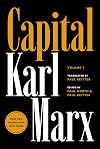
I decided to read Capital for two reasons. The first was my reading this spring of To The Finland Station, a passionate, idiosyncratic book about passionate, idiosyncratic people, especially Marx. I wanted to see the result of his long, proud, penurious London years and his bookwormery in the British Museum reading room; I wanted to see how the unquenchable fury and bottomless well of bitterness portrayed by Edmund Wilson could possibly find expression in a "critique of political economy". show more The second reason was a drunken argument I had with the CFO of my company not long after. I can't remember how it started, I think I was saying that the best cities had room for people of all socioeconomic classes and he was saying fuck that, Singapore is the best city because they flog vagrants there, but before I knew it he was reaching for the enduring pejorative epithet recently given new vigour by the ascendant crypto-fascists of our times (that's crypto as in Bitcoin — there's nothing crypto about their fascism): "Marxist." Don't be ridiculous, I said, of course I'm not a Marxist, and anyway, have you even read Das Kapital? And as I slurred that out loud, I was slurring to myself, I really must read Das Kapital. And then I read something about a new translation and duly coughed up sixty bucks to the capitalist exploiters doing business as Princeton University Press.
Many things surprised me about Capital, but one that didn't was the ham-handedness of Marx's try at economic theory. His insistence on the "use-value" of a thing correlating with the amount of human labour that's gone into it — his "labour theory of value" — is just head-spinningly wrong-seeming from the outset, and you get the sense that he's secretly a bit embarrassed about it himself, from the way he takes every opportunity to dress it up in kindergarten algebra and restate it backwards, inside-out and upside-down. But there's something exhilarating about this. We sense from the get-go that we're in for a weird time here, and that all this strange preamble about congealed labour and the nature of the commodity is a kind of dialectical borborygmus, presaging a crisis we want to be in the room for when it erupts. The backward, inside-out and upside-downness of Marx's economics is also illustrative of his literary technique, I guess influenced by the rhetorical fluidity of his beloved Greeks. Marx can't take anything, or state anything, at face-value — he has the permanently aggrieved mindset of the constitutionally paranoid — and so all his axioms and formulations end up flipped, doubled, reversed, paired off in a grotesque Doctor Moreau-style freakshow. Everything in Marx has a "double nature"; he's an inveterate turner-over of stones, and it's both horrid and compelling to watch. It can result in absurd sentences like this:
Obviously.
But what's especially good about Marx's mad theoretical contortions is that his subject — that monolith, its name derived from "head" — is equally double-natured, equally slippery, equally paranoid. Marx portrays capital as an elemental entity, as relentless as a force of nature but feral and cunning and insatiable, alien to and ungovernable by humanity. He calls it, in a triumph for Paul Reiter's translation, a "sensuous supersensuous thing." He's too successful at this (his vampire metaphor is pre-Stoker), and his success undermines his assertions later on that other economic paradigms are no less inevitable. Marx believes in progress — another weakness he shares with his arch-enemies — so he thinks that Capitalism is perforce a passing phase. He sees it as a hideous growth that will be its own undoing and be superseded by, or give birth to, fairer things; whereas to us the capitalist end-state looks more like mere depletion, a blob of corium beneath a blown reactor core. Marx's optimism is both understandable, given his relative proximity to the birth of Capitalism, and necessary to power the polemical side of this book, which is what really makes it worth reading. Because for everything Marx gets wrong about economics, for every mutation (e.g. branding and the information economy) of the capitalist hippogriff that he fails to foresee, there is an incontestable analysis of some intrinsic aspect of it still in evidence today: its dependence on an immiserated "surplus labour army", or its instinct for bucking all restraint and proceeding like a dysregulated peristaltic Moloch, gulping down its victims and vomiting their undigested remains back up for reprocessing. The "apologists" in this paragraph for example — about how new technology never really "sets people free" — could just as well be the current apologists for what's laughably called artificial intelligence:
It's this monumental polemic, this unwonky cri de coeur at the crapness of life under Capitalism (specifically his kind of industrial capitalism, but equally applicable to post-industrial societies) that gives Capital its enduring appeal. Marx, son of a lawyer and grandson of a Rabbi, writes sometimes like a priest, more often like a vituperative prophet. He draws on the researches of his friend Engels (the only friend he never succeeded in repelling) into the "condition of the working class in England", as well as reams of official statistics, government inquiries, court transcripts and obscurities dug up from the bowels of the British Museum to assemble an identikit portrait, like the police used to do for suspects, of Capitalism. His style is consciously lawyerly, and his favourite prosecutorial techniques are the thespian-flamboyant — the righteous, Rabbinical denunciation — and the evidential overload, the "my book will be a million words and you can't try to refute it until you've read it all". Like many a literary rhetorician, he indulges his baser urges in the footnotes, peppering them with sarcastic insults, second-edition score-settling, and tangential veerings-off in pursuit of ulterior targets. Capital is like capital: complex, elusive, resisting categorisation, a mess, a self-perpetuating system that conditions its participants to accept it, if not to understand it. Great books train their readers how to read them; Capitalism inures its victims to their own victimhood; Marx's Capital does both of these things. Will I read it again? Under no circumstances. Will I read volumes II and III? Not if I live as long as the Capitalist system itself endures. Did I laugh when Marx described the Ancient Greek Xenophon as having "characteristic bourgeois instincts"? Yes — it's funny because it's true! show less
Many things surprised me about Capital, but one that didn't was the ham-handedness of Marx's try at economic theory. His insistence on the "use-value" of a thing correlating with the amount of human labour that's gone into it — his "labour theory of value" — is just head-spinningly wrong-seeming from the outset, and you get the sense that he's secretly a bit embarrassed about it himself, from the way he takes every opportunity to dress it up in kindergarten algebra and restate it backwards, inside-out and upside-down. But there's something exhilarating about this. We sense from the get-go that we're in for a weird time here, and that all this strange preamble about congealed labour and the nature of the commodity is a kind of dialectical borborygmus, presaging a crisis we want to be in the room for when it erupts. The backward, inside-out and upside-downness of Marx's economics is also illustrative of his literary technique, I guess influenced by the rhetorical fluidity of his beloved Greeks. Marx can't take anything, or state anything, at face-value — he has the permanently aggrieved mindset of the constitutionally paranoid — and so all his axioms and formulations end up flipped, doubled, reversed, paired off in a grotesque Doctor Moreau-style freakshow. Everything in Marx has a "double nature"; he's an inveterate turner-over of stones, and it's both horrid and compelling to watch. It can result in absurd sentences like this:
Insofar as the surplus-value that makes up capital Number 1 arose when labor-power was bought with part of the original capital, a transaction that conformed to the laws of commodity exchange and, legally speaking, presupposed nothing but that on the side of the capital relation, the worker could do what he wanted with his skills, while on the other side, the money or commodity owner could do what he wanted with the value he owned; furthermore, insofar as surplus capital Number 2 is merely the result of surplus capital Number 1 and therefore a consequence of the relation described above; and, finally, insofar as all transactions continue to conform to the laws of commodity exchange, which means the capitalist continues to buy labor-power, and the worker continues to sell it (at its actual value, we will assume), the law of appropriation or private property based on commodity production and circulation is obviously inverted into its direct opposite by its inexorable inner dialectic.
Obviously.
But what's especially good about Marx's mad theoretical contortions is that his subject — that monolith, its name derived from "head" — is equally double-natured, equally slippery, equally paranoid. Marx portrays capital as an elemental entity, as relentless as a force of nature but feral and cunning and insatiable, alien to and ungovernable by humanity. He calls it, in a triumph for Paul Reiter's translation, a "sensuous supersensuous thing." He's too successful at this (his vampire metaphor is pre-Stoker), and his success undermines his assertions later on that other economic paradigms are no less inevitable. Marx believes in progress — another weakness he shares with his arch-enemies — so he thinks that Capitalism is perforce a passing phase. He sees it as a hideous growth that will be its own undoing and be superseded by, or give birth to, fairer things; whereas to us the capitalist end-state looks more like mere depletion, a blob of corium beneath a blown reactor core. Marx's optimism is both understandable, given his relative proximity to the birth of Capitalism, and necessary to power the polemical side of this book, which is what really makes it worth reading. Because for everything Marx gets wrong about economics, for every mutation (e.g. branding and the information economy) of the capitalist hippogriff that he fails to foresee, there is an incontestable analysis of some intrinsic aspect of it still in evidence today: its dependence on an immiserated "surplus labour army", or its instinct for bucking all restraint and proceeding like a dysregulated peristaltic Moloch, gulping down its victims and vomiting their undigested remains back up for reprocessing. The "apologists" in this paragraph for example — about how new technology never really "sets people free" — could just as well be the current apologists for what's laughably called artificial intelligence:
We will recall that when new machines are introduced or old machines are enlarged, part of the variable capital is transformed into constant capital. The apologists take this operation, which "fixes" capital, thereby setting workers "free," and turn it around. According to them, it sets capital free for the workers. Only now are we in a position to fully appreciate the apologists' shamelessness. For the workers directly cast aside by machines aren't the only ones set free: so are their future replacements and also the additional contingent regularly absorbed when, supported by its old foundation, industry expanded as usual. Old capital isn't set free for workers, but workers are set free for "additional" capital.
It's this monumental polemic, this unwonky cri de coeur at the crapness of life under Capitalism (specifically his kind of industrial capitalism, but equally applicable to post-industrial societies) that gives Capital its enduring appeal. Marx, son of a lawyer and grandson of a Rabbi, writes sometimes like a priest, more often like a vituperative prophet. He draws on the researches of his friend Engels (the only friend he never succeeded in repelling) into the "condition of the working class in England", as well as reams of official statistics, government inquiries, court transcripts and obscurities dug up from the bowels of the British Museum to assemble an identikit portrait, like the police used to do for suspects, of Capitalism. His style is consciously lawyerly, and his favourite prosecutorial techniques are the thespian-flamboyant — the righteous, Rabbinical denunciation — and the evidential overload, the "my book will be a million words and you can't try to refute it until you've read it all". Like many a literary rhetorician, he indulges his baser urges in the footnotes, peppering them with sarcastic insults, second-edition score-settling, and tangential veerings-off in pursuit of ulterior targets. Capital is like capital: complex, elusive, resisting categorisation, a mess, a self-perpetuating system that conditions its participants to accept it, if not to understand it. Great books train their readers how to read them; Capitalism inures its victims to their own victimhood; Marx's Capital does both of these things. Will I read it again? Under no circumstances. Will I read volumes II and III? Not if I live as long as the Capitalist system itself endures. Did I laugh when Marx described the Ancient Greek Xenophon as having "characteristic bourgeois instincts"? Yes — it's funny because it's true! show less

A whole lot of the historical background of this long essay went over my head- I must admit that my knowledge of 19th century French politics isn’t exactly broad. I came to this book from a podcast called “The Age of Napoleon” which deals with the subject of this book’s much more famous and consequential uncle. One episode features a discussion of this work by Marx and mentions that it may be a little hard for contemporary readers to “get” because Marx was writing about current show more events, and assumed that his readers would be up to date on the latest news coming out of France. However, for us, this news has been watered down by an extra century and a half of intervening history.
Even coming in so ignorant, there’s a lot to be had from this book. Something I never hear mentioned is how fun Marx is to read. He was a extremely talented writer (or polemicist, depending on your perspective) with great skill for a turn of phrase or an biting piece of wit to draw into contrast the absurdity of the social phenomena he is describing. Its also refreshing to read a brilliant thinker speaking with such confidence and passion about these issues - when reading Marx you feel like the right answer is so clear, so unavoidable, only by deliberate misdirection have we missed the mark. This is partially 19th century intellectual hubris, but I think it does show how impotent modern political discourse has become. It’s still shocking how radical his opinions were, and how so long ago he was presciently able to diagnose many problems we are still struggling to understand today. When you actually read Marx, you realize how misconstrued he has become, and how different the contemporary “left” in the USA is from the agenda he is putting forward. Case in point is his criticisms of taxes towards the back of the essay, which runs totally counter to the depiction of “liberals” in mainstream American discourse as spendthrifts always ready to raise taxes on the hard working people. In this book Marx articulates much the same criticism of big government as an American style conservative might, albeit with a much different endgame in mind. What were these taxes for? What were they going towards supporting? Would they actually improve the status of the working class or only to fund further distractions and misdirections to make it seem like the government was actually doing something? (It is after all the ultimate goal of classic Marxism to dissolve the state after the means of production has been secured by the workers) Always basing his work in hardcore research and study (evinced by the thousands of hours spent researching Das Kapital in the libraries of London), Marx, despite his reputation as an ideologue, always seeks the no bullshit, practical path forward. In this book we see him rail against meaningless political grandstanding in the service of obfuscating revolutionary energy. What Louis Napoleon was able to do, and what sets him directly in Marx’s sights, was skillfully manipulate (or take advantage of) the political winds blowing after the stymied revolutions of 1848. By playing all sides against each other, and using the powers of office to put forward the most pandering political projects that would ultimately do nothing to improve the situation of the working class, Napoleon III was able to enrich himself, his cronies, and the entire bourgeois class that profited from “stability” at any cost. show less
Even coming in so ignorant, there’s a lot to be had from this book. Something I never hear mentioned is how fun Marx is to read. He was a extremely talented writer (or polemicist, depending on your perspective) with great skill for a turn of phrase or an biting piece of wit to draw into contrast the absurdity of the social phenomena he is describing. Its also refreshing to read a brilliant thinker speaking with such confidence and passion about these issues - when reading Marx you feel like the right answer is so clear, so unavoidable, only by deliberate misdirection have we missed the mark. This is partially 19th century intellectual hubris, but I think it does show how impotent modern political discourse has become. It’s still shocking how radical his opinions were, and how so long ago he was presciently able to diagnose many problems we are still struggling to understand today. When you actually read Marx, you realize how misconstrued he has become, and how different the contemporary “left” in the USA is from the agenda he is putting forward. Case in point is his criticisms of taxes towards the back of the essay, which runs totally counter to the depiction of “liberals” in mainstream American discourse as spendthrifts always ready to raise taxes on the hard working people. In this book Marx articulates much the same criticism of big government as an American style conservative might, albeit with a much different endgame in mind. What were these taxes for? What were they going towards supporting? Would they actually improve the status of the working class or only to fund further distractions and misdirections to make it seem like the government was actually doing something? (It is after all the ultimate goal of classic Marxism to dissolve the state after the means of production has been secured by the workers) Always basing his work in hardcore research and study (evinced by the thousands of hours spent researching Das Kapital in the libraries of London), Marx, despite his reputation as an ideologue, always seeks the no bullshit, practical path forward. In this book we see him rail against meaningless political grandstanding in the service of obfuscating revolutionary energy. What Louis Napoleon was able to do, and what sets him directly in Marx’s sights, was skillfully manipulate (or take advantage of) the political winds blowing after the stymied revolutions of 1848. By playing all sides against each other, and using the powers of office to put forward the most pandering political projects that would ultimately do nothing to improve the situation of the working class, Napoleon III was able to enrich himself, his cronies, and the entire bourgeois class that profited from “stability” at any cost. show less
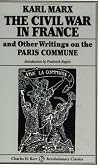
I got a lovely old edition of this from the University Library. It has a slightly grudging introduction by Engels and appendices of resolutions by the General Council of the International Working Men's Association. Most interestingly, there is a speech given by Lenin in 1908 on lessons from the Commune, which brings out the point that the initial French Revolution has begun a tide of European nationalism, but by the turn of the 20th century patriotic feeling had become damaging to the show more revolutionary cause. This is also notable as the international significance of the Commune seems to be judged by history as much smaller than the 1789-94 revolution. Which is emphasised, I suppose, by the title of this book, 'The Civil War in France'. Although the Commune had geopolitical significance, its ideas didn't reverberate around the world in the same way as those of the initial ('Great') French Revolution.
As Lenin was speaking decades after the Commune, his tone is measured. Marx's central work, by contrast, is very angry indeed. It consists of an address delivered mere days after the fall of the Commune. He spends quite a bit of it personally abusing Thiers, the French president he holds personally responsible for the repression of the Commune and resulting wholesale slaughter. More broadly, his analysis brings home the sheer complexity of political factionalism in France at the time. It also highlights the achievements of the Commune's short lifespan, which were impressively pragmatic economic and administrative reforms.
As mentioned before, it is fascinating to compare the 1789-1794 revolution with the Paris Commune, which could be seen as a later manifestation of the former's ideas. What strikes me, in this commentary and elsewhere, is that the first revolution was one of young, idealistic men, whereas the Commune consisted of middle aged men, disillusioned by war and political infighting. Whereas strong personalities emerged from 1789-1794, there is no Robespierre or Danton in 1871. That said, the Commune didn't last long enough, managing a mere 70 days, for this happen. Moreover, you could argue that the lack personality politics demonstrates a more fundamental democracy was at work, a genuine 'dictatorship of the proletariat'. Marx certainly really doesn't single out particular Communards for praise, despite excoriating many on the other side by name.
I recommend this book to supplement your understanding of the Paris Commune and its immediate aftermath, but not as an introduction. Marx assumes total understanding of events straight off. I suggest, 'That Terrible Year' by Alaistair Horne as a good starting point. show less
As Lenin was speaking decades after the Commune, his tone is measured. Marx's central work, by contrast, is very angry indeed. It consists of an address delivered mere days after the fall of the Commune. He spends quite a bit of it personally abusing Thiers, the French president he holds personally responsible for the repression of the Commune and resulting wholesale slaughter. More broadly, his analysis brings home the sheer complexity of political factionalism in France at the time. It also highlights the achievements of the Commune's short lifespan, which were impressively pragmatic economic and administrative reforms.
As mentioned before, it is fascinating to compare the 1789-1794 revolution with the Paris Commune, which could be seen as a later manifestation of the former's ideas. What strikes me, in this commentary and elsewhere, is that the first revolution was one of young, idealistic men, whereas the Commune consisted of middle aged men, disillusioned by war and political infighting. Whereas strong personalities emerged from 1789-1794, there is no Robespierre or Danton in 1871. That said, the Commune didn't last long enough, managing a mere 70 days, for this happen. Moreover, you could argue that the lack personality politics demonstrates a more fundamental democracy was at work, a genuine 'dictatorship of the proletariat'. Marx certainly really doesn't single out particular Communards for praise, despite excoriating many on the other side by name.
I recommend this book to supplement your understanding of the Paris Commune and its immediate aftermath, but not as an introduction. Marx assumes total understanding of events straight off. I suggest, 'That Terrible Year' by Alaistair Horne as a good starting point. show less

Everything that seemed abstract and difficult to comprehend, is today clear. As we are living through yet another crisis of late capitalism, the sheer bestiality of the ruling class which clings to its privilege at the cost of billions of lives (and that's only human lives) is on spectacle for the most willfully blind to see.
The mass of wage earners is sinking so the rich could scale to some pharaonic height on their corpses. The system is crashing so badly it, as the Manifesto predicted, show more has to feed the slaves instead of being fed by it--and that's IF the rulers decide we should be alive at all. Won't robots soon turn out to be better consumers too?
Precarious jobs between no jobs resulting in nothing but precarious existence, billions of people hanging on threads while a small group in power tells them they are free--free for what, free how? We are only free to vote to keep the rich around.
Anyone who feels they have a stake in human society ought to read this. Anyone who thinks they are a humanist, a good and moral person, anyone who gives charity but is pro-capitalist, ought to read this.
It's a brilliant book and it's everything you need to begin to understand what must be done if we love life, if we love life in everything living. show less
The mass of wage earners is sinking so the rich could scale to some pharaonic height on their corpses. The system is crashing so badly it, as the Manifesto predicted, show more has to feed the slaves instead of being fed by it--and that's IF the rulers decide we should be alive at all. Won't robots soon turn out to be better consumers too?
Precarious jobs between no jobs resulting in nothing but precarious existence, billions of people hanging on threads while a small group in power tells them they are free--free for what, free how? We are only free to vote to keep the rich around.
Anyone who feels they have a stake in human society ought to read this. Anyone who thinks they are a humanist, a good and moral person, anyone who gives charity but is pro-capitalist, ought to read this.
It's a brilliant book and it's everything you need to begin to understand what must be done if we love life, if we love life in everything living. show less
Lists
19th Century (1)
Non-Fiction (1)
A Reading List (1)
. (1)
2026 (1)
BitLife (1)
My List (1)
Revolutions (1)
2025-2026 (1)
Unread books (1)
Economics (1)
bound (1)
Stuff from Bard (1)
Blindpill (1)
Disco Elysium (1)
Economics (4)
Political Theory (1)
el (2)
. (2)
Favourite Books (1)
Reading LIst (1)
Europe (1)
Book wishlist (1)
Awards


You May Also Like


Associated Authors
Statistics
- Works
- 1,861
- Also by
- 41
- Members
- 54,620
- Popularity
- #274
- Rating
- 3.7
- Reviews
- 408
- ISBNs
- 2,997
- Languages
- 40
- Favorited
- 99


