
Willem Frederik Hermans (1921–1995)
Author of The Darkroom of Damocles
About the Author
Image credit: Roland Gerrits / Anefo
Series
Works by Willem Frederik Hermans
In de mist van het schimmenrijk : fragmenten uit het oorlogsdagboek van de student Karel R. (1993) 344 copies, 4 reviews
Volledige werken. 7: Verhalen en novellen : Moedwil en misverstand, Paranoia, Een landingspoging op Newfoundland en andere verhalen (2005) 51 copies, 1 review
Volledige werken. 3: Romans: De donkere kamer van Damokles, Nooit meer slapen (1958) 34 copies, 2 reviews
Volledige werken. 12: Beschouwend werk : Boze brieven van Bijkaart, Houten leeuwen en leeuwen van goud (2005) 32 copies, 1 review
Volledige werken. 2: Romans: Ik heb altijd gelijk, De God Denkbaar, Denkbaar de God, Drie melodrama's (2008) 32 copies, 1 review
Volledige werken /11 . Beschouwend werk:Het sadistisch universum 1en 2; Annum Veritatis; De laatste resten tropisch Nederland; Van Witgenstein tot Weinreb; Machines in bikini;… (2008) 28 copies, 4 reviews
Machines en emoties : Willem Frederik Hermans, Rudy Kousbroek, Ethel Portnoy : een briefwisseling (2009) 28 copies
Madelon in de mist van het schimmenrijk : fragmenten uit het oorlogsdagboek van de student Karel R. (1994) 23 copies
Ze zullen eikels zaaien op mijn graf : teruggevonden gesprekken met Willem Frederik Hermans (1995) 15 copies
Ongebundeld werk: 1952-1979 (Volledige werken Willem Frederik Hermans, 21) (2021) 12 copies, 2 reviews
Wittgenstein in de mode 11 copies
Mondelinge mededelingen : over Oorlog en literatuur, Van duisternis tot licht, en terug, Schrijver en auteursrecht, Eers (1987) 10 copies
Hermans is hier geweest 10 copies
Het lek in de eeuwigheid 7 copies
Annum veritatis 6 copies
Hollywood 6 copies
Hypnodrome 5 copies
Filip's sonatine ; De zegelring 4 copies
De leproos van Molokaï 3 copies
Erosie 3 copies
Mandarijnen op zwavelzuur. No.1: Het geweten van de Groene Amsterdammer, of Volg het spoor omhoog 3 copies
Horror Coeli en andere gedichten 3 copies
Verboden toegang : essays over het werk van Willem Frederik Hermans, gevolgd door een vraaggesprek met de schrijver (1989) 3 copies
Bijzondere tekens 3 copies
Willem Frederik Hermans 2 copies
De Mandarijnenpers 2 copies
In contact met het werk 2 copies
De anatomie van de schrijfmachine 2 copies
Een anekdote 2 copies
Tirade 2 copies
Antiquariaat Schuhmacher 2 copies
De psychologische test 2 copies
Het omgekeerde pension 2 copies
Dit is door en door gemeen! 1 copy
Suidafrikaantjies! 1 copy
Overzicht bodemgroepen 1 copy
De onversleten wandelaar 1 copy
Volledige werken deel 1&7 1 copy
Misdaad stelt de wet 1 copy
Misdaad aan de Noordpool 1 copy
W.F. Hermans en Groningen 1 copy
De mandarijnenpers 1 copy
Openbaar leven 1 copy
Nooit meer slapen 1 copy
Igavene uni : [romaan] 1 copy
Een foto uit eigen doos 1 copy
Mandarijnen op zwavelzuur. 1 : Het geweten van de Groene Amsterdammer of Volg het spoor omhoog 1 copy, 1 review
Een toerist 1 copy
Dutch comfort 1 copy
Mayerling 1 copy
Pang : De oorlogsjaren 1 copy
De demon van ivoor 1 copy
Associated Works
De Nederlandse poëzie van de negentiende en twintigste eeuw in duizend en enige gedichten (1979) — Contributor, some editions — 209 copies, 1 review
De Nederlandse en Vlaamse literatuur vanaf 1880 in 250 verhalen (2005) — Contributor — 79 copies, 2 reviews
De Nederlandse en Vlaamse literatuur vanaf 1880 in 60 lange verhalen (2006) — Contributor — 43 copies, 2 reviews
Over F. Bordewijk : een inleiding en een chronologie, geschreven portretten, essays en meningen (1982) — Contributor — 14 copies
De zeven hoofdzonden — Author, some editions — 5 copies
Aapverhalen : verhalen van Abdelkader Benali, Arnon Grunberg, Willem Frederik Hermans en andere Nederlandse schrijvers (2004) — Contributor — 3 copies
Briefgeheim : vier eenacters gespeeld bij de opening van de achttiende boekenweek op 27 februari 1953 in de Stadsschouwburg te Amsterdam — Author, some editions — 3 copies
Smutny kos : opowieści niesamowite i osobliwe z prozy niderlandzkiej (1983) — Contributor — 3 copies
Over Multatuli — Contributor — 3 copies
Focquenbroch : bloemlezing uit zijn lyriek — Introduction, some editions — 3 copies
Literaire rechtspraak — Contributor, some editions — 1 copy
Tagged
Common Knowledge
- Canonical name
- Hermans, Willem Frederik
- Legal name
- Hermans, Willem Frederik
- Other names
- Prudhomme s.j., Pater Anastase
Schrijver Dezes
Bijkaart, Age
Klondyke, Fjodor
Wissel, Sita van de
Cimatarra, Luis (show all 7)
Zomerplaag, B.J.O. - Birthdate
- 1921-09-01
- Date of death
- 1995-04-27
- Gender
- male
- Education
- University of Amsterdam
- Occupations
- novelist
geologist
professor - Awards and honors
- P.C. Hooft-prijs (1959, 1971)
Vijverberg Prijs (1966)
Prijs der Nederlandse Letteren (1977)
AKO Literatuurprijs (1988)
Aristeion Prize (1991, 1992) - Short biography
- Willem Frederik Hermans was a Dutch author of poetry, novels, short stories, plays, as well as booklength studies, essays, and literary criticism. His most famous works are The House of Refuge (novella, 1952), The Darkroom of Damocles (novel, 1958), and Beyond Sleep (novel, 1966).
After World War II, Hermans tried to live off his writing exclusively, but as his country was just recovering from the Occupation, he had no opportunity to sustain himself. He published three important collections of short stories from 1948 to 1957, chief among them the novella The House of Refuge (1952), and in 1958 became lecturer in physical geography at Groningen University, a position he retained until his move to Paris, France, in 1973. The same year 1958 he broke to a wide audience with The Darkroom of Damocles. In the seventies Hermans played an important role in the unmasking of Friedrich Weinreb as a cheater of Jews in the war. Hermans refused to accept the P.C. Hooftprijs for 1971. In 1977 he received the Prijs der Nederlandse Letteren, the most prestigious literary award available for writers in the language, handed out every three years alternately by the reigning Dutch and Belgian monarchs to a writer of the other country, the Belgian king Baudouin handing the prize to Hermans. Hermans is considered one of the three most important authors in the Netherlands in the postwar period, along with Harry Mulisch and Gerard Reve.
[Wikipedia] - Cause of death
- lung cancer
- Nationality
- Netherlands
- Birthplace
- Amsterdam, Netherlands
- Places of residence
- Groningen, Netherlands
Paris, Île-de-France, France
Brussels, Belgium
Haren, Netherlands - Place of death
- Utrecht, Netherlands
- Burial location
- Gecremeerd
- Map Location
- Netherlands
- Associated Place (for map)
- Netherlands
Members
Reviews
Rating: 4* of five
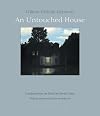
The Publisher Says: In this dark, unnerving work of wartime fiction, W. F. Hermans exposes humanity’s essential savagery, barely concealed by its mores and morals. The year is 1944, and a Dutch partisan chances on an abandoned estate, where he decides to take refuge during a lull in the hostilities. The house seems untouched by the war, a kind of haven, its ornament and grandeur intact (not to mention its walls), clothes and sheets to spare, a kitchen stocked with food show more and drink. He settles in, and begins to consider himself the owner. When the Nazis recapture the village and come knocking, they similarly assume the house to be his; they assume, also, its spare rooms, which they outfit as barracks.
It is all and well until the true owner and his wife return to their estate. Horrified at the thought of being caught in his subterfuge, our protagonist finds himself drawn into further deceit—and swept up in the violence that ensues.
Civilization comes face-to-face with brutality, truth meets the duplicity that has upended and challenged its certainty—Hermans’ prose searches for an order to the chaos and nihilism of war and life. What he cannot find is as telling as what he uncovers.
I RECEIVED A DRC FROM THE PUBLISHER VIA EDELWEISS+. THANK YOU.
My Review: Novellas are, by definition, brief and gestural as opposed to the novel in its deeper dives, its wider emotional landscape. These general observations are, of course, not true of every novel or novella. They serve to define nothing but an expectation of the reasonably experienced reader when picking up one or the other.
I went into this read, then, expecting to get a glancing blow to my interest in the topic of what the Second World War was like for those who lived it, who were involved in the conflict and not observing events from afar. That was an expectation met...but exceeded, at least as the read settled into my brain. The prose, as translated, was not showy or terribly Writerly; the story itself was simple enough, really more suited to a short story than a novella; but as I sat stunned after finishing the read, I realized why the author chose this length of telling for a story this uncomplicated.
Without the novella’s-worth of buildup, the ending would feel artificial and out of proportion to the story itself. As it is, the ending is a shocker. It arrives without fanfare and smacks the complacent, even slightly bored, reader in their readerly chops. At the end of a trip through one devious survivor’s opportunistic manipulations of everyone around him, all in service of maximizing his immediate personal comfort, the situation he has created from his selfish, self-serving and utterly believable actions comes to a loud, permanent conclusion.
The issue I had been nursing against this overgrown short story exploded in the events of the ending. There is a reason for the length the author chose to tell his simple tale. I was not ready for the impact of the ending, which to be clear would always have been powerful. The novella before it, however, was exactly right to create its seismic shifting of my emotional response. An entire novel with this ending would, honestly, have vitiated its power to stun; a short story, even a long one, would make the ending feel artificial and tacked on.
This read is an excellent example of what a novella can do best, when used to best advantage: satisfy the reader’s hunger for a powerful emotional experience in a one-sitting package. So why only four stars? In the end, the manner of telling the story, the simple unfussy writing, works against the needed investment in the story being told. It gets to the stage of thinking, "Really? is this IT?" before the truly impactful payoff occurs. That I soldiered on, finishing the read, was not assured by the manner of storytelling the author used. At times I was ready to jump ship just to be done with this really dislikable man, this solipsistic selfish creep. I am glad that I persevered, but also a little surprised that I did with the truly staggering number of reads I already have lined up.
So, to all who start this read, I say: Do stick it out for the whole distance. It *is* worth your time. But because I feel the need to say that, I can only in honesty rate it four of five stars. show less
The Publisher Says: In this dark, unnerving work of wartime fiction, W. F. Hermans exposes humanity’s essential savagery, barely concealed by its mores and morals. The year is 1944, and a Dutch partisan chances on an abandoned estate, where he decides to take refuge during a lull in the hostilities. The house seems untouched by the war, a kind of haven, its ornament and grandeur intact (not to mention its walls), clothes and sheets to spare, a kitchen stocked with food show more and drink. He settles in, and begins to consider himself the owner. When the Nazis recapture the village and come knocking, they similarly assume the house to be his; they assume, also, its spare rooms, which they outfit as barracks.
It is all and well until the true owner and his wife return to their estate. Horrified at the thought of being caught in his subterfuge, our protagonist finds himself drawn into further deceit—and swept up in the violence that ensues.
Civilization comes face-to-face with brutality, truth meets the duplicity that has upended and challenged its certainty—Hermans’ prose searches for an order to the chaos and nihilism of war and life. What he cannot find is as telling as what he uncovers.
I RECEIVED A DRC FROM THE PUBLISHER VIA EDELWEISS+. THANK YOU.
My Review: Novellas are, by definition, brief and gestural as opposed to the novel in its deeper dives, its wider emotional landscape. These general observations are, of course, not true of every novel or novella. They serve to define nothing but an expectation of the reasonably experienced reader when picking up one or the other.
I went into this read, then, expecting to get a glancing blow to my interest in the topic of what the Second World War was like for those who lived it, who were involved in the conflict and not observing events from afar. That was an expectation met...but exceeded, at least as the read settled into my brain. The prose, as translated, was not showy or terribly Writerly; the story itself was simple enough, really more suited to a short story than a novella; but as I sat stunned after finishing the read, I realized why the author chose this length of telling for a story this uncomplicated.
Without the novella’s-worth of buildup, the ending would feel artificial and out of proportion to the story itself. As it is, the ending is a shocker. It arrives without fanfare and smacks the complacent, even slightly bored, reader in their readerly chops. At the end of a trip through one devious survivor’s opportunistic manipulations of everyone around him, all in service of maximizing his immediate personal comfort, the situation he has created from his selfish, self-serving and utterly believable actions comes to a loud, permanent conclusion.
The issue I had been nursing against this overgrown short story exploded in the events of the ending. There is a reason for the length the author chose to tell his simple tale. I was not ready for the impact of the ending, which to be clear would always have been powerful. The novella before it, however, was exactly right to create its seismic shifting of my emotional response. An entire novel with this ending would, honestly, have vitiated its power to stun; a short story, even a long one, would make the ending feel artificial and tacked on.
This read is an excellent example of what a novella can do best, when used to best advantage: satisfy the reader’s hunger for a powerful emotional experience in a one-sitting package. So why only four stars? In the end, the manner of telling the story, the simple unfussy writing, works against the needed investment in the story being told. It gets to the stage of thinking, "Really? is this IT?" before the truly impactful payoff occurs. That I soldiered on, finishing the read, was not assured by the manner of storytelling the author used. At times I was ready to jump ship just to be done with this really dislikable man, this solipsistic selfish creep. I am glad that I persevered, but also a little surprised that I did with the truly staggering number of reads I already have lined up.
So, to all who start this read, I say: Do stick it out for the whole distance. It *is* worth your time. But because I feel the need to say that, I can only in honesty rate it four of five stars. show less
Quite a wallop is packed in this small novella. An unnamed narrator stumbles across an unoccupied house somewhere in the no man's land of WWII and decides to live out the war there. He is a partisan severely traumatized by war and half-convinced that nothing is real and therefore nothing he does matters. The brutality escalates at a breakneck pace.
The afterword by Cees Nooteboom is well-written and introduces the author and his worldview.
The absurdity, cruelty, and pointlessness of war are show more ratcheted up in his books; it's not just the main characters, readers too are unable to escape the vice-like pressure. Hermans went against the prevailing mood in the postwar Netherlands by precisely and compellingly describing not the heroic aspects of those days, but the folly of it all, the bungling, the pointless fumbling in what he called a sadistic universe, the chaos in which human lives are played out when the semblance of order called civilization has been breached.
Both the story and the critique were thought-provoking. I look forward to reading one of his full-length novels. show less
The afterword by Cees Nooteboom is well-written and introduces the author and his worldview.
The absurdity, cruelty, and pointlessness of war are show more ratcheted up in his books; it's not just the main characters, readers too are unable to escape the vice-like pressure. Hermans went against the prevailing mood in the postwar Netherlands by precisely and compellingly describing not the heroic aspects of those days, but the folly of it all, the bungling, the pointless fumbling in what he called a sadistic universe, the chaos in which human lives are played out when the semblance of order called civilization has been breached.
Both the story and the critique were thought-provoking. I look forward to reading one of his full-length novels. show less

Hermans is known for bleak, philosophical novels, so it's a little unexpected to find yourself here in what looks like a satirical campus farce, in a late-seventies register somewhere between The history man and Abigail's party. But with a hint of Stoner too! Clemens is a sociology lecturer in Groningen, middle-aged and despairing of ever making it to full professor, rapidly losing his faith in the professional advantages of sticking to Marx and Marcuse. His wife, Sita, knows that the other show more faculty-wives look down on her: they are all students who married their professors; she was serving in a snack-bar when she met Clemens. She has hopes of publishing a successful children's book, like her neighbour Alies, but things seem to keep going wrong with the project, roughly in proportion to the rate at which the level of sherry goes down in the "vinegar" bottle in the kitchen. Meanwhile, her beautiful daughter, Parel, also seems to be heading full-tilt down some kind of slippery slope.
There's a lot of play with academic one-upmanship, and with the L-shaped living-rooms and sofas of suburban life (and the green letterboxes that keep getting pinched from suburban front gardens), and there are plenty of the kind of painfully embarrassing coincidences that belong to that kind of farce. But it gradually becomes obvious that there's also something darker going on. Sita's little book, "Beertje Bombazijn" (which Hermans wrote and actually published, under Sita's name) has its surreal side: one of the bears plays the tambourine and keeps a gypsy on a chain to collect the money for him. And actual bears, dream-bears and teddy-bears keep popping up in the novel in bizarre ways. There are suggestions of medieval allegory in many of the character names, and a strong hint — in a gratuitous walk-on appearance by the Professor of Middle English — that we should be looking for parallels with the poem "The Pearl".
Funny, in a warped way, and with some very acute bits of social observation. But maybe a bit more heavily-layered with meaning than it absolutely needs to be. show less
There's a lot of play with academic one-upmanship, and with the L-shaped living-rooms and sofas of suburban life (and the green letterboxes that keep getting pinched from suburban front gardens), and there are plenty of the kind of painfully embarrassing coincidences that belong to that kind of farce. But it gradually becomes obvious that there's also something darker going on. Sita's little book, "Beertje Bombazijn" (which Hermans wrote and actually published, under Sita's name) has its surreal side: one of the bears plays the tambourine and keeps a gypsy on a chain to collect the money for him. And actual bears, dream-bears and teddy-bears keep popping up in the novel in bizarre ways. There are suggestions of medieval allegory in many of the character names, and a strong hint — in a gratuitous walk-on appearance by the Professor of Middle English — that we should be looking for parallels with the poem "The Pearl".
Funny, in a warped way, and with some very acute bits of social observation. But maybe a bit more heavily-layered with meaning than it absolutely needs to be. show less

Ook bij herlezing na tientallen jaren nog steeds heel goed, vlot geschreven en spannend. Wat mij nu vooral opviel waren de humor en slapstickachtige scenes en de originele beeldspraak: "De hand van mijn tong zoekt in een diepe zwarte zak naar woorden ..."; "de zon heeft schaduwen als zwarte ski's aan mijn voeten gebonden."; "De zon ... duwt licht en hitte naar ons toe als met een bulldozer."; "Zijn armen zijn dik en blubberig als de armen van een harpiste."; "Zeventien sigaretten. Bruine show more drab is opgetrokken in hun witte doktersjasjes." Verder leiden de recht-voor-zijn-raap discussies tussen de geologen soms tot hilarische conclusies. Ook de paranoide complottheorieen van Alfred over het hoe en waarom van de ontbrekende luchtfoto's werken op de lachspieren, want zijn heel herkenbaar.
Het Nederlands begint een beetje te verouderen met uitdrukkingen die we tegenwoordig niet meer gebruiken.
Dit is een voorbeeld van een roman waar veel betekenis in verstopt zit en waar nog veel over te zeggen valt, los van het verhaal zelf. Ik zie dat wat Alfred overkomt als een voorbeeld van wat hijzelf eerder in de roman aanhaalt, als uitspraak van de door Hermans zo bewonderde Wittgenstein: de manier waarop iemand ertoe gekomen is iets te begrijpen, verdwijnt in datgene wat hij begrepen heeft. Al zijn inspanningen zijn voor niets, dat wil zeggen dat hij zijn oorspronkelijke doel niet bereikt. Maar hij slaagt er wel in om zich los te maken van zijn door zijn moeder ingefluisterde obsessie: dat hij de dood van zijn vader zou moeten wreken. Dat er vlak na zijn vertrek een meteoriet inslaat, doet er niet meer toe: de obsessie is verdwenen.
Bijzonder indrukwekkend is de passage waar hij Arne terugvindt. Door theodoliet ziet Alfred een sneeuwhoen: is dat de ziel van Arne? Of is dat de prooi die Arne had moeten vangen, Arne=adelaar, neergestort. Ook zijn doel, iets groots verrichten ondanks zijn vader, heeft hij niet bereikt, netzomin als Alfred. Arne lijkt het spiegelbeeld van Alfred, zijn vadercomplex is het tegenovergestelde van dat van Arne.
Interessant en van belang is ook de theorie in een van de gesprekken over de drie stadia van het menselijk bewustzijn: 1. De onbewuste, instinctieve fase, 2. De narcistische fase, met een egocentrisch bewustzijn, het ik is het centrum van de wereld en 3. De schizofrene fase waarin het ik versplinterd is, zichzelf als een ander ziet, overbewust van de eigen daden. Alfred lijkt tijdens de tocht telkens in een van die drie fases te verkeren. Hij gaat eigenlijk puur instinctief de reis aan, gestuurd door onbewuste of halfbewuste motieven. Het egoistische ik krijgt de overhand in de passages waar hij gedwarsboomd wordt en tot moord in staat is. In de schizofase is Alfred zich helder bewust van de hopeloosheid van zijn project. Uiteindelijk wint dat besef het van de andere twee. show less
Het Nederlands begint een beetje te verouderen met uitdrukkingen die we tegenwoordig niet meer gebruiken.
Dit is een voorbeeld van een roman waar veel betekenis in verstopt zit en waar nog veel over te zeggen valt, los van het verhaal zelf. Ik zie dat wat Alfred overkomt als een voorbeeld van wat hijzelf eerder in de roman aanhaalt, als uitspraak van de door Hermans zo bewonderde Wittgenstein: de manier waarop iemand ertoe gekomen is iets te begrijpen, verdwijnt in datgene wat hij begrepen heeft. Al zijn inspanningen zijn voor niets, dat wil zeggen dat hij zijn oorspronkelijke doel niet bereikt. Maar hij slaagt er wel in om zich los te maken van zijn door zijn moeder ingefluisterde obsessie: dat hij de dood van zijn vader zou moeten wreken. Dat er vlak na zijn vertrek een meteoriet inslaat, doet er niet meer toe: de obsessie is verdwenen.
Bijzonder indrukwekkend is de passage waar hij Arne terugvindt. Door theodoliet ziet Alfred een sneeuwhoen: is dat de ziel van Arne? Of is dat de prooi die Arne had moeten vangen, Arne=adelaar, neergestort. Ook zijn doel, iets groots verrichten ondanks zijn vader, heeft hij niet bereikt, netzomin als Alfred. Arne lijkt het spiegelbeeld van Alfred, zijn vadercomplex is het tegenovergestelde van dat van Arne.
Interessant en van belang is ook de theorie in een van de gesprekken over de drie stadia van het menselijk bewustzijn: 1. De onbewuste, instinctieve fase, 2. De narcistische fase, met een egocentrisch bewustzijn, het ik is het centrum van de wereld en 3. De schizofrene fase waarin het ik versplinterd is, zichzelf als een ander ziet, overbewust van de eigen daden. Alfred lijkt tijdens de tocht telkens in een van die drie fases te verkeren. Hij gaat eigenlijk puur instinctief de reis aan, gestuurd door onbewuste of halfbewuste motieven. Het egoistische ik krijgt de overhand in de passages waar hij gedwarsboomd wordt en tot moord in staat is. In de schizofase is Alfred zich helder bewust van de hopeloosheid van zijn project. Uiteindelijk wint dat besef het van de andere twee. show less
Lists
Awards


You May Also Like


Associated Authors
Statistics
- Works
- 159
- Also by
- 23
- Members
- 8,681
- Popularity
- #2,762
- Rating
- 3.7
- Reviews
- 162
- ISBNs
- 336
- Languages
- 13
- Favorited
- 63