
Jennie Fields
Author of Atomic Love
Works by Jennie Fields
Amor Atómico - eBook 1 copy
Tagged
Common Knowledge
- Birthdate
- 1953-07-25
- Gender
- female
- Nationality
- USA
- Birthplace
- Chicago, Illinois, USA
- Associated Place (for map)
- Illinois, USA
Members
Discussions
Fiction about (not by) Edith Wharton in Name that Book (May 2013)
Reviews
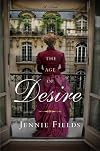
I really liked Z for Zelda, I was unimpressed by The Paris Wife, and this book was given to me, so I thought I'd give it a go. I have only read Ethan Frome, and that was a long time ago, so I knew nothing about Edith Wharton going into this book, but I was interested in learning more.
I was sorely disappointed.
For one thing. it takes a real person's history (and someone who wrote quality literature at that) and turns it into a romance/chick-lit kind of book where most of the story is the show more protagonist mooning over her love interest. This treatment is a disservice to an award-winning author. One could argue that by writing Wharton into a story that attracts an audience who might now read her novels (where they might not before), and while that might be true, I don't think it is sufficient justification for writing a crappy book about a great writer.
Second, I have no idea what was real and what was fiction. There is an author's note at the beginning explaining how she is grateful for access to letters and journals from Anna's estate (the secondary protagonist in the novel). There are frequent insets in the story put in italics to depict the letters/journals characters are writing or reading in the story, but I have no idea if those are actual excerpts from the aforementioned personal papers or if they are simply inspired by the primary source documents. The lack of citations (even dates) makes me suspect they are only inspired by the primary documents and imagined by the author. If my suspicion is false, then the author has done her book and Wharton (and readers!) a disservice by not making the authenticity of the letters apparent. If my suspicion is true, well...see point number one.
Third, because the majority of the book is Wharton mooning over her love interest, the author misses many of the actually interesting parts of Wharton's life. Half way through I checked Wikipedia to get an idea of Wharton's life so I could discern what was truth and what was invented in the book, and I found out that post-Morton, Wharton's life was really interesting and she did some amazing things during and after the War. These amazing things are referenced in the epilogue, but by then the character the author has written has spent so much time mooning and fretting that I find it a stretch to believe that the character Wharton actually did those things. Therefore highlighting my impression that the novel is a romanticized version of Wharton's life and not aligned with her own character. (Again, if my impression is wrong, I lay blame with the author Fields for the injustice done to Wharton.) If the book had stretched over a longer time period and could incorporate those interesting historical activities into the book, it probably would have had more substance and been more interesting.
My fourth criticism is that the characters are all rather flat and boring. Anna, Morton, Teddy, even Edith herself: they fit into boxes imagined by unimaginative high school students.
In summary, this book is a romance that happens to use real-life people and events, lacking in any of the qualities that garnered Wharton's books literary success.
I'll go read her novels instead. show less
I was sorely disappointed.
For one thing. it takes a real person's history (and someone who wrote quality literature at that) and turns it into a romance/chick-lit kind of book where most of the story is the show more protagonist mooning over her love interest. This treatment is a disservice to an award-winning author. One could argue that by writing Wharton into a story that attracts an audience who might now read her novels (where they might not before), and while that might be true, I don't think it is sufficient justification for writing a crappy book about a great writer.
Second, I have no idea what was real and what was fiction. There is an author's note at the beginning explaining how she is grateful for access to letters and journals from Anna's estate (the secondary protagonist in the novel). There are frequent insets in the story put in italics to depict the letters/journals characters are writing or reading in the story, but I have no idea if those are actual excerpts from the aforementioned personal papers or if they are simply inspired by the primary source documents. The lack of citations (even dates) makes me suspect they are only inspired by the primary documents and imagined by the author. If my suspicion is false, then the author has done her book and Wharton (and readers!) a disservice by not making the authenticity of the letters apparent. If my suspicion is true, well...see point number one.
Third, because the majority of the book is Wharton mooning over her love interest, the author misses many of the actually interesting parts of Wharton's life. Half way through I checked Wikipedia to get an idea of Wharton's life so I could discern what was truth and what was invented in the book, and I found out that post-Morton, Wharton's life was really interesting and she did some amazing things during and after the War. These amazing things are referenced in the epilogue, but by then the character the author has written has spent so much time mooning and fretting that I find it a stretch to believe that the character Wharton actually did those things. Therefore highlighting my impression that the novel is a romanticized version of Wharton's life and not aligned with her own character. (Again, if my impression is wrong, I lay blame with the author Fields for the injustice done to Wharton.) If the book had stretched over a longer time period and could incorporate those interesting historical activities into the book, it probably would have had more substance and been more interesting.
My fourth criticism is that the characters are all rather flat and boring. Anna, Morton, Teddy, even Edith herself: they fit into boxes imagined by unimaginative high school students.
In summary, this book is a romance that happens to use real-life people and events, lacking in any of the qualities that garnered Wharton's books literary success.
I'll go read her novels instead. show less
Fans of Paula McLain's The Paris Wife are going to fall in love with Jennie Field's masterpiece, The Age of Desire. This book is so lush and perfect I savored my way through it, exploring the life of Edith Wharton through the eyes of her faithful secretary, Anna.
I am going to be completely honest here - I knew next to nothing about Wharton. I'd read recently some fiction that was inspired by her... but still knew next to nothing about the woman. This book remedied that. Inspired by Edith's show more real letters and diary entries, Jennie Fields paints a picture of Edith that, while not always complementary, showcases well the extraordinary strength and will that Wharton had. How difficult it must have been, to be writing books like she wrote in a world dominated by male authors.
But she did, and as a result of all of the pain of her personal life, her heartbreak, and her desire for more, we received some of the most masterful pieces of fiction. And Jennie Fields ... how beautifully written was this novel? I was worried that it would get confusing, since the changes of perspective were not what I've come to expect from books like this, but it flowed so well and I moved from viewpoint to viewpoint without feeling the slightest hitch. This book unfolded in my mind like a movie. That's some fantastic writing there, my friends. show less
I am going to be completely honest here - I knew next to nothing about Wharton. I'd read recently some fiction that was inspired by her... but still knew next to nothing about the woman. This book remedied that. Inspired by Edith's show more real letters and diary entries, Jennie Fields paints a picture of Edith that, while not always complementary, showcases well the extraordinary strength and will that Wharton had. How difficult it must have been, to be writing books like she wrote in a world dominated by male authors.
But she did, and as a result of all of the pain of her personal life, her heartbreak, and her desire for more, we received some of the most masterful pieces of fiction. And Jennie Fields ... how beautifully written was this novel? I was worried that it would get confusing, since the changes of perspective were not what I've come to expect from books like this, but it flowed so well and I moved from viewpoint to viewpoint without feeling the slightest hitch. This book unfolded in my mind like a movie. That's some fantastic writing there, my friends. show less
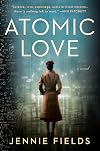
I loved the heroine of Atomic Love straight away—smart, independent, aware of and willing to embrace her sexuality, and not letting societal norms stop her. Rosalind is my kind of protagonist.
Based on the title and book jacket copy, I expected a love story—a complicated one based on the expected 1950s norms around marriage, women having careers, and sex—and Atomic Love delivered. I thought author Jennie Fields did a brilliant job capturing the beauty and flaws that accompany seeking show more love, and I very much appreciated a young heroine experiencing it in its complexity, making mistakes, and willing to have it in her life on her own terms.
You understand early on the plot involves a love triangle and the stakes are high and realistic given the characters involvement in the Manhattan Project. This is not a historical novel about the Manhattan Project. For me, that event provided setting and character inspiration and motivations. It also made the Cold War espionage piece realistic. Having watched The Americans (which is my only frame of reference), Jennie Fields' characters felt true and conflicted by what they were caught up in.
I found myself rooting for Charlie as the story unfolded (his backstory as a POW in the Philippines during WW2 was interesting and heart-wrenching) yet I understood why Rosalind would consider going back to Weaver. I identified with her struggles, her motivation to do her duty and perhaps find redemption, but also her attraction to and love for Weaver. Often, love and sex aren’t rational. Usually love and sex aren’t rational, even for rational, sciency people.
I eventually felt some sympathy for Weaver. I started out disliking him but once I learned his history, I came to sympathize with his predicament and believed he truly did love Rosalind. I couldn’t figure out how Fields was going to end the story in a satisfying and non-cliche way. I’ll just say I loved how she wrapped it up and appreciated that the ending—though perhaps rushed a bit—was left in Rosalind's very capable hands. show less
Based on the title and book jacket copy, I expected a love story—a complicated one based on the expected 1950s norms around marriage, women having careers, and sex—and Atomic Love delivered. I thought author Jennie Fields did a brilliant job capturing the beauty and flaws that accompany seeking show more love, and I very much appreciated a young heroine experiencing it in its complexity, making mistakes, and willing to have it in her life on her own terms.
You understand early on the plot involves a love triangle and the stakes are high and realistic given the characters involvement in the Manhattan Project. This is not a historical novel about the Manhattan Project. For me, that event provided setting and character inspiration and motivations. It also made the Cold War espionage piece realistic. Having watched The Americans (which is my only frame of reference), Jennie Fields' characters felt true and conflicted by what they were caught up in.
I found myself rooting for Charlie as the story unfolded (his backstory as a POW in the Philippines during WW2 was interesting and heart-wrenching) yet I understood why Rosalind would consider going back to Weaver. I identified with her struggles, her motivation to do her duty and perhaps find redemption, but also her attraction to and love for Weaver. Often, love and sex aren’t rational. Usually love and sex aren’t rational, even for rational, sciency people.
I eventually felt some sympathy for Weaver. I started out disliking him but once I learned his history, I came to sympathize with his predicament and believed he truly did love Rosalind. I couldn’t figure out how Fields was going to end the story in a satisfying and non-cliche way. I’ll just say I loved how she wrapped it up and appreciated that the ending—though perhaps rushed a bit—was left in Rosalind's very capable hands. show less
4.5 Exceeded my expectations (which had admittedly been lowered by the other recent Wharton-inspired novel, The Innocents by Francesca Segal).
Edith Wharton and her governess-turned-assistant Anna Bahlman share center stage in this novel, and it is a credit to author Jennie Fields that their stories are equally compelling. Edith has neither love, nor intimacy, nor even any longer affection for her husband Teddy; Anna does not see how Edith can treat "a good man" so carelessly and coldly. show more When Edith meets and begins a friendship and then a relationship with American journalist Morton Fullerton, Anna's disapproval - though barely expressed - threatens the women's lifelong friendship. However, as Teddy becomes moody, unpredictable, and eventually violent and irresponsible, Anna takes Edith's side again, and Edith, in turn, eventually concludes her affair with Fullerton.
Edith's decisions are not without consequences, but given the constrictions on women at the time, and her own mother's icy contempt (in part a mask for her own shame or ignorance, at least on the topic of marital relations), it is difficult for the reader to judge her harshly. Even Anna - though she intuits Fullerton's true character immediately - wants most of all for Edith to be happy.
It is not an action-packed narrative, though there is much travel - mostly between Paris, New York, and Massachusetts, though Anna has adventures of her own in Europe and visits her family in Missouri. There are also letters and journal entries throughout, some (all?) Wharton's own; Fields weaves these in so effortlessly that they blend with her own beautiful and observant writing.
I would recommend The Age of Desire to lovers of history and literature (Henry James is also a character), and those who enjoyed Wharton's own The Age of Innocence, Paula McLain's The Paris Wife, Ian McEwan's On Chesil Beach and Selden Edwards' The Little Book.
Quotes:
"So vigorously will I lean on life,
So strongly will I hold and embrace it,
That before I lose the sweetness of day
It will be heated from my touch." ("Imprint," Anna de Noailles, p. 47)
"What can be more tragic than someone destroying his own chance at happiness? It's the classic theme. The seductive glow of the wrong option. Wrong options always seem to have ribbons on them for me." (Fullerton, p. 50)
...restlessness without bravery means dissatisfaction. She wants something, but is she willing to take the risk to find it? (Edith, 66)
She feels dented by him. He marks her soul more than anyone she's ever known. (Edith, 86)
To get just what one wants when one wants it: has it ever happened to her before? How rare, how deeply satisfying it feels...she feels so utterly understood. (Edith, 129)
"I should like to be to you, friend of my heart, like a touch of wings brushing by you in the darkness, or like the scent of an invisible garden, that no one passes on an unknown road at night." (Edith, 131)
"The first time I was able to read a book, I thought, This is what I want to do every day for the rest of my life. I lose myself in reading." "I find myself in reading!" (Fullerton and Edith, 132)
"If only one could put a day into a potion and drink it whenever one likes," Henry says. "I would choose today..." (Henry James, 179)
And why should we worship purity, Edith wonders? Her own purity, or at least her blindness to the sensual, has happily and finally been removed like a stone from her shoe. An ocean can part her from Morton, and time can sway his heart from hers, but nothing can take away the power of the knowledge he's given her or the exquisiteness of its memory. (Edith, 193)
...her letters begin as one long howl of pain....Then somehow, she gathers herself...just to undercut the obvious grief written all over the first page. (Edith, 212)
Edith was born to be a lady. And a lady never pursues, never complains, never makes a scene and certainly never makes a fool of herself. (256)
She knows she must imprint this moment on her memory like a painting seen at auction but bought by someone else. (Edith, 305)
She has never been able to hide her feelings from him. She has never learned to dissemble. (Edith, 315)
...as a reflection is often infinitely more beautiful than the object it reflects. (Edith, 315)
Her joy has nowhere to go if she can't share it with him! (334)
But now, she feels nothing but the steady pound of her breaking heart. (336-337)
How ironic that a friendship so unwavering is the one more easily taken for granted. (346)
Perhaps there were no right options. Perhaps there never are. (346) show less
Edith Wharton and her governess-turned-assistant Anna Bahlman share center stage in this novel, and it is a credit to author Jennie Fields that their stories are equally compelling. Edith has neither love, nor intimacy, nor even any longer affection for her husband Teddy; Anna does not see how Edith can treat "a good man" so carelessly and coldly. show more When Edith meets and begins a friendship and then a relationship with American journalist Morton Fullerton, Anna's disapproval - though barely expressed - threatens the women's lifelong friendship. However, as Teddy becomes moody, unpredictable, and eventually violent and irresponsible, Anna takes Edith's side again, and Edith, in turn, eventually concludes her affair with Fullerton.
Edith's decisions are not without consequences, but given the constrictions on women at the time, and her own mother's icy contempt (in part a mask for her own shame or ignorance, at least on the topic of marital relations), it is difficult for the reader to judge her harshly. Even Anna - though she intuits Fullerton's true character immediately - wants most of all for Edith to be happy.
It is not an action-packed narrative, though there is much travel - mostly between Paris, New York, and Massachusetts, though Anna has adventures of her own in Europe and visits her family in Missouri. There are also letters and journal entries throughout, some (all?) Wharton's own; Fields weaves these in so effortlessly that they blend with her own beautiful and observant writing.
I would recommend The Age of Desire to lovers of history and literature (Henry James is also a character), and those who enjoyed Wharton's own The Age of Innocence, Paula McLain's The Paris Wife, Ian McEwan's On Chesil Beach and Selden Edwards' The Little Book.
Quotes:
"So vigorously will I lean on life,
So strongly will I hold and embrace it,
That before I lose the sweetness of day
It will be heated from my touch." ("Imprint," Anna de Noailles, p. 47)
"What can be more tragic than someone destroying his own chance at happiness? It's the classic theme. The seductive glow of the wrong option. Wrong options always seem to have ribbons on them for me." (Fullerton, p. 50)
...restlessness without bravery means dissatisfaction. She wants something, but is she willing to take the risk to find it? (Edith, 66)
She feels dented by him. He marks her soul more than anyone she's ever known. (Edith, 86)
To get just what one wants when one wants it: has it ever happened to her before? How rare, how deeply satisfying it feels...she feels so utterly understood. (Edith, 129)
"I should like to be to you, friend of my heart, like a touch of wings brushing by you in the darkness, or like the scent of an invisible garden, that no one passes on an unknown road at night." (Edith, 131)
"The first time I was able to read a book, I thought, This is what I want to do every day for the rest of my life. I lose myself in reading." "I find myself in reading!" (Fullerton and Edith, 132)
"If only one could put a day into a potion and drink it whenever one likes," Henry says. "I would choose today..." (Henry James, 179)
And why should we worship purity, Edith wonders? Her own purity, or at least her blindness to the sensual, has happily and finally been removed like a stone from her shoe. An ocean can part her from Morton, and time can sway his heart from hers, but nothing can take away the power of the knowledge he's given her or the exquisiteness of its memory. (Edith, 193)
...her letters begin as one long howl of pain....Then somehow, she gathers herself...just to undercut the obvious grief written all over the first page. (Edith, 212)
Edith was born to be a lady. And a lady never pursues, never complains, never makes a scene and certainly never makes a fool of herself. (256)
She knows she must imprint this moment on her memory like a painting seen at auction but bought by someone else. (Edith, 305)
She has never been able to hide her feelings from him. She has never learned to dissemble. (Edith, 315)
...as a reflection is often infinitely more beautiful than the object it reflects. (Edith, 315)
Her joy has nowhere to go if she can't share it with him! (334)
But now, she feels nothing but the steady pound of her breaking heart. (336-337)
How ironic that a friendship so unwavering is the one more easily taken for granted. (346)
Perhaps there were no right options. Perhaps there never are. (346) show less
Awards


You May Also Like


Statistics
- Works
- 10
- Members
- 916
- Popularity
- #27,999
- Rating
- 3.5
- Reviews
- 46
- ISBNs
- 62
- Languages
- 5
