
Steven Pinker
Author of The Language Instinct: How the Mind Creates Language
About the Author
Steven Pinker is an authority on language and the mind. He is Peter de Florez professor of psychology in the department of brain and cognitive sciences at the Massachusetts Institute of Technology. He lives in Cambridge, Massachusetts. Steven Arthur Pinker was born on September 18, 1954 in Canada. show more He is an experimental psychologist, cognitive scientist, linguist, and author. He is a psychology professor at Harvard University. He is the author of several non-fiction books including The Language Instinct, How the Mind Works, Words and Rules, The Blank Slate, The Stuff of Thought, and The Sense of Style: The Thinking Person's Guide to Writing in the 21st Century. His research in cognitive psychology has won the Early Career Award in 1984 and Boyd McCandless Award in 1986 from the American Psychological Association, the Troland Research Award in 1993 from the National Academy of Sciences, the Henry Dale Prize in 2004 from the Royal Institution of Great Britain, and the George Miller Prize in 2010 from the Cognitive Neuroscience Society. He was twice a finalist for the Pulitzer Prize, in 1998 and in 2003. In 2006, he received the American Humanist Association's Humanist of the Year award for his contributions to public understanding of human evolution. (Bowker Author Biography) show less
Works by Steven Pinker
Enlightenment Now: The Case for Reason, Science, Humanism, and Progress (2018) 2,573 copies, 63 reviews
The Sense of Style: The Thinking Person's Guide to Writing in the 21st Century (2014) 1,887 copies, 35 reviews
When Everyone Knows That Everyone Knows . . .: Common Knowledge and the Mysteries of Money, Power, and Everyday Life (2025) 181 copies, 2 reviews
Quando Todos Sabem Que Todos Sabem… 2 copies
Rationality-what it is 2 copies
100: Season 2 1 copy
暴力の人類史 上 1 copy
PROGRESI NJERËZOR 1 copy
Associated Works
This Will Make You Smarter: New Scientific Concepts to Improve Your Thinking (Edge Question Series) (2012) — Contributor — 905 copies, 17 reviews
The Expression of the Emotions in Man and Animals (1872) — Introduction, some editions — 873 copies, 10 reviews
What Is Your Dangerous Idea? Today's Leading Thinkers on the Unthinkable (2007) — Introduction — 668 copies, 8 reviews
The Nurture Assumption: Why Children Turn Out the Way They Do (1998) — Foreword, some editions — 607 copies, 12 reviews
The Great Big Book of Horrible Things: The Definitive Chronicle of History's 100 Worst Atrocities (2012) — Foreword — 336 copies, 8 reviews
Wondering at the Natural Fecundity of Things: Essays in Honor of Alan Prince (2006) — Contributor — 1 copy
Tagged
Common Knowledge
- Canonical name
- Pinker, Steven
- Legal name
- Pinker, Steven Arthur
- Birthdate
- 1954-09-18
- Gender
- male
- Education
- Dawson College (1973)
McGill University (BA|1976| Psychology)
Harvard University (Ph.D|1979 ∙ Experimental Psychology)
Massachusetts Institute of Technology (Postdoc) - Occupations
- cognitive scientist
linguist
popular science author
university professor - Organizations
- Harvard University
Massachusetts Institute of Technology
Stanford University - Awards and honors
- Troland Award, National Academy of Sciences (1993)
Henry Dale Prize from the Royal Institute of Great Britain (2004)
Humanist of the Year (2006)
Kistler Prize (2005)
Richard Dawkins Award (2013)
William James Fellow Award (2016) (show all 12)
National Academy of Sciences (2016)
American Academy of Arts and Sciences (1998)
Boyd McCandless Award (1986)
George Miller Prize (2010)
BBVA Foundation Frontiers of Knowledge Award (2022)
Golden Plate Award (1998, 2003) - Agent
- David Lavin Agency
- Relationships
- Goldstein, Rebecca (spouse)
Kosslyn, Stephen A. (doctoral advisor)
Pinker, Susan (sister) - Nationality
- USA
Canada (birth) - Birthplace
- Montreal, Quebec, Canada
- Places of residence
- Boston, Massachusetts, USA
Palo Alto, California, USA
Montréal, Québec, Canada
Cambridge, Massachusetts, USA - Map Location
- USA
Members
Discussions
Are we living in the most peaceful era of world history? in History: On learning from and writing history (September 2013)
Reviews
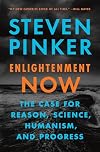
You’ve never had it so good, and Steven Pinker has the stats and charts (over 70!) to prove it. Wars are fewer and less severe, homicides are down, racism is in decline, terrorism is a fading fad, democracy rules, communicable diseases and poverty are on their way out. Life expectancy is up, and police are killing fewer people, both black and white. Even the poor have refrigerators. Inequality is a requisite sign of success. So appreciate the wonderful state of affairs you find yourself show more in. This is the message of Enlightenment Now, with a title that sounds like a protest placard, but which is actually a survey of the world by the statistics that states collect.
We’re so “progressive”, we’re beating back entropy itself. Steven Pinker takes 500 pages to create a world where everything is so fabulously much better than it ever has been, that anyone who says different is perpetuating an intellectual lie. This is why it is your enlightenment. The book is an endless, uplifting editorial. If you’re buying.
He’s at his best criticizing politics and science. He shows precisely how our biases prejudice our most thoughtful conclusions, and bemoans the lack of respect for science and the humanities. He says science is presented in some schools as “just another narrative, or myth”. Humanities are in danger of extinction, and they are critical to progress.
Pinker has a nice tendency to support his arguments with examples and charts. Unfortunately, he balances this with a tendency to ignore states or countries that don’t conform to his claims, and he swings numbers around to make them look better. He claims when he measures what people consume as opposed to what they earn, the poverty rate in the USA is 3%. So really, everyone is thriving. Even if they’re visibly not.
I fully realize Pinker is untouchable and slated for sainthood, but many things he says don’t add up, and a lot of it is just outrageous on its face. Let him speak for himself:
-On war: “Virtually every acre of land that was conquered after 1928 has been returned to the state that lost it.” (Something must have happened in 1927 for him to pick 1928, but he doesn’t say). Where do you even begin to refute this? Kaliningrad? Mauritania? The South China Sea? Crimea? Dnmbass? Palestine?
-He defends the demolition of the middle classes in the West. Yes, a hundred million Americans are worse off. But a billion Chinese are better off. “The tradeoff is worth it,” he says. That the extremely rich got fabulously more rich is fine with him, too.
-On terrorism’s “decline”, Pinker points to recently low numbers of victim deaths to show how safe we really are. He doesn’t mention all the freedom of movement, assembly and privacy we have lost to the terrorists. He’s satisfied they don’t kill that much, and that they will eventually fade away.
-On the mellowing of war: “Weapons don’t come into existence just because they are conceivable or physically possible.” Yes, they do. And worse, everything can be weaponized, from food to mouseclicks. Pinker goes even further, claiming “most historians” don’t think the atomic bombings caused Japan to surrender in three days, but rather it was the potential of Russia turning its attention from west to east.
-There is a great deal of nonsense about how much cheaper life is today. The provision of a light indoors would have cost the equivalent of £40,000 in the middle ages (if anyone could read), while today, lights cost fractions of pennies. And 100 years ago it took 1800 hours’ work to afford a refrigerator (among too many more such examples). But Pinker never bothers with the other side of the coin. That today, everyone must spend $150 a month on cable, $125 on phone (after purchasing a phone every two years, with each costing more than the fridge), a $20,000 car, a mortgage, and $50,000 in school debt (none of which were factors in the cost of living in the middle ages ) or be unable to function in society. His endless comparisons are pointless.
-He keeps repeating that because even the poor have flush toilets and refrigerators, they are much better off today than ever. He says even the fabulously wealthy Rothschilds didn’t have a washing machine like nearly everyone (80%) now supposedly has.
Pinker dismisses ecology as a pastime of the affluent. The more educated and wealthy we become, the more eco-conscious we become, so everything works out. He completely ignores the fact we have crossed the red line. That the oceans are toxic, that there is trash and plastic everywhere, that the carbon levels are at unseemly record levels. That the Paris Accord has not dented the damage one bit. But, he says, the air over London is no longer purple every day.
The book ends with an interminable bashing of religion, which Pinker considers “intellectually bankrupt”. He cites all the usual contradictions and hypocrisy, narrow-mindedness and longing for a cleaner era that never existed. Basically, religion and enlightenment are oil and water.
So you can look at Enlightenment Now in two ways, according to your own various biases. Either the greater message of positivism is too important (and correct) to criticize Pinker’s maddening claims, or the maddening claims make the whole exercise suspect.
David Wineberg show less
We’re so “progressive”, we’re beating back entropy itself. Steven Pinker takes 500 pages to create a world where everything is so fabulously much better than it ever has been, that anyone who says different is perpetuating an intellectual lie. This is why it is your enlightenment. The book is an endless, uplifting editorial. If you’re buying.
He’s at his best criticizing politics and science. He shows precisely how our biases prejudice our most thoughtful conclusions, and bemoans the lack of respect for science and the humanities. He says science is presented in some schools as “just another narrative, or myth”. Humanities are in danger of extinction, and they are critical to progress.
Pinker has a nice tendency to support his arguments with examples and charts. Unfortunately, he balances this with a tendency to ignore states or countries that don’t conform to his claims, and he swings numbers around to make them look better. He claims when he measures what people consume as opposed to what they earn, the poverty rate in the USA is 3%. So really, everyone is thriving. Even if they’re visibly not.
I fully realize Pinker is untouchable and slated for sainthood, but many things he says don’t add up, and a lot of it is just outrageous on its face. Let him speak for himself:
-On war: “Virtually every acre of land that was conquered after 1928 has been returned to the state that lost it.” (Something must have happened in 1927 for him to pick 1928, but he doesn’t say). Where do you even begin to refute this? Kaliningrad? Mauritania? The South China Sea? Crimea? Dnmbass? Palestine?
-He defends the demolition of the middle classes in the West. Yes, a hundred million Americans are worse off. But a billion Chinese are better off. “The tradeoff is worth it,” he says. That the extremely rich got fabulously more rich is fine with him, too.
-On terrorism’s “decline”, Pinker points to recently low numbers of victim deaths to show how safe we really are. He doesn’t mention all the freedom of movement, assembly and privacy we have lost to the terrorists. He’s satisfied they don’t kill that much, and that they will eventually fade away.
-On the mellowing of war: “Weapons don’t come into existence just because they are conceivable or physically possible.” Yes, they do. And worse, everything can be weaponized, from food to mouseclicks. Pinker goes even further, claiming “most historians” don’t think the atomic bombings caused Japan to surrender in three days, but rather it was the potential of Russia turning its attention from west to east.
-There is a great deal of nonsense about how much cheaper life is today. The provision of a light indoors would have cost the equivalent of £40,000 in the middle ages (if anyone could read), while today, lights cost fractions of pennies. And 100 years ago it took 1800 hours’ work to afford a refrigerator (among too many more such examples). But Pinker never bothers with the other side of the coin. That today, everyone must spend $150 a month on cable, $125 on phone (after purchasing a phone every two years, with each costing more than the fridge), a $20,000 car, a mortgage, and $50,000 in school debt (none of which were factors in the cost of living in the middle ages ) or be unable to function in society. His endless comparisons are pointless.
-He keeps repeating that because even the poor have flush toilets and refrigerators, they are much better off today than ever. He says even the fabulously wealthy Rothschilds didn’t have a washing machine like nearly everyone (80%) now supposedly has.
Pinker dismisses ecology as a pastime of the affluent. The more educated and wealthy we become, the more eco-conscious we become, so everything works out. He completely ignores the fact we have crossed the red line. That the oceans are toxic, that there is trash and plastic everywhere, that the carbon levels are at unseemly record levels. That the Paris Accord has not dented the damage one bit. But, he says, the air over London is no longer purple every day.
The book ends with an interminable bashing of religion, which Pinker considers “intellectually bankrupt”. He cites all the usual contradictions and hypocrisy, narrow-mindedness and longing for a cleaner era that never existed. Basically, religion and enlightenment are oil and water.
So you can look at Enlightenment Now in two ways, according to your own various biases. Either the greater message of positivism is too important (and correct) to criticize Pinker’s maddening claims, or the maddening claims make the whole exercise suspect.
David Wineberg show less
The Sense of Style: The Thinking Person's Guide to Writing in the 21st Century [audiobook] by Steven Pinker

Really outstanding. I could read (or listen) to Steven Pinker talk about the telephone book, he is so deeply humane and has such penetrating insight, but at the same time makes his observations seem self evident. There are parts where this book does become a bit dry, but he forcibly conveys the overarching message that the point of good written English is to communicate the writers viewpoint with clarity rather than following a pedant's grammatical strictures. Also acquired a useful new show more mental model - the curse of knowledge, one of the greatest impediments to good writing, being unable to imagine how someone who does not know what you know will see the world; this was also a central theme in the book. show less
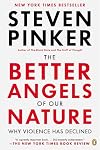
Втората световна война, геноцидите в Руанда и Дарфур, атомни бомби в Хирошима и Нагасаки, войните във Виетнам, Корея, Афганистан, Ирак, Русия напада Украйна, Пол Пот, Осама бин Ладен, червените кхмери, муджахидините, терористични атаки всеки ден... Без съмнение, 20 век е векът show more на войната, на военно-промишлената машина, най-насилственото столетие в историята на човечеството. А последните 20 години нещата стават още по-зле.
Да... ама не. Всъщност - точно обратното, колкото и да не ви се вярва. Сравнено с предишната човешка история, 20 в. всъщност е най-мирното столетие, с невиждано ниска до тогава смъртност от война и насилствени престъпления. А последните 20 години, статистически, са направо утопия. Разбира се, имаме си множество медии, които като лешояди се хранят от смъртта и войната, поради което повечето хора не вярват на горенаписаното.
Но въпреки, че има още много какво да се желае относно спирането на конфликтите в света и намаляването на престъпленията, в сравнение с предишните периоди на историята сегашния е направо цвете. Втората световна война с нейните 60 млн жертви даже не се доближава до примерно делото на Чингис Хан, чиито завоевания са намалили популацията на Земята тогава с 11% (повече от черната чума). Геноцидите на Хитлер, Сталин (срещу украинците) и Мао (срещу собствените му хора, при това най-вероятно без да иска) не се нареждат и в челната десятка даже на най-големите геноциди в историята...
Нещо повече - през цялата човешка история се наблюдава плавно и постоянно намаляване на смъртта от войни и насилие - от почти 35% вероятност за насилствена смърт при ловците-събирачи от палеолита, през брой на убийствата около 500 на 100 хил. души годишно през средновековието, и 100/100х.д.г. само преди стотина години, до невероятните 1.9 на 100 х.д.г. в момента в България и под 0.5 в Западна Европа (Русия с 10 е в третия свят, но пак в пъти по-добре от преди).
В настоящата страхотна и бая дълга книга (800 стр.), Стивън Пинкър не само обяснява и доказва с множество (даже досадно количество) данни гореописаните факти, но и прави хипотези за причините за тях. Като цяло прави задълбочен анализ на човешкото насилие - причини, трендове, начини и предположения за бъдещето. Прозренията му относно психологическите фактори за насилието са, според мен, направо просветляващи.
Силно препоръчвам. show less
Да... ама не. Всъщност - точно обратното, колкото и да не ви се вярва. Сравнено с предишната човешка история, 20 в. всъщност е най-мирното столетие, с невиждано ниска до тогава смъртност от война и насилствени престъпления. А последните 20 години, статистически, са направо утопия. Разбира се, имаме си множество медии, които като лешояди се хранят от смъртта и войната, поради което повечето хора не вярват на горенаписаното.
Но въпреки, че има още много какво да се желае относно спирането на конфликтите в света и намаляването на престъпленията, в сравнение с предишните периоди на историята сегашния е направо цвете. Втората световна война с нейните 60 млн жертви даже не се доближава до примерно делото на Чингис Хан, чиито завоевания са намалили популацията на Земята тогава с 11% (повече от черната чума). Геноцидите на Хитлер, Сталин (срещу украинците) и Мао (срещу собствените му хора, при това най-вероятно без да иска) не се нареждат и в челната десятка даже на най-големите геноциди в историята...
Нещо повече - през цялата човешка история се наблюдава плавно и постоянно намаляване на смъртта от войни и насилие - от почти 35% вероятност за насилствена смърт при ловците-събирачи от палеолита, през брой на убийствата около 500 на 100 хил. души годишно през средновековието, и 100/100х.д.г. само преди стотина години, до невероятните 1.9 на 100 х.д.г. в момента в България и под 0.5 в Западна Европа (Русия с 10 е в третия свят, но пак в пъти по-добре от преди).
В настоящата страхотна и бая дълга книга (800 стр.), Стивън Пинкър не само обяснява и доказва с множество (даже досадно количество) данни гореописаните факти, но и прави хипотези за причините за тях. Като цяло прави задълбочен анализ на човешкото насилие - причини, трендове, начини и предположения за бъдещето. Прозренията му относно психологическите фактори за насилието са, според мен, направо просветляващи.
Силно препоръчвам. show less
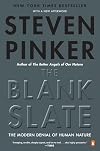
Pinker deftly blends a deep understanding of philosophy and a thorough review of scientific literature to critic the dearly-held 19070’s intellectual doctrines of the blank slate, the noble savage and the ghost of the machine. Like Better Angles of our Nature, the book is expansive, thorough and convincing - liberally citing from the literature to make his points with data.
Whether we like it or not, we have a common human nature and it’s imparted by our genes. While this does not mean show more our destiny is predetermined, it does shape our lives and our society. To ignore it, or worse, actively deny it exists, is folly.
What was particularly striking was how recognizable the debunked arguments still are in today’s intellectual debates. As explored in the book, many intellectuals espouse theories they want to be true, largely because they fit with their ideology, even if they have no basis in fact. After reading this book, you’ll see these arguments frequently in debates of many of societies most passionate disagreements.
A quote I think succinctly summarizes Pinker’s argument:
“Acknowledging human nature does not mean overturning our personal world views, and I would have nothing to suggest as a replacement if it did. It means only taking intellectual life out of its parallel universe and reuniting it with science and, when it is borne out by science, with common sense. The alternative is to make intellectual life increasingly irrelevant to human affairs, to turn intellectuals into hypocrites, and to turn everyone else into anti-intellectuals.” show less
Whether we like it or not, we have a common human nature and it’s imparted by our genes. While this does not mean show more our destiny is predetermined, it does shape our lives and our society. To ignore it, or worse, actively deny it exists, is folly.
What was particularly striking was how recognizable the debunked arguments still are in today’s intellectual debates. As explored in the book, many intellectuals espouse theories they want to be true, largely because they fit with their ideology, even if they have no basis in fact. After reading this book, you’ll see these arguments frequently in debates of many of societies most passionate disagreements.
A quote I think succinctly summarizes Pinker’s argument:
“Acknowledging human nature does not mean overturning our personal world views, and I would have nothing to suggest as a replacement if it did. It means only taking intellectual life out of its parallel universe and reuniting it with science and, when it is borne out by science, with common sense. The alternative is to make intellectual life increasingly irrelevant to human affairs, to turn intellectuals into hypocrites, and to turn everyone else into anti-intellectuals.” show less
Lists
Career (1)
Secular Ethics (1)
How it can be. (1)
Wisdom (1)
Book Club List (1)
Awards


You May Also Like


Associated Authors
Statistics
- Works
- 41
- Also by
- 15
- Members
- 31,723
- Popularity
- #623
- Rating
- 3.9
- Reviews
- 429
- ISBNs
- 352
- Languages
- 19
- Favorited
- 101

