
William Golding (1911–1993)
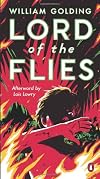
Author of Lord of the Flies
About the Author
William Golding was born in Cornwall, England on September 19, 1911. Although educated to be a scientist at the request of his father, he developed an interest in literature. At Oxford University, he studied natural science for two years and then transferred to a program for English literature and show more philosophy. He eventually became a schoolmaster at Bishop Wordsworth's School in Salisbury. During World War II, he joined the Royal Navy and was involved in the sinking of the German battleship Bismarck. After the war, he returned to Bishop Wordsworth's School and taught there until 1962. His first novel, Lord of the Flies, was published in 1954 and was made into a film in 1963. His other novels include The Inheritors, Free Fall, The Spire, The Pyramid, The Paper Men, Close Quarters, and Fire down Below. He won the Booker Prize for Rites of Passage in 1980 and the Nobel Prize for Literature in 1983. He also wrote plays, essays, and short stories. He was knighted by Queen Elizabeth II in 1988. He died on June 19, 1993. (Bowker Author Biography) show less
Series
Works by William Golding
Lord of the flies c.25 17 copies
Penguin Study Notes: Lord of the Flies 13 copies
Lord of the Flies / The Pyramid 3 copies
Poems 2 copies
Los herederos 2 copies
To the Ends of the Earth 2 copies
PERËNDIA E MIZAVE 1 copy
lord of the flies volume 2 1 copy
Novelas 1 copy
The Art of the Critic: Literary Theory and Criticism from the Greeks to the Present (Vol. 2 Early Renaissance) (1986) 1 copy
Повелитель мух Шпиль; Пирамида : Романы / Уильям Голдинг; [Пер. с англ. Е. Суриц, В. Хинкиса] (1999) 1 copy
lord of the flies volume 1 1 copy
Papier-Männer Roman 1 copy
1983 1 copy
WIDEVIEW/PERIGEE BOOKS 1 copy
Miss Pulkinhorn 1 copy
Lord of the flies : notes 1 copy
Clonk! Clonk! 1 copy
Çatal Dil 1 copy
Höfuðpaurinn 1 copy
To the Ends of the Earth 1 copy
Господарот на мувите 1 copy
Associated Works
The Moral Life: An Introductory Reader in Ethics and Literature (1999) — Contributor — 202 copies, 2 reviews
The Graphic Canon, Vol. 3: From Heart of Darkness to Hemingway to Infinite Jest (2013) — Contributor — 162 copies, 1 review
Deep Blue: Stories of Shipwreck, Sunken Treasure, and Survival (Adrenaline) (2001) — Contributor — 32 copies
The Bedside 'Guardian' 30: A Selection from The Guardian, 1980-1981 (1981) — Introduction — 9 copies
Die englische Literatur 10 in Text und Darstellung. 20. Jahrhundert 2. (2001) — Contributor — 6 copies
The Art of the Critic: Literary Theory and Criticism from the Greeks to the Present (10-Volume Set) (1985) 3 copies
Antaeus No. 35, Autumn 1979 — Contributor — 1 copy
Tagged
Common Knowledge
- Canonical name
- Golding, William
- Legal name
- Golding, Sir William Gerald
- Birthdate
- 1911-09-19
- Date of death
- 1993-06-19
- Gender
- male
- Education
- University of Oxford (BA|1934 - Brasenose College)
Marlborough Grammar School - Occupations
- novelist
teacher
sailor - Organizations
- Royal Navy (WWII)
Bishop Wordsworth's School - Awards and honors
- Nobel Prize (1983)
Royal Society of Literature (Fellow, 1955)
Order of the British Empire (Commander, 1965)
Knight Bachelor (1988)
Royal Society of Literature (Companion of Literature, 1983) - Relationships
- Golding, Alec (father)
Golding, Joseph (brother)
Curnoe, Mildred (mother)
Brookfield, Ann (wife)
Golding, Judith (daughter)
Golding, David (son) (show all 7)
Lovelock, James (friend and neighbour) - Cause of death
- heart failure
- Nationality
- UK
- Birthplace
- Newquay, Cornwall, England, UK
- Places of residence
- Newquay, Cornwall, England, UK (birth)
Marlborough, Wiltshire, England, UK
Bowerchalke, Wiltshire, England, UK
Salisbury, Wiltshire, England, UK
Perranarworthal, England, UK (death) - Place of death
- Perranarworthal, England, UK
- Burial location
- Bowerchalke Village Churchyard, Bowerchalke, England, UK
- Map Location
- England, UK
Members
Discussions
Lord of the Flies - high market demand? in Folio Society Devotees (June 2025)
BRITISH AUTHOR CHALLENGE - OCTOBER 2016 - ATKINSON & GOLDING in 75 Books Challenge for 2016 (October 2016)
British children abandoned on a deserted island - Fiction - forty or fifty years ago in Name that Book (February 2014)
Happy 100th to The Lord of the Fly in the Ointment, Sir William Golding in Nobel Laureates in Literature (March 2013)
Reviews

One of the best openings to a novel that I’ve read. There are sentences that look innocuous but resound with meaning if you’ve been paying attention. I hadn’t been paying attention but luckily the GCSE student who owned this copy before me was, and had helpfully underlined the relevant passages.
Unfortunately there are some pretty serious problems with the novel. Golding is incapable of describing the geographical layout properly. This makes it impossible to follow the action at the end show more of the novel in anything but the broadest way. Perhaps more seriously is that the geography functions as a metaphor which is sometimes thereby occluded. There’s a preoccupation with alcohol and I did wonder if this was a factor in these problems.
He does pull it together at the end and return to those deeper meanings. My guess would be that the novel is about the fear that comes from knowledge and the guilt that pursues us when we take what does not belong to us. And the whole thing is beautifully written of course. Golding’s a bit like a man repeatedly firing an antique gun. He looks and sounds cool even when it misfires. show less
Unfortunately there are some pretty serious problems with the novel. Golding is incapable of describing the geographical layout properly. This makes it impossible to follow the action at the end show more of the novel in anything but the broadest way. Perhaps more seriously is that the geography functions as a metaphor which is sometimes thereby occluded. There’s a preoccupation with alcohol and I did wonder if this was a factor in these problems.
He does pull it together at the end and return to those deeper meanings. My guess would be that the novel is about the fear that comes from knowledge and the guilt that pursues us when we take what does not belong to us. And the whole thing is beautifully written of course. Golding’s a bit like a man repeatedly firing an antique gun. He looks and sounds cool even when it misfires. show less

Where his first book exposed the fundamental nastiness of humans by taking a bunch of children away from the constraints of adult society, Golding's second novel shows us an equally bleak view of the species from the point of view of the hominids we displaced. His Neanderthals are gentle, cooperative, and committed — through a simple, all-embracing, Mother Goddess cult — to sustainable use of what the forest has to offer them. When they first come into contact with a group of the show more new-fangled homo sapiens that have strayed into their area, both sides panic, but the result is mildly awkward for the ruthless and resourceful new people and disastrous for the delicately-balanced Neanderthal clan.
The message may be quite simplistic, but Golding handles it just as brilliantly as you would expect, developing a stripped-down language free from cultural and technological images to show us the world — and the puzzling behaviours of the new people — from the Neanderthals' perspective and engage our sympathy with their struggle to survive. It is only right at the end of the book that the main viewpoint character, Lok, discovers the power of simile and starts applying it to everything around him. Obviously it is all a trick: we don't really know anything about how Neanderthals used language or how sophisticated their culture was, apart from a few slim clues in the artefacts they did or (mostly) didn't leave behind. But Golding creates a plausible and self-consistent view of the world, and it is quite a shock when the perspective suddenly shifts to the new people in the closing chapter and a half. show less
The message may be quite simplistic, but Golding handles it just as brilliantly as you would expect, developing a stripped-down language free from cultural and technological images to show us the world — and the puzzling behaviours of the new people — from the Neanderthals' perspective and engage our sympathy with their struggle to survive. It is only right at the end of the book that the main viewpoint character, Lok, discovers the power of simile and starts applying it to everything around him. Obviously it is all a trick: we don't really know anything about how Neanderthals used language or how sophisticated their culture was, apart from a few slim clues in the artefacts they did or (mostly) didn't leave behind. But Golding creates a plausible and self-consistent view of the world, and it is quite a shock when the perspective suddenly shifts to the new people in the closing chapter and a half. show less

Gosh, this is even bleaker than my hazy memories remember! Is this the message we want to impart to all GCSE children out of all the books in the world?
In the unlikely event that there are people left out there who don't know the plot, this is the story of a posse of school children who are stranded on a tropical island, after their plane crashes when they are being evacuated (there is a hazy WWIII theme going on in the background).
Despite some initial good will the boys soon schism - Ralph, show more the athletic upstanding son of a navel officer and all around Hero representing civilisation and keeping the fire going in the hope of rescue, and Jack representing savagery and hunting and the barbaric darkness in the heart of man if civilisation should ever falter.
The book powers on and is unputdownable. Despite the characters being cyphers to tell the story, you still find yourself feeling for them. Poor Simon, with his deep intuitive understanding, too terrified to speak. Piggy, with his weight and his asthma and his spectacles, being the main force for educated reason, but also mocked by all.
Like many books of its time, the most interesting characters are killed to help the Hero have his story arc. Yes, I'm pleased that brave Ralph makes it out alive, but the fat ones and the weak ones are foils to show the evilness of humanity and add terror to Ralph's story.
It is of course, deeply racist. The drawing of the loss of civilisation is deeply entwined with images of n*ggers, island savages, face paint and hunting with spears. As though civilisation and reason and caring for the weak are a White Mans prerogative, and all island people were savage reasonless hunters.
I found myself more inclined to read it as a christian allegory this time. The fire must be kept burning, because our eyes must be on Rescue from the Island, not on indulging our base desires for meat and hunting.
And I know the point is to set up a false dichotomy to tell a morality tale about the darkness of the human condition, but really, you can't help but think there is a huge excluded middle if you face onto it as a story, not an analogy. Ralph is sensible to want to build a fire, but there is some chance all other humans have been wiped out, and Jack is right that hunting has a place in survival as well.
It definitely felt like it had been written by someone well versed in office politics. The slow sliding away, the slights, the factions, the half-had arguments with no resolution that turn into bitter burning hatred...
Anyway, I definitely see why it is a classic, and it is an unputdownable and moving read. But wow, it's dark! show less
In the unlikely event that there are people left out there who don't know the plot, this is the story of a posse of school children who are stranded on a tropical island, after their plane crashes when they are being evacuated (there is a hazy WWIII theme going on in the background).
Despite some initial good will the boys soon schism - Ralph, show more the athletic upstanding son of a navel officer and all around Hero representing civilisation and keeping the fire going in the hope of rescue, and Jack representing savagery and hunting and the barbaric darkness in the heart of man if civilisation should ever falter.
The book powers on and is unputdownable. Despite the characters being cyphers to tell the story, you still find yourself feeling for them. Poor Simon, with his deep intuitive understanding, too terrified to speak. Piggy, with his weight and his asthma and his spectacles, being the main force for educated reason, but also mocked by all.
It is of course, deeply racist. The drawing of the loss of civilisation is deeply entwined with images of n*ggers, island savages, face paint and hunting with spears. As though civilisation and reason and caring for the weak are a White Mans prerogative, and all island people were savage reasonless hunters.
I found myself more inclined to read it as a christian allegory this time. The fire must be kept burning, because our eyes must be on Rescue from the Island, not on indulging our base desires for meat and hunting.
And I know the point is to set up a false dichotomy to tell a morality tale about the darkness of the human condition, but really, you can't help but think there is a huge excluded middle if you face onto it as a story, not an analogy. Ralph is sensible to want to build a fire, but there is some chance all other humans have been wiped out, and Jack is right that hunting has a place in survival as well.
It definitely felt like it had been written by someone well versed in office politics. The slow sliding away, the slights, the factions, the half-had arguments with no resolution that turn into bitter burning hatred...
Anyway, I definitely see why it is a classic, and it is an unputdownable and moving read. But wow, it's dark! show less
I believe that this book is the ultimate testament to how an ending can soil an amazing book.
When I was younger, fiction didn't really do it for me. I was, admittedly edgy, and wanted to step into the disturbing when I had free time. I think that is why horror movies and video games appealed to me so much. Stuff like 'Cabin in the Woods' and 'COD: Zombies' I gave reading many chances, and outside of a couple titles, The Hunger Games and The Road (odd combination I know), nothing hit that show more real, teenage angst disturbing that I wanted. But this book reawakened that in me, and I see now that myself as a teenager would have loved this. It is a shame I was never assigned to read it in school.
The premise is all too real for me. I can suspend my disbelief that all these kids survived a plane crash, because after that, there is no supernatural or unrealistic aspect to the story. Everything that happens is exactly what would happen in real life with a bunch of twelve-year-olds. The fighting over a leader, over priorities, and over control. The realism of one bad apple in the bunch ruining everything hits hard for me.
The characters are well written, not in crazy backstory or deep motivations and purpose, but just in their actions. They are, once again with the strength of this story, real. Ralph, our "hero" is still a jerk to the fat kid like most preteens would be. Jack, the villain, is a classic, but real bully, someone who knows how to have people on his side, and can convince them to commit very deep violence just because he is charismatic.
The events are meaningful as well. The deaths we see, though I won't spoil them, happen in a way that can be believed when you mix in the pressures the kids are dealing with. The first death is caused by a combination of fear/paranoia, and delirium brought on by malnourishment and exhaustion. The second death is forced by a young boy, who is beginning his journey in the way of manipulation, and on his way to becoming an adult devoid of empathy and emotion.
The ending, as I mentioned, is what killed me in the end. I know I am not the author, and I hate when people suggest different endings to works they didn't write, but the end feels like a cop out to me. I won't 'suggest' anything, I will simply say that Golding didn't hold back on realism and brutality until the end, where stories like this need that most. I can appreciate the thematic importance the ending has, but not much beyond that.
As I mentioned, I never read this in high school, so when one of my students wanted to read this on his own, then came to me asking questions about the characters, I had to take the weekend to lock in, and lock in I did. show less
When I was younger, fiction didn't really do it for me. I was, admittedly edgy, and wanted to step into the disturbing when I had free time. I think that is why horror movies and video games appealed to me so much. Stuff like 'Cabin in the Woods' and 'COD: Zombies' I gave reading many chances, and outside of a couple titles, The Hunger Games and The Road (odd combination I know), nothing hit that show more real, teenage angst disturbing that I wanted. But this book reawakened that in me, and I see now that myself as a teenager would have loved this. It is a shame I was never assigned to read it in school.
The premise is all too real for me. I can suspend my disbelief that all these kids survived a plane crash, because after that, there is no supernatural or unrealistic aspect to the story. Everything that happens is exactly what would happen in real life with a bunch of twelve-year-olds. The fighting over a leader, over priorities, and over control. The realism of one bad apple in the bunch ruining everything hits hard for me.
The characters are well written, not in crazy backstory or deep motivations and purpose, but just in their actions. They are, once again with the strength of this story, real. Ralph, our "hero" is still a jerk to the fat kid like most preteens would be. Jack, the villain, is a classic, but real bully, someone who knows how to have people on his side, and can convince them to commit very deep violence just because he is charismatic.
The events are meaningful as well. The deaths we see, though I won't spoil them, happen in a way that can be believed when you mix in the pressures the kids are dealing with. The first death is caused by a combination of fear/paranoia, and delirium brought on by malnourishment and exhaustion. The second death is forced by a young boy, who is beginning his journey in the way of manipulation, and on his way to becoming an adult devoid of empathy and emotion.
The ending, as I mentioned, is what killed me in the end. I know I am not the author, and I hate when people suggest different endings to works they didn't write, but the end feels like a cop out to me. I won't 'suggest' anything, I will simply say that Golding didn't hold back on realism and brutality until the end, where stories like this need that most. I can appreciate the thematic importance the ending has, but not much beyond that.
As I mentioned, I never read this in high school, so when one of my students wanted to read this on his own, then came to me asking questions about the characters, I had to take the weekend to lock in, and lock in I did. show less
Lists
DELETE (1)
1980 great books (1)
Titles to Avoid (1)
BBC Big Read (1)
Read (1)
First Novels (1)
BitLife (1)
. (1)
100 (1)
100 knjiga (1)
A Novel Cure (1)
Books About Boys (1)
Enfants sans (1)
Favourite Books (1)
Unread books (1)
Banned Books (1)
Best Sea Stories (1)
Booker Prize (1)
Fiction For Men (1)
Sonlight Books (1)
BBC Big Read (1)
1970s (1)
scav (1)
Gen X Library (1)
Books I've read (1)
Overdue Podcast (1)
BBC Top Books (1)
Best Satire (1)
Modernism (1)
1960s (1)
Nifty Fifties (2)
1950s (2)
Five star books (2)
bound (1)
el (1)
top 100 (1)
Folio Society (1)
Page Turners (1)
. (1)
To Read - Horror (1)
AP Lit (1)
Best Dystopias (1)
Awards


You May Also Like


Associated Authors
Statistics
- Works
- 98
- Also by
- 21
- Members
- 68,440
- Popularity
- #195
- Rating
- 3.7
- Reviews
- 1,031
- ISBNs
- 848
- Languages
- 32
- Favorited
- 62
