
John Dittmer (1) (1939–)
Author of Local People: The Struggle for Civil Rights in Mississippi
For other authors named John Dittmer, see the disambiguation page.
About the Author
John Dittmer is author of Black Georgia in the Progressive Era, 1900-1920 and Local People: The Struggle for Civil Rights in Mississippi, which was awarded the Bancroft Prize. He has taught in the history departments at Tougaloo College, Brown University, the Massachusetts Institute of Technology, show more and DePauw University, where he is professor emeritus. show less
Works by John Dittmer
The Good Doctors: The Medical Committee for Human Rights and the Struggle for Social Justice in Health Care (2009) 71 copies, 19 reviews
Tagged
Common Knowledge
- Birthdate
- 1939
- Gender
- male
- Education
- Indiana University (BA, MA, PhD)
- Occupations
- historian
professor emeritus (History) - Organizations
- DePauw University
Tougaloo College
Massachusetts Institute of Technology
Brown University - Nationality
- USA
- Associated Place (for map)
- USA
Members
Reviews
The Good Doctors: The Medical Committee for Human Rights and the Struggle for Social Justice in Health Care by John Dittmer
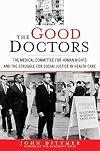
The Good Doctors is an interesting and well-researched account of the Medical Committee for Human Rights, a group of doctors, nurses, and other health care professionals that played a large yet often ignored role in the civil rights movement of the 1960s.
Dittmer does an excellent job portraying the people who played major roles in the organization and the sacrifices they made in order to provide medical services to other activists and bring to light the injustice of segregated health care. show more For their belief that every human being deserves quality health care regardless of the color of their skin, many left lucrative private practices, were ostracized by many in their professional community, and even faced violence and arrest.
This account of the unsung heroes behind the scenes of the civil rights movement is worth reading for anyone who is interested in the movement or health care. show less
Dittmer does an excellent job portraying the people who played major roles in the organization and the sacrifices they made in order to provide medical services to other activists and bring to light the injustice of segregated health care. show more For their belief that every human being deserves quality health care regardless of the color of their skin, many left lucrative private practices, were ostracized by many in their professional community, and even faced violence and arrest.
This account of the unsung heroes behind the scenes of the civil rights movement is worth reading for anyone who is interested in the movement or health care. show less
 This review was written for LibraryThing Early Reviewers.
Local People: The Struggle for Civil Rights in Mississippi (Blacks in the New World) by John Dittmer

Dittmer chronicles the grass roots politics of the Magnolia State, the home of the South's most virulent form of White Supremacy. Focusing on both the local Blacks of Mississippi and the activists from outside the state in SNCC and CORE, he adds complexity to the picture of the Civil Rights Movement in documenting the interplay between "outside agitators" and native protest. Outsiders from SNCC and CORE could never have survived without the support of local people. He also helps us show more understand the class undercurrents of a movement that often pitted the black middle class against the rural poor. The trajectory he maps is one that follows native protest from the cauldron of WWII and its aftermath through the 50s and into the 60s. Men who returned from the war and were denied the vote became activists in the 40s and 50s within the NAACP. The 60s are really the focal point of his story and here his focus begins with SNCC and ends with the demise of the MFDP. To move beyond this demise in local activism after 1968 is not the project of this book. Dittmer's conclusion is that the radical demands of the MFDP, like the radical demands of other movements in American history (the Populists?) were not met. Though much of their reform program was indeed enacted. We inhabit an America shaped by the egalitarian strivings of local people from Mississippi as much as we do one shaped by the National Government's halting progress toward equal rights.
Mississippi in the age of "Grand Expectations" was a very violent place, and most of that violence was exercised by white supremacists against blacks. Dittmer catalogs this violence in near numbing detail. As Kim Lacey Rodgers points out in her review, he also " shows the craven role played by the federal government, as the administrations of both John Kennedy and Lyndon Johnson ignored the segregationist violence in the state in hopes of placating men such as Senators John Stennis and James O. Eastland." As Alan Draper points out in his review for the Journal of Negro History, Dittmer's archetype for local people is Fannie Lou Hamer. But she is an archetype, indeed, and in giving credit to the local people in Mississippi he chronicles the lives of people who braved the terror of the South's worst state. In Draper's apt summary, credit here goes
to the people in Ruleville who braved economic reprisals and police violence to register to vote; to the people in Jackson who desegregated public facilities; to the people in McComb who withstood Klan terror to build a community center; to the people in Cleveland who distributed food when the county withdrew from federal support programs; to the people in Clarksdale who boycotted white merchants; and tot the people of Hattiesburg who waited in line for hours to take the voter registration tests. (p. 203)
Granting this, however, Draper takes issue with the way Dittmer uses class. Trying to demonstrate the class politics of the movement, Draper believes Dittmer misrepresents the struggle. Teachers and preachers certainly belonged to the middle class, but so too did business people and independent farmers. And more generally, one is left arguing if the radical democracy represented the larger Mississippi Black population better than the more "moderate" program of the NAACP. Against the class politics of the MFDP, Draper urges a consideration of the mass mobilization around voter registration. I would submit, however, that Dittmer's consideration of Great Society Politics in Mississippi is a lasting contribution to the historiography. show less
Mississippi in the age of "Grand Expectations" was a very violent place, and most of that violence was exercised by white supremacists against blacks. Dittmer catalogs this violence in near numbing detail. As Kim Lacey Rodgers points out in her review, he also " shows the craven role played by the federal government, as the administrations of both John Kennedy and Lyndon Johnson ignored the segregationist violence in the state in hopes of placating men such as Senators John Stennis and James O. Eastland." As Alan Draper points out in his review for the Journal of Negro History, Dittmer's archetype for local people is Fannie Lou Hamer. But she is an archetype, indeed, and in giving credit to the local people in Mississippi he chronicles the lives of people who braved the terror of the South's worst state. In Draper's apt summary, credit here goes
to the people in Ruleville who braved economic reprisals and police violence to register to vote; to the people in Jackson who desegregated public facilities; to the people in McComb who withstood Klan terror to build a community center; to the people in Cleveland who distributed food when the county withdrew from federal support programs; to the people in Clarksdale who boycotted white merchants; and tot the people of Hattiesburg who waited in line for hours to take the voter registration tests. (p. 203)
Granting this, however, Draper takes issue with the way Dittmer uses class. Trying to demonstrate the class politics of the movement, Draper believes Dittmer misrepresents the struggle. Teachers and preachers certainly belonged to the middle class, but so too did business people and independent farmers. And more generally, one is left arguing if the radical democracy represented the larger Mississippi Black population better than the more "moderate" program of the NAACP. Against the class politics of the MFDP, Draper urges a consideration of the mass mobilization around voter registration. I would submit, however, that Dittmer's consideration of Great Society Politics in Mississippi is a lasting contribution to the historiography. show less
The Good Doctors: The Medical Committee for Human Rights and the Struggle for Social Justice in Health Care by John Dittmer

I found John Dittmer’s The Good Doctors to be inspiring and disheartening at the same time. The book is a well-written, well-researched volume that tells the story of the Medical Committee for Human Rights. Dittmer admits that he was moved to write this book when it was pointed out to him, at a commemoration of the thirtieth anniversary of Freedom Summer that his new book only contained one paragraph about the MCHR but that paragraph had two factual errors in it. Any student of military show more history will tell you that support units get no respect. That was the original reason that the MCHR was formed, to provide medical support to the civil rights workers in the South. They did that and much more.
MCHR members risked injury and death to be there to provide medical attention to anyone injured in marches and protests across the South, in Washington, San Francisco, Chicago, and Wounded Knee. They started community health centers and worked to pass every health care reform of the 1960s and 70s. Dittmer covers their failures as well as their accomplishments, he details how policy disputes and ideology prevented the MCHR from being more effective and eventually caused it to fade away.
What I found most impressive about the book was the attention given to the background of the people involved. It was clear that the people involved had, personally, more to loose than they would gain from their participation. Dittmer dismisses some of the affluent doctors of loosing interest in the cause after they earned some ‘war stories’ to tell their friends and of loosing interest when other liberal causes came up but the main players courage shines through, Dr. June Finer’s fearless outrage at a policeman stealing a flag away from a young boy, Dr. Bob Smith’s thoughts as he marched down secluded Mississippi back roads as Dr. King’s personal physician, and the efforts of the many doctors, nurses and medical students who struggled to improve health care for all the citizens of the nation.
The penultimate chapter deals with the history of national health care reform since the Truman administration and is exceptionally relevant to the efforts being made in Washington this year. show less
MCHR members risked injury and death to be there to provide medical attention to anyone injured in marches and protests across the South, in Washington, San Francisco, Chicago, and Wounded Knee. They started community health centers and worked to pass every health care reform of the 1960s and 70s. Dittmer covers their failures as well as their accomplishments, he details how policy disputes and ideology prevented the MCHR from being more effective and eventually caused it to fade away.
What I found most impressive about the book was the attention given to the background of the people involved. It was clear that the people involved had, personally, more to loose than they would gain from their participation. Dittmer dismisses some of the affluent doctors of loosing interest in the cause after they earned some ‘war stories’ to tell their friends and of loosing interest when other liberal causes came up but the main players courage shines through, Dr. June Finer’s fearless outrage at a policeman stealing a flag away from a young boy, Dr. Bob Smith’s thoughts as he marched down secluded Mississippi back roads as Dr. King’s personal physician, and the efforts of the many doctors, nurses and medical students who struggled to improve health care for all the citizens of the nation.
The penultimate chapter deals with the history of national health care reform since the Truman administration and is exceptionally relevant to the efforts being made in Washington this year. show less
This review was written for LibraryThing Early Reviewers.The Good Doctors: The Medical Committee for Human Rights and the Struggle for Social Justice in Health Care by John Dittmer
Superbly written (and I would expect nothing less from this author), The Good Doctors examines the creation, role, activism and struggles of the Medical Committee for Human Rights, which started as an organization to help out civil rights workers in the south during the early 1960s. The committee's statement of purpose:
"We are deeply concerned with the health needs of the socially deprived. It is our purpose to initiate activities to improve their health status and to provide professional show more support and assistance to organizations concerned with human rights." (62).
That is precisely what the members of this committee did, whether it be to civil rights workers in Mississippi or other places in the south, or to offer medical aid to those who marched in Selma (and other places). The Committee also worked tirelessly to gather evidence of racial discrimination in the cases of hospitals and medical officials who had taken federal funding but who were actively discriminating against African-Americans not only in the south, but in other parts of the country as well. Members were often attacked by law enforcement while they were in the Jim Crow-ruled American South, making their jobs even tougher but still they kept on with their work. The members set up health clinics and tried to get to the root of social injustice and help locals to gain some sense of self-empowerment. Members were there at Wounded Knee, at Alcatraz, at the Chicago Democratic Convention, at various anti-Vietnam war demonstrations and the list goes on. The Committee worked to try to get the message across to politicians, the AMA and other organizations that health care is not a privilege, but rather a human right, through their efforts to support a national health program.
The most impressive part of this book (not that the whole thing isn't great) was Dittmer's examination of how the MCHR went from its original conception to the "medical arm of the new left." From the Black Panthers on down to the Progressive Labor Party in the 1970s and beyond, Dittmer shows how national and local politics, infighting among factions in the local Committee chapters and at higher levels, and other factors changed the face of MCHR as the decades progressed. The changing face of Black activism, taking on a more "Black Nationalism" tone, the wave of ideologies of the revolutionary organizations and parties in the 70s also led to changes in the organization. Dittmer does an excellent job in examining these phenomenon.
Finally, not only does Dittmer vew the Committee as an entity, he goes on in some detail to examine the motivations and backgrounds of the founding members, and those who joined later, as well as the hard and often dangerous being work done by individual members out in the field, anywhere where racism & poverty often kept people in ignorance or prevented people from receiving decent health care.
I can't really do this book justice in a few short paragraphs, but it is simply excellent. Anyone with any interest in a more in-depth look at the Civil Rights Movement itself, or as it is connected to the history of medicine in the US should read this book. I highly recommend it.
thanks, Librarything Early Reviewers program! show less
"We are deeply concerned with the health needs of the socially deprived. It is our purpose to initiate activities to improve their health status and to provide professional show more support and assistance to organizations concerned with human rights." (62).
That is precisely what the members of this committee did, whether it be to civil rights workers in Mississippi or other places in the south, or to offer medical aid to those who marched in Selma (and other places). The Committee also worked tirelessly to gather evidence of racial discrimination in the cases of hospitals and medical officials who had taken federal funding but who were actively discriminating against African-Americans not only in the south, but in other parts of the country as well. Members were often attacked by law enforcement while they were in the Jim Crow-ruled American South, making their jobs even tougher but still they kept on with their work. The members set up health clinics and tried to get to the root of social injustice and help locals to gain some sense of self-empowerment. Members were there at Wounded Knee, at Alcatraz, at the Chicago Democratic Convention, at various anti-Vietnam war demonstrations and the list goes on. The Committee worked to try to get the message across to politicians, the AMA and other organizations that health care is not a privilege, but rather a human right, through their efforts to support a national health program.
The most impressive part of this book (not that the whole thing isn't great) was Dittmer's examination of how the MCHR went from its original conception to the "medical arm of the new left." From the Black Panthers on down to the Progressive Labor Party in the 1970s and beyond, Dittmer shows how national and local politics, infighting among factions in the local Committee chapters and at higher levels, and other factors changed the face of MCHR as the decades progressed. The changing face of Black activism, taking on a more "Black Nationalism" tone, the wave of ideologies of the revolutionary organizations and parties in the 70s also led to changes in the organization. Dittmer does an excellent job in examining these phenomenon.
Finally, not only does Dittmer vew the Committee as an entity, he goes on in some detail to examine the motivations and backgrounds of the founding members, and those who joined later, as well as the hard and often dangerous being work done by individual members out in the field, anywhere where racism & poverty often kept people in ignorance or prevented people from receiving decent health care.
I can't really do this book justice in a few short paragraphs, but it is simply excellent. Anyone with any interest in a more in-depth look at the Civil Rights Movement itself, or as it is connected to the history of medicine in the US should read this book. I highly recommend it.
thanks, Librarything Early Reviewers program! show less
This review was written for LibraryThing Early Reviewers.Lists
Awards


You May Also Like


Statistics
- Works
- 4
- Members
- 295
- Popularity
- #79,434
- Rating
- 3.9
- Reviews
- 24
- ISBNs
- 14
