
Susan Howatch
Author of Glittering Images
About the Author
Susan Howatch was born on July 14, 1940 in England. She graduated from the University of London in 1961 and served as a law clerk and secretary in the early 1960s before becoming a full-time writer. She writes in a variety of genres, including mystery, romance, and historical fiction. Her books show more include The Dark Shore, April's Grave, Penmarric, and the six-volume Starbridge series. (Bowker Author Biography) show less
Series
Works by Susan Howatch
The Dark Shore, The Waiting Sands, and Call in the Night: Susan Howatch Omnibus (2003) 13 copies, 1 review
The Susan Howatch Omnibus 3 copies
The Second Susan Howatch Omnibus The Devil on Lammas Night, Call in the Night, April's Grave 3 copies
The birth of the Starbridge novels 2 copies
ENTRE DIEU ET DIABLE 1 copy
Dimmornas hus 1 copy
Areias movediças 1 copy
ROUE DE LA FORTUNE 1 copy
Za lśniącą zasłoną 1 copy
Skremmende spor 1 copy
Any 1 copy
Jan-Yves recht en onrecht 1 copy
Associated Works
Tagged
Common Knowledge
- Other names
- Sturt, Susan Elizabeth
- Birthdate
- 1940-07-14
- Gender
- female
- Education
- King's College, London
- Occupations
- writer
- Agent
- Gillon Aitken Associates Ltd
- Short biography
- Born Susan Elizabeth Sturt in Leatherhead, Surrey, England, she was the daughter of a stockbroker, and went to school at Sutton High School. She was an only child whose father was killed during World War II, but she has described her childhood as a happy one.
She obtained a degree in law from King's College London in 1961. In 1964, she emigrated to the United States, where she worked as a secretary in New York City. She married Joseph Howatch, a sculptor and writer, that year and began her career as a writer, finding success almost immediately with her intricately detailed gothic novels. A daughter was born to the couple in 1971. Upon separating from her husband in 1975, Howatch returned to England, then lived in the Republic of Ireland from 1976–80 before moving back to England permanently in 1980.
After her latter return to England, Howatch found herself "rich, successful, and living exactly where I wanted to live," but feeling a spiritual emptiness which she ascribed to "trying to hold my divided self together" and questioning her life and what she should do with it.
She had settled in Salisbury out of love for the beauty of the town, but found herself increasingly drawn to Salisbury Cathedral; eventually she began to study Anglican Christianity in earnest. She experienced a spiritual epiphany, and concluded that she should continue to write novels, but to "set forth my discoveries in the light of faith, no matter how feeble and inadequate my beginner's faith was." This personal turning point culminated in Howatch's most successful and popular works, the Starbridge series. - Nationality
- UK
- Birthplace
- Leatherhead, Surrey, England, UK
- Places of residence
- Leatherhead, Surrey, England, UK
New York, New York, USA
London, England, UK
Salisbury, Wiltshire, England, UK - Associated Place (for map)
- England, UK
Members
Reviews
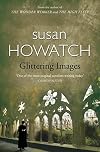
Vicar Charles Ashworth agrees to become an archiepiscopal spy. What could be juicier? He has been tasked by the Archbishop of Canterbury with reading Bishop Jardine's private journal and search for illicit love letters to make sure nothing untoward is happening in the household. Rumors abound. Ashworth's cover story is that he is going to Starbridge Cathedral because he wants his students to learn more about Saint Anselm and Starbridge just happens to hold the only early manuscripts. As if show more orchestrated in advance, a dinner party discusses the subject of divorce as it relates to the Marriage Bill and the Bible. This is perfect cover for Charles' investigation, but it reveals deep, dark, and dirty secrets of his own. True to his past and unable to help himself, Charles falls in love with a member of the bishop's household; the very person causing the Archbishop's concern. From there, everything unravels at a rapid pace. Glittering Images becomes laden with psychobabble theology and therapy doubletalk. When Charles suffers from an emotional angst far heavier than he can handle, he seeks the counsel of Jon Darrow, a monk from the Fordite monastery. Thanks to Darrow's investigative interviews, sound consultation, and the subsequent wailing torment of Charles, the two discover Charles is of two distinct personalities. One maintains the glittering image of perfection while the other is a whiskey gulping, fornicating fool wracked with guilt. Is the man he has called 'father' to blame or is it the man who actually sired him? Uncovering layers of insecurity and irrational jealousy leads to a self-fulfilling prophesy. The more insecure Charles behaves, the less inclined people are to convince him of his worth. The fear of abandonment is not exclusive to Charles. Many other characters suffer the same terror of inadequacy. show less

I've seen Susan Howatch's ecclesiastical novels facetiously described as “surplice-rippers” - which is unfair, of course, but you can see why. There’s a late-Victorian earnestness about the way she deals with religious faith and a rather mid-twentieth-century lack of irony in her approach to sex and psycho-analysis. At one point in this book (the first in her Starbridge series), she seems to become aware of the difficulty and has two of her characters discuss whether they are caught up show more in a cross between Barchester Towers and Lady Chatterley’s lover. They decide that they aren't, of course. Perhaps a more apt comparison would have been with Zola’s Abbé Mouret’s sin, though, and as we worked towards the solution of the psychological mystery there was a kind of neat closure going on that seemed to come straight out of Agatha Christie (possibly deliberate - Roger Ackroyd is mentioned conspicuously early in the story). And the resolution does turn out to be the psychological equivalent of “the butler did it”.
Which is all to say that this isn't the sort of thing I usually enjoy. But in all fairness I have to say that Howatch does it extremely well. Despite the high-flown emotions, her characters are never altogether implausible, and she manages to stay convincingly in period (1937, before she was born) without much apparent effort. She’s obviously done her research and got a feel for the way clergymen spoke in the thirties. And I'm fairly confident that, if I knew more about theology and psycho-analysis, that would all turn out to be correct for the period too. show less
Which is all to say that this isn't the sort of thing I usually enjoy. But in all fairness I have to say that Howatch does it extremely well. Despite the high-flown emotions, her characters are never altogether implausible, and she manages to stay convincingly in period (1937, before she was born) without much apparent effort. She’s obviously done her research and got a feel for the way clergymen spoke in the thirties. And I'm fairly confident that, if I knew more about theology and psycho-analysis, that would all turn out to be correct for the period too. show less
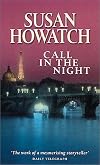
This is one of Susan Howatch's early 'Gothic' novels - there are six of them in all. They're short, less than 200 pages, each, and nothing like as powerful as her later family sagas and the Starbridge series. Nevertheless, they're well-written and suspenseful without being ghastly. I read this book in about three hours this afternoon and didn't find it disturbing at all, despite not being much of a thriller reader. The genre is more like Mary Stewart's thrillers than a modern one, based as show more it is in the pre-computer pre-mobile phone era, where long distance calls had to be done via an operator and were extremely expensive.
This story starts with Clare Sullivan (who narrates the book in the first person) receiving an anguished phone call in New york from her sister Gina, who is in London. The call is stopped abruptly, and Gina apparently vanishes. Clare's intuition tells her something is badly wrong, so she flies first to Paris, then on to London, and finds herself quickly embroiled in a dangerous and worrying set of circumstances.
Showing a distinct flair that comes out more strongly in the later novels, Susan Howatch manages to build up suspense by Clare's research: she meets people who know something about Gina, or what's happened to her, and they give their perspective. Each time we learn a little more although we're not entirely sure who can be trusted until the end. The climax of the book is highly dramatic, perhaps somewhat over melodramatic, but in context it appears entirely possible - another sign of a great writer! show less
This story starts with Clare Sullivan (who narrates the book in the first person) receiving an anguished phone call in New york from her sister Gina, who is in London. The call is stopped abruptly, and Gina apparently vanishes. Clare's intuition tells her something is badly wrong, so she flies first to Paris, then on to London, and finds herself quickly embroiled in a dangerous and worrying set of circumstances.
Showing a distinct flair that comes out more strongly in the later novels, Susan Howatch manages to build up suspense by Clare's research: she meets people who know something about Gina, or what's happened to her, and they give their perspective. Each time we learn a little more although we're not entirely sure who can be trusted until the end. The climax of the book is highly dramatic, perhaps somewhat over melodramatic, but in context it appears entirely possible - another sign of a great writer! show less

Long before Dan Brown discovered that religious institutions could be just as fruitful as law firms and airports for telling a compelling story, best-selling author of family sagas and historical novels Susan Howatch redirected her literary career with a series of novels about the upper echelons of the Anglican church. Mysteries and human failings abound, although nothing as sensational as secret codes revealing the descendants of Jesus and Mary Magdalene.
In Howatch’s case, her change of show more subject matter coincided with a personal spiritual quest that resulted in her commitment to high Anglicanism. Unlike many converts, who in their enthusiasm are blind to the human dimension of their new home, Howatch is too keen a student of life to paint an idealized picture. Some of her characters are saintly, but they remain human. Her commitment is best evidenced by her portrayal of most as genuine about their faith. The problem is, most have a public face (the glittering image) and a tormented inner life.
This inner turmoil is particularly true of the narrator/protagonist, Charles Ashworth. He is well-named since he is convinced he is unworthy, much like ashes. But in Christian tradition, ashes are the sign of penance in the hope of regeneration through the death and resurrection of Christ.
The torments of all main characters revolve around difficult marriages. It is no coincidence that the inciting incident of the book comes soon after a House of Lords debate in 1937 of a bill introduced to liberalize divorce. I won’t reveal more about the plot except to say that Howatch has created an interesting story, with enough melodramatic twists and turns to keep it a page-turner. In the end, it all seemed too pat, but the way there held my interest.
This even though much of the plot is recounted in dialogue, rather than in narrated action. While it was interesting to read Howatch’s depiction of the work of an insightful spiritual director, both strict and compassionate, not only this spiritual director, Jonathan Darrow, but several other characters display an uncanny ability to analyze in a way that neatly sums up the psychological traumas of the several characters.
Howatch has done her homework. The requisite theological authors, ancient and modern, are name-checked. Characters are also prone to use the titles of novels—Jane Eyre, Barchester Towers, Lady Chatterley's Lover—to describe their situations.
The title phrase, “Glittering Images,” appears early and recurs often throughout the book, but not in a univocal way. Among the theological discussions is one about the quest for the historical Jesus, the one behind the glittering image of the Gospel accounts. Since salvation for Charles, Lyle, and others involves stripping away the image and coming to grips with the person hidden behind, it’s surprising that Howatch makes nothing of what this might mean in the case of Christ.
At one point, when the Bishop of Starbridge is verbally fencing with Ashworth, who is intent on digging out a lurid secret he suspects the bishop of hiding, the bishop refers to an Agatha Christie crime story, then generalizes: “I always find the more I read that story the more intrigued I become by the narrator’s omissions and evasions.” This unreliability, it turns out, is relevant when applied to the Bishop, but since the protagonist narrates Glittering Images, I kept wondering when we would discover that this dictum applies to him as well. In the end, it seems that he has been all-too-truthful; there is no hint that he is an unreliable narrator. This seemed careless on the author’s part.
I also felt that the crisis leading to a resolution unfolds inconsistently. When the mystery Ashworth had pursued becomes revealed, it is clear that three women were complicit in imposing a situation on the bishop; yet before long, Darrow seemed to hold the bishop alone accountable.
Despite all the flaws, I enjoyed reading this book immensely, and will probably pick up others in the series when I’m in the need of some light entertainment, such as on an airplane flight. show less
In Howatch’s case, her change of show more subject matter coincided with a personal spiritual quest that resulted in her commitment to high Anglicanism. Unlike many converts, who in their enthusiasm are blind to the human dimension of their new home, Howatch is too keen a student of life to paint an idealized picture. Some of her characters are saintly, but they remain human. Her commitment is best evidenced by her portrayal of most as genuine about their faith. The problem is, most have a public face (the glittering image) and a tormented inner life.
This inner turmoil is particularly true of the narrator/protagonist, Charles Ashworth. He is well-named since he is convinced he is unworthy, much like ashes. But in Christian tradition, ashes are the sign of penance in the hope of regeneration through the death and resurrection of Christ.
The torments of all main characters revolve around difficult marriages. It is no coincidence that the inciting incident of the book comes soon after a House of Lords debate in 1937 of a bill introduced to liberalize divorce. I won’t reveal more about the plot except to say that Howatch has created an interesting story, with enough melodramatic twists and turns to keep it a page-turner. In the end, it all seemed too pat, but the way there held my interest.
This even though much of the plot is recounted in dialogue, rather than in narrated action. While it was interesting to read Howatch’s depiction of the work of an insightful spiritual director, both strict and compassionate, not only this spiritual director, Jonathan Darrow, but several other characters display an uncanny ability to analyze in a way that neatly sums up the psychological traumas of the several characters.
Howatch has done her homework. The requisite theological authors, ancient and modern, are name-checked. Characters are also prone to use the titles of novels—Jane Eyre, Barchester Towers, Lady Chatterley's Lover—to describe their situations.
The title phrase, “Glittering Images,” appears early and recurs often throughout the book, but not in a univocal way. Among the theological discussions is one about the quest for the historical Jesus, the one behind the glittering image of the Gospel accounts. Since salvation for Charles, Lyle, and others involves stripping away the image and coming to grips with the person hidden behind, it’s surprising that Howatch makes nothing of what this might mean in the case of Christ.
At one point, when the Bishop of Starbridge is verbally fencing with Ashworth, who is intent on digging out a lurid secret he suspects the bishop of hiding, the bishop refers to an Agatha Christie crime story, then generalizes: “I always find the more I read that story the more intrigued I become by the narrator’s omissions and evasions.” This unreliability, it turns out, is relevant when applied to the Bishop, but since the protagonist narrates Glittering Images, I kept wondering when we would discover that this dictum applies to him as well. In the end, it seems that he has been all-too-truthful; there is no hint that he is an unreliable narrator. This seemed careless on the author’s part.
I also felt that the crisis leading to a resolution unfolds inconsistently. When the mystery Ashworth had pursued becomes revealed, it is clear that three women were complicit in imposing a situation on the bishop; yet before long, Darrow seemed to hold the bishop alone accountable.
Despite all the flaws, I enjoyed reading this book immensely, and will probably pick up others in the series when I’m in the need of some light entertainment, such as on an airplane flight. show less
Lists
Awards

You May Also Like


Associated Authors
Statistics
- Works
- 64
- Also by
- 2
- Members
- 8,177
- Popularity
- #2,957
- Rating
- 3.9
- Reviews
- 149
- ISBNs
- 401
- Languages
- 13
- Favorited
- 33