
David Hilliam
Author of Kings, Queens, Bones and Bastards
About the Author
David Hilliam is a freelance lecturer and writer
Works by David Hilliam
Richard the Lionheart and the Third Crusade: The English King Confronts Saladin, Ad 1191 (The Library of the Middle Ages) (2004) 17 copies, 1 review
Castles and Cathedrals: The Great Buildings of Medieval Times (The Library of the Middle Ages) (2004) 16 copies, 1 review
Eleanor of Aquitaine: The Richest Queen in Medieval Europe (Leaders of the Middle Ages) (2004) 8 copies, 2 reviews
William Shakespeare: Englands Greatest Playwright and Poet (Rulers, Scholars, and Artists of Renaissance Europe) (2005) 6 copies
Tagged
Common Knowledge
- Gender
- male
Members
Reviews
Kings, Queens, Bones and Bastards: Who's Who in the English Monarchy from Egbert to Elizabeth II by David Hilliam

My review is for the 1998 edition.
This is certainly comprehensive, more so than most other books on English royalty: unlike them, this book talks about pre-Norman kings and queens, as well as the spouses, notable mistresses and bastard children of royalty. Points for that. I did, however, see several (relatively minor) inaccuracies, such as the old canard that Henry VIII died of syphilis. Perhaps these were corrected in future editions, I don't know.
This is certainly comprehensive, more so than most other books on English royalty: unlike them, this book talks about pre-Norman kings and queens, as well as the spouses, notable mistresses and bastard children of royalty. Points for that. I did, however, see several (relatively minor) inaccuracies, such as the old canard that Henry VIII died of syphilis. Perhaps these were corrected in future editions, I don't know.
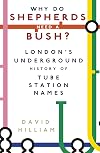
Best for: Anyone who likes a little trivia about place names.
In a nutshell: Author Hilliam provides the history of the name of every station on the London Underground
Worth quoting:
“Interestingly, our word ‘book’ also comes from this Saxon word (boc hyrst) for a beech tree. Even before books as we know them were invented, wooden writing tablets were made of thin slices of beech wood, on which letters known as runes could be scratched. These, of course, were pieces of boc.”
Why I chose show more it: I saw it at the Museum of London and it seemed like a fun thing to own.
Review:
This is one of those books that you don’t actually have to read straight through; it’s more of a reference book. That said, I thoroughly enjoyed reading through it in just a couple of sittings. It’s probably more interesting to someone who has been to London, but if you have an interest in language, and in how words evolve over time, then you might enjoy this book.
One thing I learned is that so very many place names in London come from Saxon leaders. Like, Paddington (as in the bear, named after the Paddington Tube station), is named after a Saxon leader Padda. Padda + ingas (family or followers) + tun (village): The Village Where Followers of Padda Live.
Another interesting bit is how many names are not that interesting. They’re named for a tree that once stood somewhere, or a popular pub. I mean, I suppose that’s kind of interesting, but imagine a future where the stop on the flying car expressway is Dennys, after that super-popular restaurant in the center of town.
I think I’ve always thought of names of places in London as being steeped in history, and for the most part they are, but in reality there are the mundane names as well, and that’s kind of cool. show less
In a nutshell: Author Hilliam provides the history of the name of every station on the London Underground
Worth quoting:
“Interestingly, our word ‘book’ also comes from this Saxon word (boc hyrst) for a beech tree. Even before books as we know them were invented, wooden writing tablets were made of thin slices of beech wood, on which letters known as runes could be scratched. These, of course, were pieces of boc.”
Why I chose show more it: I saw it at the Museum of London and it seemed like a fun thing to own.
Review:
This is one of those books that you don’t actually have to read straight through; it’s more of a reference book. That said, I thoroughly enjoyed reading through it in just a couple of sittings. It’s probably more interesting to someone who has been to London, but if you have an interest in language, and in how words evolve over time, then you might enjoy this book.
One thing I learned is that so very many place names in London come from Saxon leaders. Like, Paddington (as in the bear, named after the Paddington Tube station), is named after a Saxon leader Padda. Padda + ingas (family or followers) + tun (village): The Village Where Followers of Padda Live.
Another interesting bit is how many names are not that interesting. They’re named for a tree that once stood somewhere, or a popular pub. I mean, I suppose that’s kind of interesting, but imagine a future where the stop on the flying car expressway is Dennys, after that super-popular restaurant in the center of town.
I think I’ve always thought of names of places in London as being steeped in history, and for the most part they are, but in reality there are the mundane names as well, and that’s kind of cool. show less
Kings, Queens, Bones & Bastards: Who's Who in the English Monarchy from Egbert to Elizabeth II by David Hilliam
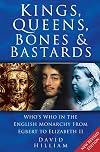
If you don't know British history or anything about the English monarchy, this is an amusing introduction. However, there are so many errors that the reader shouldn't take anything at face value. For example, Roger Mortimer was first buried at Grey Friars in Coventry, not London, then moved to Wigmore Abbey where his wife Joan was buried next to him later, not Isabella of France who is buried in Grey Friars in London.
There are many anecdotes which have not a shred of truth, and others of show more dubious merit. While my copy was an updated version, it still doesn't have the correct burial for Richard III or the findings that the discovery of his body revealed from 2012. It's a shame because this could be a good primer if the numerous errors were corrected. show less
There are many anecdotes which have not a shred of truth, and others of show more dubious merit. While my copy was an updated version, it still doesn't have the correct burial for Richard III or the findings that the discovery of his body revealed from 2012. It's a shame because this could be a good primer if the numerous errors were corrected. show less
Kings, Queens, Bones & Bastards: Who's Who in the English Monarchy from Egbert to Elizabeth II by David Hilliam
Non-fiction but an entertaining read about the English Monarchy from Egbert to Elizabeth II. At times it felt like I was reading a gossip column. I learned lots of interesting trivia (which is not substantiated but I can research these things for myself). The book is easy to read and well presented in four sections: The Kings and Queens; Their Wives/Husbands; Death details and Burial location; and Illegitimate children and Mistresses. Each section follows each Royal person in order. Very show more entertaining! show less
You May Also Like


Statistics
- Works
- 20
- Members
- 362
- Popularity
- #66,318
- Rating
- 3.4
- Reviews
- 11
- ISBNs
- 34